

“The Wheel-Bearer” is an engaging moral story for kids that teaches the importance of hard work, honesty, and helping others. This children’s story highlights good values, life lessons, practical wisdom, and teamwork, making it perfect for young readers to understand morals and develop strong character through storytelling.
[Scroll Down for Download Link]
The Wheel-Bearer – Moral Story for Kids

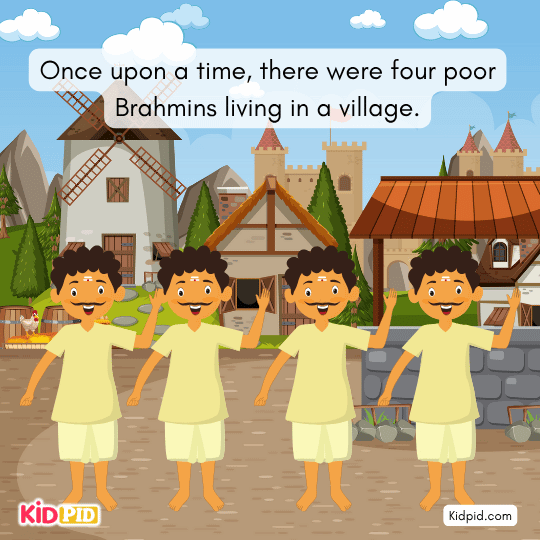
Once upon a time, there were four poor Brahmans living in a village.
They often talked amongst themselves, saying, “Oh, what a terrible curse poverty is!
Happiness seems to come only with wealth. But how can we get money?”
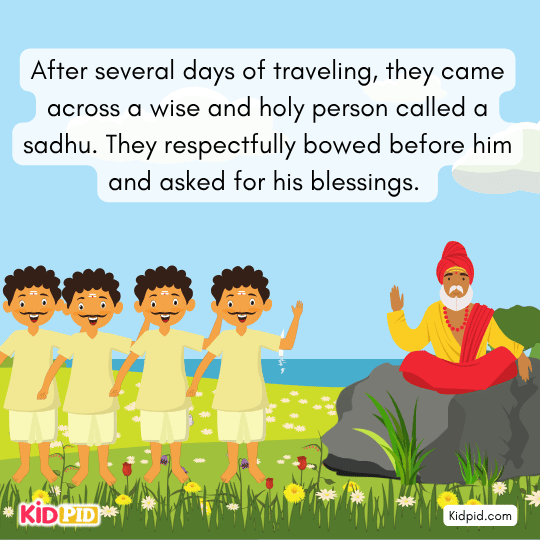
After several days of travelling, they came across a wise and holy person called a sadhu. They respectfully bowed before him and asked for his blessings.
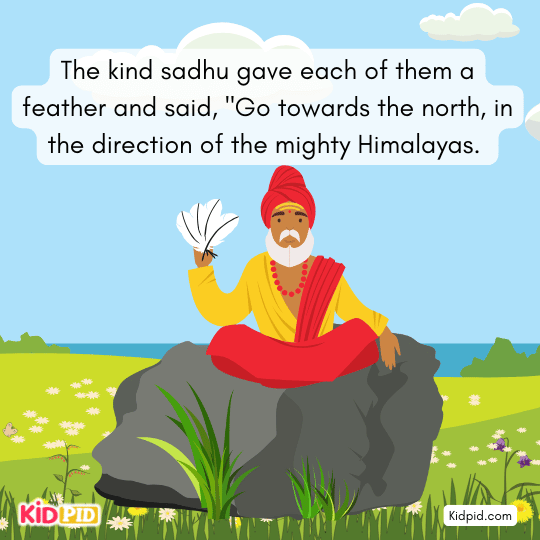
The kind sadhu gave each of them a feather and said, “Go towards the north, in the direction of the mighty Himalayas.
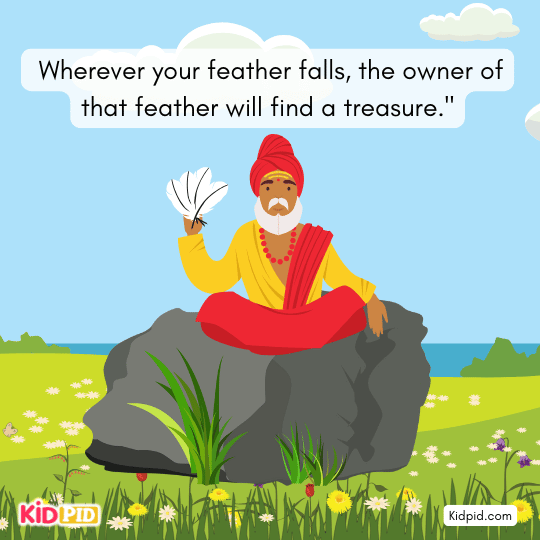
Wherever your feather falls, the owner of that feather will find a treasure.”
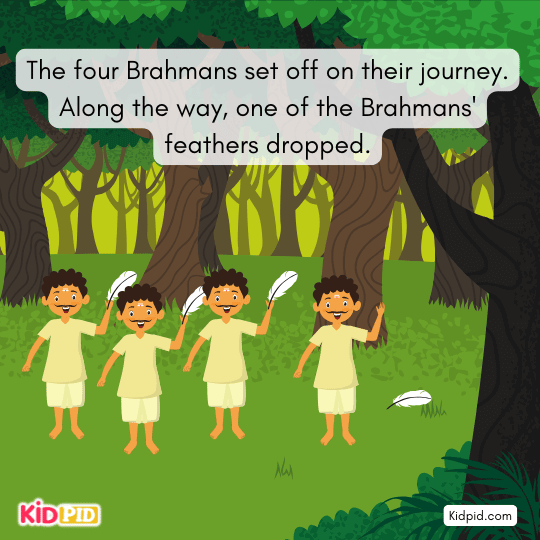
The four Brahmans set off on their journey. Along the way, one of the Brahmans’ feathers dropped.
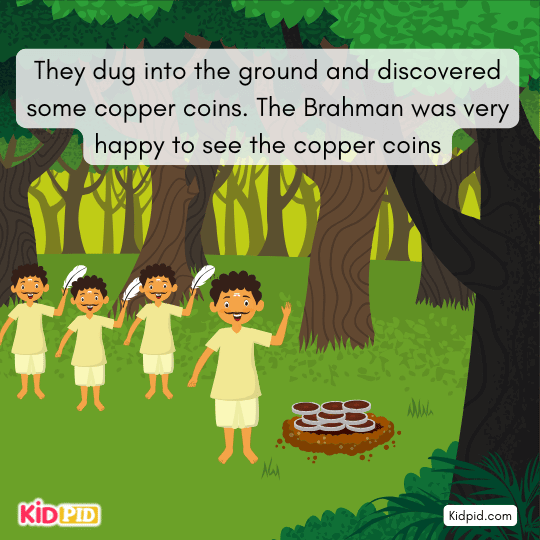
They dug into the ground and discovered some copper coins. The Brahman was very happy to see the copper coins.
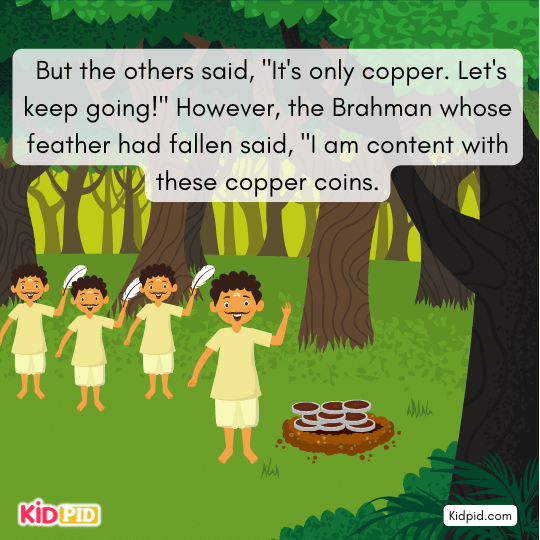
But the others said, “It’s only copper. Let’s keep going!” However, the Brahman whose feather had fallen said, “I am content with these copper coins.
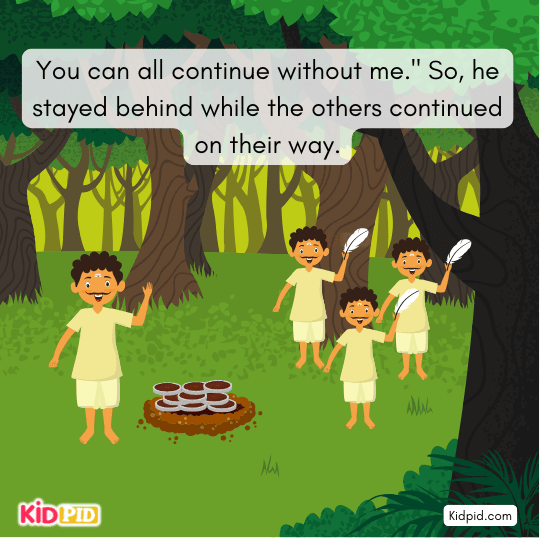
You can all continue without me.” So, he stayed behind while the others continued on their way.
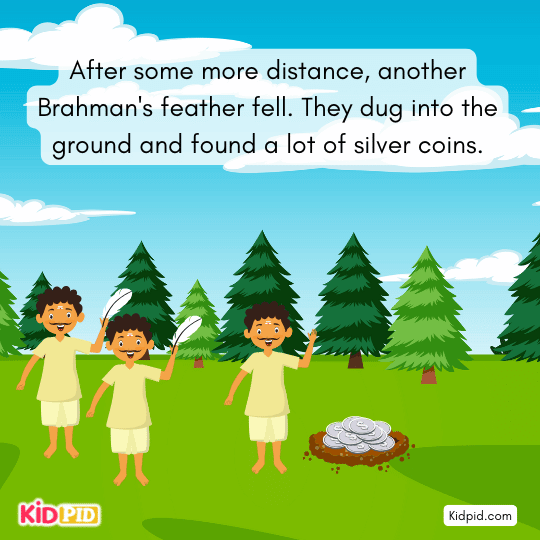
After some more distance, another Brahman’s feather fell. They dug into the ground and found a lot of silver coins.
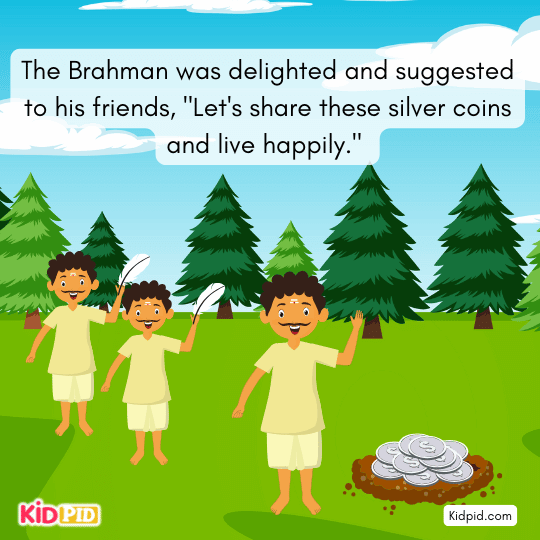
The Brahman was delighted and suggested to his friends, “Let’s share these silver coins and live happily.”
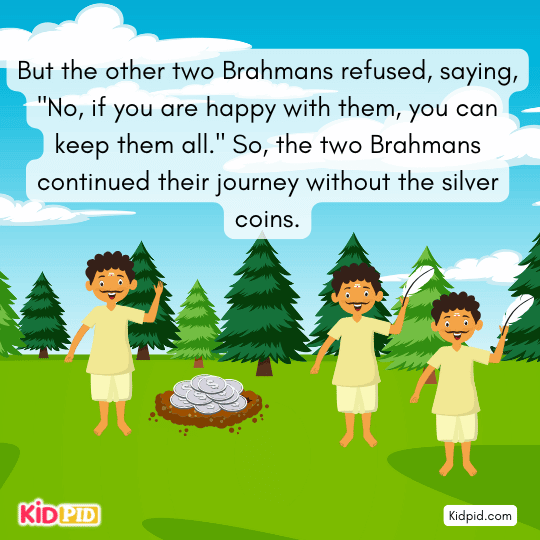
But the other two Brahmans refused, saying, “No, if you are happy with them, you can keep them all.” So, the two Brahmans continued their journey without the silver coins.
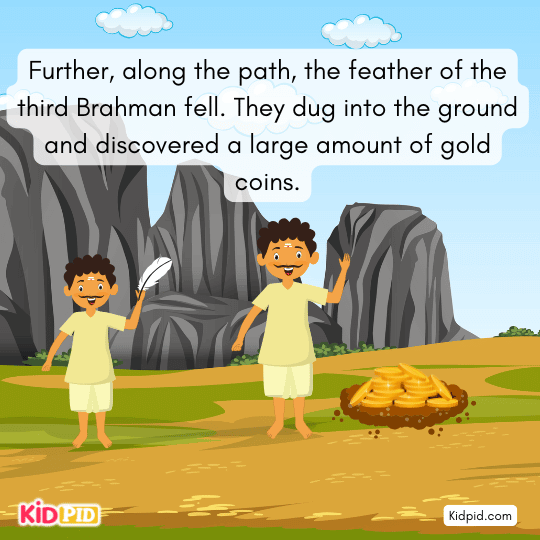
Further, along the path, the feather of the third Brahman fell. They dug into the ground and discovered a large amount of gold coins.
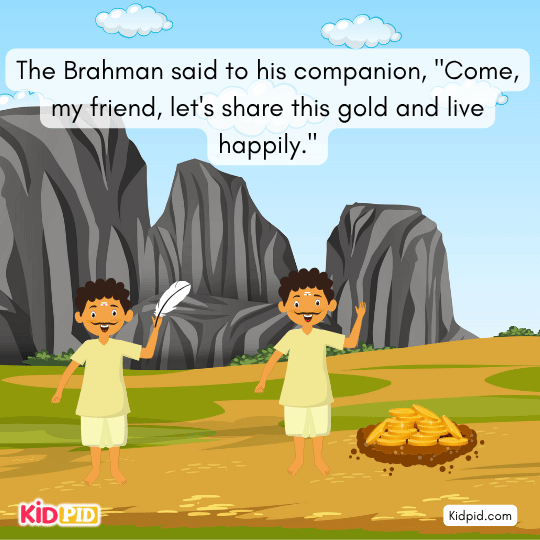
The Brahman said to his companion, “Come, my friend, let’s share this gold and live happily.”
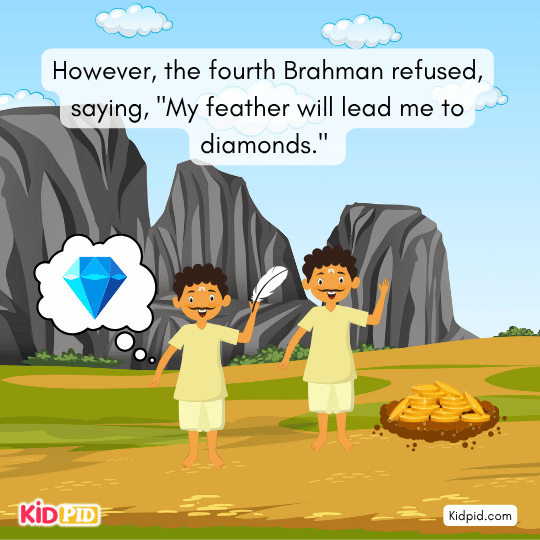
However, the fourth Brahman refused, saying, “My feather will lead me to diamonds.”
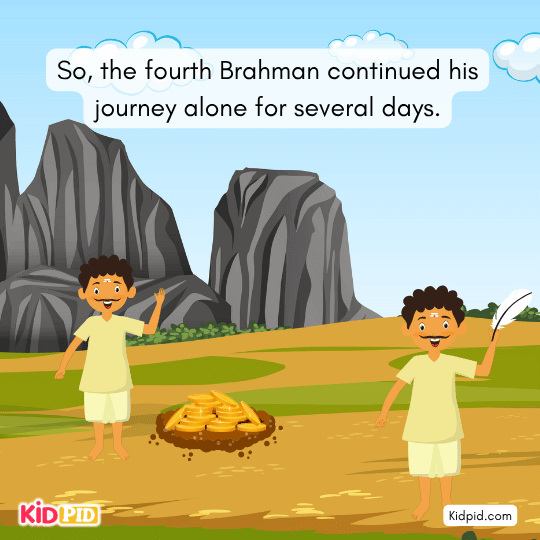
So, the fourth Brahman continued his journey alone for several days.
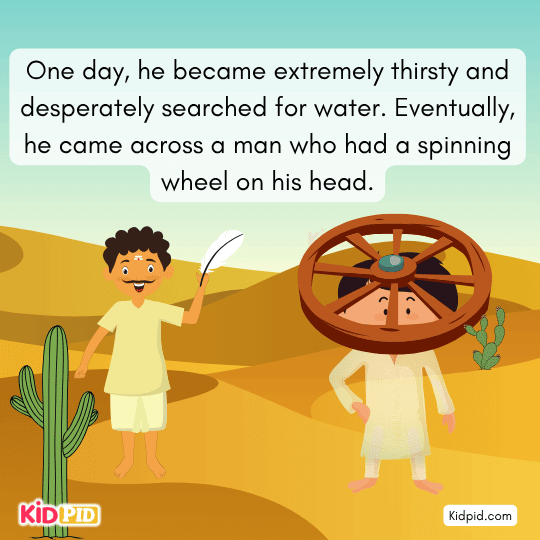
One day, he became extremely thirsty and desperately searched for water. Eventually, he came across a man who had a spinning wheel on his head.
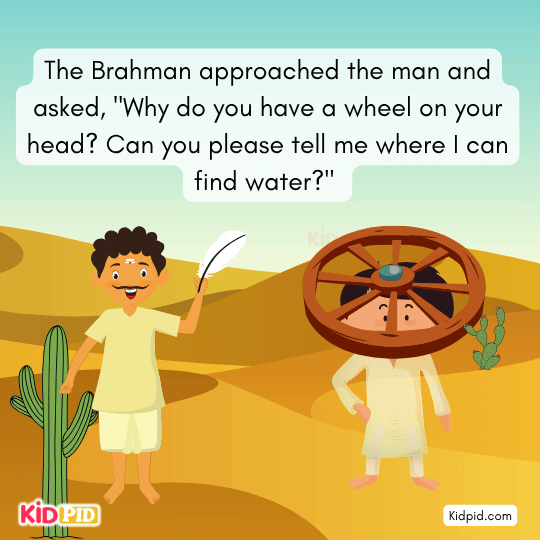
The Brahman approached the man and asked, “Why do you have a wheel on your head? Can you please tell me where I can find water?”
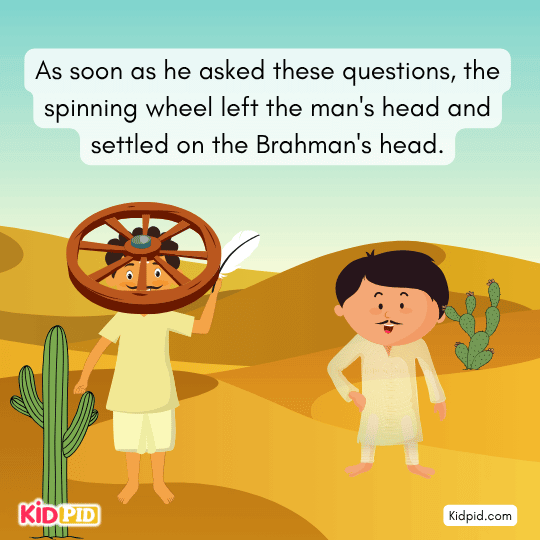
As soon as he asked these questions, the spinning wheel left the man’s head and settled on the Brahman’s head.
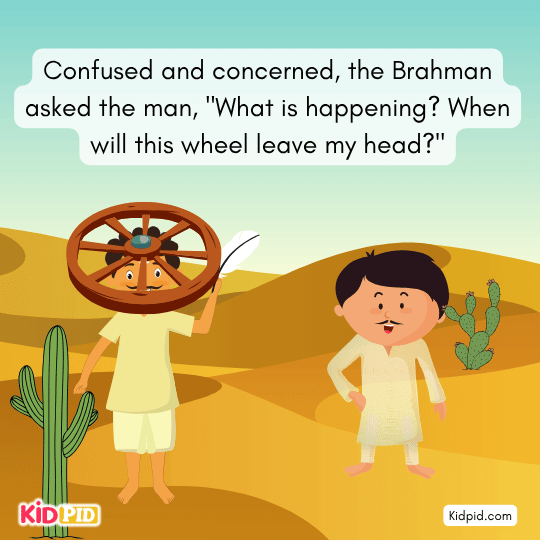
Confused and concerned, the Brahman asked the man, “What is happening? When will this wheel leave my head?”
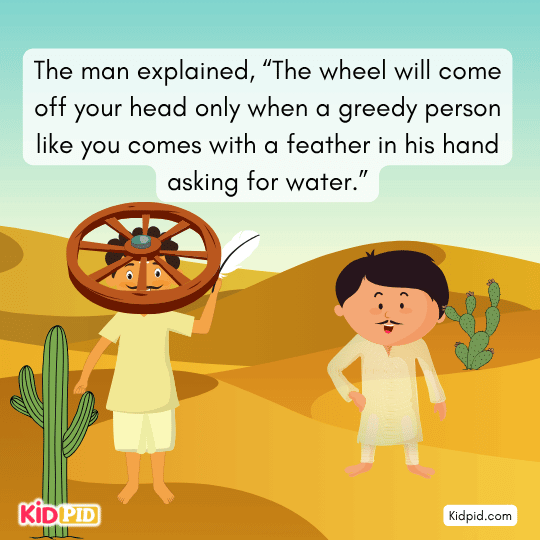
The man explained, “The wheel will come off your head only when a greedy person like you comes with a feather in his hand asking for water.”
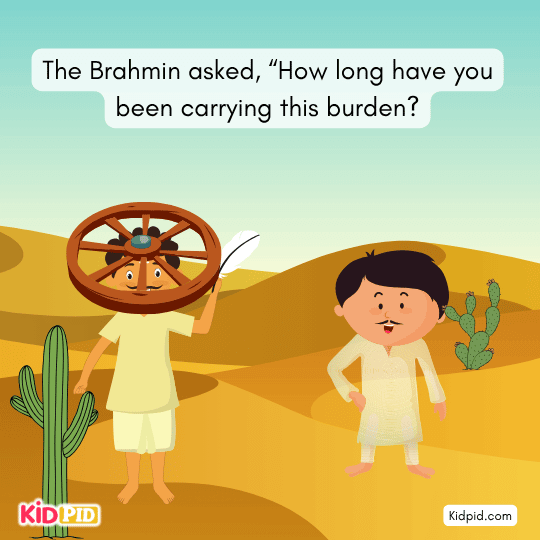
The Brahmin asked, “How long have you been carrying this burden?
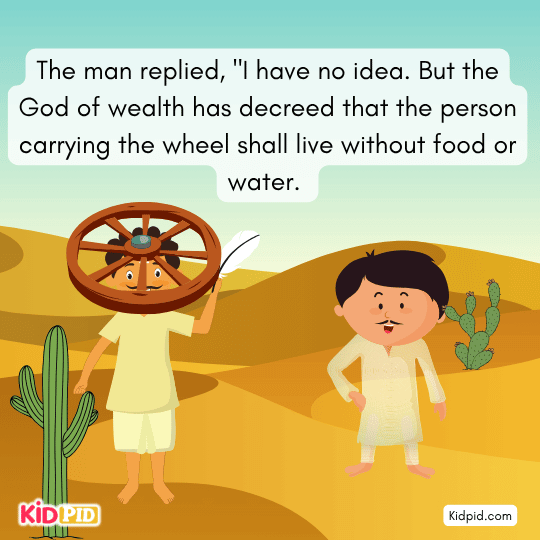
The man replied, “I have no idea. But the God of wealth has decreed that the person carrying the wheel shall live without food or water.
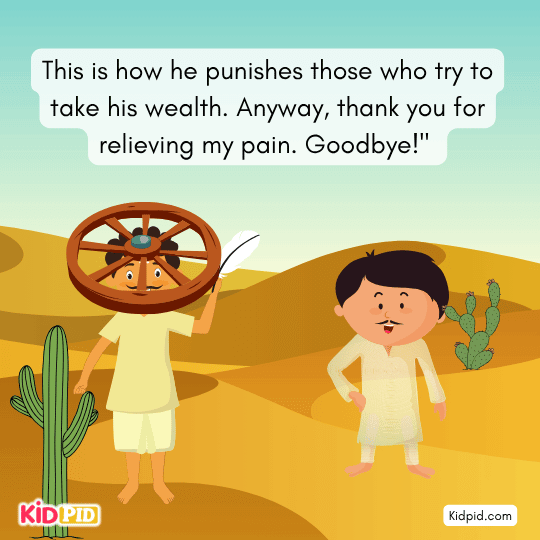
This is how he punishes those who try to take his wealth. Anyway, thank you for relieving my pain. Goodbye!”
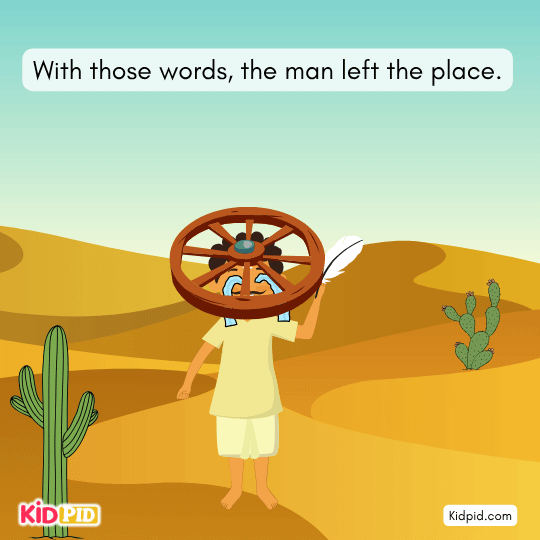
With those words, the man left the place.
Moral of the story: Greed leads to suffering, but contentment brings peace and happiness.

The story of “The Wheel-Bearer” teaches children honesty, responsibility, and kindness. By understanding this moral tale, kids learn important life lessons, values, and the benefits of hard work and helping others.


