

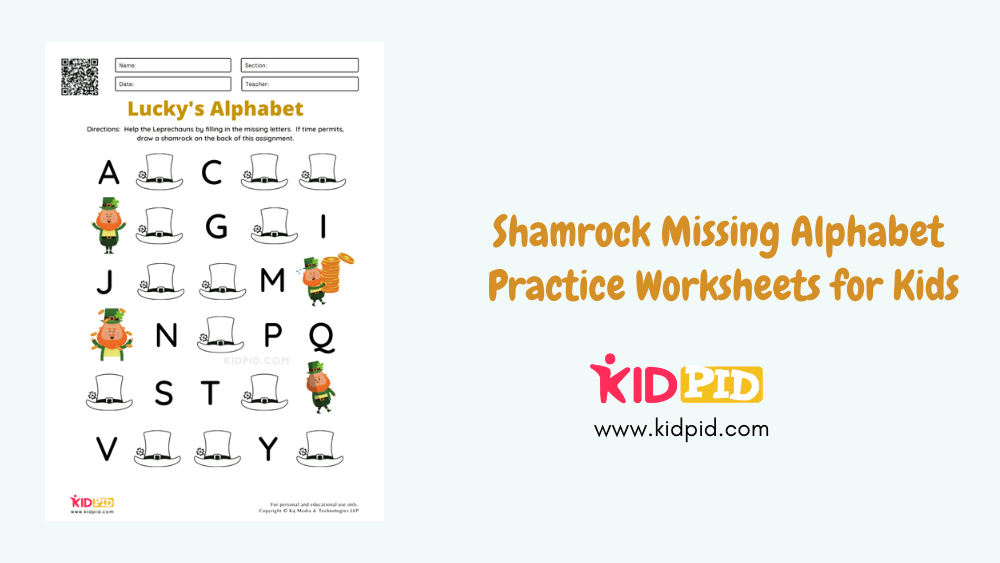
Learning the alphabet is the foundation for reading and writing. It is essential to learn any language. It is thus one of the first things taught to kids. Before young ones learn to sound out words and master the foundations of reading, they need to recognize the letters. The following worksheets aim at teaching young ones the alphabet of the English language.
[Scroll Down for Download Link]
Contents
- Shamrock Alphabet Missing Practice Worksheets
- Key Facts About Shamrock Missing Alphabet Practice Worksheets for Kids
- Parts/Types/Examples of Shamrock Missing Alphabet Practice Worksheets
- How Does Shamrock Missing Alphabet Practice Worksheets Work?
- Benefits of Learning About Shamrock Missing Alphabet Practice Worksheets
- Learning Objectives
- Worksheet Instructions
- Interesting Facts About Shamrock Missing Alphabet Practice Worksheets
- Real-Life Applications
- FAQs
- Q1. What age group are Shamrock Missing Alphabet Practice Worksheets suitable for?
- Q2. What skills do children develop through these worksheets?
- Q3. Can these worksheets be used at home?
- Q4. Are the worksheets suitable for beginners?
- Q5. Why is finding missing letters important?
- Q6. How often should children practice alphabet worksheets?
- Q7. Can teachers use these worksheets in classrooms?
- You may like these:
Shamrock Alphabet Missing Practice Worksheets
Help the Leprechauns by filling in the missing letters. If time permits, draw a shamrock on the back of this worksheet.
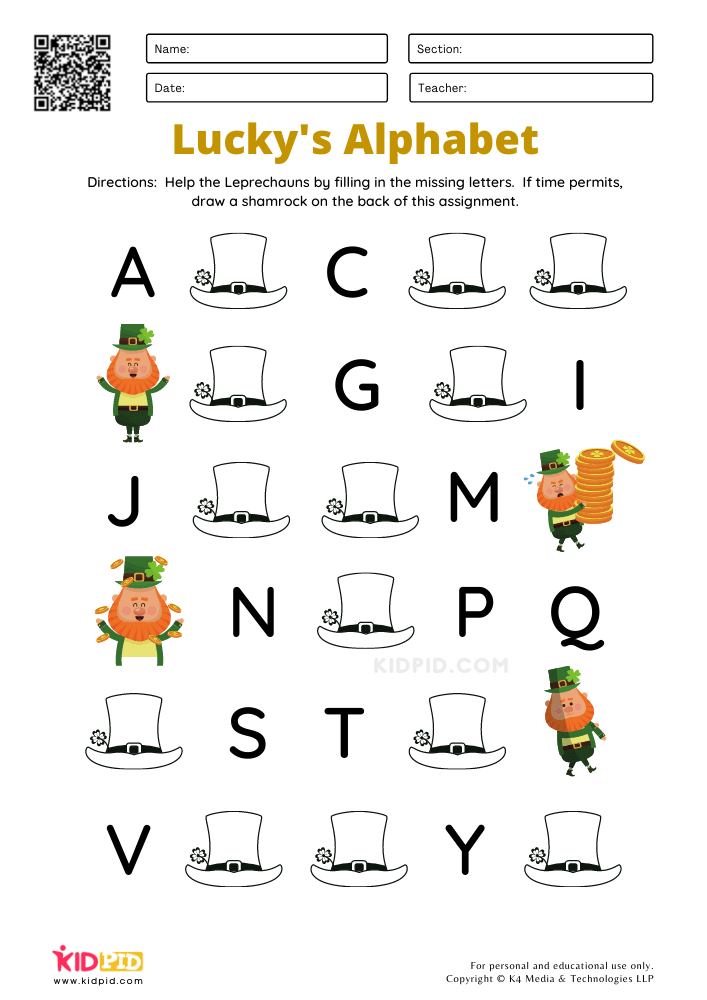
The worksheet enables children to test their memory and knowledge of the alphabet. Before attempting the worksheet, it is necessary that the kid has memorized the 26 letters of the alphabet by heart. This is the second sheet. All of our worksheets are downloadable for your use.
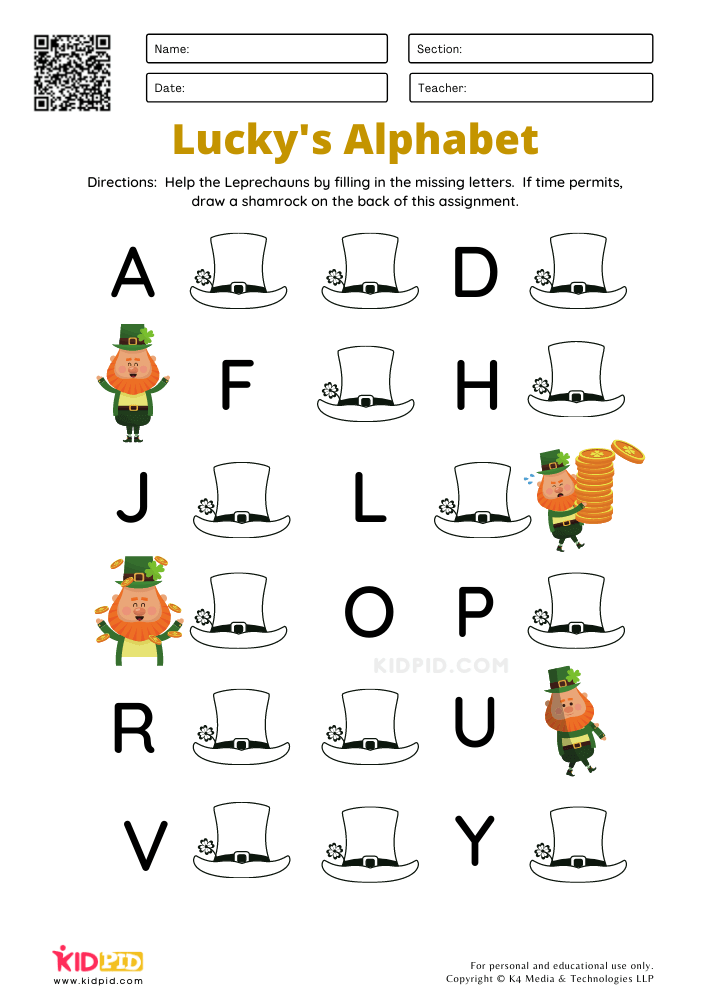
The third worksheet tests the child’s ability to recall the 26 letters in the English language in their correct sequence. It is a simple exercise that requires the kid to recall the alphabet and write the missing letters in their corresponding places.
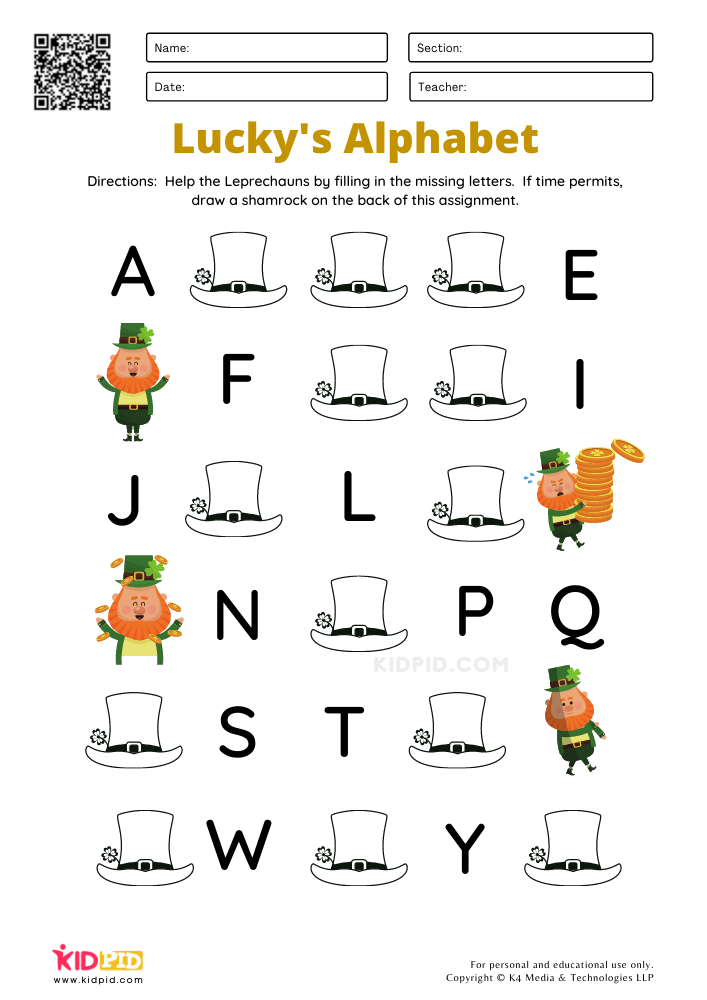
Practice aims at perfection and develops the soul. The fourth worksheet allows for more practice. More practice reduces their chances of forgetting the lesson. The worksheet is created in such a way that after going through all of these, your young ones would be able to recite the alphabet in one go.
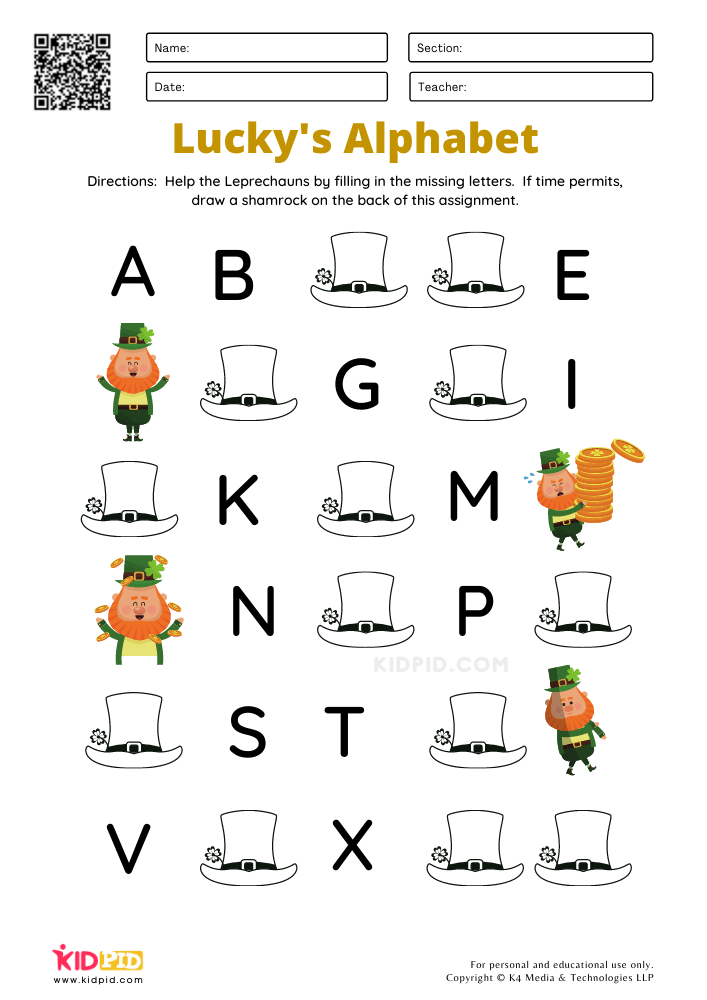
The worksheets are created in a manner that is visually appealing to kids. It hooks their attention to the task at hand, making them more attentive and hence increasing their chances of learning. Allow your kid ample time to recall and learn. Young kids are often running from their studies. Rushing them would burden and hamper their ability to learn. It is essential to make learning a fun activity. With our worksheets, your young ones would be able to enjoy the process of learning, and they’ll be spelling out words in no time.
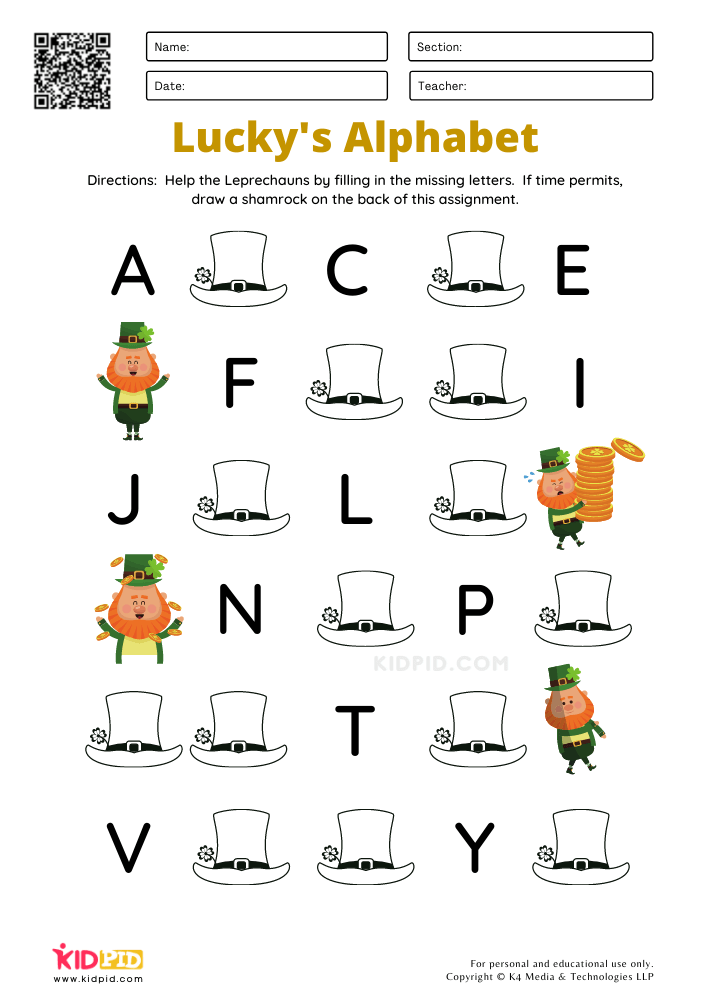
At a very young age, it is important to be attentive and careful about the knowledge being transferred to kids. Through these worksheets, they’ll develop the strength to read any word by recognizing letters and develop the ability to form them into entire words.
Key Facts About Shamrock Missing Alphabet Practice Worksheets for Kids
- Shamrock Missing Alphabet Practice Worksheets help children identify and fill in missing letters in alphabetical sequences.
- These worksheets are designed with shamrock-themed activities, making learning fun and engaging.
- They support early literacy development by strengthening letter recognition and alphabet order skills.
- Suitable for preschool, kindergarten, and early elementary students.
- The activities encourage critical thinking and attention to detail.
- Children improve handwriting and fine motor skills while writing missing letters.
- The festive shamrock design can be especially useful during St. Patrick’s Day learning activities.
- These worksheets provide an interactive way to reinforce foundational reading and writing skills.
Parts/Types/Examples of Shamrock Missing Alphabet Practice Worksheets
Parts of the Worksheets
- Shamrock-shaped letter boxes
- Alphabet sequences with missing letters
- Writing spaces for answers
- Visual letter clues and patterns
Types of Worksheets
- Uppercase missing alphabet worksheets
- Lowercase missing alphabet worksheets
- Mixed-case alphabet activities
- Beginning letter missing exercises
- Middle letter missing exercises
- End letter missing exercises
Examples
- A, B, __, D, E
- M, __, O, P, Q
- W, X, __, Z
- a, __, c, d, e
How Does Shamrock Missing Alphabet Practice Worksheets Work?
These worksheets present children with alphabet sequences that contain one or more missing letters. Students examine the letter pattern, identify the missing character, and write the correct answer in the blank shamrock space. By repeatedly practicing alphabet sequences, children learn proper letter order, strengthen memory retention, and build confidence in early reading and writing skills. The themed shamrock format keeps learners interested and motivated throughout the activity.
Benefits of Learning About Shamrock Missing Alphabet Practice Worksheets
- Improves alphabet recognition skills.
- Strengthens understanding of letter sequencing.
- Enhances early reading readiness.
- Develops handwriting and pencil control.
- Builds concentration and problem-solving abilities.
- Encourages independent learning.
- Supports classroom and homeschool education.
- Makes literacy practice enjoyable through themed activities.
Learning Objectives
By completing these worksheets, children will:
- Recognize uppercase and lowercase letters.
- Identify missing letters within alphabet sequences.
- Understand alphabetical order.
- Improve handwriting accuracy.
- Strengthen visual discrimination skills.
- Develop cognitive and logical thinking abilities.
- Build confidence in language learning.
- Prepare for more advanced reading and writing activities.
Worksheet Instructions
- Look carefully at each alphabet sequence.
- Find the letter that is missing from the pattern.
- Write the correct letter in the blank shamrock.
- Check your answer by reading the sequence aloud.
- Complete all the shamrocks on the worksheet.
- Review your work after finishing.
- Practice regularly to improve alphabet mastery.
Interesting Facts About Shamrock Missing Alphabet Practice Worksheets
- The shamrock is a well-known symbol of Ireland and is often associated with good luck.
- Alphabet sequencing is one of the earliest literacy skills children learn.
- Identifying missing letters helps strengthen memory and pattern recognition.
- Letter-order activities support future spelling and reading development.
- Themed worksheets often increase student engagement and participation.
- Fun visuals can help children stay focused longer during learning activities.
- Repeated alphabet practice improves letter recall speed.
- Educational games and worksheets make foundational learning more enjoyable.
Real-Life Applications
- Reading books and storybooks accurately.
- Learning the correct spelling of words.
- Understanding dictionaries and alphabetical order systems.
- Completing classroom literacy activities.
- Writing letters and words independently.
- Organizing names and lists alphabetically.
- Building strong foundations for future language arts learning.
- Improving communication and writing skills in everyday life.
FAQs
Q1. What age group are Shamrock Missing Alphabet Practice Worksheets suitable for?
Answer: These worksheets are ideal for preschoolers, kindergarten students, and early elementary learners aged 3–7 years.
Q2. What skills do children develop through these worksheets?
Answer: Children develop alphabet recognition, letter sequencing, handwriting, concentration, and early literacy skills.
Q3. Can these worksheets be used at home?
Answer: Yes. Parents can easily use them for homeschooling, after-school practice, or holiday-themed educational activities.
Q4. Are the worksheets suitable for beginners?
Answer: Yes. The activities are designed to support children who are just starting to learn the alphabet.
Q5. Why is finding missing letters important?
Answer: Missing-letter activities help children understand alphabetical order, improve memory, and prepare for reading and spelling success.
Q6. How often should children practice alphabet worksheets?
Answer: Regular practice, even for 10–15 minutes a few times a week, can significantly improve alphabet knowledge and literacy development.
Q7. Can teachers use these worksheets in classrooms?
Answer: Absolutely. They are excellent for literacy centers, morning work, group activities, and independent practice sessions.

Finding missing letters becomes more exciting with a festive shamrock theme. These worksheets strengthen alphabetical order, letter recognition, and early literacy skills while keeping young learners actively engaged. Keep visiting our website and explore more paragraphs, essays, worksheets, flashcards, Quizzes, and many other interactive resources. Don’t forget to follow us on YouTube & Facebook.
This worksheet was prepared by the Content Team to strengthen academic outcomes.
Reviewed By Muskan Bhardwaj
You may like these:
Trace the ABCs! Fun Worksheets for Little Learners

Engaging worksheets designed to help preschoolers trace lowercase letters, develop fine motor skills, and build confidence in early handwriting practice through playful learning activities.
Activity Book for Tiny Tots: Learn the Alphabet (Ages 2-5)
A colorful activity book packed with fun exercises to introduce toddlers and preschoolers to the alphabet, fostering letter recognition and pre-writing skills through interactive play.
Practice Writing A to Z: Free Printable Tracing Pages
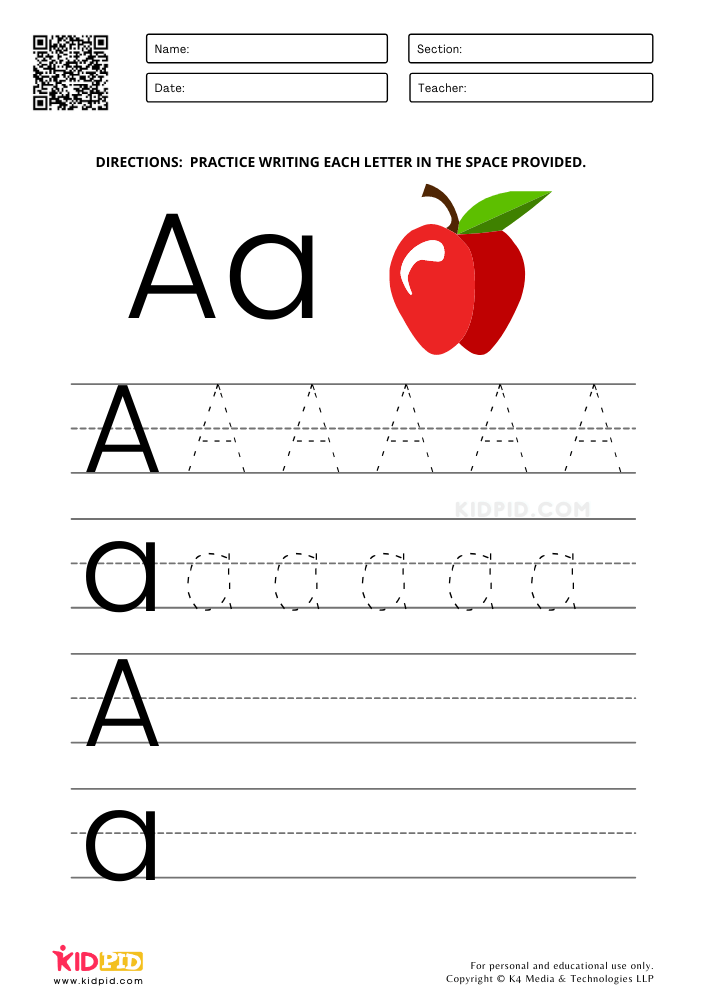
Free printable pages offering step-by-step tracing practice for every letter from A to Z, helping kids master alphabet writing while enhancing their hand-eye coordination and creativity.
Animal Alphabet Handwriting Fun

Adorable animal-themed handwriting sheets that make learning the alphabet exciting! Each page pairs a letter with a cute animal, encouraging kids to trace, write, and learn joyfully.
Trace Easy Words: Things That Start with A-Z
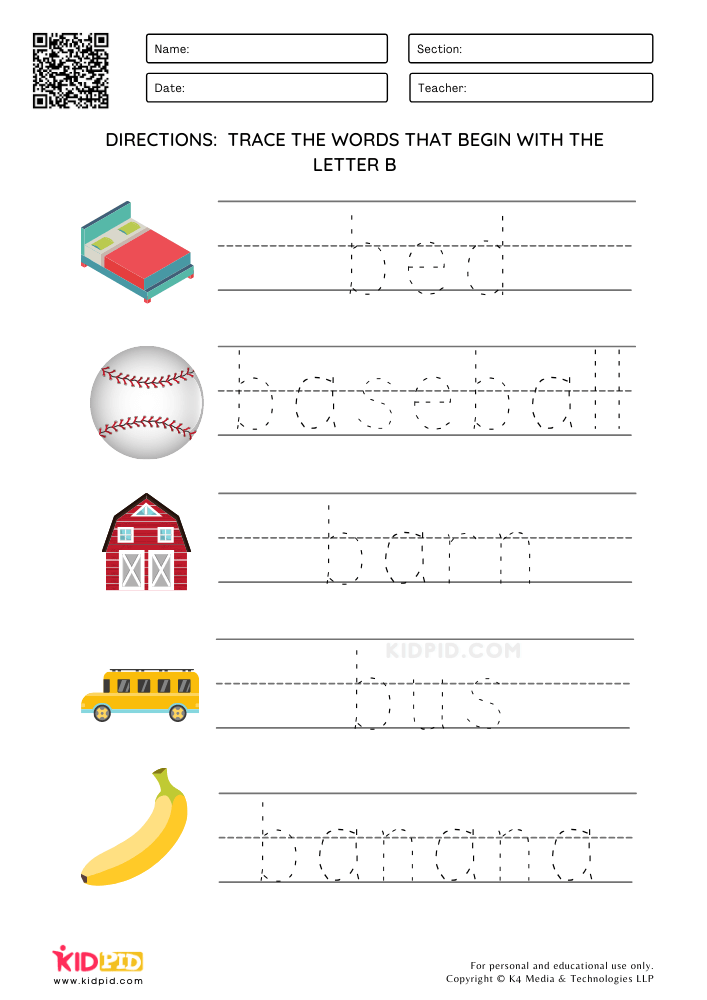
Simple tracing activities featuring everyday words for each letter of the alphabet, helping children expand vocabulary, improve spelling, and gain confidence in their reading and writing skills.



