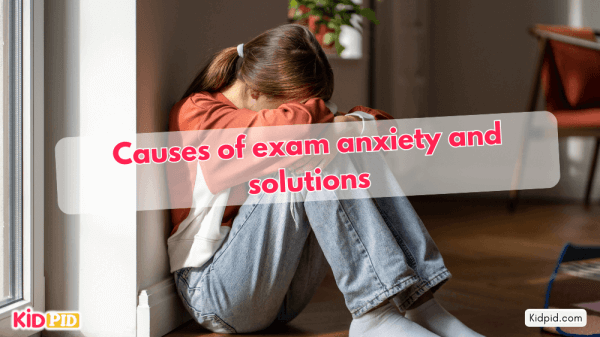
Many kids feel nervous or scared before an exam. This feeling is called anxiety, and it can make it hard to focus and do your best. In this guide, we’ll learn about what causes exam anxiety and some helpful ways to overcome it.
- What is Exam Anxiety: A feeling of fear or worry before a test. It can make you feel nervous, shaky, or unable to concentrate.
- Common Causes: Fear of not doing well. Pressure from parents or teachers. Lack of preparation or feeling unprepared.
- Symptoms of Anxiety: Fast heartbeat and sweating. Trouble sleeping or feeling restless. Difficulty thinking clearly.
- Ways to Overcome Anxiety: Preparation: Study in advance and practice what you need to know.
Relaxation Techniques: Try deep breathing, meditation, or yoga to calm down.
Positive Thinking: Replace negative thoughts with positive ones to boost your confidence. - Talk About Your Feelings: Share your worries with a friend, teacher, or family member.
- Remember: It’s normal to feel anxious sometimes. You can learn to manage your anxiety and do well in your exams!
Contents
- “Fear of Exams, Causes of Anxiety, and How to Manage It.”
- Related MCQ’S
- 1. What is the fight-or-flight response?
- 2. What is anxiety disorder?
- 3. Which part of the brain is responsible for the fight-or-flight response?
- 4. What hormone is released during the fight-or-flight response?
- 5. How can anxiety be managed?
- 6. Which group is more likely to experience anxiety disorders?
- 7. What could happen to someone with prolonged anxiety?
- You may like these:
“Fear of Exams, Causes of Anxiety, and How to Manage It.”
Related MCQ’S
1. What is the fight-or-flight response?
a) A way your body prepares to sleep
b) A normal reaction that helps your body prepare to fight or run away from danger
c) A response that only happens when you’re playing a game
d) A response to feeling sleepy
2. What is anxiety disorder?
a) Feeling anxious once in a while
b) A mental health condition where anxiety lasts for 6 months or more
c) A common feeling during tests
d) A fear of spiders
3. Which part of the brain is responsible for the fight-or-flight response?
a) Cerebellum
b) Amygdala
c) Hippocampus
d) Thalamus
4. What hormone is released during the fight-or-flight response?
a) Insulin
b) Cortisol
c) Epinephrine (Adrenaline)
d) Serotonin
5. How can anxiety be managed?
a) By avoiding all social situations
b) By taking deep breaths, practicing mindfulness, and getting enough sleep
c) By sleeping for 24 hours straight
d) By worrying even more
6. Which group is more likely to experience anxiety disorders?
a) Boys
b) Girls
c) Both equally
d) Adults
7. What could happen to someone with prolonged anxiety?
a) They will feel sleepy all the time
b) They may have difficulty sleeping, feel irritable, and even physically sick
c) They will become immune to stress
d) They will become stronger
You may like these:
What happens when you don’t get this much need sleep?
Lack of sleep affects mental and physical health, impairing concentration, memory, immune function, and increasing the risk of chronic diseases like heart disease.
What happens when I’m scared?
Fear triggers the body’s fight-or-flight response, releasing adrenaline, increasing heart rate, and preparing muscles for action, often causing physical reactions like sweating or trembling.
Why Do People Fear Clowns? Know the Science Behind It
Clown fear, or coulrophobia, is linked to uncanny, unsettling facial features, unpredictability, and psychological discomfort, as clowns can blur the line between joy and menace.