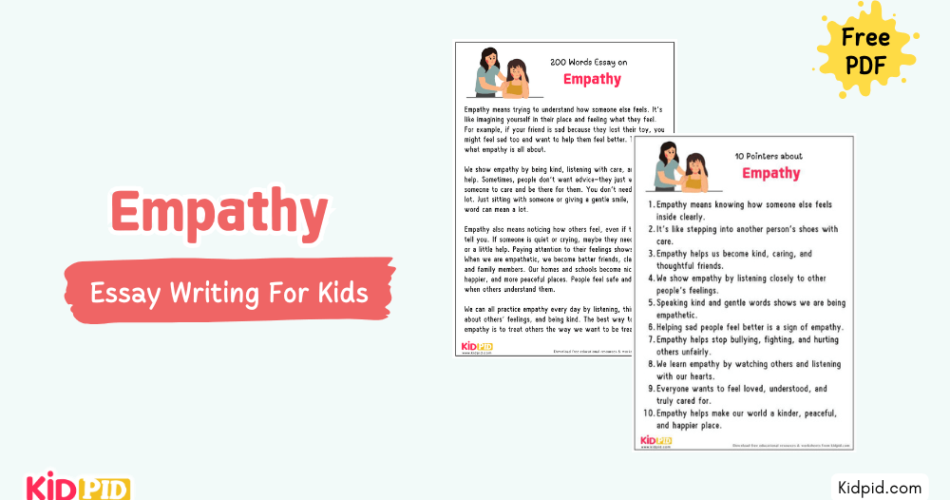
Essay on Empathy shows the importance of understanding and sharing others’ feelings.
Empathy means understanding how others feel and caring about them. It helps us become kind, helpful, and respectful. When we show empathy, we make others feel heard and supported. It is important in friendships, families, and schools, helping everyone live together with love, care, and a better understanding.
Contents
10 Pointers About Empathy
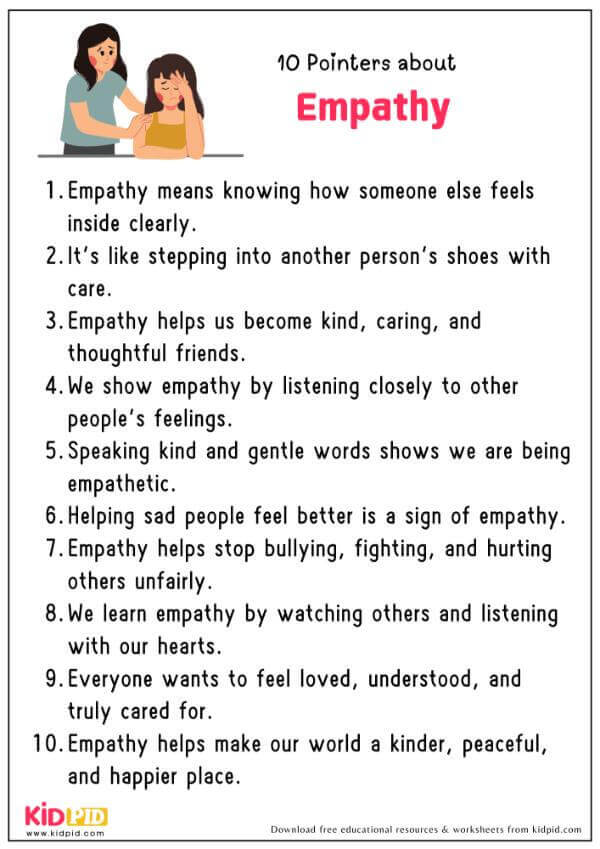
- Empathy means knowing how someone else feels inside clearly.
- It’s like stepping into another person’s shoes with care.
- Empathy helps us become kind, caring, and thoughtful friends.
- We show empathy by listening closely to other people’s feelings.
- Speaking kind and gentle words shows we are being empathetic.
- Helping sad people feel better is a sign of empathy.
- Empathy helps stop bullying, fighting, and hurting others unfairly.
- We learn empathy by watching others and listening with our hearts.
- Everyone wants to feel loved, understood, and truly cared for.
- Empathy helps make our world a kinder, peaceful, and happier place.
Short Essay On Empathy
Essay On Empathy in 100 Words
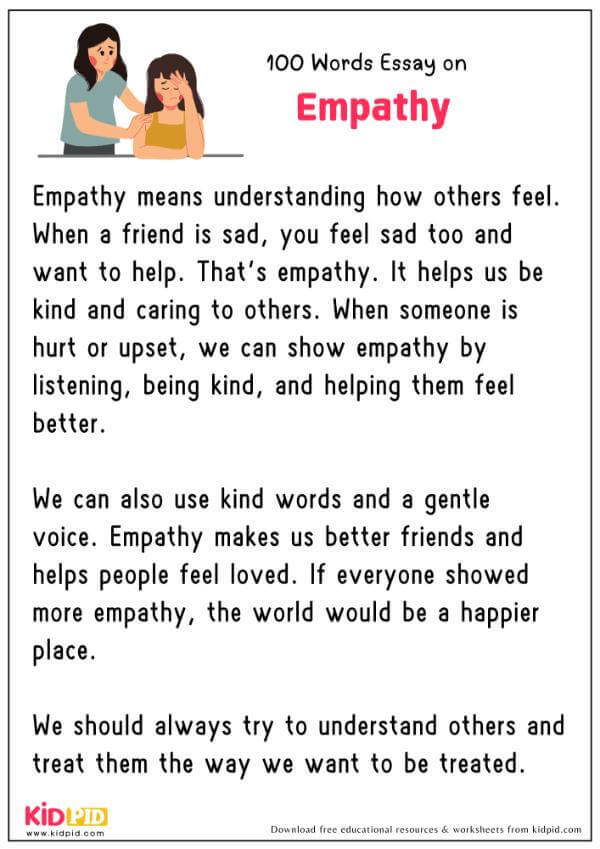
Empathy means understanding how others feel. When a friend is sad, you feel sad too and want to help. That’s empathy. It helps us be kind and caring to others. When someone is hurt or upset, we can show empathy by listening, being kind, and helping them feel better. We can also use kind words and a gentle voice. Empathy makes us better friends and helps people feel loved. If everyone showed more empathy, the world would be a happier place. We should always try to understand others and treat them the way we want to be treated.
Essay On Empathy in 200 Words
Empathy means trying to understand how someone else feels. It’s like imagining yourself in their place and feeling what they feel. For example, if your friend is sad because they lost their toy, you might feel sad too and want to help them feel better. That’s what empathy is all about.
We show empathy by being kind, listening with care, and offering help. Sometimes, people don’t want advice—they just want someone to care and be there for them. You don’t need to say a lot. Just sitting with someone or giving a gentle smile, or a kind word can mean a lot.
Empathy also means noticing how others feel, even if they don’t tell you. If someone is quiet or crying, maybe they need comfort or a little help. Paying attention to their feelings shows you care.
When we are empathetic, we become better friends, classmates, and family members. Our homes and schools become nicer, happier, and more peaceful places. People feel safe and loved when others understand them.
We can all practice empathy every day by listening, thinking about others’ feelings, and being kind. The best way to show empathy is to treat others the way we want to be treated.
Essay On Empathy in 300 Words
Empathy is the ability to understand and share someone else’s feelings. It’s more than just being nice — it means thinking about what another person is going through. When we see a friend who is sad, scared, or angry, and we care about how they feel, we are showing empathy.
Imagine if your friend falls and hurts their knee. You might feel sorry for them and help them up, or get a teacher. You are putting yourself in their shoes — that’s what empathy means. It’s not just about big moments either. If someone feels left out, we can invite them to join us. If a friend is happy, we can celebrate with them. That’s empathy, too!
Empathy helps us build strong friendships, avoid arguments, and solve problems calmly. It teaches us to listen more, talk less, and care deeply. We don’t always know what someone is going through, but if we try to be understanding and kind, we’re being empathetic.
We can grow our empathy by asking, “How would I feel if that happened to me?” or “What can I do to make this person feel better?” When everyone in a classroom, home, or playground shows empathy, it becomes a safe and happy place.
Long Essay On Empathy in 500 Words
Introduction
Empathy is the ability to understand and share the feelings of another person. It is more than just offering comfort or advice—it is about deeply connecting with someone else’s emotions. Empathy helps us build stronger relationships, promotes kindness, and fosters a sense of belonging and love among people. It is a vital quality that can make the world a much kinder place. By practicing empathy, we show others that we care about their feelings and experiences.
Empathy
Empathy means stepping into another person’s shoes and understanding how they feel, whether they are happy, sad, excited, or upset. For example, if a friend is feeling lonely, you might feel their sadness and want to support them. Similarly, if someone is celebrating a victory, you share in their joy and happiness. By recognizing and acknowledging others’ feelings, we become more connected and compassionate individuals. Empathy is essential because it makes us more aware of how our actions and words impact those around us.
Importance of Empathy
Empathy plays a crucial role in creating strong relationships and building a sense of community. When we empathize with others, we are more likely to be supportive and understanding. This leads to better communication, fewer misunderstandings, and less conflict. Whether at home, in school, or among friends, empathy strengthens bonds and helps everyone feel valued.
Empathy is especially important during difficult times. When someone is upset, they may not want advice—they might just want someone to listen and understand. By showing empathy, we offer a sense of comfort and support. It’s not always about fixing problems; sometimes, it’s about being present and acknowledging their emotions. When we express empathy, we create safe spaces where people feel heard and cared for.
To Show Empathy
Showing empathy can be simple, yet powerful. It starts with listening—listening to what someone is saying, without interrupting or offering solutions right away. It’s about making eye contact, offering a warm smile, and using comforting words. Empathy can also be shown through actions, like offering a hug, helping someone in need, or simply spending time with them.
One key to practicing empathy is to be aware of non-verbal cues. Sometimes, people may not directly say they are upset, but their body language or tone of voice can give us clues. When we notice these signs, we can approach them with kindness and ask how we can help.
Another important aspect of empathy is the ability to put yourself in someone else’s position. Asking questions like, “How would I feel if that happened to me?” can help us understand how others might be feeling in certain situations. This understanding can guide our actions and help us be more considerate in our interactions.
The Role of Empathy in Different Settings
Empathy plays a crucial role in various aspects of life. In school, it helps students work together, resolve conflicts, and support one another. A classroom filled with empathy is a peaceful, welcoming environment where everyone feels safe and valued. When students empathize with one another, they are more likely to offer help and encouragement, making learning a collaborative and positive experience.
At home, empathy strengthens family bonds. By understanding each other’s feelings, family members can create an environment where everyone feels supported. Children who learn empathy at home are more likely to practice it outside of their families as well, contributing to a more empathetic society.
In the workplace, empathy fosters teamwork, trust, and effective communication. It helps colleagues understand each other’s challenges and work together to overcome them. A workplace where empathy is valued leads to higher morale, better collaboration, and a more positive environment for all employees.
Challenges to Practicing Empathy
While empathy is a powerful quality, it can sometimes be challenging to practice. In today’s fast-paced world, people may be focused on their problems and may find it hard to connect with others. Additionally, cultural differences, misunderstandings, and personal biases can sometimes make it difficult to empathize with people from different backgrounds.
However, empathy is a skill that can be developed over time. By actively working to understand others’ emotions, being patient, and making an effort to see the world from different perspectives, we can improve our empathy skills.
Conclusion
Empathy is an essential part of being a caring, understanding, and compassionate person. It allows us to connect with others on a deeper level, build meaningful relationships, and create positive environments in our homes, schools, and communities. By practicing empathy every day, we can make the world a kinder, more supportive place for everyone. Whether it’s through listening, offering help, or simply showing you care, empathy can make a big difference in the lives of others. It’s a quality that makes us more human and helps us live harmoniously with others.

FAQs on Empathy
Q1. What is empathy?
Ans. Empathy is understanding and sharing someone else’s feelings.
Q2. Why is empathy important?
Ans. Empathy strengthens relationships, builds understanding, and reduces conflicts.
Q3. How does empathy help during difficult times?
Ans. It offers support by listening and understanding emotions.
Q4. How can you show empathy to others?
Ans. By listening, offering comfort, and showing kindness.
Q5. What role does empathy play in schools?
Ans. It promotes teamwork, resolves conflicts, and supports students.
Q6. Why is empathy important at home?
Ans. It strengthens family bonds and promotes mutual understanding.
Q7. What challenges exist in practicing empathy?
Ans. Cultural differences, misunderstandings, and personal biases may interfere.
Q8. How does empathy improve workplace communication?
Ans. It fosters teamwork, trust, and understanding among colleagues.
Q9. What is the key to practicing empathy?
Ans. Listening actively, being patient, and understanding others’ emotions.
Q10. How can empathy make the world kinder?
Ans. Empathy fosters kindness, support, and a sense of community.
Empathy helps us understand others and build strong, caring relationships. It makes the world kinder. We should always listen, care, and try to feel what others are going through.Explore more on our website with a variety of paragraphs, essays, worksheets, flashcards, Quizzes, and other interactive resources. Don’t forget to follow us on YouTube & Facebook.
You May Like This:
Essay – Rani Lakshmi Bai: The Warrior Queen Of Jhansi

Rani Lakshmi Bai (born Manikarnika Tambe, November 19, 1828, in Varanasi; died June 18, 1858, near Gwalior) was the fearless Queen of Jhansi who fought bravely against British rule in the 1857 rebellion, symbolizing courage and resistance.
Essay – Priyanka Chopra: A Global Ambassador of Indian Culture

Priyanka Chopra Jonas (born July 18, 1982, in Jamshedpur) is an award-winning Indian actress, former Miss World, singer, producer and UNICEF Goodwill Ambassador, who made a global impact in Bollywood and Hollywood.
Essay – Indira Gandhi: India’s First Female Prime Minister

Indira Gandhi (born November 19, 1917, in Allahabad; died October 31, 1984) was India’s first (and only) female Prime Minister. Known as the “Iron Lady,” she led bold reforms and tough leadership during her long tenure across key wars and crises.
Essay – Shahrukh Khan: The King of Bollywood

Shah Rukh Khan (born November 2, 1965, in New Delhi) is India’s iconic “King of Bollywood.” A beloved actor-producer known for films like DDLJ, Chak De! India and Jawan.