
Ruby Bridges was a brave young girl who made history by becoming the first African-American student to attend an all-white school in the U.S. Her courage helped break racial barriers in education. This essay explores her inspiring journey through 10 key points and thoughtful questions for better understanding.
Contents
10 Pointers About Ruby Bridges
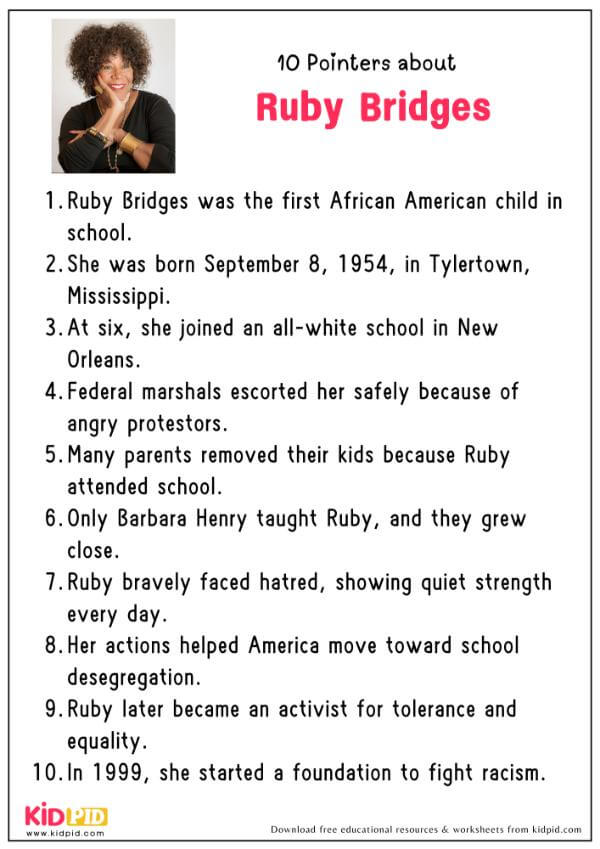
- Ruby Bridges was the first African American child to attend school.
- She was born September 8, 1954, in Tylertown, Mississippi.
- At six, she joined an all-white school in New Orleans.
- Federal marshals escorted her safely because of angry protestors.
- Many parents removed their kids because Ruby attended school.
- Only Barbara Henry taught Ruby, and they grew close.
- Ruby bravely faced hatred, showing quiet strength every day.
- Her actions helped America move toward school desegregation.
- Ruby later became an activist for tolerance and equality.
- In 1999, she started a foundation to fight racism.
Short Essay On Ruby Bridges
Essay On Ruby Bridges in 100 Words

Ruby Bridges was a brave little girl who changed history. In 1960, at just six years old, she became the first Black child to attend an all-white school in New Orleans. Every day, angry crowds shouted at her, but she stayed strong. U.S. marshals protected her as she walked to school. Inside, only one teacher, Mrs. Henry, was kind to her. Ruby’s courage helped end segregation in schools. Later, she worked to teach others about fairness and kindness. Ruby proved that even a child can make a big difference in the world.
Essay On Ruby Bridges in 200 Words
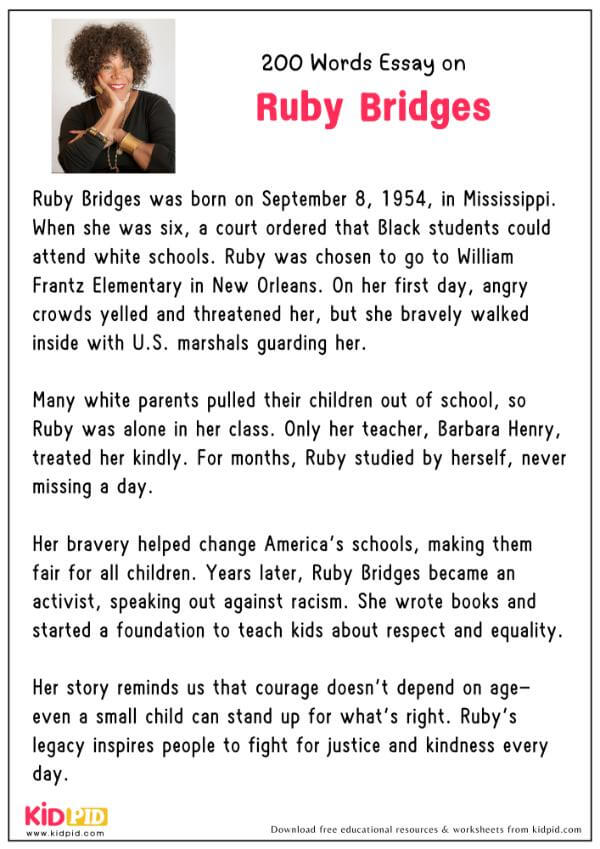
Ruby Bridges was born on September 8, 1954, in Mississippi. When she was six, a court ordered that Black students could attend white schools. Ruby was chosen to go to William Frantz Elementary in New Orleans. On her first day, angry crowds yelled and threatened her, but she bravely walked inside with U.S. marshals guarding her.
Many white parents pulled their children out of school, so Ruby was alone in her class. Only her teacher, Barbara Henry, treated her kindly. For months, Ruby studied by herself, never missing a day. Her bravery helped change America’s schools, making them fair for all children.
Years later, Ruby Bridges became an activist, speaking out against racism. She wrote books and started a foundation to teach kids about respect and equality. Her story reminds us that courage doesn’t depend on age; even a small child can stand up for what’s right. Ruby’s legacy inspires people to fight for justice and kindness every day.
Essay On Ruby Bridges in 300 Words
Ruby Bridges made history as the first African American child to attend an all-white elementary school in the South. Born in Mississippi in 1954, she moved to New Orleans, where schools were still segregated despite laws against it. In 1960, a judge ordered that Black students could attend white schools, and Ruby was one of six chosen for integration.
On November 14, 1960, six-year-old Ruby walked into William Frantz Elementary, protected by federal marshals. Angry crowds shouted cruel words and held hateful signs, but Ruby stayed calm. Many white parents refused to let their children attend school with her, so Ruby spent the year as the only student in her class. Her teacher, Barbara Henry, taught her with kindness while others ignored her. Ruby’s family also faced hardships. Her father lost his job, and stores refused to serve them. Still, Ruby never gave up.
Her bravery helped push school desegregation forward. Over time, more Black students joined white schools, and Ruby’s actions became a symbol of the Civil Rights Movement. As an adult, Ruby Bridges became a speaker and author, sharing her story to teach tolerance. In 1999, she founded the Ruby Bridges Foundation to promote racial unity.
Today, Ruby’s legacy lives on in books, movies, and even a famous Norman Rockwell painting. She reminds us that courage comes in all sizes; even a child can change the world by standing up for justice. Ruby’s story teaches us to be brave, kind, and fair, no matter how hard things seem.
Long Essay On Ruby Bridges in 500 Words
Introduction
Ruby Bridges is an American hero who made history as the first Black child to attend an all-white elementary school in the South. Born on September 8, 1954, in Mississippi, Ruby grew up during a time when Black and white children were not allowed to go to the same schools. Her bravery helped change education in America forever.
Ruby’s Big Challenge
In 1960, six-year-old Ruby was chosen to attend William Frantz Elementary School in New Orleans, Louisiana. Before this, schools were segregated, meaning Black and white students were kept apart. Ruby had to pass a difficult test to prove she could attend the all-white school. Even though she passed, many people were angry and did not want her there.
A Scary First Day
On Ruby’s first day, she had to be escorted by U.S. Marshals (federal police officers) because crowds of angry people shouted at her. Some even threatened to hurt her. Ruby stayed brave, walking tall while holding her mother’s hand. She later said she thought the crowd was like a Mardi Gras parade because she didn’t fully understand their hate.
Ruby’s Teacher and Classroom
Because parents refused to let their children be in class with Ruby, she was the only student in her classroom. Her teacher, Mrs. Barbara Henry, was kind and taught Ruby alone for the whole year. Ruby worked hard, never missing a day of school, even though it was scary.
How Ruby Changed History
Ruby’s courage helped end segregation in schools. More Black students began attending white schools, and soon, segregation became illegal everywhere. Ruby’s story showed that even a small child could make a big difference.
Ruby Bridges Today
As an adult, Ruby became an activist, working to promote equality and education. She wrote a book called Through My Eyes to share her story. Schools and libraries honor her bravery, and she continues to inspire children today.
Conclusion
Ruby Bridges proved that bravery comes in all sizes. Even as a little girl, she stood strong against unfairness and helped change America for the better. Her story teaches us that one person’s courage can make a big difference.

FAQs on Ruby Bridges
Q1. Who was Ruby Bridges?
Ans. She was the first Black child to attend an all-white school in the South.
Q2. How old was Ruby when she integrated the school?
Ans. She was six years old.
Q3. What was the name of the school Ruby attended?
Ans. William Frantz Elementary School.
Q4. Why did Ruby need U.S. marshals with her?
Ans. To protect her from angry crowds.
Q5. Who was the only teacher who agreed to teach Ruby?
Ans. Mrs. Barbara Henry.
Q6. What happened to Ruby’s classmates when she joined the school?
Ans. Many white parents pulled their children out of school.
Q7. What was the name of the foundation Ruby created?
Ans. The Ruby Bridges Foundation.
Q8. What book did Ruby write to share her story?
Ans. Through My Eyes.
Q9. How did Ruby’s actions help the country?
Ans. She helped end segregation in schools.
Q10. What does Ruby Bridges’ story teach us today?
Ans. It teaches us about courage, fairness, and standing up for what’s right.
Ruby Bridges showed great courage and strength as a young girl who helped change history. Her story teaches us about bravery, equality, and the power of standing up for what’s right. To increase your knowledge further, visit our website and explore more paragraphs, essays, worksheets, flashcards, Quizzes, and other interactive resources. Make sure to follow us on YouTube & Facebook.
You might also like

Michael Jordan, born February 17, 1963, revolutionized basketball with unmatched skill, leadership, and iconic dunks. Winning six NBA titles and five MVPs, he inspired generations through determination and excellence.

Langston Hughes, born February 1, 1902, emerged as a leading voice of the Harlem Renaissance. He fused jazz‑inspired rhythms with poetry, spotlighting African‑American culture, hope, and racial pride.
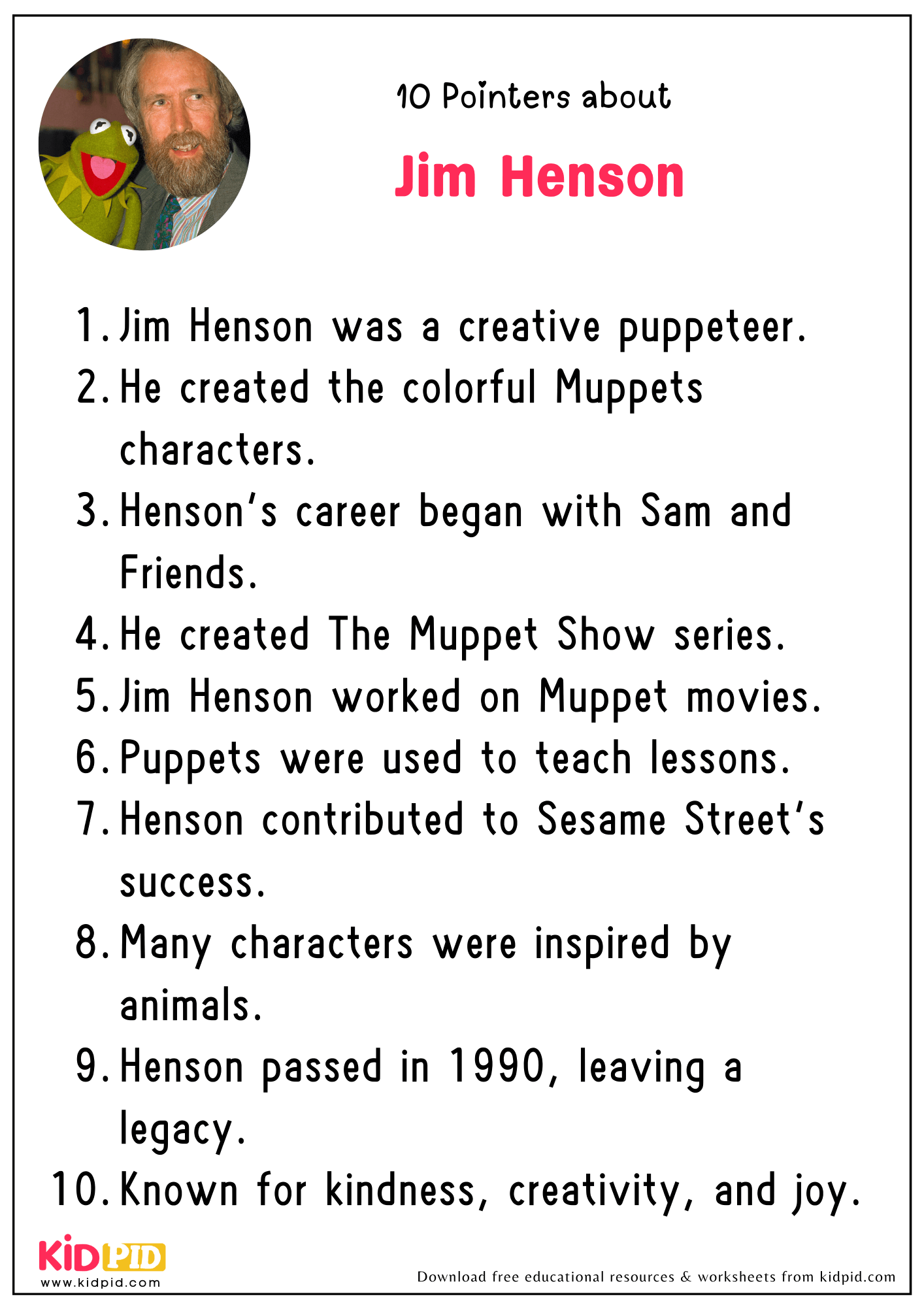
Jim Henson was a visionary puppeteer whose creativity gave us the Muppets, Sam and Friends, The Muppet Show, Sesame Street, and films like The Dark Crystal and Labyrinth, leaving an enduring legacy.

Born October 28, 1955, Bill Gates co‑founded Microsoft at 19, revolutionizing personal computing. After stepping down, he devoted himself to philanthropy through the Bill & Melinda Gates Foundation, impacting health and education worldwide.
Jane Goodall, born April 3, 1934, in London, studied wild chimpanzees in Tanzania. Founding the Jane Goodall Institute, she taught global conservation through research, education, and her lifelong animal advocacy.