Liberty means the freedom to think, speak, and act without unnecessary restrictions, while respecting the rights of others. It is essential for personal growth, social harmony, and democracy. This essay highlights the meaning, importance, and types of liberty, supported by key points and questions for deeper understanding.
Contents
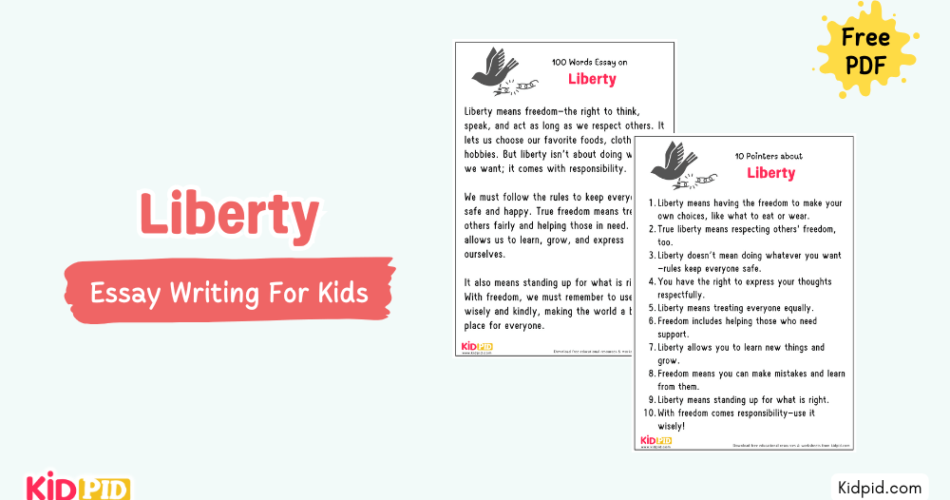
10 Pointers About Liberty

- Liberty means having the freedom to make your own choices, like what to eat or wear.
- True liberty means respecting others’ freedom, too.
- Liberty doesn’t mean doing whatever you want; rules keep everyone safe.
- You have the right to express your thoughts respectfully.
- Liberty means treating everyone equally.
- Freedom includes helping those who need support.
- Liberty allows you to learn new things and grow.
- Freedom means you can make mistakes and learn from them.
- Liberty means standing up for what is right.
- With freedom comes responsibility. Use it wisely!
Short Essay On Liberty
Essay On Liberty in 100 Words
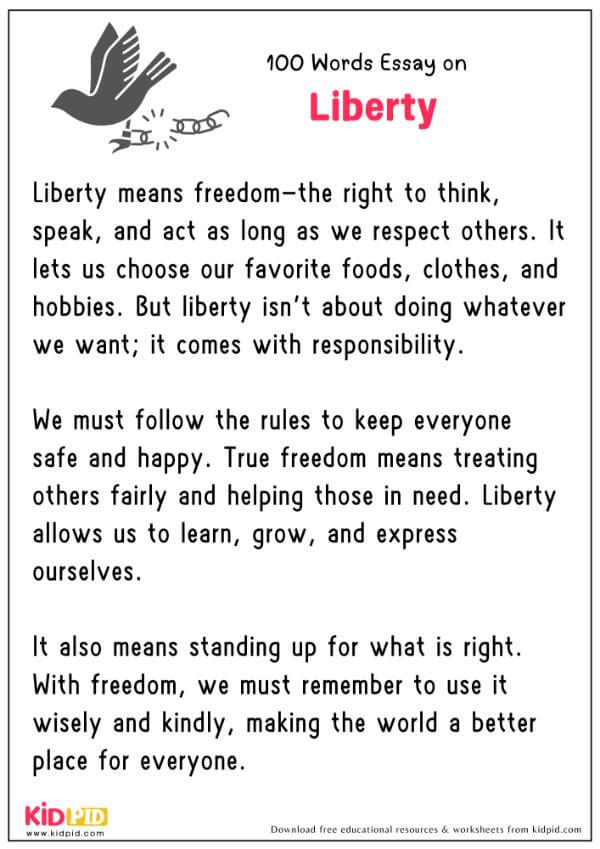
Liberty means freedom—the right to think, speak, and act as long as we respect others. It lets us choose our favorite foods, clothes, and hobbies. But liberty isn’t about doing whatever we want; it comes with responsibility. We must follow the rules to keep everyone safe and happy. True freedom means treating others fairly and helping those in need. Liberty allows us to learn, grow, and express ourselves. It also means standing up for what is right. With freedom, we must remember to use it wisely and kindly, making the world a better place for everyone.
Essay On Liberty in 200 Words
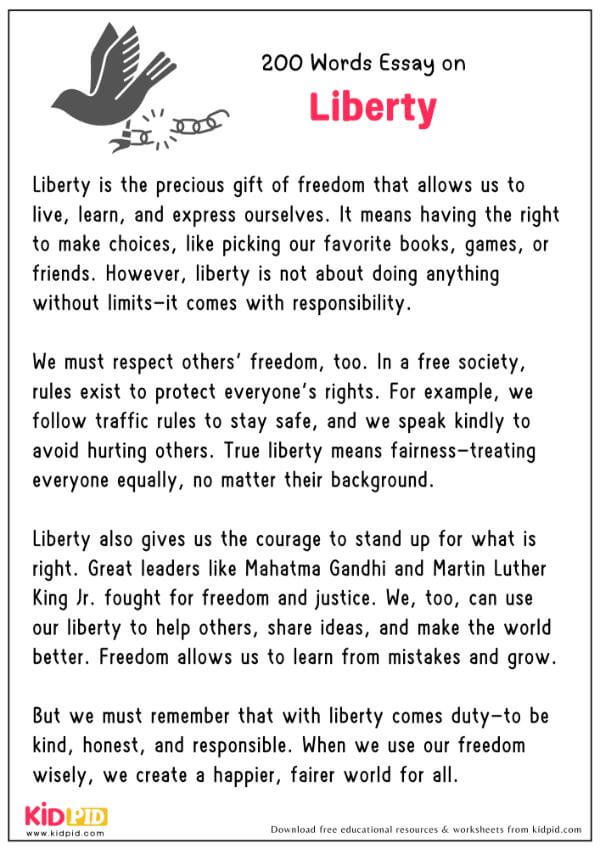
Liberty is the precious gift of freedom that allows us to live, learn, and express ourselves. It means having the right to make choices, like picking our favorite books, games, or friends. However, liberty is not about doing anything without limits—it comes with responsibility. We must respect others’ freedom, too.
In a free society, rules exist to protect everyone’s rights. For example, we follow traffic rules to stay safe, and we speak kindly to avoid hurting others. True liberty means fairness—treating everyone equally, no matter their background.
Liberty also gives us the courage to stand up for what is right. Great leaders like Mahatma Gandhi and Martin Luther King Jr. fought for freedom and justice. We, too, can use our liberty to help others, share ideas, and make the world better.
Freedom allows us to learn from mistakes and grow. But we must remember that with liberty comes duty—to be kind, honest, and responsible. When we use our freedom wisely, we create a happier, fairer world for all.
Essay On Liberty in 300 Words
Liberty is one of the most important values in life. It means the freedom to think, speak, and act while respecting others. Imagine a world where you could choose your favorite food, wear clothes you like, and play games you enjoy—that’s liberty! But freedom doesn’t mean doing anything without rules. Just like in a game, rules help everyone play fairly and stay safe.
Liberty allows us to express our thoughts, but we must also listen to others. If everyone spoke without respect, there would be chaos. True freedom means balancing our rights with responsibility. For example, we have the liberty to draw on paper, but not on someone else’s property.
History shows us how people fought for liberty. Leaders like Mahatma Gandhi and Nelson Mandela struggled for freedom against unfair rules. Their courage reminds us that liberty is precious and worth protecting. Even today, many people work to ensure everyone has equal rights.
In daily life, liberty means making choices—like picking a book to read or a sport to play. It also means standing up against bullying or unfairness. Freedom helps us learn, grow, and become better people. But we must remember that our actions affect others. If we litter, we harm nature; if we cheat, we hurt fairness.
True liberty is about using freedom wisely—helping others, sharing ideas, and following rules that keep society peaceful. When we respect each other’s rights, we create a world where everyone can thrive. Liberty is not just a right; it’s a responsibility we must cherish and protect for a brighter future.
Long Essay On Liberty in 500 Words
Introduction
Liberty, or freedom, is one of the most precious gifts we have. It allows us to think, speak, and act in ways that reflect who we are. Liberty is not just about having the ability to do anything we want; it is about using our freedom in a way that respects the rights and freedoms of others. Without liberty, life would be very different, as it would be difficult for people to express themselves or make their own choices. However, it is important to remember that true liberty comes with responsibility. In this essay, we will explore the meaning of liberty, how it affects our lives, and the responsibilities that come with freedom.
Liberty
Liberty means freedom—the right to make choices and live according to our values. This can be seen in the small, everyday decisions we make, such as what to wear, what food to eat, or which activities to enjoy. However, liberty does not give us the right to harm others. In a society that values liberty, we have the freedom to express our opinions, but we must do so in a respectful way that does not harm others.
True liberty is about having the freedom to do things that contribute to our happiness while also respecting others’ rights. For example, while we have the liberty to express our thoughts and ideas, we must not use our words to hurt others or spread hatred. Similarly, we have the freedom to enjoy our hobbies and activities, but we must do so in a way that does not interfere with the freedoms of others.
The Role of Responsibility in Liberty
With liberty comes responsibility. This means that while we enjoy our freedom, we must also think about how our actions affect others. In a society where everyone enjoys liberty, people must follow rules that help keep things fair and safe. For example, traffic laws ensure that people can drive safely, and anti-bullying laws ensure that everyone can feel safe at school.
Liberty is not about doing whatever we want without consequences. It is about making responsible decisions and using our freedom in a way that benefits not just ourselves, but also the people around us. Responsibility also means standing up for what is right and helping those in need, just as historical figures like Mahatma Gandhi and Martin Luther King Jr. did. They fought for freedom and equality, teaching us that liberty must always be used for the greater good.
Liberty and Equality
Another important aspect of liberty is equality. Everyone should have the same rights and opportunities, no matter who they are or where they come from. Liberty is about fairness—treating everyone with respect, kindness, and equality. Sadly, not everyone in the world enjoys the same liberties. That is why people continue to fight for freedom and equality in many parts of the world today.
In a world where liberty is respected, people are free to follow their passions, build relationships, and make choices that lead to happiness. However, we must protect the rights of others while doing so. Whether it’s voting, protesting, or simply being kind, we must always remember that liberty is not just about freedom—it’s about creating a world where everyone can live freely and happily.
Conclusion
In conclusion, liberty is a valuable right that allows us to live our lives with freedom and choice. It gives us the ability to express ourselves, make decisions, and pursue our happiness. However, liberty comes with the responsibility to respect others and follow rules that ensure fairness and safety. True liberty is about balancing our rights with the rights of others. It teaches us to use our freedom wisely and to stand up for what is right. When we cherish and protect liberty, we create a world where everyone can thrive. Therefore, liberty is not only a right but a responsibility we must all uphold for a better future.

FAQs on Liberty
Q1. What does liberty mean?
Ans. Liberty means freedom, the right to think, speak, and act while respecting others.
Q2. What responsibilities come with liberty?
Ans. With liberty, we must respect others’ rights, follow rules, and make responsible decisions.
Q3. How does liberty help us make choices?
Ans. Liberty allows us to choose things like what to eat, wear, and do, based on our personal preferences.
Q4. Why is it important to respect others’ freedom?
Ans. Respecting others’ freedom ensures fairness and prevents harm, allowing everyone to enjoy their liberty equally.
Q5. How do historical figures like Mahatma Gandhi and Martin Luther King Jr. relate to liberty?
Ans. They fought for freedom and equality, teaching us that liberty should be used for the greater good.
Q6. What role do rules play in a society that values liberty?
Ans. Rules help maintain fairness and safety, ensuring everyone can enjoy their freedom without harm to others.
Q7. Why is liberty not about doing whatever we want?
Ans. Liberty comes with responsibility, and we must consider how our actions affect others and follow rules for a peaceful society.
Q8. How does liberty promote equality?
Ans. Liberty ensures that everyone has the same rights and opportunities, promoting fairness and respect for all.
Q9. What can happen if we use liberty irresponsibly?
Ans. Irresponsible use of liberty can harm others, create unfair situations, and disrupt society’s peace.
Q10. What is the main message about liberty and fairness?
Ans. True liberty means using freedom responsibly and fairly, ensuring that everyone’s rights are respected and protected.
Liberty is the foundation of freedom, allowing individuals to think, speak, and act without fear. It nurtures equality, justice, and growth, making life meaningful while ensuring responsibility toward society and the nation.
Visit our website to explore a wide collection of paragraphs, essays, worksheets, flashcards, Quizzes, and other interactive resources. Also, remember to follow us on YouTube & Facebook.
You might also like
Nepal: Essay, 10 Pointers & Questions
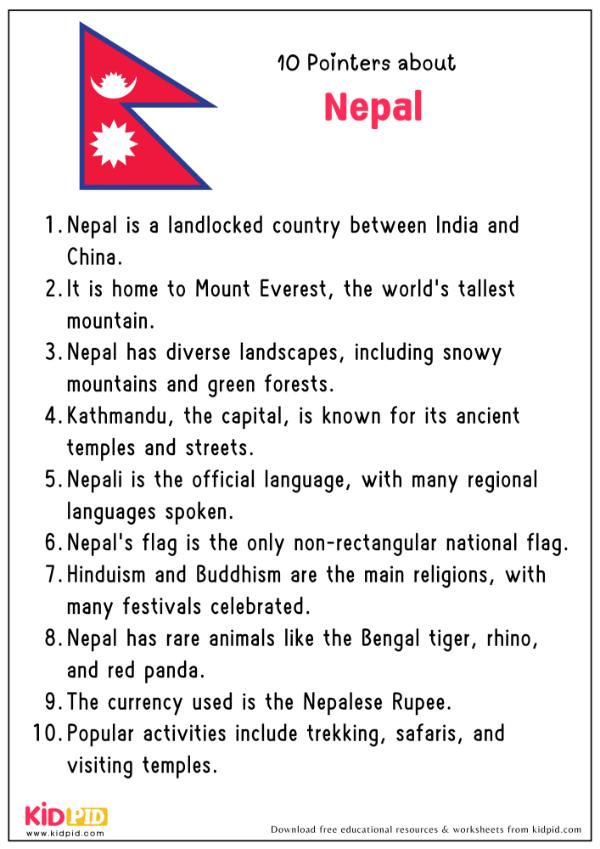
Nepal, nestled between India and China, is famed for Mount Everest, diverse landscapes, ancient temples in Kathmandu, vibrant Hindu–Buddhist festivals, a unique non-rectangular flag, rare wildlife, trekking adventures, and the Nepali rupee.
Ocean Pollution: Essay, 10 Pointers & Questions

Ocean pollution—mostly from plastics, oil spills, chemicals, and noise—harms marine life, creates ‘dead zones,’ and risks human health. Schools, clean-ups, laws, and eco-tech help restore our oceans.
Sleep: Essay, 10 Pointers and Questions

Sleep is essential for growth and brain health. Kids need 9–12 hours nightly. Good routines, a dark room, exercise, and limiting screens boost rest. Proper sleep sharpens memory, mood, and learning.
Relationship: Essay, 10 Pointers & Questions

Relationships—strong bonds with family, friends, classmates—thrive on kindness, listening, sharing, honesty, respect, support, laughter, forgiveness, and quality time, creating trust, joy, empathy, and a caring lifelong connection.