

Quaid-e-Azam Muhammad Ali Jinnah was the founder of Pakistan and a great leader known for his vision, honesty, and determination. This essay on Quaid-e-Azam, with 10 pointers and questions, explains his life, struggle for independence, and role in shaping Pakistan, inspiring students to learn leadership, unity, and dedication.
Contents
10 Pointers About Quaid-e-Azam

- Quaid-e-Azam Muhammad Ali Jinnah is known as the founder of Pakistan.
- He was born on December 25, 1876, in Karachi, British India.
- He studied law in England and became a successful lawyer.
- Jinnah led the All-India Muslim League to fight for the rights of Muslims.
- He strongly believed that Muslims needed a separate country to protect their culture and religion.
- He played a key role in the creation of Pakistan in 1947.
- Jinnah became the first Governor-General of Pakistan.
- He was known for his powerful speeches and strong leadership.
- He worked tirelessly for the freedom of Muslims in India.
- Quaid-e-Azam passed away on September 11, 1948, just a year after Pakistan’s independence.
Short Essay On Quaid-e-Azam
Essay On Quaid-e-Azam in 100 Words

Quaid-e-Azam, Muhammad Ali Jinnah, was the founder of Pakistan. Born on December 25, 1876, in Karachi, he became a prominent lawyer and politician. Jinnah fought for the rights of Muslims in India, believing they deserved a separate nation. His dedication led to the creation of Pakistan on August 14, 1947. Known as “Quaid-e-Azam,” meaning “Great Leader,” he is remembered for his vision and leadership. Jinnah emphasized the importance of unity, faith, and discipline among the people. He served as Pakistan’s first Governor-General until his death on September 11, 1948, leaving a lasting legacy.
Essay On Quaid-e-Azam in 200 Words

Muhammad Ali Jinnah, known as Quaid-e-Azam, was born on December 25, 1876, in Karachi. He was a brilliant lawyer and politician who played a vital role in the creation of Pakistan. Jinnah dedicated his life to advocating for the rights of Muslims in India, believing they needed a separate homeland to ensure their rights and identity. His efforts culminated in the formation of Pakistan on August 14, 1947.
As the first Governor-General of Pakistan, Jinnah worked tirelessly to lay the foundation of the new nation. He believed in the principles of unity, faith, and discipline, urging the people to work together for a prosperous future. His vision for Pakistan was one where all citizens, regardless of religion, could live in harmony.
Tragically, Quaid-e-Azam passed away on September 11, 1948, just a year after Pakistan’s independence. His leadership and dedication have made him a symbol of strength and resilience for the nation. Jinnah’s legacy continues to inspire generations, reminding Pakistanis of the importance of hard work and unity in achieving their dreams.
Essay On Quaid-e-Azam in 300 Words
Muhammad Ali Jinnah, affectionately known as Quaid-e-Azam, was born on December 25, 1876, in Karachi. He emerged as a prominent lawyer and politician in British India and became the leading figure in the struggle for Muslims’ rights. Jinnah believed that Muslims in India needed a separate nation to safeguard their political and cultural identity. His relentless pursuit of this goal led to the establishment of Pakistan on August 14, 1947.
As the first Governor-General of Pakistan, Quaid-e-Azam focused on building the newly independent nation. He envisioned a country where people of all backgrounds could coexist peacefully. Jinnah often emphasized the importance of unity, faith, and discipline, encouraging citizens to work together for the nation’s progress. His speeches and writings inspired countless individuals, instilling hope and determination in the hearts of many.
Despite his declining health, Jinnah remained committed to his vision for Pakistan. He worked tirelessly to address the challenges facing the young nation, from economic issues to social harmony. Tragically, he passed away on September 11, 1948, just a year after Pakistan gained independence. His death left a profound impact on the nation, and he is remembered as a symbol of perseverance and dedication.
Quaid-e-Azam’s legacy lives on in the hearts of Pakistanis. Schools and institutions across the country honor his contributions, ensuring that future generations remember the sacrifices made for their freedom. His life story serves as a powerful reminder of the importance of leadership, vision, and the relentless pursuit of justice.
Long Essay On Quaid-e-Azam in 500 Words
Introduction
Muhammad Ali Jinnah, known as Quaid-e-Azam, was born on December 25, 1876, in Karachi, which was then part of British India. He came from a merchant family and was the eldest of seven siblings. Jinnah was a bright student and showed great promise from a young age. He went to England to study law and became one of the youngest Indians to qualify as a barrister. This education laid the foundation for his future career in politics and leadership.
Political Career
Jinnah began his political journey in the Indian National Congress, where he initially worked for the rights of all Indians. However, as time went on, he realized that Muslims needed a separate platform to voice their concerns. He joined the All India Muslim League and quickly rose to prominence. He was a skilled orator and argued passionately for the rights of Muslims in India. Jinnah believed that Muslims should have their own nation where they could live freely and follow their cultural and religious practices.
Struggle for Pakistan
The struggle for Pakistan began in the 1940s, as Jinnah and his colleagues worked tirelessly to secure a separate homeland for Muslims. He emphasized the need for unity among Muslims and encouraged them to participate actively in the political process. His famous Lahore Resolution in 1940 called for the establishment of independent states for Muslims in the northwest and eastern zones of India. Jinnah’s determination and leadership inspired millions, and he became the voice of the Muslim community.
Founding of Pakistan
After years of struggle, Pakistan was finally created on August 14, 1947. Jinnah became the first Governor-General of the new nation. He faced numerous challenges, including the migration crisis and the need to establish a government. Despite his declining health, Jinnah worked tirelessly to lay the foundations of Pakistan. He wanted to create a country where people of all faiths could live in harmony and enjoy equal rights. His vision was for a democratic and progressive nation.
Legacy
Quaid-e-Azam passed away on September 11, 1948, just a year after Pakistan’s independence. His death was a great loss to the nation, but his legacy continues to inspire millions. Jinnah is remembered as a symbol of perseverance, courage, and leadership. His principles of unity, faith, and discipline remain relevant today. Schools, institutions, and parks are named in his honor, reminding Pakistanis of the sacrifices he made for their freedom.
Conclusion
Quaid-e-Azam Muhammad Ali Jinnah is not just a historical figure; he is a source of inspiration for future generations. His dedication to the cause of Muslims in India and his unwavering commitment to creating Pakistan have left an indelible mark on the nation. His life teaches us the importance of hard work, determination, and the pursuit of justice. As Pakistan continues to grow and develop, Jinnah’s vision serves as a guiding light for all its citizens.

FAQs on Quaid-e-Azam
Q1. When was Muhammad Ali Jinnah born?
Ans. He was born on December 25, 1876.
Q2. What title is Muhammad Ali Jinnah known by?
Ans. He is known as “Quaid-e-Azam,” meaning “Great Leader.”
Q3. Why did Jinnah believe Muslims needed a separate nation?
Ans. He believed Muslims needed a separate nation to protect their rights and identity.
Q4. When was Pakistan founded
Ans. Pakistan was founded on August 14, 1947.
Q5. What role did Jinnah hold after Pakistan’s independence?
Ans. He served as the first Governor-General of Pakistan.
Q6. What three principles did Jinnah emphasize?
Ans. He emphasized unity, faith, and discipline.
Q7. What major event did Jinnah lead in 1940?
Ans. He led the Lahore Resolution, which called for a separate Muslim state.
Q8. Where did Jinnah receive his law education?
Ans. He studied law in England and became a barrister.
Q9. When did Jinnah pass away?
Ans. He passed away on September 11, 1948.
Q10. How is Jinnah’s legacy honored in Pakistan today?
Ans. His legacy is honored through schools, institutions, and monuments named after him.
Quaid-e-Azam was a true leader and the father of Pakistan. This essay with 10 pointers and questions highlights his vision, struggle, and legacy, teaching unity, discipline, and determination. Visit our website for a wide range of paragraphs, essays, worksheets, flashcards, Quizzes, and other interactive resources. Keep in touch by following us on YouTube & Facebook.
You might also like
Essay – Arun Sarin: The Business Leader

“‘Essay – Arun Sarin: The Business Leader’ highlights the former Vodafone CEO’s visionary telecom growth, strategic decisions, global expansion, and support for startups. Includes a short essay, 10 clear points, and questions.”
Essay – E. Sreedharan: The Metro Man of India

“E. Sreedharan essay: Celebrates India’s “Metro Man,” whose discipline, vision, and leadership transformed urban transport via Delhi Metro and Konkan Railway.”
Essay – Kalpana Chawla: The First Indian Woman In Space

“Kalpana Chawla essay: Celebrates the first Indian woman in space—her journey, achievements, courage, inspiration, and lasting legacy for young learners.”
Essay – Yuri Gagarin

“Essay on Yuri Gagarin: Chronicles the Soviet cosmonaut’s 1961 Vostok 1 mission, making him the first person to orbit Earth.
Essay – Sardar Vallabhbhai Patel: The Iron Man Of India
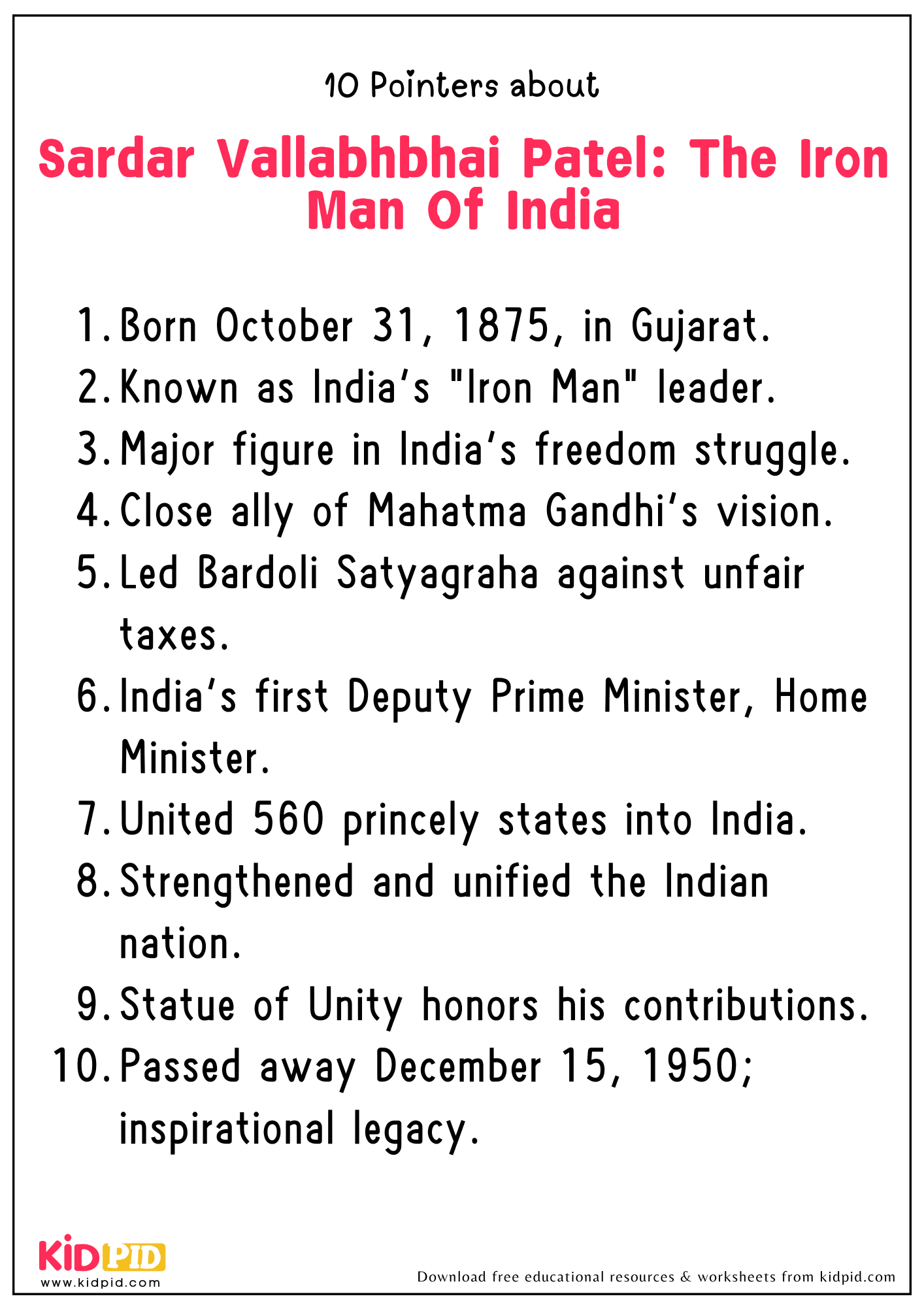
“Sardar Vallabhbhai Patel, the ‘Iron Man of India’, united hundreds of princely states, served as Home Minister, and is inspired by the Statue of Unity.”