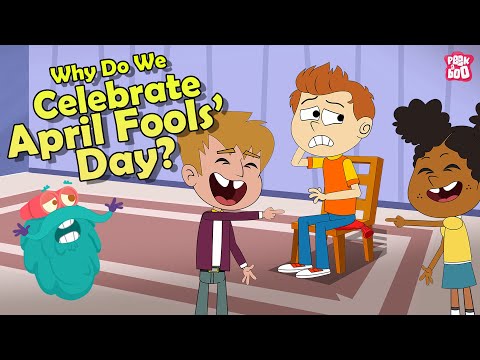
April Fools’ Day is celebrated on April 1st every year. It is a fun day where people play pranks or tricks on each other. The day is all about laughter, surprises, and harmless jokes.
- The tradition started a long time ago, but no one knows exactly when or how.
- Some believe it started in France in the 1500s when they switched the new year date.
- In the past, people celebrated New Year’s Day in April, but it was changed to January 1st.
- Those who didn’t know about the change were called “April fools” and were tricked by others.
- The tradition of playing tricks spread to other countries and is still celebrated today.
Contents
- The Origin And Story Behind The Celebration Of April Fools’ Day.
- Related MCQ’S
- 1. What is the main purpose of April Fool’s Day?
- 2. Which ancient Roman festival is believed to be connected to the origin of April Fool’s Day?
- 3. What happened after the adoption of the Gregorian calendar in the 16th century?
- 4. What lesson does April Fool’s Day teach us?
- 5. What prank did the BBC play in 1957?
- 6. What is the most important thing to remember when playing pranks on April Fool’s Day?
- You may like these:
The Origin And Story Behind The Celebration Of April Fools’ Day.
Related MCQ’S
1. What is the main purpose of April Fool’s Day?
a) To celebrate New Year’s Day
b) To play pranks and make people laugh
c) To honor a goddess
d) To celebrate the Spring Equinox
Answer: b) To play pranks and make people laugh
Explanation: April Fool’s Day is a day for playing pranks on friends and family to spread joy and laughter.
2. Which ancient Roman festival is believed to be connected to the origin of April Fool’s Day?
a) Saturnalia
b) Hilaria
c) Lupercalia
d) Festivus
Answer: b) Hilaria
Explanation: The Hilaria festival, held in ancient Rome at the end of March, is thought to be linked to the origin of April Fool’s Day, with people playing pranks and dressing in funny costumes.
3. What happened after the adoption of the Gregorian calendar in the 16th century?
a) April 1st became the official New Year’s Day
b) People started playing pranks on those who celebrated New Year’s on April 1st
c) All festivals were canceled
d) April Fool’s Day was no longer celebrated
Answer: b) People started playing pranks on those who celebrated New Year’s on April 1st
Explanation: When the Gregorian calendar moved New Year’s Day to January 1st, those who continued celebrating it on April 1st were called “April Fools” and became the target of pranks.
4. What lesson does April Fool’s Day teach us?
a) To never trust anyone
b) To always believe what we see
c) To question and critically think about what we hear or see
d) To play pranks on everyone
Answer: c) To question and critically think about what we hear or see
Explanation: April Fool’s Day reminds us to be skeptical and think critically about information to avoid falling for scams and hoaxes.
5. What prank did the BBC play in 1957?
a) Broadcasting a fake story about spaghetti growing on trees
b) Pretending to announce a new holiday
c) Airing a fake cooking show
d) Broadcasting a weather forecast that was incorrect
Answer: a) Broadcasting a fake story about spaghetti growing on trees
Explanation: In 1957, the BBC played a prank by broadcasting a fake documentary about how spaghetti grows on trees in Switzerland.
6. What is the most important thing to remember when playing pranks on April Fool’s Day?
a) To prank as many people as possible
b) To make sure no one gets hurt or feels upset
c) To prank only your family
d) To keep pranks a secret for a long time
Answer: b) To make sure no one gets hurt or feels upset
Explanation: It’s important to ensure that pranks are done in good fun, without causing harm or hurting anyone’s feelings.
You may like these:
Story of Four Learned Fools
The “Four Learned Fools” is a humorous tale about four scholars who, despite their knowledge, make foolish decisions. It highlights the importance of wisdom over intellect.
Paragraph On ‘Children’s Day’
Children’s Day celebrates the joy, innocence, and importance of children. It honors their rights and encourages their well-being, education, and overall development.
Paragraph On ‘Holi’
Holi, the Festival of Colors, celebrates the arrival of spring. People joyfully throw colored powder, dance, sing, and celebrate love, unity, and the victory of good over evil.