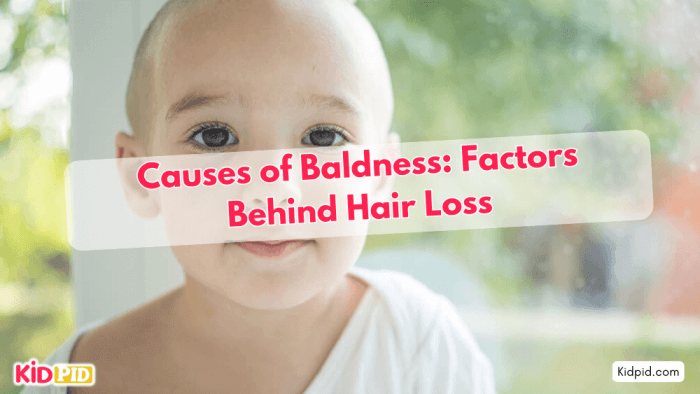
Baldness happens when people lose their hair. Some people may have hair fall when they get older, while others may lose hair earlier. There are different reasons why hair can fall out. Here’s a simple explanation of what can cause baldness:
- Genetics: Sometimes, hair loss runs in families. If your parents or grandparents lost hair, you may lose hair too.
- Hormones: Changes in hormones, like during pregnancy or old age, can cause hair to fall out.
- Stress: Feeling stressed for a long time can lead to hair loss.
- Poor Diet: Not eating enough healthy foods can make your hair weaker and cause it to fall out.
- Medications: Some medicines can cause hair loss as a side effect.
- Health Problems: Certain illnesses or conditions, like thyroid problems, can lead to hair loss.
- Age: As people get older, their hair might naturally become thinner and fall out.
Contents
- What Causes Baldness? Understanding The Factors Behind Hair Loss.
- Related MCQ’s
- 1. What is the main protein that makes up our hair?
- 2. How many hair follicles does a person typically have on their scalp?
- 3. Which phase is known as the hair growth phase?
- 4. What happens during the Cogen phase of hair growth?
- 5. What hormone is associated with hair loss?
- 6. What is the condition called when a person loses hair due to genetics?
- 7. What should you do if you notice a lot of hair loss?
- 8. At what age do most men experience hair loss?
- 9. What is one of the most common causes of hair loss?
- You may like these:
What Causes Baldness? Understanding The Factors Behind Hair Loss.

Related MCQ’s
1. What is the main protein that makes up our hair?
a) Collagen
b) Keratin
c) Calcium
d) Vitamin D
Answer: b) Keratin
Explanation: Hair is mostly made of keratin, a type of protein formed from dead cells.
2. How many hair follicles does a person typically have on their scalp?
a) 10,000 to 50,000
b) 50,000 to 75,000
c) 100,000 to 150,000
d) 200,000 to 300,000
Answer: c) 100,000 to 150,000
Explanation: A person with a full head of hair typically has between 100,000 and 150,000 hair follicles on their scalp.
3. Which phase is known as the hair growth phase?
a) Telogen
b) Cogen
c) Anagen
d) Keratin
Answer: c) Anagen
Explanation: The anagen phase is the active hair growth phase, where hair grows about 1 cm per month.
4. What happens during the Cogen phase of hair growth?
a) Hair follicles grow faster
b) Hair follicles shrink and lose their diameter
c) Hair follicles become inactive
d) Hair starts to fall out
Answer: b) Hair follicles shrink and lose their diameter
Explanation: During the Cogen phase, hair follicles begin to shrink, which leads to the shedding of hair.
5. What hormone is associated with hair loss?
a) Insulin
b) Estrogen
c) Testosterone
d) Adrenaline
Answer: c) Testosterone
Explanation: Testosterone is converted into dihydrotestosterone (DHT), which affects hair follicles and can cause hair loss in some people.
6. What is the condition called when a person loses hair due to genetics?
a) Alopecia
b) Dermatitis
c) Psoriasis
d) Eczema
Answer: a) Alopecia
Explanation: Alopecia is the medical term for hair loss, often caused by genetics.
7. What should you do if you notice a lot of hair loss?
a) Ignore it and wait for it to stop
b) Visit a dermatologist
c) Try different shampoos
d) Stop washing your hair
Answer: b) Visit a dermatologist
Explanation: If you notice excessive hair loss, it’s important to see a dermatologist to get the proper diagnosis and treatment.
8. At what age do most men experience hair loss?
a) In their 20s
b) In their 30s
c) In their 40s
d) In their 50s
Answer: b) In their 30s
Explanation: Most men start experiencing hair loss in their 30s, though it can happen earlier or later depending on genetic factors.
9. What is one of the most common causes of hair loss?
a) Poor diet
b) Stress
c) Heredity
d) Lack of sleep
Answer: c) Heredity
Explanation: Heredity, also known as androgenetic alopecia, is the most common cause of hair loss.
You may like these:
Why does our hair turn gray as we grow older?
Hair turns gray as we age because the cells that produce pigment slow down. Less pigment results in hair losing its natural color over time.
Why do some people go bald?
Baldness can happen due to genetics, hormonal changes, or age. It often starts with thinning hair, which leads to hair loss, especially on the scalp.