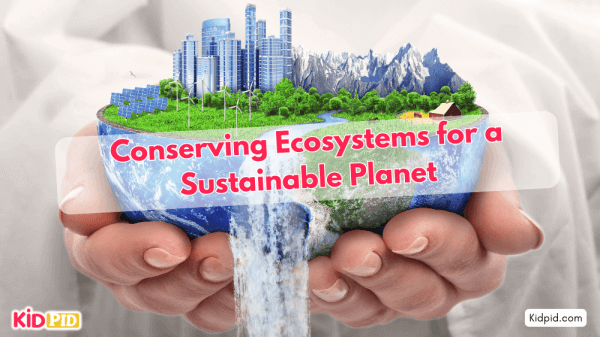
Our planet is full of amazing ecosystems, like forests, oceans, and grasslands, where plants, animals, and humans live together. But to keep these ecosystems healthy, we need to protect nature. In this video, you’ll learn why conservation is important and how we can help save the Earth.
- What is an ecosystem: An ecosystem is a community of living things like plants, animals, and microbes, all working together in a specific area.
- Why is nature conservation important: Protecting nature helps maintain clean air, water, and food for all living beings. It also keeps biodiversity, meaning all kinds of plants and animals, healthy and safe.
- Ways to protect the planet: Reduce pollution by using less plastic. Save water and recycle. Plant trees to help clean the air. Protect animals and their habitats from destruction.
- Our responsibility: Everyone can help! By making small changes in how we live, like turning off lights or picking up trash, we can make a big difference for the planet.

Related MCQ’S
1. What is an ecosystem?
A) A group of only plants
B) A community of living organisms and their natural environment
C) A place for humans only
D) A type of animal habitat
Answer: B) A community of living organisms and their natural environment
Explanation: An ecosystem includes both living organisms (biotic components) like plants and animals, and non-living components (abiotic components) like air, water, and sunlight.
2. Which of the following is a biotic component of an ecosystem?
A) Air
B) Water
C) Plants
D) Soil
Answer: C) Plants
Explanation: Biotic components are the living parts of an ecosystem, such as plants, animals, and microorganisms.
3. Why is soil conservation important?
A) To make the soil look pretty
B) To protect the soil from erosion and degradation
C) To increase pollution
D) To remove all plants
Answer: B) To protect the soil from erosion and degradation
Explanation: Soil conservation helps maintain the quality of the soil, preventing erosion and ensuring we can grow crops and plants for food and other uses.
4. What is soil erosion?
A) The process of soil growing too much
B) The process in which soil is washed away by wind or water
C) The process of planting more trees
D) The process of water being absorbed by the soil
Answer: B) The process in which soil is washed away by wind or water
Explanation: Soil erosion occurs when wind or water carries away the topsoil, which contains vital nutrients for plant growth.
5. What is an example of a renewable energy source?
A) Coal
B) Wind energy
C) Natural gas
D) Petroleum
Answer: B) Wind energy
Explanation: Wind energy is renewable because it comes from the wind, which is a natural and inexhaustible resource.
6. Why is it important to conserve natural resources?
A) To use them as much as possible
B) To make them available for future generations
C) To waste them
D) To destroy them
Answer: B) To make them available for future generations
Explanation: Conserving natural resources ensures that future generations can continue to use them for survival and development.
7. What is the role of wind turbines?
A) To create wind
B) To produce electricity by harnessing wind energy
C) To make trees grow
D) To store energy
Answer: B) To produce electricity by harnessing wind energy
Explanation: Wind turbines use the wind to generate electricity, making it a sustainable energy source.
8. What is the main cause of soil erosion?
A) Planting more trees
B) Overuse of water and human activities like overgrazing and mining
C) Healthy soil
D) Reduced water usage
Answer: B) Overuse of water and human activities like overgrazing and mining
Explanation: Soil erosion is accelerated by human activities such as overgrazing, excessive use of pesticides, mining, and logging.
9. Which of these is NOT a non-renewable resource?
A) Coal
B) Water
C) Petroleum
D) Natural gas
Answer: B) Water
Explanation: Water is a renewable resource, but coal, petroleum, and natural gas are non-renewable and can run out over time.
10. What is sustainable development?
A) Development that ignores the needs of the future
B) Development that meets present needs without harming future generations
C) Development that wastes resources
D) Development that harms the environment
Answer: B) Development that meets present needs without harming future generations
Explanation: Sustainable development ensures that natural resources are used wisely and preserved for future generations.
You may like these:
What are living and non-living things?

Living things grow, reproduce, and breathe, while non-living things do not have these characteristics. Understanding the difference is key to studying biology and the environment.
Essay on Effects of Erosion
Erosion wears down the earth’s surface through wind, water, and human activities, leading to loss of soil, destruction of habitats, and changes in landscapes.
How do wind Turbines work?
Wind turbines convert wind energy into electricity by spinning blades connected to a generator, making them a clean, renewable source of power for sustainable energy.