Crimes are actions that break the law and harm individuals or society, while punishments are penalties given to offenders to maintain justice and order. Understanding crimes and their consequences helps promote safety, fairness, and respect for rules in a community, ensuring peace and security for everyone
Contents
10 Pointers About Crimes and Punishment
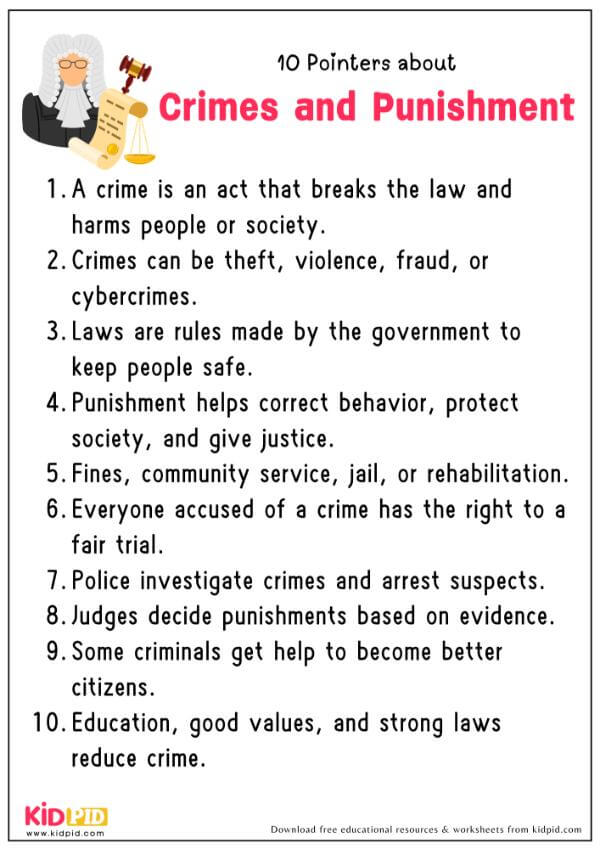

- A crime is an act that breaks the law and harms people or society.
- Crimes can be theft, violence, fraud, or cybercrimes.
- Laws are rules made by the government to keep people safe.
- Punishment helps correct behavior, protect society, and give justice.
- Fines, community service, jail, or rehabilitation.
- Everyone accused of a crime has the right to a fair trial.
- Police investigate crimes and arrest suspects.
- Judges decide punishments based on evidence.
- Some criminals get help to become better citizens.
- Education, good values, and strong laws reduce crime.
Short Essay On Crimes and Punishment
Essay On Crimes and Punishment in 100 Words

Crimes are bad actions that break laws and hurt people or society. Stealing, hurting others, or lying in serious ways are crimes. Laws exist to keep everyone safe. When someone commits a crime, they may face punishment like fines, community service, or jail. Punishment helps them learn from mistakes and protects others. Police catch criminals, and judges decide on fair punishments. Everyone deserves a fair trial. Sometimes, criminals get rehabilitation to become better. To stop crimes, we must teach good values and follow the rules. A peaceful society needs justice, where wrong actions have consequences, and people learn to do right.
Essay On Crimes and Punishment in 200 Words
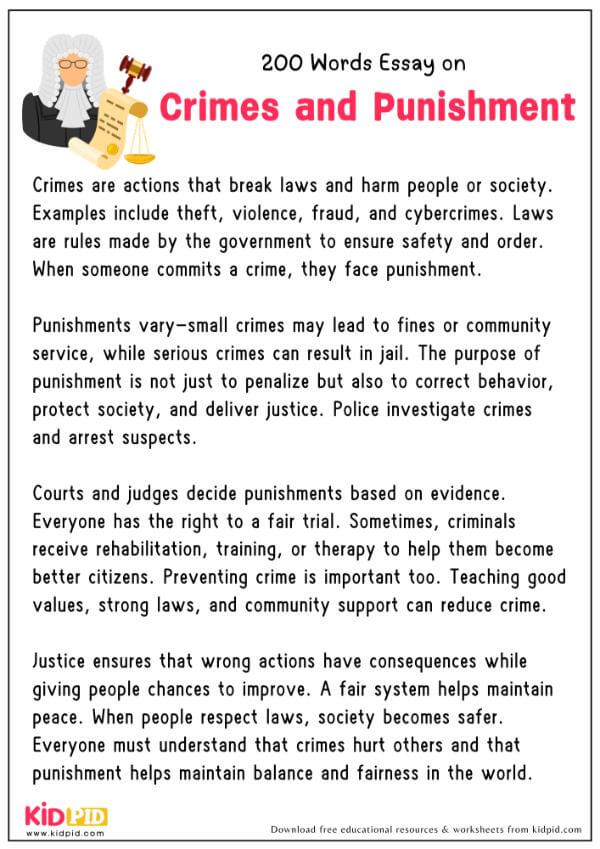
Crimes are actions that break laws and harm people or society. Examples include theft, violence, fraud, and cybercrimes. Laws are rules made by the government to ensure safety and order. When someone commits a crime, they face punishment. Punishments vary; small crimes may lead to fines or community service, while serious crimes can result in jail.
The purpose of punishment is not just to penalize but also to correct behavior, protect society, and deliver justice. Police investigate crimes and arrest suspects. Courts and judges decide punishments based on evidence. Everyone has the right to a fair trial.
Sometimes, criminals receive rehabilitation, training, or therapy to help them become better citizens. Preventing crime is important too. Teaching good values, strong laws, and community support can reduce crime.
Justice ensures that wrong actions have consequences while giving people chances to improve. A fair system helps maintain peace. When people respect laws, society becomes safer. Everyone must understand that crimes hurt others and that punishment helps maintain balance and fairness in the world.
Essay On Crimes and Punishment in 300 Words
Crimes are wrong actions that break laws and harm individuals or society. They include theft, assault, vandalism, fraud, and cybercrimes. Laws are rules created by governments to keep order and protect people’s rights. Without laws, there would be chaos.
When someone commits a crime, they face punishment. Punishments depend on the crime’s severity. Minor crimes may lead to warnings, fines, or community service. Serious crimes like robbery or violence can result in prison time. Deliver Justice – Ensure victims get fairness.
Police play a key role in catching criminals. They gather evidence and arrest suspects. Courts then decide if the person is guilty. Judges and juries examine facts and give fair punishments. Everyone has the right to a lawyer and a fair trial.
Some criminals get rehabilitation instead of harsh punishment. Rehabilitation includes education, job training, or therapy to help them become responsible citizens. This approach works for non-violent offenders.
Preventing crime is better than punishing it. Good parenting, education, and strong moral values help reduce crime. Communities must work together to support laws and report wrongdoing.
Justice systems must be fair. Innocent people should never be punished, and criminals must face appropriate consequences. A balanced approach—mixing punishment with chances for improvement—creates a safer society.
In conclusion, crimes disrupt peace, but laws and punishments restore order. By understanding consequences, people learn to make better choices. A just society protects its citizens while helping wrongdoers reform and contribute positively.
Long Essay On Crimes and Punishment in 500 Words
Introduction
Crime and punishment are fundamental aspects of any legal system, ensuring justice and maintaining social order. The relationship between criminal acts and their consequences has evolved over centuries, influenced by cultural, ethical, and legal principles. This essay explores the nature of crimes, the purpose of punishment, and different forms of penalties.
Types of Crimes
Crimes can be categorized based on their severity and impact. Felonies are serious offenses like murder, rape, and armed robbery, often punishable by long prison sentences or even death. Misdemeanors, such as petty theft or vandalism, carry lighter penalties like fines or short jail terms. White-collar crimes, including fraud and embezzlement, involve financial deceit and are typically non-violent but still harmful to society.
Purpose of Punishment
The primary objectives of punishment are retribution, deterrence, rehabilitation, and societal protection. Retribution ensures that offenders pay for their crimes, serving as moral justice. Deterrence discourages future crimes by setting an example. Rehabilitation aims to reform criminals, helping them reintegrate into society. Lastly, punishment protects society by isolating dangerous individuals.
Forms of Punishment
Punishments vary depending on the crime and legal system. Imprisonment removes criminals from society, while fines impose financial penalties. Community service allows offenders to contribute positively instead of facing jail time. In some countries, capital punishment (the death penalty) is used for extreme crimes, though it remains controversial due to ethical concerns.
Conclusion
Crimes disrupt social harmony, and punishment serves as a mechanism to restore balance. A fair justice system must balance severity with fairness, ensuring that penalties fit the crimes while allowing for rehabilitation. Society must continually evaluate its approach to crime and punishment to uphold justice effectively.


FAQs on Crimes and Punishment
Q1. What are crimes?
Ans. Crimes are actions that break laws and harm people or society.
Q2. Why do we have laws?
Ans. Laws keep people safe and maintain order.
Q3. What are some examples of crimes?
Ans. Examples include theft, violence, fraud, and cybercrime.
Q4. What kinds of punishments can criminals face?
Ans. They may face fines, jail, or community service.
Q5. Who decides the punishment for a crime?
Ans. Judges and courts decide the punishment after a fair trial.
Q6. What is rehabilitation in criminal justice?
Ans. Rehabilitation helps criminals change through education or therapy.
Q7. Why is it important to have a fair trial?
Ans. A fair trial protects the rights of everyone, including the accused.
Q8. How can we prevent crimes?
Ans. Teaching values, strong laws, and community support helps prevent crimes.
Q9. What is the goal of punishment?
Ans. To correct behavior, protect society, and bring justice.
Q10. Why should justice systems be fair?
Ans. To make sure innocent people are safe and wrongdoers face proper consequences.
Crimes and punishments reflect society’s values and justice system. Fair laws and punishments maintain order, deter wrongdoing, and ensure safety, promoting peace and harmony for everyone’s well-being. For more, visit our website and get more paragraphs, essays, worksheets, flashcards, Quizzes, and other interactive resources. Don’t forget to follow us on YouTube & Facebook.
You might also like
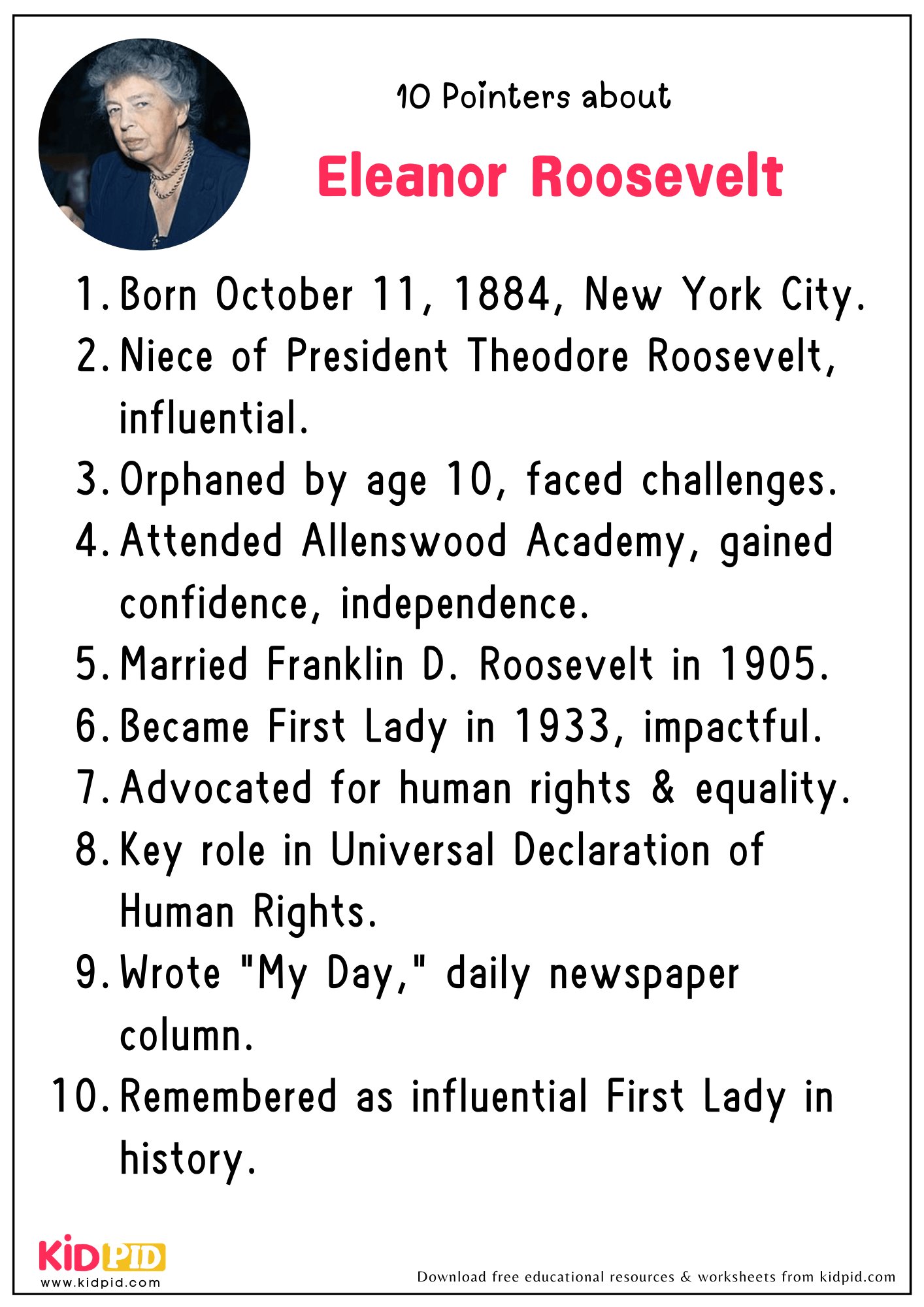

Eleanor Roosevelt, born in 1884, overcame childhood loss and became the longest-serving First Lady (1933–45). She championed human, women’s, and racial rights, wrote “My Day,” and helped draft the Universal Declaration of Human Rights.


Fred Rogers, beloved host of Mister Rogers’ Neighborhood (1968–1990s), used his gentle voice, red sweater, and soft shoes to teach children about feelings, kindness, self-worth, friendship, and respect.

Oprah Winfrey rose from poverty and childhood hardship to become a media mogul: launching her legendary talk show, founding Harpo Productions, donating millions, and becoming the first Black female billionaire.
Essay – Favorite Outdoor Activity

Hiking, my favorite outdoor activity, combines adventure and health. Trekking through forests and hills lets me explore nature’s beauty, breathe fresh air, relax, and bond with loved ones amid scenic surroundings.

Technology revolutionizes our lives, enhancing global communication, transforming learning, entertainment, healthcare, and travel, and streamlining work, yet it also raises important privacy concerns amid its many conveniences and evolving innovations.