An essay on depression discussing its causes, effects on mental health, and the importance of awareness, support, and treatment.”
Depression is a serious mental health problem that affects how a person feels, thinks, and acts. It can make someone feel very sad, tired, or hopeless for a long time. Depression is common but treatable, and it’s important to talk about it and get help when needed.
Contents
10 Pointers About Depression
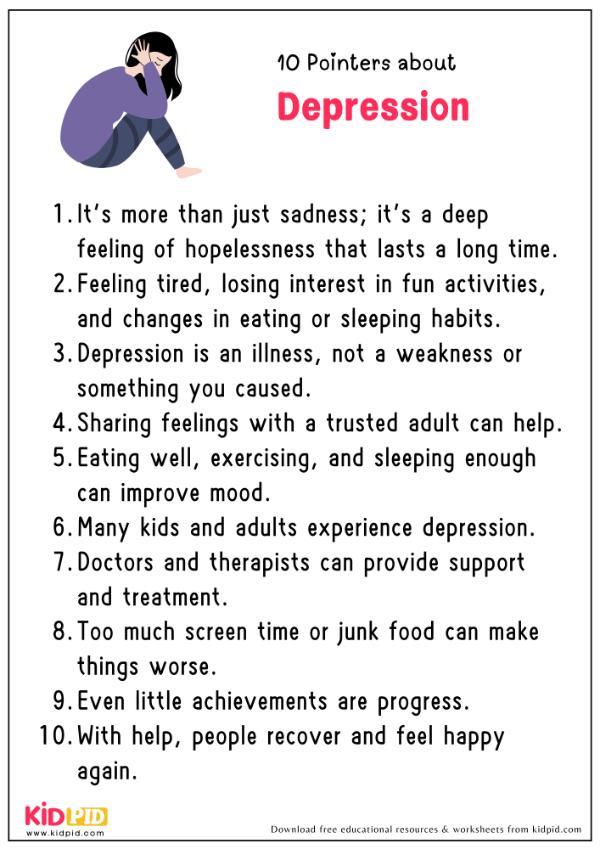
- It’s more than just sadness; it’s a deep feeling of hopelessness that lasts a long time.
- Feeling tired, losing interest in fun activities, and changes in eating or sleeping habits.
- Depression is an illness, not a weakness or something you caused.
- Sharing feelings with a trusted adult can help.
- Eating well, exercising, and sleeping enough can improve mood.
- Many kids and adults experience depression.
- Doctors and therapists can provide support and treatment.
- Too much screen time or junk food can make things worse.
- Even little achievements are progress.
- With help, people recover and feel happy again.
Short Essay On Depression
Essay On Depression in 100 Words

Depression is when someone feels very sad for many days. They may not want to play or talk. They might sleep too much or too little. Some people eat less or more than usual. It’s not being lazy. It’s not something they choose. Their heart feels heavy, and they feel tired all the time. But they can feel better. Talking to parents, teachers, or doctors helps a lot. Good sleep, food, and kind words can help. People should not hide it. It’s okay to feel sad, but we must tell someone. With help, anyone can feel better again.
Essay On Depression in 200 Words

Depression is a strong and long-lasting feeling of sadness. Everyone feels sad sometimes, but depression lasts for many days or even weeks. Kids or adults with depression may stop smiling, playing, or doing things they once enjoyed. They may feel tired all the time, even after sleeping. Some may sleep too much, while others can’t sleep at all. Eating habits may also change.
People with depression are not lazy. They are just feeling very low inside. They might cry often or feel like they are not good enough. This is not true. Depression is not their fault. It is okay to feel this way.
The good news is, help is always there. Talking to someone—a parent, teacher, or doctor—is the first step. Friends and family can support too. Simple things like playing outside, eating healthy food, and getting rest help a lot. Also, kind and caring words matter.
Depression can get better. With love, care, and the right help, people can smile again. No one should feel alone. Everyone deserves to feel happy and strong again.
Essay On Depression in 300 Words
Depression is a deep feeling of sadness that stays for a long time. It is not just a bad day or a sad moment. Depression makes a person feel very low inside, and it does not go away easily. Kids with depression may stop laughing, playing, or doing things they used to enjoy. They may feel tired even after resting. Some may sleep a lot, and others may not sleep at all. They might eat too little or too much.
People with depression often feel alone or think they are not good enough. They may cry a lot or feel angry for no reason. But they are not bad or weak. Depression is not their fault. It is like being sick inside the heart and mind. And just like other sicknesses, it needs care and help.
The best way to help is to talk. Kids should tell someone they trust, like a parent, teacher, or school counselor. There are also doctors who know how to help with depression. Talking helps. Playing outside, eating healthy, resting well, and hearing kind words also help a lot.
It’s important not to hide these feelings. It’s okay to ask for help. Everyone feels sad sometimes, but when it lasts too long, we need support. You are never alone. With help, love, and care, anyone can feel better. Everyone deserves to smile again.
Long Essay On Depression in 500 Words
Introduction
Depression is a common but serious mental health disorder that negatively affects how a person feels, thinks, and behaves. It leads to persistent sadness, loss of interest in activities, and various emotional and physical problems. Depression can interfere with daily functioning and reduce the quality of life. Understanding its causes, symptoms, and treatment options is essential for managing and overcoming this condition.
Causes of Depression
Depression arises from a combination of genetic, biological, environmental, and psychological factors. A family history of depression increases the risk, suggesting a genetic link. Imbalances in brain chemicals, such as serotonin and dopamine, also contribute to depressive symptoms. Stressful life events, trauma, chronic illness, or substance abuse can trigger depression. Additionally, personality traits like low self-esteem or excessive pessimism may make individuals more vulnerable.
Symptoms of Depression
Depression manifests through emotional, cognitive, and physical symptoms. Common signs include persistent sadness, hopelessness, irritability, and loss of interest in hobbies. Cognitive symptoms involve difficulty concentrating, indecisiveness, and negative thoughts. Physical symptoms include fatigue, changes in appetite, sleep disturbances, and unexplained aches. In severe cases, individuals may experience suicidal thoughts, requiring immediate intervention.
Types of Depression
There are several forms of depression, each with distinct characteristics. Major Depressive Disorder (MDD) involves severe symptoms lasting at least two weeks. Persistent Depressive Disorder (Dysthymia) is a chronic but milder form lasting for years. Postpartum Depression affects new mothers, while Seasonal Affective Disorder (SAD) occurs during specific seasons. Bipolar Disorder includes depressive episodes alternating with manic phases.
Treatment and Management
Depression is treatable through therapy, medication, and lifestyle changes. Psychotherapy, such as Cognitive Behavioral Therapy (CBT), helps individuals reframe negative thoughts. Antidepressants regulate brain chemicals but should be taken under medical supervision. Lifestyle modifications like regular exercise, a balanced diet, and stress management techniques can alleviate symptoms. Support from family and friends also plays a crucial role in recovery.
Conclusion
Depression is a complex mental health condition that requires awareness and proper treatment. Recognizing its causes and symptoms can lead to early intervention, improving outcomes. With the right combination of therapy, medication, and support, individuals can manage depression and regain a fulfilling life.

FAQs on Depression
Q1. What is depression?
Ans. A mental health condition that causes long-term sadness and hopelessness.
Q2. Name two causes of depression.
Ans. Family history and life changes like loss.
Q3. List two symptoms of depression.
Ans. Tiredness and loss of interest in activities.
Q4. What is Major Depressive Disorder?
Ans. A type of depression with strong symptoms lasting for weeks.
Q5. What is Seasonal Affective Disorder?
Ans. Depression that happens during certain seasons.
Q6. How does psychotherapy help in treating depression?
Ans. It helps individuals change negative thought patterns (e.g., CBT).
Q7. What role do antidepressants play in treatment?
Ans. They regulate brain chemicals like serotonin and dopamine.
Q8. What is Seasonal Affective Disorder (SAD)?
Ans. Depression that occurs during specific seasons, usually winter.
Q9. How can lifestyle changes help manage depression?
Ans. Exercise, a healthy diet, and stress reduction techniques improve mood.
Q10. Why is social support important for someone with depression?
Ans. Emotional support from loved ones aids recovery and reduces isolation.
In conclusion, depression is a serious condition that affects many people. With support, care, and treatment, it can be managed. Talking openly and getting help is the first important step. For more content, visit our website to discover additional paragraphs, essays, worksheets, flashcards, quizzes, and other interactive resources. Be sure to follow us on YouTube and Facebook!
You May Like This
Essay – Narasimha Rao The Architect of Economic Reforms

P.V. Narasimha Rao served as India’s Prime Minister from 1991 to 1996 and led landmark economic reforms—ending License Raj, encouraging foreign investment, and transforming India into a modern, global economy
Essay – Rani Padmini: The Legendary Queen

Rani Padmini (also called Padmavati) was a legendary queen of Chittorgarh (Rajasthan). Famous for her beauty and courage, she led by example—choosing self‑sacrifice in the 1303 siege.

Thomas Alva Edison (1847–1931) was an American inventor and businessman with over 1,000 patents. He improved electric lighting, invented the phonograph and motion‑picture camera, and pioneered modern innovation worldwide.
Essay – T. S. Eliot: The Influential Poet

T. S. Eliot was an American‑born British poet, playwright, and critic who transformed modern literature with works like The Waste Land and won the 1948 Nobel Prize in Literature
Essay – Gopal Krishna Gokhale: The Political Mentor

Gopal Krishna Gokhale (1866–1915) was a respected Indian moderate leader, social reformer, educator, and mentor to Mahatma Gandhi. He founded the Servants of India Society and championed constitutional self‑rule.01