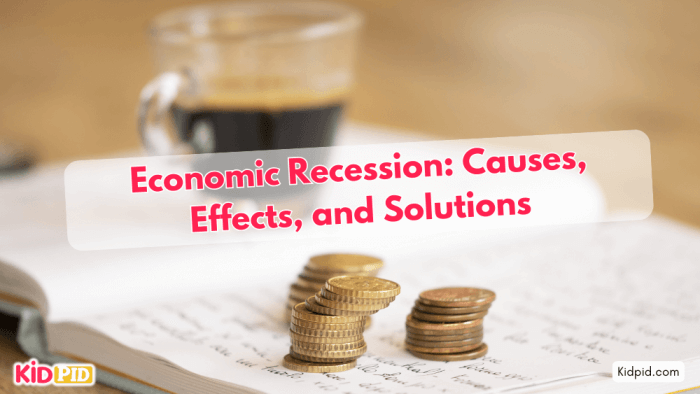
An economic recession is a time when the economy of a country becomes weak. During a recession, businesses may close, people might lose their jobs, and money becomes harder to earn and spend. But don’t worry! Recessions happen sometimes, and there are ways to deal with them. Let’s break it down:
- What is a Recession: A recession is when the economy slows down for a long period.
It means people spend less money, businesses make fewer profits, and there are fewer jobs available. - What Causes a Recession: A recession can happen because of:
Less spending by people and businesses.
Problems in the banking system or money management.
High prices for things like food or gas.
Political problems or wars that affect the economy. - What Happens During a Recession: People may lose their jobs because businesses are not making enough money.
Some businesses may close or reduce their size.
The government might need to help by spending money or making new rules to help the economy grow. - How to Deal With a Recession: People can save money and spend wisely.
Governments can help by creating jobs or supporting businesses.
Learning new skills or getting an education can help people find new jobs. - Why It’s Important to Understand Recession: Understanding recessions helps us prepare for tough times and find ways to bounce back stronger when the economy recovers!
Contents
- “Understanding Economic Recession: Causes, Effects, and Solutions”
- Related MCQ’S
- 1. What is a recession?
- 2. What is one major cause of a recession?
- 3. How do interest rates affect the economy during a recession?
- 4. How did the COVID-19 pandemic affect the economy?
- 5. What did the government do to help people during a recession?
- 6. What happened during the 2007 Great Recession?
- 7. What happens to the economy when interest rates are too high?
- You may like these:
“Understanding Economic Recession: Causes, Effects, and Solutions”

Related MCQ’S
1. What is a recession?
A) A rise in business profits
B) A period of economic growth
C) A difficult time when a country’s economy struggles
D) A time when everyone gets rich
Answer: C) A difficult time when a country’s economy struggles
Explanation: A recession is a period when a country’s economy struggles, leading to businesses closing and people losing jobs.
2. What is one major cause of a recession?
A) Too much supply and not enough demand
B) Too many employees in companies
C) A rise in workers’ wages
D) Too much money circulating in the economy
Answer: A) Too much supply and not enough demand
Explanation: A mismatch between supply and demand can lead to a recession. If there is too much supply and not enough demand for goods and services, it causes losses.
3. How do interest rates affect the economy during a recession?
A) Higher interest rates make borrowing money easier
B) Higher interest rates encourage people to borrow more money
C) Lower interest rates help businesses and people borrow money more easily
D) Interest rates don’t affect the economy at all
Answer: C) Lower interest rates help businesses and people borrow money more easily
Explanation: When interest rates are low, it’s cheaper to borrow money, which can help boost the economy.
4. How did the COVID-19 pandemic affect the economy?
A) It improved business performance worldwide
B) It caused lockdowns that harmed industries and increased unemployment
C) It led to better sales for all businesses
D) It caused people to spend more money
Answer: B) It caused lockdowns that harmed industries and increased unemployment
Explanation: The COVID-19 pandemic caused lockdowns that led to business struggles and high unemployment rates globally.
5. What did the government do to help people during a recession?
A) They raised taxes for everyone
B) They created more businesses to hire workers
C) They offered money to unemployed people and helped businesses hire
D) They stopped giving money to businesses
Answer: C) They offered money to unemployed people and helped businesses hire
Explanation: During a recession, governments help by offering financial support to unemployed people and assisting businesses to hire new workers.
6. What happened during the 2007 Great Recession?
A) People borrowed money to buy houses but couldn’t pay back loans, which caused problems
B) Businesses made more money than ever
C) There was no impact on the economy
D) People started saving more money
Answer: A) People borrowed money to buy houses but couldn’t pay back loans, which caused problems
Explanation: The Great Recession occurred because people borrowed money to buy houses they couldn’t afford, leading to a banking crisis and economic decline.
7. What happens to the economy when interest rates are too high?
A) People borrow more money
B) Businesses and people find it expensive to borrow money, slowing down economic activity
C) Prices of goods and services go down
D) More people find jobs
Answer: B) Businesses and people find it expensive to borrow money, slowing down economic activity
Explanation: When interest rates are high, borrowing money becomes expensive, which can slow down business activity and economic growth.
You may like these:
Micro Vs Macro & Money Vs Barter
Microeconomics focuses on individual behavior and market decisions, while macroeconomics deals with aggregate economic factors. Money acts as a medium of exchange, unlike barter.
Markets and Properties of Money
Markets facilitate the exchange of goods and services. Money’s properties include portability, divisibility, durability, acceptability, and stability, enabling efficient transactions in the economy.
Production Possibility Curve
The Production Possibility Curve illustrates the trade-offs between two goods, showing the maximum possible output combinations in an economy, emphasizing opportunity cost and efficiency.