Existentialism is a philosophy that explores human existence, freedom, and choice. It asks deep questions about life’s meaning and how we create our purpose. This essay explains key ideas, important thinkers, and common questions to help you understand existentialism in a simple, clear way.
Contents
10 Pointers About Existentialism

- Existentialism is a way of thinking about life and its meaning.
- It teaches that everyone is free to make their own choices.
- People are responsible for what they do and who they become.
- Life doesn’t always come with a clear purpose—we create our own.
- Feelings like confusion or worry about life are normal.
- Being true to yourself is very important.
- Every person is unique, and their choices matter.
- Even small actions can shape your future.
- It’s okay to ask deep questions about life.
- You can find meaning by being kind, honest, and doing what you love.
Short Essay On Existentialism
Essay On Existentialism in 100 Words
Existentialism is a big word, but it’s about something simple—you get to choose what your life means. It says that people are free to decide who they want to be. No one else can live your life for you. That also means you are responsible for your actions. Existentialism teaches that life doesn’t always have one big meaning, but you can make your own. It’s okay to ask big questions like “Why am I here?” or “What do I want to become?” This way of thinking helps people be honest, brave, and kind while creating their path in life.
Essay On Existentialism in 200 Words
Existentialism is a special way of thinking that says life is what you make of it. It means you have the power to choose your actions, dreams, and goals. Some people believe that life has one big purpose, but existentialists say that we create our meaning. That means we are free, but also responsible. If you make a mistake, you can learn from it and grow. Existentialism helps people ask questions like “Who am I?” or “What should I do with my life?” These questions can be confusing, but they are important.
Sometimes, people feel lost or unsure about what they should do. That’s okay. Existentialism tells us that it’s normal to wonder about life. Instead of waiting for someone to tell you what to do, you can decide what is right for you. Being honest with yourself, making kind choices, and doing what you love are ways to give your life meaning. Every person is unique, and that’s something to celebrate. Your choices matter, and you matter too.
Essay On Existentialism in 300 Words
Existentialism is a way of thinking that says you are in charge of your own life. That might sound like a lot, but it also means you have a lot of freedom. Existentialists believe that life doesn’t come with a single meaning. Instead, each person gets to decide what their life means. It’s kind of like being an artist with a blank page—you get to draw your picture. Every day, with every choice, you are shaping who you are.
This way of thinking also teaches us that we must take responsibility for our actions. If we do something good, we can feel proud. If we do something wrong, we can say sorry and learn from it. It’s okay to feel confused sometimes and ask big questions like “What’s the point of life?” or “What should I do when I grow up?” Existentialism tells us it’s brave to ask these questions and even braver to try and find your answers.
You don’t have to know everything right away. Life is a journey, and you learn as you go. What matters is being true to yourself, being kind to others, and doing things that matter to you. Whether it’s drawing, helping friends, or dreaming big, your choices help you build a meaningful life.
Long Essay On Existentialism in 500 Words
Introduction
Existentialism is a big word, but it’s really about something simple and powerful—it’s the idea that life is what you make of it. This way of thinking says that every person has the freedom to choose what their life means. You are not born with a set path. Instead, you get to decide what’s important to you and how you want to live. That also means you are responsible for your actions and the choices you make. Existentialism is about asking deep questions, being honest with yourself, and creating your path in life.
Freedom to Choose
One of the most important parts of existentialism is freedom. Existentialists believe that people are free to make their own decisions. No one can tell you who you have to be or what you have to believe. You get to decide what makes you happy, what you want to do, and what you care about. This freedom is exciting, but it also means you have to be responsible for your actions. You can’t blame others for the choices you make, because you are in charge of your own life.
Asking Big Questions
Existentialism also encourages people to ask big questions like “Why am I here?” or “What should I do with my life?” These questions may seem hard or even scary, but they are important. It’s okay to feel confused or lost sometimes. Existentialists think it’s normal to wonder about life and not always have the answers. What matters is that you keep thinking, learning, and growing. These questions help you understand yourself better.
Creating Your Meaning
Instead of waiting for someone to tell you what life means, existentialism says you can create your meaning. That might mean helping others, being kind, doing your favorite hobby, or standing up for what’s right. Every person is different, so the meaning of life can be different for each person. There’s no one right answer, and that’s okay. Your life is like a story, and you are the author. You get to decide what kind of story you want to tell.
Being True to Yourself
Existentialism also teaches that being honest with yourself is important. It’s easy to try to fit in or do what others want, but real happiness comes from being true to who you are. When you know what matters to you, it becomes easier to make choices that feel right. Even if the path is hard or different, following your own heart helps you build a meaningful life.
Conclusion: Your Life, Your Meaning
Existentialism is not just a school subject or a word in a book. It’s a way of thinking that can help you live a strong, honest, and happy life. It tells you that you are free to choose, responsible for your actions, and brave enough to find your way. Life might not come with one big meaning, but you can create your own meaning through the choices you make. Be kind, be curious, and never stop asking questions. After all, your life is yours to live—and that’s something truly special.


FAQs on Existentialism
Q1. What does existentialism say about the meaning of life?
Ans. Existentialism says that people create their meaning in life.
Q2. Who is responsible for your life choices according to existentialism?
Ans. You are responsible for your own life choices.
Q3. What kind of questions does existentialism encourage us to ask?
Ans. Big questions like “Why am I here?” and “What should I do with my life?”
Q4. Why is freedom important in existentialism?
Ans. Because it lets you choose how to live your life.
Q5. What does existentialism say about feeling lost or confused?
Ans. It says it’s normal to feel that way and encourages you to keep thinking and learning.
Q6. How is life compared to art in the 300-word essay?
Ans. Life is compared to a blank page where you draw your picture.
Q7. What should people do when they make mistakes, according to existentialism?
Ans. They should learn from their mistakes and grow.
Q8. How can people create meaning in their lives?
Ans. By doing kind things, following dreams, and being true to themselves.
Q9. Why is being honest with yourself important in existentialism?
Ans. Because it helps you make choices that feel right to you.
Q10. What message does the conclusion of the 500-word essay give?
Ans. It says your life is yours to live, and you can make it meaningful through your choices.
Existentialism urges us to find personal meaning in a chaotic world, embracing freedom and responsibility. It challenges us to live authentically despite uncertainty and the absurdity of life’s questions. To explore more, visit our website and explore more paragraphs, essays, worksheets, flashcards, Quizzes, and other interactive resources. Join our community on YouTube & Facebook.
You might also like
Essay – A Person Who Inspires Me


My dad’s hard work, optimism, and nurturing spirit—whether helping with homework or gardening—instill lessons of responsibility, perseverance, and kindness. His belief in learning and positivity motivates me every day.
Essay – My Favorite Place To Relax


A quiet park near home, shaded by tall trees, flowers, soft grass, and a cozy bench. Fresh air, birds, and small critters create peace, clarity, and a peaceful escape from stress.
Essay – The Importance Of Cultural Diversity

Cultural diversity unites unique traditions, languages, foods, and stories—strengthening empathy, acceptance, and creativity. Learning from one another enriches communities, fosters understanding, and builds a world where differences are celebrated, not feared.
Essay – A Time I Learned From Failure

Failing to make the school basketball team felt heartbreaking, but by asking for feedback, practicing relentlessly, and staying determined, the author turned failure into growth—ultimately making the team and learning perseverance.
Essay – A Time I Made A Mistake
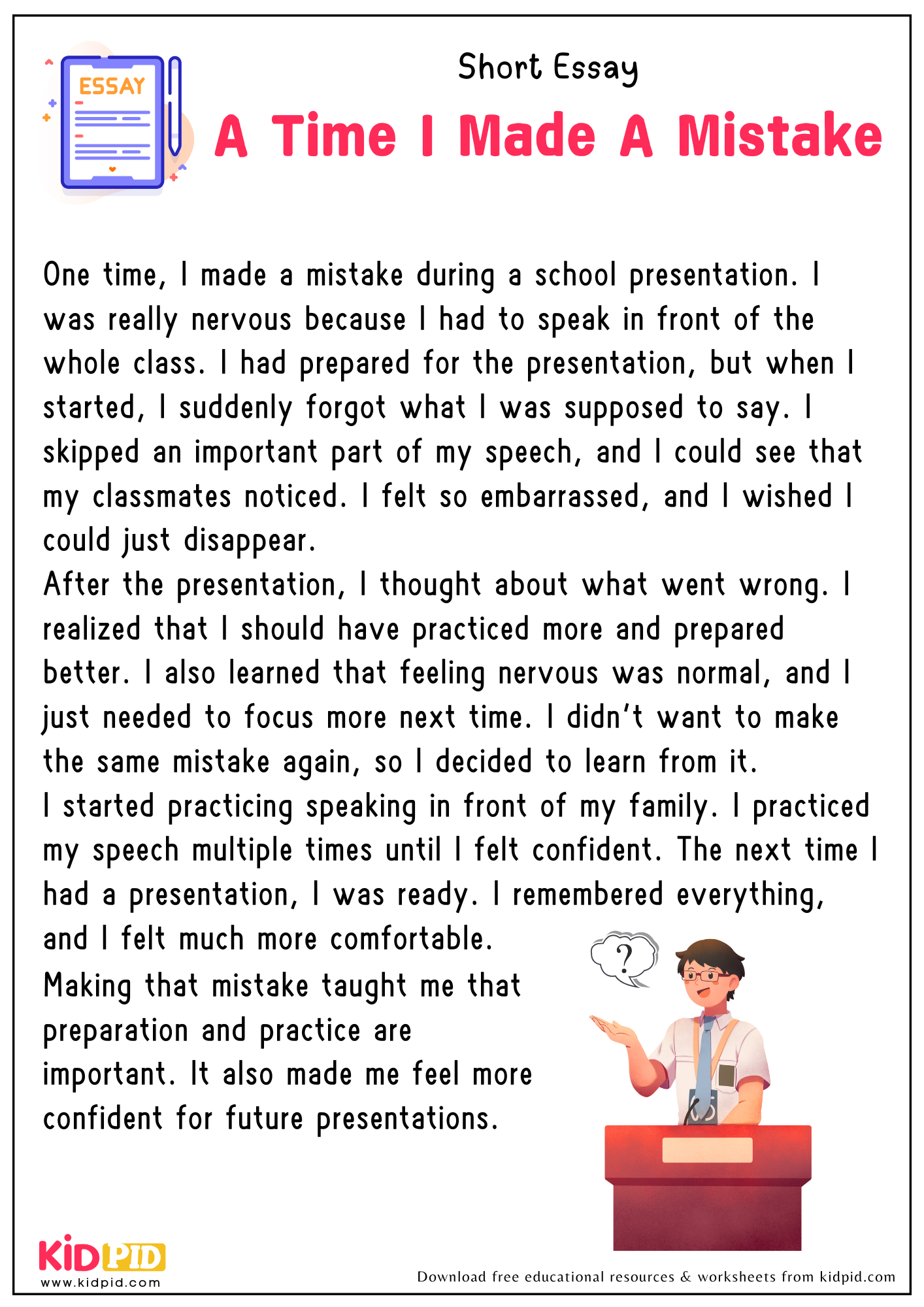
Nervous during a school presentation, I froze and skipped part of my speech, feeling embarrassed. Afterward, I practiced at home until confident, turning that mistake into a stepping stone for public-speaking growth.