Contents
🌍 Understanding Feedback in Nature
- When musicians say, “Testing, testing, one, two, three,” they are checking for sound feedback — that annoying noise.
- But in nature, feedback is a good thing — it helps everything stay balanced and work properly!
🔁 What Is Feedback?
- Feedback happens when one thing affects another, and that second thing affects the first one back.
- This back-and-forth process is called a feedback loop.
- Nature is full of these loops — between plants, animals, water, soil, and air.
- Feedback helps keep balance in nature and makes ecosystems stronger.
🌱 Example of Positive Feedback
- When plants die, they turn into humus, which adds nutrients and moisture to the soil.
- This helps more plants grow.
- More plants growing → more plants dying → more humus again.
- This is a positive feedback loop because it amplifies (increases) the effect.
- Positive feedback isn’t always “good” — it just means the effect keeps growing stronger.
- Example of harmful positive feedback:
- If a forest is cut down → soil erosion starts.
- Erosion removes nutrients → fewer plants can grow.
- Fewer plants → more erosion — and the damage continues.
🐇 Example of Negative Feedback
- Negative feedback helps keep balance and stop things from going too far.
- Example: Lynx and snowshoe hares
- Lynx eat hares → hare population decreases.
- With fewer hares, lynx have less food → lynx population decreases.
- With fewer lynx, hares increase again.
- This cycle keeps both populations stable over time — like a wave going up and down.
🦋 Surprising Feedback in Nature
- Nature’s feedback can be tricky — it’s not always simple “cause and effect.”
- Example:
- You spray pesticides to kill harmful insects.
- But then the insect predators (like ladybugs) lose food and their numbers drop.
- With fewer predators, the pest insects may come back again!
- Every link in the loop matters — if one link is weak or missing, the whole loop breaks.
🌐 Nature’s Web of Feedback Loops
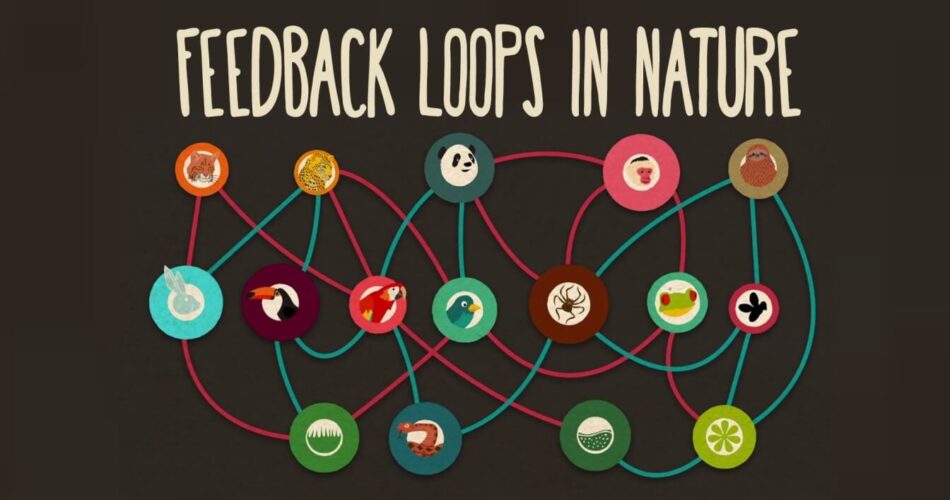
- Nature isn’t made of simple food chains — it’s a big food web.
- A web with 20 species can have thousands of feedback loops!
- These loops work together like instruments in an orchestra, making a beautiful balance in nature.
🎵 Ecosystems as Music
- Ocean ecosystems are like loud, powerful music — full of movement and strong feedback loops.
- Desert ecosystems are like a slow, steady drumbeat — fewer changes and slower feedback.
- Rainforests are like grand orchestras — rich, lively, full of many interacting loops.
- Sometimes, nature’s “music” changes:
- Deforestation can silence a forest — like a band losing its star.
- Abandoned land can grow into a forest again — like a small band turning into a big orchestra.
💡 In Short
- Feedback loops are nature’s way of keeping balance and adapting to change.
- Positive feedback = makes changes stronger.
- Negative feedback = keeps balance.
- Together, they make nature’s beautiful, ever-changing symphony! 🎶

Read More
Show Comments