Financial literacy means understanding how to manage money wisely. It helps people make informed choices about saving, spending, investing, and budgeting. Learning these skills ensures a secure financial future and avoids debt. This essay explains key points, benefits, and common questions about financial literacy for everyone.
Contents
10 Pointers About Financial Literacy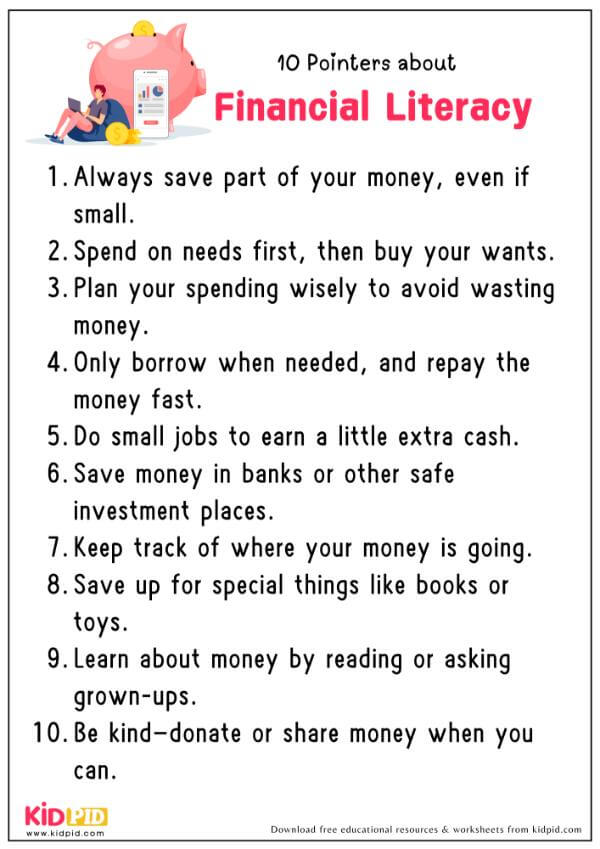

- Always save part of your money, even if small.
- Spend on needs first, then buy your wants.
- Plan your spending wisely to avoid wasting money.
- Only borrow when needed, and repay the money fast.
- Do small jobs to earn a little extra cash.
- Save money in banks or other safe investment places.
- Keep track of where your money is going.
- Save up for special things like books or toys.
- Learn about money by reading or asking grown-ups.
- Be kind—donate or share money when you can.
Short Essay On Financial Literacy
Essay On Financial Literacy in 100 Words
Financial literacy means understanding how to manage money wisely. Kids should learn to save part of their pocket money instead of spending it all. A good habit is to separate needs (like school supplies) from wants (like toys). Budgeting helps track spending, so money isn’t wasted. Avoiding unnecessary debt is important—borrowing should be a last resort. Earning extra money through small chores teaches responsibility. Saving early, even in a piggy bank, builds good habits. Setting goals, like buying a favorite book, makes saving fun. Learning about money now helps kids grow into smart spenders and savers in the future.
Essay On Financial Literacy in 200 Words

Financial literacy is the skill of managing money wisely, and kids need to learn early. Saving even a small amount regularly helps build a habit that lasts a lifetime. Kids should understand the difference between needs (things they must have, like food and school supplies) and wants (things they wish for, like video games). Creating a simple budget helps them plan their spending and avoid wasting money.
Another key lesson is avoiding unnecessary debt. Borrowing money should only be for important things, and repaying quickly is a must. Kids can also earn extra money by doing small chores or helping neighbors, teaching them the value of hard work.
Saving in a piggy bank or a bank account keeps money safe and can grow over time. Setting small financial goals, like saving for a toy, makes learning fun. Parents and teachers can help by explaining how money works and encouraging smart choices.
Financial literacy helps kids become responsible adults who can save, spend wisely, and avoid money problems. Starting early makes it easier to build good habits that last forever.
Essay On Financial Literacy in 300 Words
Financial literacy is an essential life skill that helps kids make smart money decisions. Learning to save, spend wisely, and plan for the future starts with simple habits. One of the first lessons is saving money—even small amounts add up over time. Kids should also learn the difference between needs (essential items like food, clothes, and school supplies) and wants (non-essential things like toys and snacks). Understanding this helps them avoid unnecessary spending.
Budgeting is another important skill. By keeping track of their money, kids can see where it goes and avoid wasting it. They should also learn about the dangers of debt. Borrowing money should only be for important reasons, and paying it back quickly is crucial.
Earning money through small jobs, like helping with chores or selling handmade crafts, teaches responsibility and the value of hard work. Saving money in a piggy bank or a bank account keeps it safe and can even grow with interest. Setting financial goals, such as saving for a special toy or a gift, makes learning about money fun and rewarding.
Parents and teachers play a big role in teaching financial literacy. Explaining how banks work, why saving matters, and how to avoid scams helps kids become smart with money. Books, games, and real-life experiences also make learning engaging.
By developing good money habits early, kids can avoid financial struggles later in life. Financial literacy gives them the confidence to make smart choices, save for the future, and even help others by donating or sharing.
Long Essay On Financial Literacy in 500 Words
Introduction: The Importance of Financial Literacy
Financial literacy is a crucial skill that everyone needs to understand, regardless of age. It is the knowledge and ability to manage money effectively, including how to save, budget, and spend wisely. For children, learning about money at an early age helps build habits that can last a lifetime. Financial literacy isn’t just about saving—it also teaches kids how to make smart decisions about spending, avoiding debt, and planning for the future. With the right financial knowledge, children can grow up to be responsible adults who manage their money well and avoid common financial mistakes.
Understanding Money: The Basics
One of the first things children need to learn is the importance of saving. Saving money doesn’t always mean putting away large sums; even small amounts can add up over time. For example, saving a part of their pocket money or any money earned from small jobs can help children develop a strong savings habit. Understanding the difference between needs and wants is a key step in making good financial decisions. Needs are necessary things, like food, clothing, and school supplies. Wants, on the other hand, are things we wish for but don’t need, like toys or games. By learning to prioritize their spending, kids can ensure that their money goes towards the things that matter most.
Budgeting: A Simple but Powerful Tool
Budgeting is a vital skill that helps children understand where their money goes and how to manage it. Creating a simple budget, where kids plan how much money they need for needs, wants, and savings, helps them track their spending. It also helps prevent overspending and wasting money on things they don’t need. By budgeting, kids learn that money is limited and that they must use it wisely. This process also teaches them about the importance of saving for future goals, like a new toy or a special treat.
Avoiding Debt: Borrowing Responsibly
While borrowing money can be helpful in some situations, it should always be done cautiously. Kids need to learn that borrowing should only be for important things, like buying a necessary item or paying for something that will bring long-term benefits. Borrowing should not be done to satisfy immediate wants, as it can lead to financial problems later. Learning to avoid unnecessary debt is an essential lesson in financial literacy. When borrowing is necessary, kids should understand the importance of repaying the money quickly to avoid accumulating debt.
Earning Money: The Value of Hard Work
Another valuable lesson in financial literacy is learning to earn money. Doing small jobs, such as helping with household chores or assisting neighbors, teaches kids the value of hard work. Earning money also helps children understand that money doesn’t come easily, and they must work for it. This teaches responsibility and the importance of managing their earnings wisely. Earning extra money can also give children a sense of independence and confidence as they begin to make their own financial decisions.
Saving for the Future: Setting Goals
Saving money for future goals is an important part of financial literacy. Children should be encouraged to set simple goals, such as saving for a new toy, book, or gift. This makes the process of saving more fun and rewarding. As they see their money grow over time, they will understand the benefits of saving for something special. Setting goals also teaches kids patience and delayed gratification, two important skills that will help them throughout their lives.
Conclusion: Financial Literacy for a Bright Future
In conclusion, financial literacy is an essential life skill that prepares children for a successful and responsible future. By learning how to save, budget, earn, and spend wisely, kids can build habits that will help them avoid financial struggles in adulthood. Parents, teachers, and caregivers play an important role in helping children develop good financial habits. By encouraging kids to make smart money choices, set goals, and understand the value of money, we give them the tools they need to navigate life with confidence and financial security. Financial literacy is not just about managing money—it’s about setting kids on a path to a brighter, more successful future.


FAQs on Financial Literacy
Q1. What is financial literacy?
Ans. Financial literacy is the ability to manage money wisely, including saving, budgeting, spending, and avoiding debt.
Q2. Why should kids learn about financial literacy early?
Ans. Learning financial literacy early helps kids build good money habits that will benefit them throughout their life.
Q3. What is the difference between needs and wants?
Ans. Needs are things that are essential for living, like food and school supplies, while wants are things we wish for but do not need, like toys and video games.
Q4. How does budgeting help kids manage money?
Ans. Budgeting helps kids track their money, avoid wasting it, and plan for future expenses by separating their money into categories like needs, wants, and savings.
Q5. Why is it important to avoid unnecessary debt?
Ans. Borrowing money should be done cautiously, and only for important things. Avoiding debt helps kids prevent financial problems in the future.
Q6. What can kids learn by earning money from small jobs?
Ans. Earning money teaches kids the value of hard work, responsibility, and how to manage their earnings wisely.
Q7. How can saving money early help kids?
Ans. Saving money early helps kids develop good financial habits and allows them to watch their money grow over time.
Q8. Why is setting financial goals important?
Ans. Setting financial goals helps kids stay motivated, teaches them patience, and rewards them when they achieve their goals, such as buying something special.
Q9. What role do parents and teachers play in teaching financial literacy?
Ans. Parents and teachers explain how money works, help kids set goals, and guide them in making smart money decisions.
Q10. What skills do kids learn by practicing financial literacy?
Ans. Kids learn how to save, budget, earn money, make smart spending decisions, and avoid debt, which prepares them for a successful financial future.
Financial literacy helps us manage money wisely, make smart decisions, and plan for the future. It empowers individuals to achieve stability, avoid debt, and build a secure, successful, and stress-free life. To explore more, visit our website and explore more paragraphs, essays, worksheets, flashcards, Quizzes, and other interactive resources. Don’t forget to follow us on YouTube & Facebook.
You might also like
Essay – My Favorite Animal Habitat


Rainforests, found near the equator, are warm, humid refuges full of towering trees and vibrant wildlife—monkeys, jaguars, sloths, parrots, toucans—vital for Earth’s oxygen and rich biodiversity.
Essay – A Famous Person I Would Like to Meet

The author admires Neil Armstrong, the first person on the moon, praising his bravery and dedication, and dreams of asking him about his moon-landing feelings, space experience, and astronaut training.
Essay – A Historical Event I’d Like To Witness

The first moon landing on July 20, 1969, featuring Apollo 11’s Neil Armstrong and Buzz Aldrin, symbolized human determination, inspired global awe, and advanced space exploration—an unforgettable moment in history.
Essay – A Place That Makes Me Happy

The beach delights with calming waves, warm sand, family picnics, sandcastle building, swimming, and stunning ocean views—invoking freedom, peace, joy, and nature’s fun, making it the perfect happy place.
Essay – A Time I Faced A Challenge

Learning to swim transformed fear into triumph: I started in the shallow end, hesitated, swallowed water, but with encouragement and perseverance, I finally swam across—discovering courage, confidence, and pride