
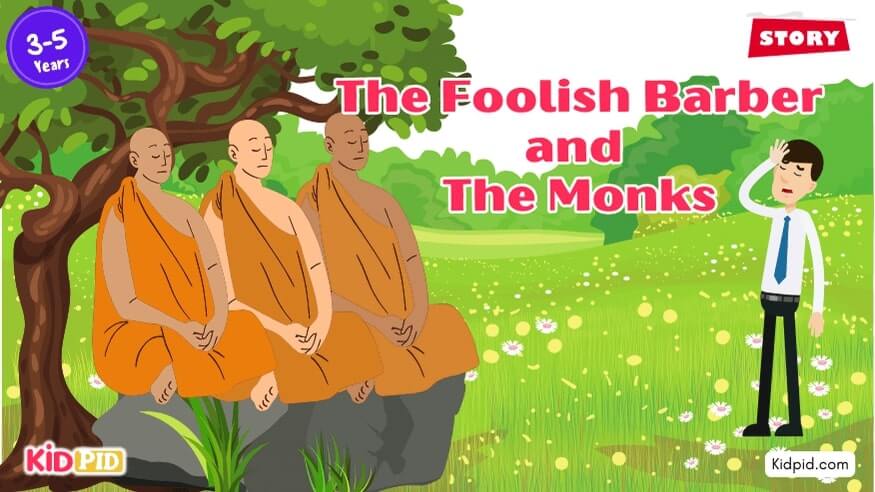
“The Foolish Barber and The Monks” is an entertaining moral story for kids that teaches honesty, wisdom, and the importance of thinking before acting. This engaging tale highlights good values, life lessons, and smart decision-making, showing children how foolish actions can lead to unexpected and funny consequences.
[Scroll Down for Download Link]
The Foolish Barber and the Monks – Moral Story for Kids
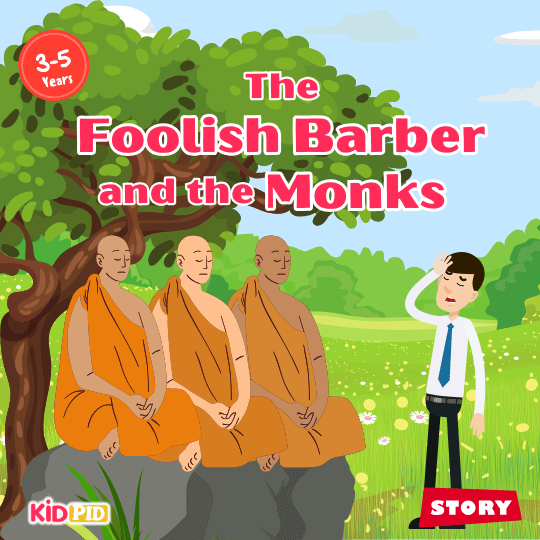
The Foolish Barber and the Monks – A moral story about wisdom and consequences.
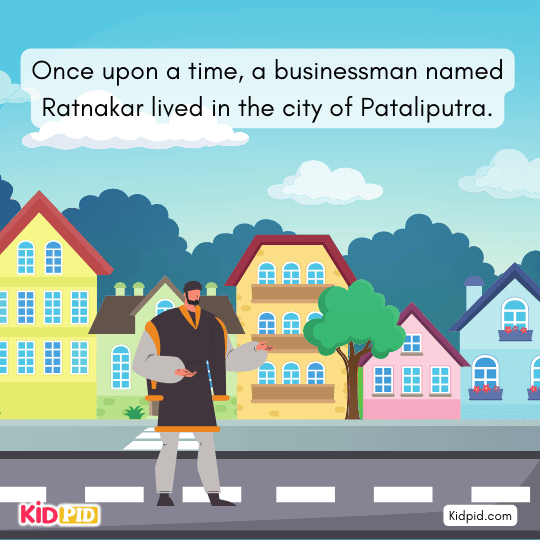
Ratnakar, a principled businessman, lives in Pataliputra.
Once upon a time, a businessman named Ratnakar lived in the city of Pataliputra.
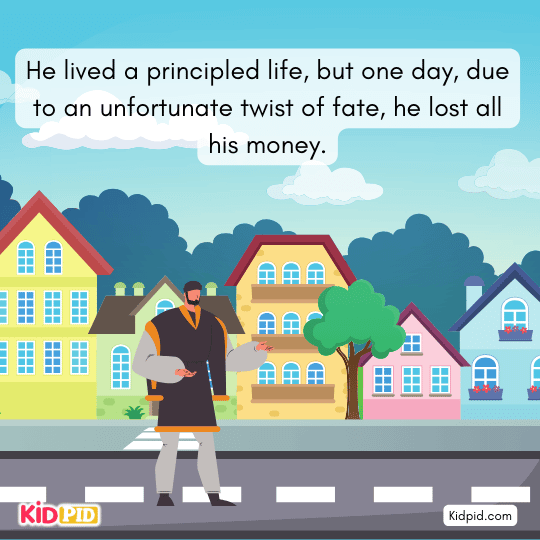
Ratnakar loses his entire fortune through misfortune.
He lived a principled life, but one day, due to an unfortunate twist of fate, he lost all his money.
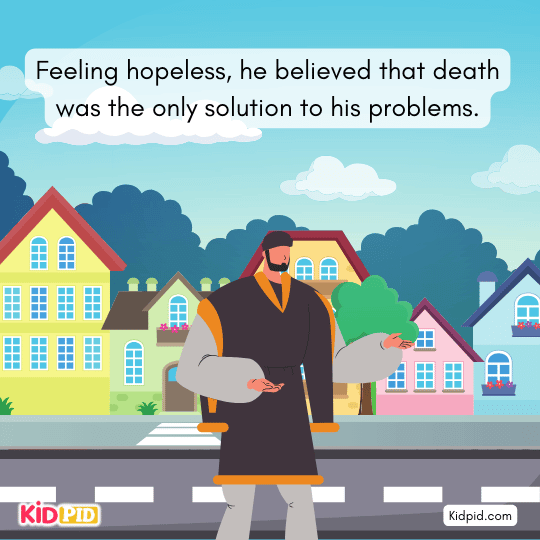
Hopeless Ratnakar believes death is his only escape.
Feeling hopeless, he believed that death was the only solution to his problems.
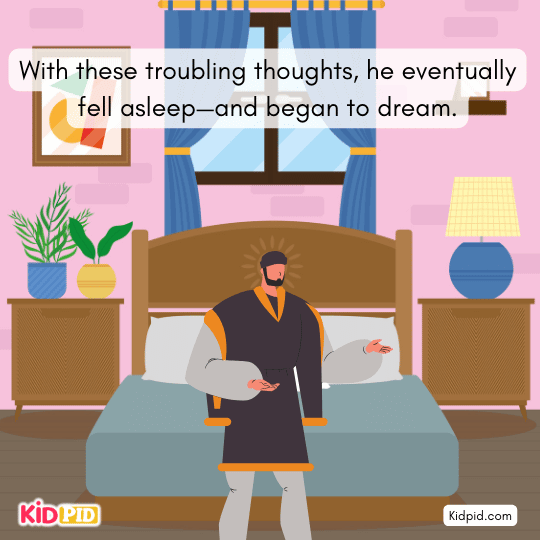
With troubled thoughts, Ratnakar eventually falls asleep.
With these troubling thoughts, he eventually fell asleep—and began to dream.
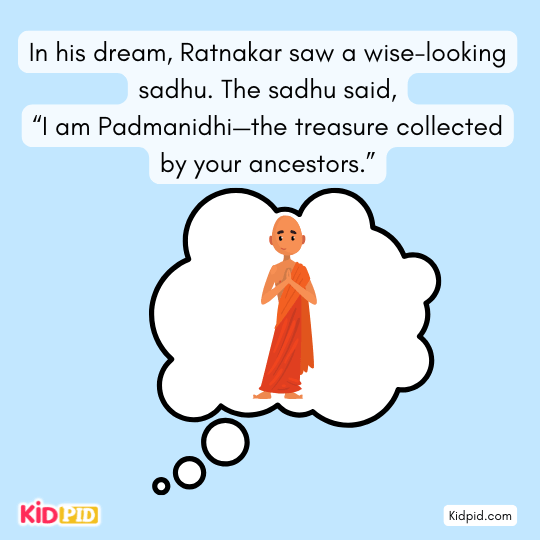
Ratnakar dreams of a wise sadhu who speaks to him.
In his dream, Ratnakar saw a wise-looking sadhu. The sadhu said, “I am Padmanidhi—the treasure collected by your ancestors.”

The sadhu tells him not to lose hope and stay strong.
He continued, “Do not lose hope. Tomorrow morning, I will appear before you in this form. Strike me on the head with a stick, and I will turn into gold. Then you can live happily.”
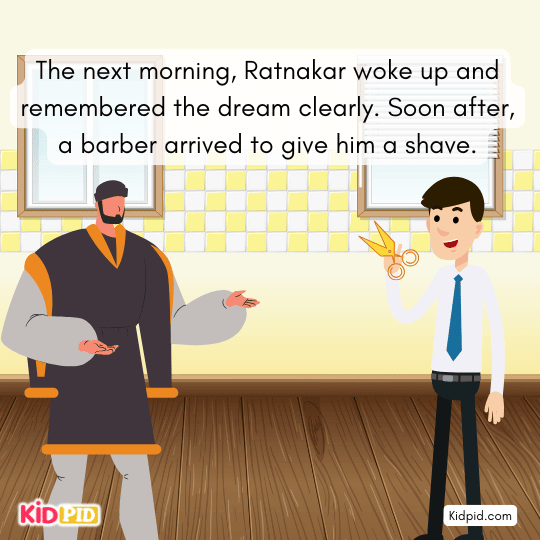
Sadhu instructs Ratnakar to strike him in the morning.
The next morning, Ratnakar woke up and remembered the dream clearly. Soon after, a barber arrived to give him a shave.
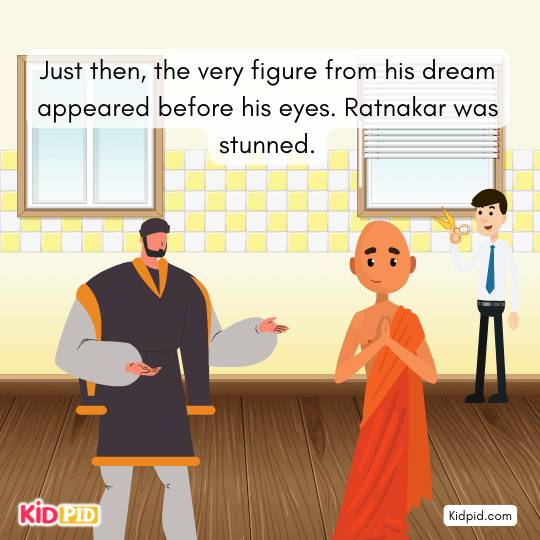
Ratnakar wakes from the dream as his barber arrives.
Just then, the very figure from his dream appeared before his eyes. Ratnakar was stunned.
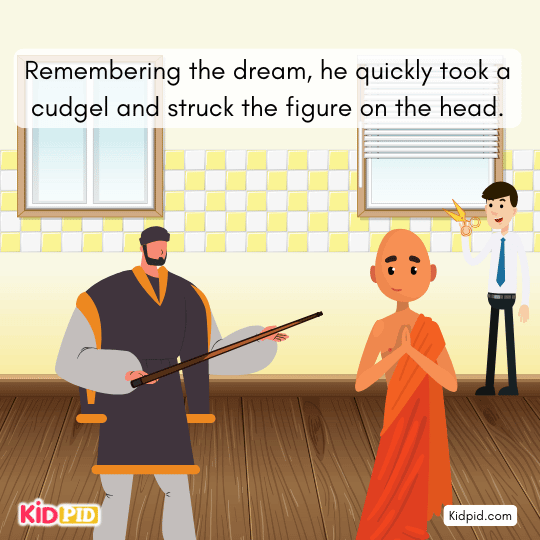
The same figure from the dream appears before Ratnakar.
Remembering the dream, he quickly took a cudgel and struck the figure on the head.
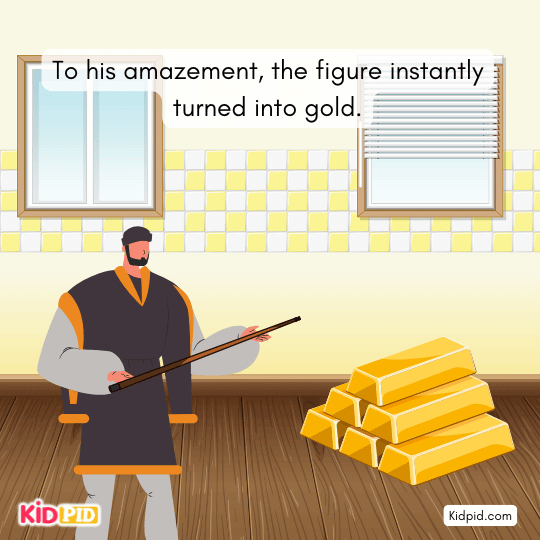
He strikes the figure on the head with a cudgel.
To his amazement, the figure instantly turned into gold.
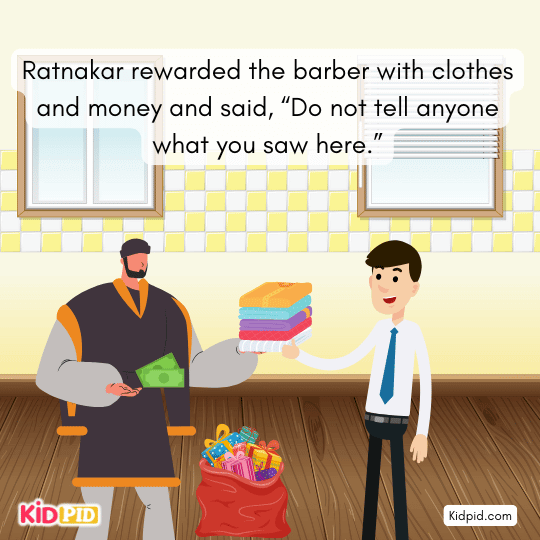
The figure transforms into shining gold instantly.
Ratnakar rewarded the barber with clothes and money and said, “Do not tell anyone what you saw here.”
Ratnakar rewards the barber for keeping the secret.
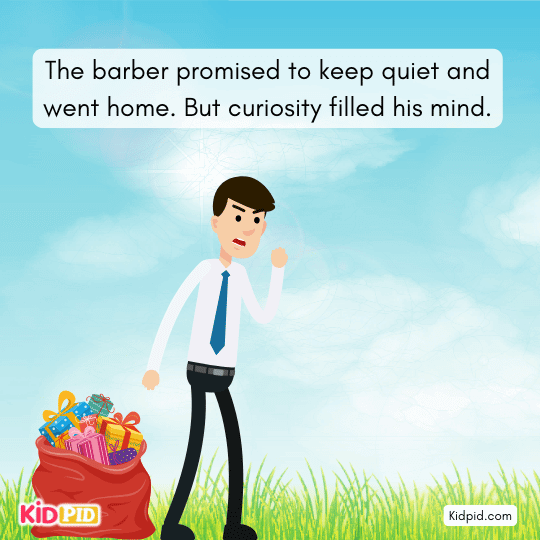
The barber promised to keep quiet and went home. But curiosity filled his mind.
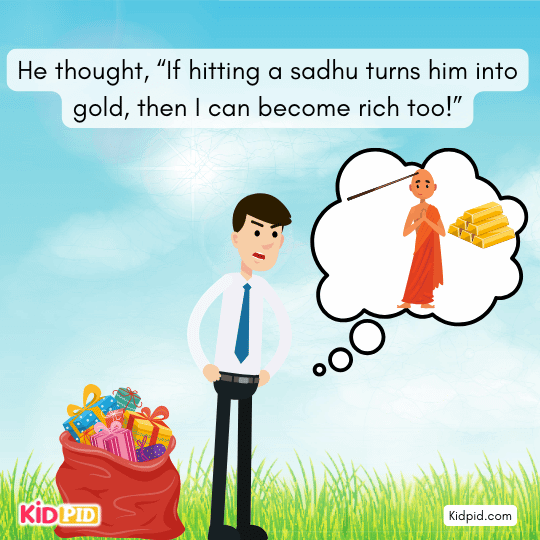
The barber dreams of getting rich by hitting monks.
He thought, “If hitting a sadhu turns him into gold, then I can become rich too!”
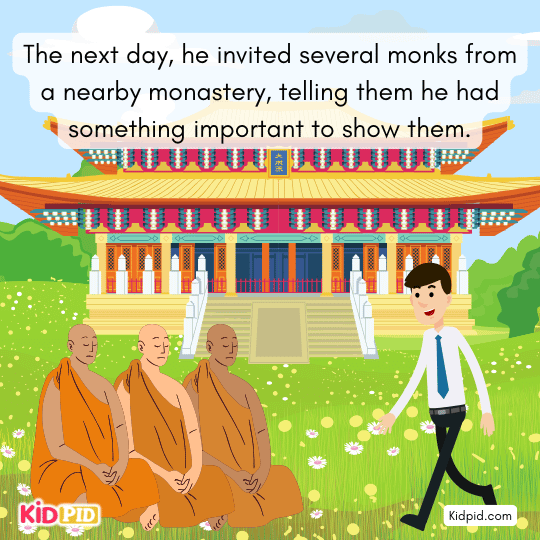
The barber invites monks saying he has something important.
The next day, he invited several monks from a nearby monastery, telling them he had something important to show them.
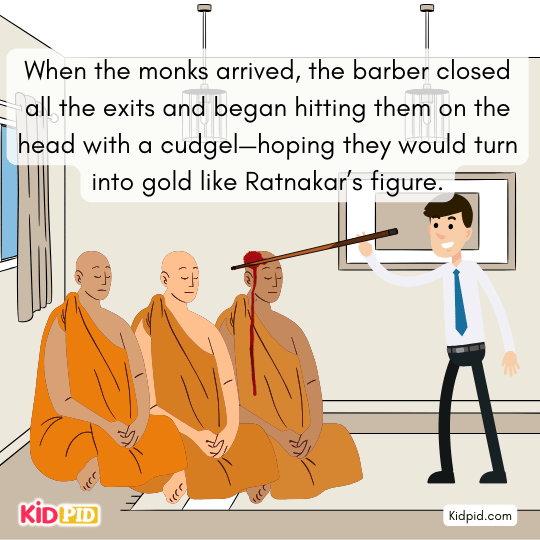
The barber strikes monks on the head, hoping they turn to gold.
When the monks arrived, the barber closed all the exits and began hitting them on the head with a cudgel—hoping they would turn into gold like Ratnakar’s figure.
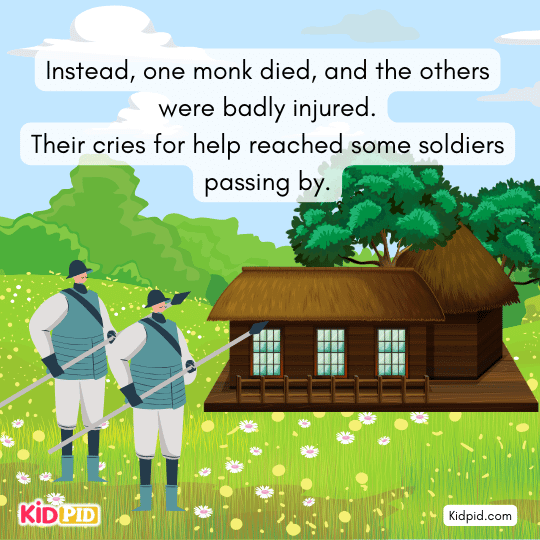
One monk dies and others are injured by the barber’s actions.
Instead, one monk died, and the others were badly injured. Their cries for help reached some soldiers passing by.
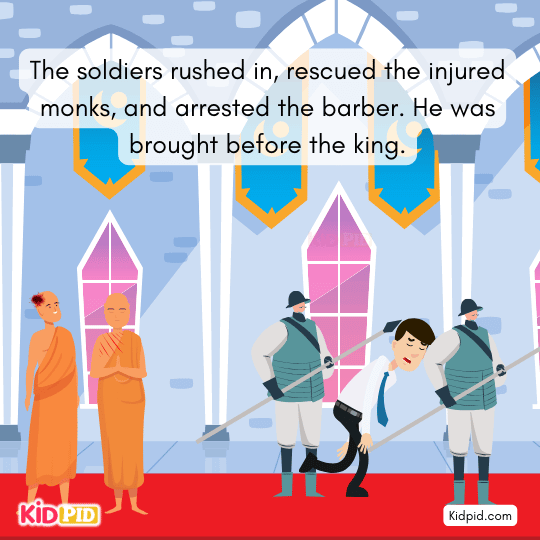
Soldiers save the monks and arrest the foolish barber.
The soldiers rushed in, rescued the injured monks, and arrested the barber. He was brought before the king.
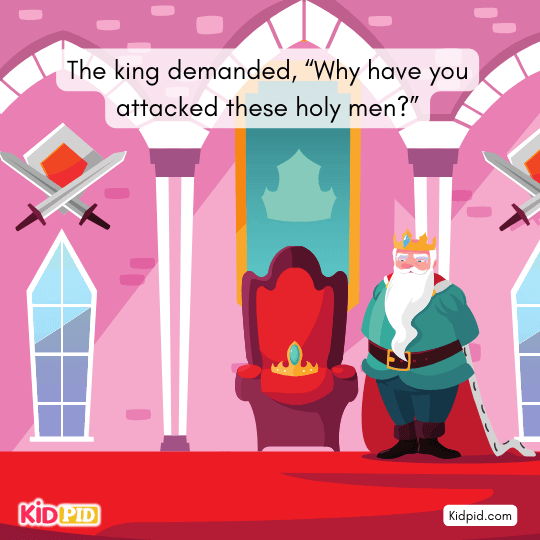
The barber is brought before the king to explain his actions.
The king demanded, “Why have you attacked these holy men?”
The barber explains Ratnakar’s miracle but misinterprets it.
The foolish barber explained everything he had seen at Ratnakar’s house.
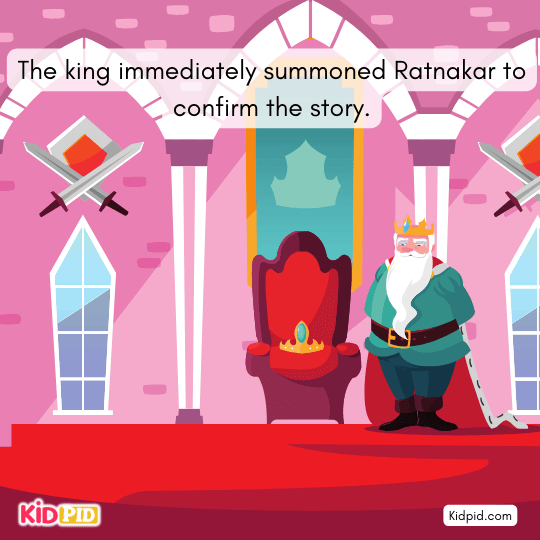
The king summons Ratnakar to verify the barber’s story.
The king immediately summoned Ratnakar to confirm the story.
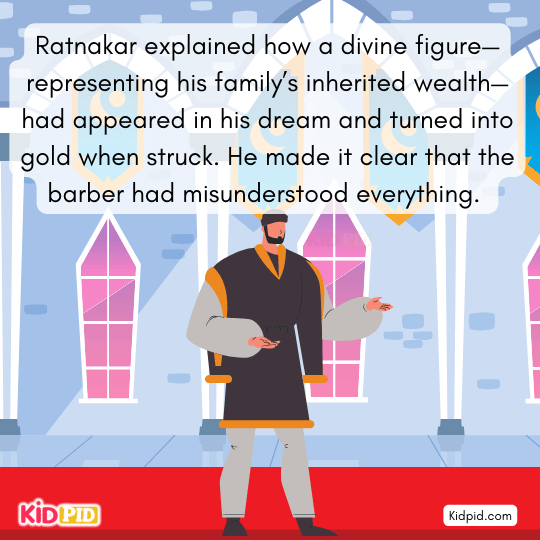
Ratnakar explains the dream and his ancestral wealth.
Ratnakar explained how a divine figure—representing his family’s inherited wealth—had appeared in his dream and turned into gold when struck. He made it clear that the barber had misunderstood everything.
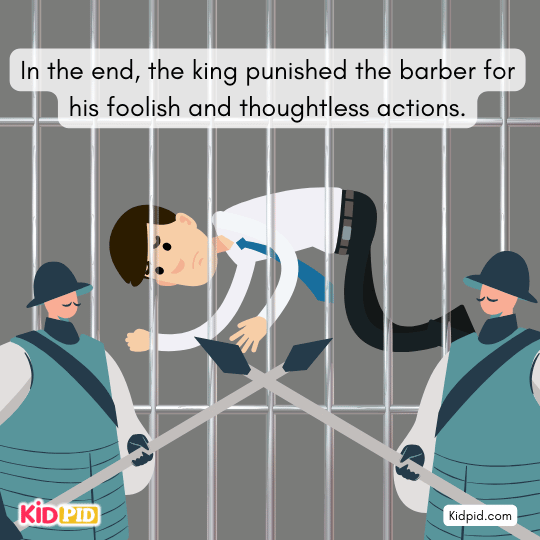
The king punishes the barber for his foolish and harmful actions.
In the end, the king punished the barber for his foolish and thoughtless actions.
Moral: Acting without thinking leads to disaster.
Moral: Acting without careful consideration always leads to disaster.

“The Foolish Barber and The Monks” teaches kids the value of honesty, wisdom, and careful thinking. This moral story reminds children that actions without thought can lead to mistakes and regrets.


