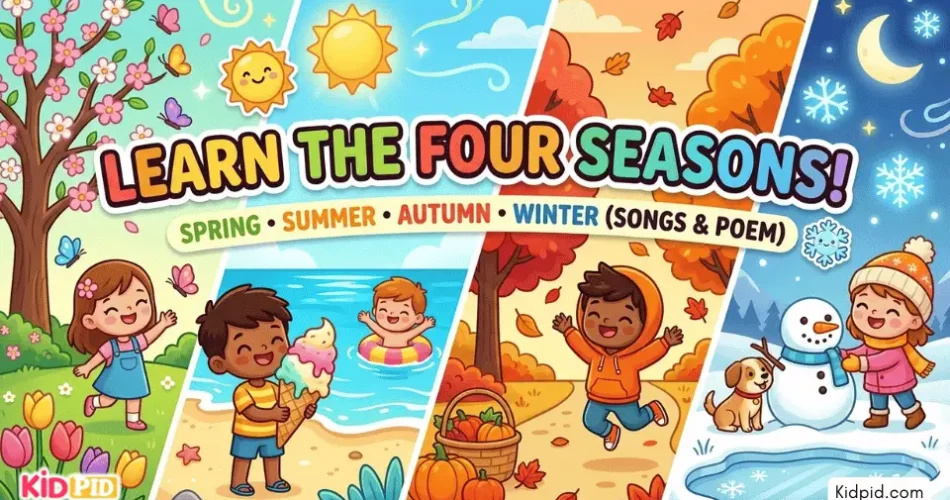
Seasons Rhyme for Kids is a fun and educational rhyme that helps children learn about the four seasons of the year—Spring, Summer, Autumn, and Winter—in a simple and memorable way. Through easy-to-understand rhyming lines and colorful seasonal examples, young learners can explore how weather, nature, plants, animals, and daily activities change throughout the year. Learning about the seasons helps children develop environmental awareness, observation skills, vocabulary, science knowledge, and time-awareness skills. This rhyme is perfect for preschoolers, kindergarten students, early elementary learners, parents, and teachers who want to make seasonal learning enjoyable and engaging.
Contents
- What are the Four Seasons?
- Seasons Rhyme for Kids – Learn the Four Seasons
- Why is it Important for Kids to Learn About Seasons?
- Educational Benefits of This Rhyme
- Learning Outcomes
- Fun Facts About Seasons
- FAQs
- Q1. How many seasons are there in a year?
- Q2. Which season comes after Spring?
- Q3. Why do leaves fall in Autumn?
- Q4. What clothes do people wear in Winter?
- Q5. Why is Summer hotter than Winter?
- Q6. How does learning about seasons help children?
- Q7. Which season has blooming flowers?
- Q8. Can seasons be different around the world?
What are the Four Seasons?
The year is divided into four seasons:
- Spring – Flowers bloom, trees grow new leaves, and the weather becomes warmer.
- Summer – The hottest season with sunny days, outdoor activities, and vacations.
- Autumn (Fall) – Leaves change color and fall from trees as the weather becomes cooler.
- Winter – The coldest season with chilly weather, snow in some places, and warm clothing.
Seasons Rhyme for Kids – Learn the Four Seasons

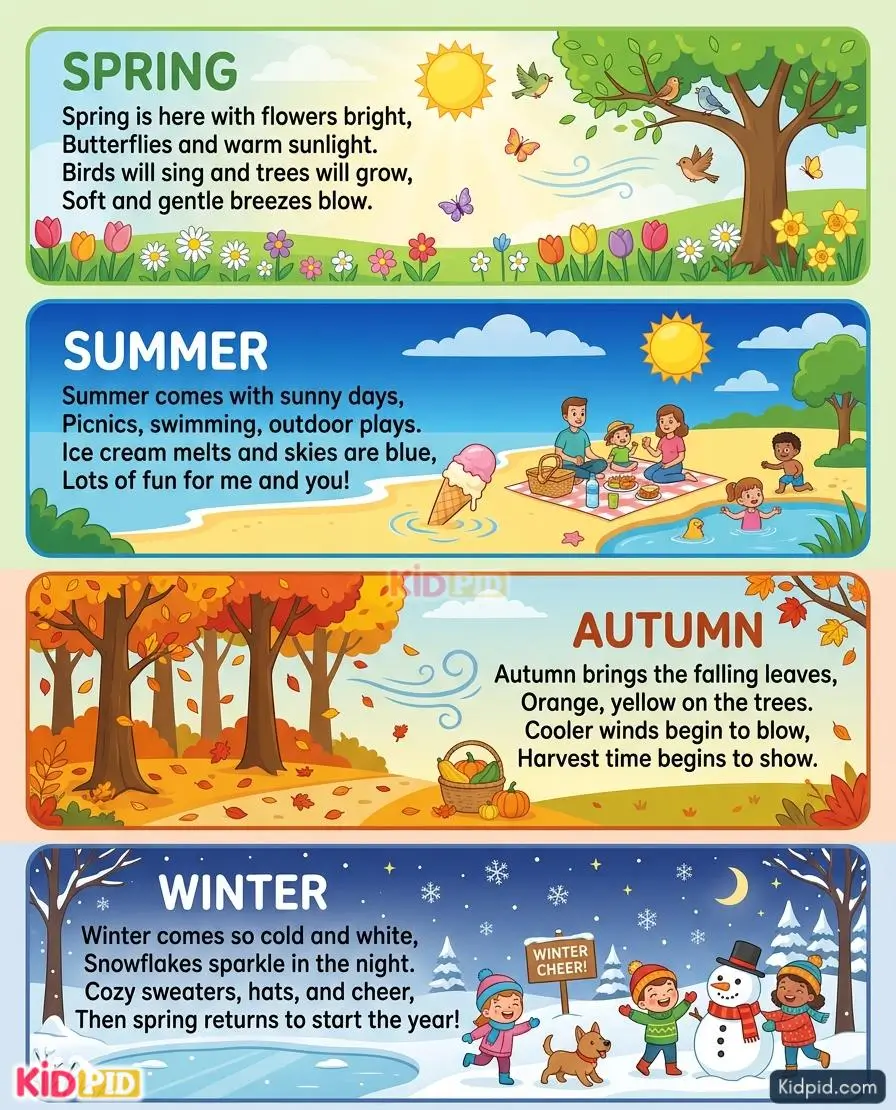
A fun Seasons Rhyme that helps children learn about Spring, Summer, Autumn, and Winter while improving vocabulary, observation skills, and seasonal awareness.
This colorful Seasons Rhyme for Kids introduces children to Spring, Summer, Autumn, and Winter through simple rhyming lines and engaging illustrations. Kids can learn about seasonal weather, nature, plants, animals, and activities while building vocabulary and observation skills. The rhyme makes learning about the changing seasons fun, memorable, and easy for young learners.
Why is it Important for Kids to Learn About Seasons?
Learning about seasons helps children understand the natural world and how it changes throughout the year. It also helps them recognize weather patterns, seasonal activities, and the relationship between nature and daily life.
Educational Benefits of This Rhyme
- Improves vocabulary related to weather and nature.
- Develops observation and environmental awareness skills.
- Enhances listening and memory through repetition.
- Supports early science and geography learning.
- Encourages curiosity about seasonal changes.
- Builds language and communication skills.
Learning Outcomes
After practicing this rhyme, children will be able to:
- Name the four seasons in order.
- Identify common features of each season.
- Understand how weather changes throughout the year.
- Recognize seasonal activities and clothing.
- Improve memory, vocabulary, and observation skills.
- Develop a basic understanding of nature and climate.
Fun Facts About Seasons
- The Earth has four main seasons because it is tilted as it moves around the Sun.
- Spring is often called the season of new beginnings.
- Summer usually has the longest days of the year.
- Autumn is known for colorful falling leaves.
- Winter has the shortest days and longest nights in many places.
FAQs
Q1. How many seasons are there in a year?
Answer: There are four seasons in a year: Spring, Summer, Autumn (Fall), and Winter.
Q2. Which season comes after Spring?
Answer: Summer comes after Spring.
Q3. Why do leaves fall in Autumn?
Answer: Trees shed their leaves to prepare for the colder winter months.
Q4. What clothes do people wear in Winter?
Answer: People usually wear warm clothes such as sweaters, jackets, scarves, and hats.
Q5. Why is Summer hotter than Winter?
Answer: During Summer, a part of the Earth receives more direct sunlight, making temperatures warmer.
Q6. How does learning about seasons help children?
Answer: It helps children understand weather, nature, time, and environmental changes throughout the year.
Q7. Which season has blooming flowers?
Answer: Spring is known for blooming flowers and new plant growth.
Q8. Can seasons be different around the world?
Answer: Yes, seasons can vary depending on a country’s location and climate.
This Seasons Rhyme for Kids makes learning about Spring, Summer, Autumn, and Winter fun and memorable. It helps children understand seasonal changes while improving vocabulary, observation, science knowledge, and environmental awareness through enjoyable rhyming practice. Don’t forget to visit our website for new rhymes, paragraphs, essays, worksheets, flashcards, quizzes, and exciting educational content. Follow us on YouTube & Facebook for daily fun learning videos and activities designed especially for kids.