Contents
10 Pointers About Freedom

- Freedom means the right to think, speak, and act without unfair control.
- It lets us make our own decisions, like choosing hobbies or friends.
- With freedom comes the duty to respect others’ rights.
- We can share our ideas, but without hurting others.
- Laws protect our freedom by stopping harm or chaos.
- Learning helps us use freedom wisely.
- Everyone deserves freedom, no matter who they are.
- Many people fought for the freedoms that we enjoy today.
- Freedom allows us to imagine and create new things.
- We should be thankful for our freedoms and protect them.
Short Essay On Freedom
Essay On Freedom in 100 Words
Freedom is the power to think, speak, and act without unnecessary restrictions. It lets us choose our friends, hobbies, and opinions while respecting others. True freedom does not mean doing whatever we want—it comes with responsibility. Laws and rules help protect our rights and keep society fair. Many historical heroes fought for freedoms like education, speech, and equality. We must use freedom wisely, without harming others, and be grateful for it. Whether in school or at home, freedom helps us grow, learn, and express ourselves positively.
Essay On Freedom in 200 Words
Freedom is one of the most important rights we have. It means the ability to make choices, express our thoughts, and live without fear. However, freedom is not unlimited—it comes with responsibility. For example, we can choose what games to play, but we must also follow the rules to stay safe and fair.
Throughout history, many leaders like Mahatma Gandhi and Martin Luther King Jr. fought for freedom and equality. Their struggles remind us that freedom should never be taken for granted. Today, we enjoy freedoms like going to school, sharing opinions, and practicing our beliefs.
Yet, freedom also means respecting others. We cannot use it to hurt people or break the law. Schools and families teach us how to balance freedom with discipline. When we use freedom wisely, it helps us grow into kind, responsible, and creative individuals.
We must protect our freedoms by being informed, standing up for what is right, and appreciating the sacrifices made for them. True freedom makes life joyful, fair, and full of opportunities.
Essay On Freedom in 300 Words
Freedom is the foundation of a happy and fair society. It allows people to live, speak, and act according to their beliefs, as long as they do not harm others. For children, freedom means choosing hobbies, playing freely, and expressing ideas in school. However, it also means understanding limits, like following rules at home and in class.
Throughout history, many brave men and women fought for freedom. Leaders like Nelson Mandela and Susan B. Anthony struggled against unfair systems so that everyone could have equal rights. Because of them, today we enjoy freedoms like education, speech, and religion.
Yet, freedom is not just about rights—it includes duties too. We must respect others’ freedoms, avoid bullying, and follow laws that keep society safe. For example, we have the freedom to speak, but not to spread lies or hate. Schools teach us how to use freedom responsibly by encouraging teamwork and fairness.
Freedom also helps creativity and growth. When children are free to explore, ask questions, and make mistakes, they learn better. Parents and teachers guide us so that we use freedom wisely without being reckless.
In some parts of the world, people still fight for basic freedoms. This reminds us to be grateful for what we have and to stand up for those who are oppressed. True freedom brings peace, progress, and happiness when used with kindness and responsibility.
We must always protect our freedoms by being informed, respectful, and courageous. By doing so, we ensure that future generations can also live in a fair and free world.
Long Essay On Freedom in 500 Words
Introduction
Freedom is one of the most fundamental human rights. It is the ability to make choices, express opinions, and live according to one’s beliefs, without undue restrictions. In a free society, individuals are empowered to pursue their dreams, engage in personal development, and contribute to the greater good. However, true freedom is not absolute. It comes with responsibilities that ensure everyone’s rights are respected. This essay explores the significance of freedom, the responsibility it entails, the historical struggles for freedom, and how we can preserve it for future generations.
The Meaning of Freedom
Freedom is the power to act, speak, or think as one wants, without interference or restrictions. It allows individuals to make their own choices about how they live their lives. For children, freedom may mean the ability to choose their friends, pursue hobbies, and express opinions in school. As people grow older, they gain more freedom, such as voting in elections, choosing their career paths, and practicing their religion. However, freedom is not without its limits. While one person may have the freedom to speak their mind, this should never infringe upon another person’s rights or cause harm. Therefore, freedom must be exercised with respect for others.
Freedom and Responsibility
While freedom offers individuals the power to make decisions, it is not a license to do anything without consequence. Every freedom comes with the responsibility to respect the freedoms of others. For example, the freedom to speak is essential, but it should not be used to spread lies or hate. Similarly, the right to vote is crucial, but people must use their votes wisely and responsibly. In schools and families, children are taught the balance between freedom and responsibility. By learning to act with respect for others and follow laws that protect the common good, individuals contribute to a fair and just society.
Historical Struggles for Freedom
Throughout history, many brave men and women have fought for freedom and equality. Leaders like Mahatma Gandhi, Martin Luther King Jr., Nelson Mandela, and Susan B. Anthony challenged oppressive systems to ensure that everyone could enjoy their rights. Their efforts have paved the way for the freedoms we enjoy today, such as the right to education, the freedom of speech, and the freedom of religion. These historical struggles remind us that freedom is not always guaranteed—it must be fought for and protected.
The Role of Education in Promoting Freedom
Education plays a vital role in teaching individuals about their rights and responsibilities. Schools are not only places for learning academic subjects but also spaces where students learn about their duties as responsible citizens. By teaching students the importance of freedom, respect for others, and the rule of law, schools prepare them to use their freedom wisely. In addition, education fosters critical thinking, creativity, and problem-solving skills—essential components of personal and societal growth. When children are encouraged to explore, ask questions, and challenge ideas, they develop into informed, responsible individuals.
The Need to Protect Freedom
Although many people today enjoy significant freedoms, not everyone in the world is free. In some parts of the world, individuals still fight for basic freedoms such as freedom of speech, the right to vote, and the right to live without fear of oppression. It is crucial for us to appreciate the freedoms we have and to stand up for those whose rights are denied. Whether through advocacy, raising awareness, or supporting human rights organizations, we all have a role to play in preserving freedom.
Conclusion
Freedom is an essential part of a just and fair society. It allows individuals to make choices, express opinions, and live according to their beliefs. However, freedom is not absolute; it requires responsibility and respect for others’ rights. The struggles of those who fought for freedom throughout history serve as reminders of its value and importance. We must protect and preserve freedom for future generations by being informed, responsible, and respectful of others. By doing so, we ensure that the principles of liberty, equality, and justice remain central to our society.


FAQs on Freedom
Q1. What is the meaning of freedom?
Ans. Freedom is acting without restrictions, responsibly.
Q2. What is the relationship between freedom and responsibility?
Ans. Freedom requires respect for others’ rights.
Q3. Who fought for freedom historically?
Ans. Mahatma Gandhi, Martin Luther King Jr.
Q4. What does freedom mean for children?
Ans. Choosing hobbies, expressing ideas, and following rules.
Q5. Why is freedom not unlimited?
Ans. It must respect others’ rights.
Q6. What role does education play in freedom?
Ans. Teaches rights, responsibilities, and critical thinking.
Q7. How do laws protect freedom?
Ans. Laws maintain fairness and prevent harm.
Q8. Why should we protect freedom?
Ans. To preserve justice and equality for all.
Q9. What struggles led to freedom rights?
Ans. Fights for equality and basic rights.
Q10. How can we protect future freedoms?
Ans. Stay informed, respect others, and advocate.
Freedom is a precious gift that allows us to live with dignity and make our own choices. We should value, protect, and use it wisely for a better future.For more learning, visit our website to explore a wide range of paragraphs, essays, worksheets, flashcards, Quizzes, and other interactive resources. Don’t forget to follow us on YouTube & Facebook.
You May Like This:
Essay – Sachin Tendulkar: The God Of Cricket


Sachin Ramesh Tendulkar (born April 24, 1973 in Mumbai) is a legendary Indian batsman. He scored over 34,000 international runs, made 100 centuries, won the 2011 World Cup, and inspired millions.
Essay – Kapil Dev: The Captain Of the World Cup Winning Team


Kapil Dev Ramlal Nikhanj (born January 6, 1959, Chandigarh) is India’s legendary all‑rounder: first fast bowler who could bat brilliantly, captained India to the 1983 World Cup, and took over 400 Test wickets.
Essay – Jawaharlal Nehru: The First Prime Minister Of India


Jawaharlal Nehru (born November 14, 1889 in Allahabad; died May 27, 1964) was India’s first Prime Minister (1947–1964), loved by children as “Chacha Nehru,” and a founder of modern, secular, democratic India.
Essay – Sunil Gavaskar: The Legendary Cricketer
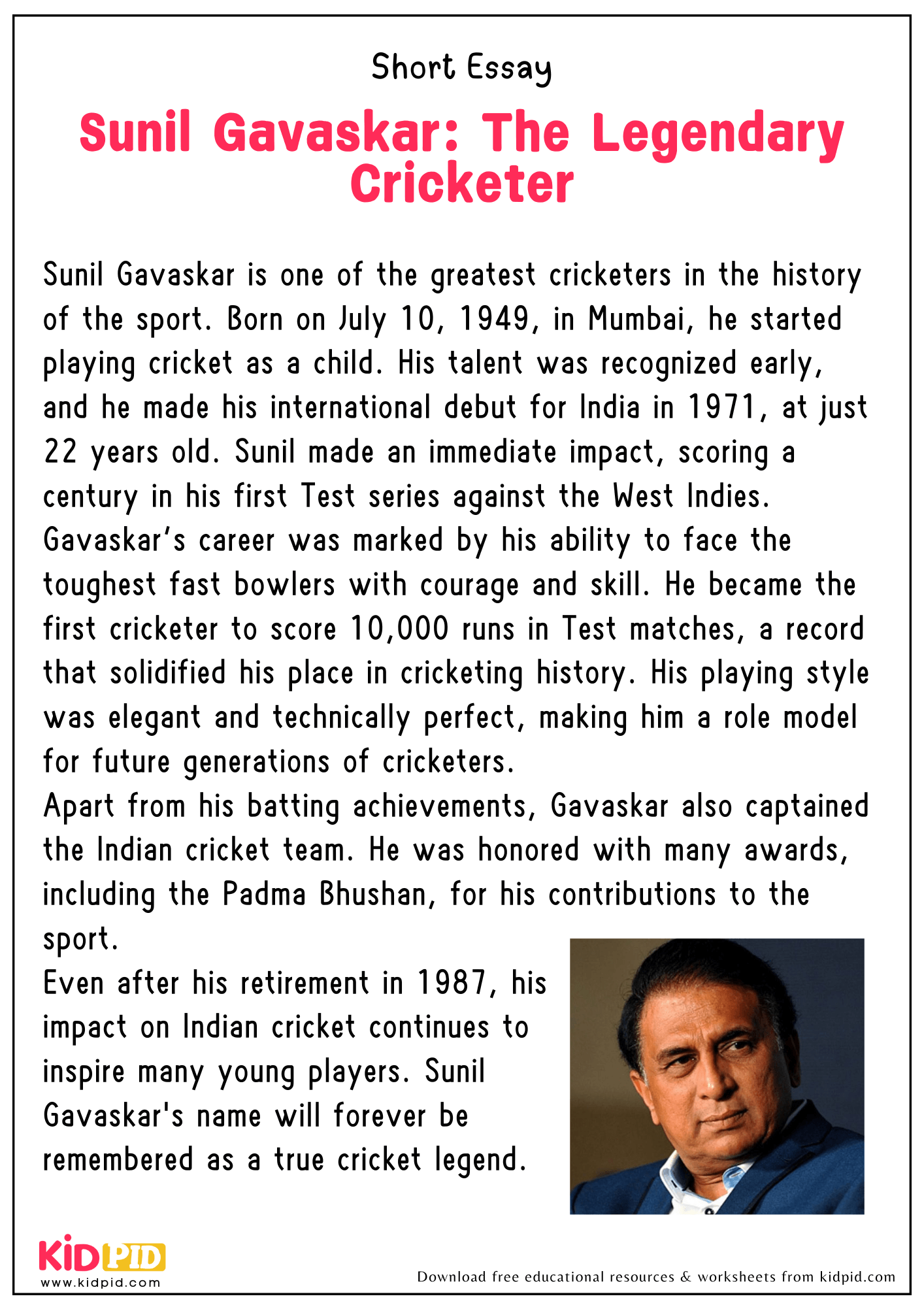

Sunil Manohar Gavaskar (born July 10, 1949, Mumbai) is India’s legendary opening batsman. Nicknamed the “Little Master,” he was the first to score over 10,000 Test runs and set many records.

Marie Antoinette (born November 2, 1755, Vienna; executed October 16, 1793, Paris) was the last Queen of France. Criticized for lavish spending and unpopular politics, she was guillotined during the French Revolution.