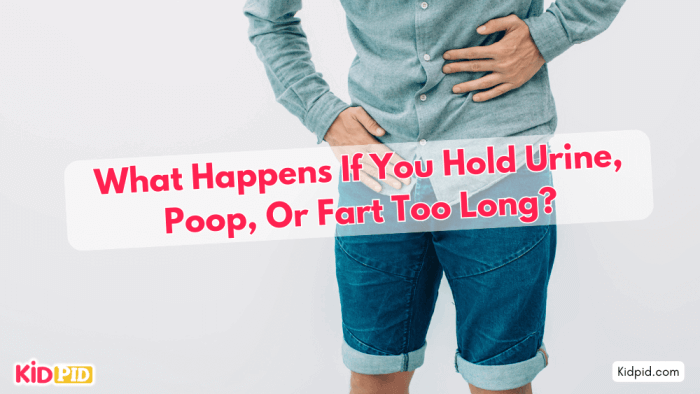
Have you ever tried holding in your pee, poop, or fart? It might feel funny for a short time, but did you know it can cause problems? Let’s take a closer look at what happens to your body when you hold these things in for too long.
- Holding Urine: Holding your pee for too long can hurt your bladder. It can lead to infections or difficulty peeing later.
- Holding Poop: If you hold in poop, it can make your stomach hurt. It may lead to constipation or other digestion problems.
- Holding Farts: If you hold in gas (farts), it can cause bloating. It might make your stomach feel uncomfortable or painful.
- Overall: It’s best to listen to your body and go when you need to. Holding these things in too long can cause discomfort and health issues.
What happens if you hold pee, poop, or gas?
Related MCQ’s
1. What happens if you hold your pee for too long?
A) Your bladder will become stronger.
B) Your bladder may burst.
C) You will feel more comfortable.
D) Your kidneys will start working harder.
2. What is the first signal your body sends when you need to pee?
A) A feeling of hunger.
B) A signal from the bladder to the brain.
C) Your muscles get stronger.
D) You start feeling sleepy.
3. What can happen if you hold your poop for too long?
A) You might develop constipation.
B) Your stomach will get bigger.
C) You will start feeling sleepy.
D) It will become easier to pass later.
4. What is a possible result of holding in all your farts?
A) You will feel more relaxed.
B) You might get bloating and pain.
C) Your stomach will shrink.
D) You will feel stronger.
5. What happens when you hold your breath for too long?
A) Your heart rate speeds up.
B) You may feel dizzy and confused.
C) You will have more energy.
D) Your lungs will get stronger.
You may like these:
What Happens When You Hold Your Pee?
Holding urine can cause bladder stretching, increased pressure, and discomfort. It may lead to urinary retention, infections, or weakened bladder muscles over time.
What causes constipation?
Constipation is caused by slow bowel movements, dehydration, poor diet, lack of exercise, medications, or medical conditions, leading to infrequent, difficult, or painful bowel movements.
The Immune System
The immune system defends the body against infections and diseases through white blood cells, antibodies, and organs like the spleen, fighting pathogens and ensuring he