
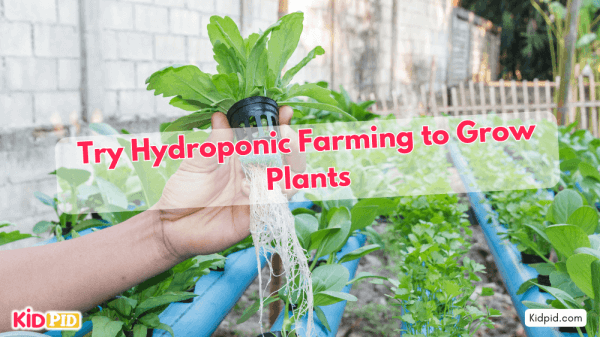
Did you know that you can grow plants without using soil? Hydroponic farming is a way to grow plants in water with special nutrients. Let’s explore how you can try it at home!
- It’s a method of growing plants in water, not soil, with all the nutrients they need to grow.
- Plants are placed in a container with water and nutrient solutions, which help them grow strong and healthy.
- Many plants like lettuce, spinach, herbs, and even strawberries can grow using hydroponics!
- It uses less space, less water, and you can grow plants indoors, even in small areas like your home.
- You can start with simple items like plastic containers, water, and special nutrient solutions. There are also hydroponic kits available!
- Benefits of Hydroponic Farming: It’s a fun way to learn about science, grow fresh plants, and help the environment by using fewer resources!
Contents
- How to Grow Plants Without Soil? Explore Hydroponic Farming At Home.
- Related MCQ’S
- 1. What is hydroponics?
- 2. What was the main challenge of soil-based agriculture?
- 3. What does the term “hydroponics” mean?
- 4. How do plants grow in hydroponics without soil?
- 5. Why is it important to adjust the environment and nutrients for different plants in hydroponics?
- 6. What is the Deep Water Culture system in hydroponics?
- 7. What is the purpose of the wick in the Wick System of hydroponics?
- 8. What is the main advantage of aeroponics?
- 9. How much water is needed for hydroponic farming compared to traditional farming?
- 10. Why is NASA using hydroponic farming techniques?
- You may like these:
How to Grow Plants Without Soil? Explore Hydroponic Farming At Home.
Related MCQ’S
1. What is hydroponics?
a) A soil-based method of farming
b) A water-based farming technique without using soil
c) A farming technique that requires a lot of pesticides
d) A method that uses only sunlight for farming
2. What was the main challenge of soil-based agriculture?
a) It requires too much water
b) It needs constant supply of fertilizers and pesticides
c) It cannot be used for all types of plants
d) It doesn’t need sunlight
3. What does the term “hydroponics” mean?
a) Water and soil
b) Water and labor
c) Water and light
d) Water and air
4. How do plants grow in hydroponics without soil?
a) They get nutrients from the air
b) Nutrients are provided in the water
c) They grow by absorbing nutrients from sunlight
d) They don’t need nutrients to grow
5. Why is it important to adjust the environment and nutrients for different plants in hydroponics?
a) Different plants require different temperatures, nutrient-rich water, and techniques
b) It helps the plants grow faster
c) All plants grow the same way in hydroponics
d) It reduces the water usage
6. What is the Deep Water Culture system in hydroponics?
a) Plants are grown in soil and water
b) Plants have their roots submerged in nutrient-mixed water with an air pump
c) Plants are suspended in the air with mist sprayed on them
d) Plants are grown with no water
7. What is the purpose of the wick in the Wick System of hydroponics?
a) To pump water directly into the plant
b) To absorb and distribute the liquid to the roots
c) To give the plants light
d) To remove the water from the system
8. What is the main advantage of aeroponics?
a) It uses the most water
b) It uses very little water by spraying a mist
c) It doesn’t need any nutrients
d) It uses only sunlight
9. How much water is needed for hydroponic farming compared to traditional farming?
a) More water
b) Less water
c) The same amount of water
d) No water
10. Why is NASA using hydroponic farming techniques?
a) It is cheaper than traditional farming
b) It uses less water, which is ideal for space programs
c) It doesn’t need sunlight
d) It’s easier to maintain
You may like these:
Essay On Plants

Plants provide oxygen, food, and medicines, and help maintain ecological balance. They also support biodiversity, prevent soil erosion, and improve the environment, making life sustainable.
How does Water Reach the Top of the Tree from the Roots?
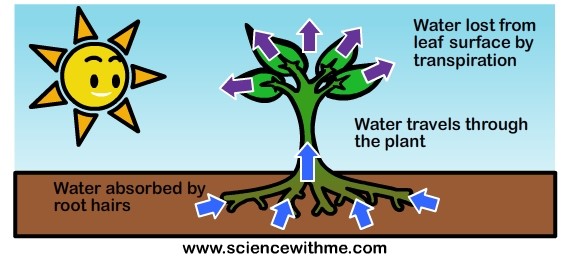
Water moves from tree roots to the top through capillary action and transpiration. Evaporation from leaves creates a pull, drawing water upward through vascular tissues.
Can Plants Like Lotus be grown without Soil?
Yes, plants like lotus can grow without soil using hydroponics. This method provides nutrients through water, ensuring growth in non-traditional environments.