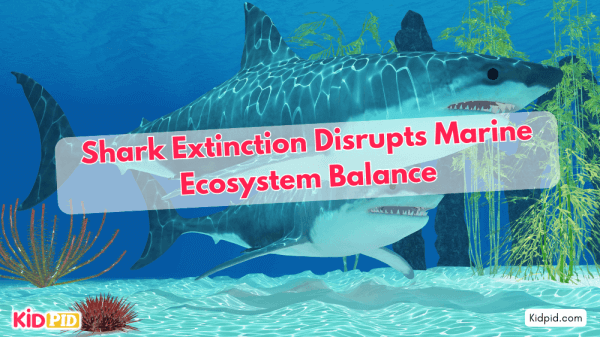
Sharks are important creatures in the ocean. If sharks were to disappear, it could cause big changes in the ocean and affect many other animals and humans too!
- Why Are Sharks Important: Sharks help keep the ocean healthy by controlling the number of other animals.
- What Would Happen if Sharks Disappeared: Without sharks, smaller fish might grow too many, which could hurt other ocean creatures.
- Impact on the Ocean Food Chain: Sharks are at the top of the food chain, and without them, the balance in the ocean would be upset.
- Effect on Other Animals: Some animals that sharks eat could become too numerous, and others could struggle to survive.
- Impact on Humans: People depend on healthy oceans for food and jobs, and sharks help keep the ocean balanced.
- Why Should We Protect Sharks: Sharks are important for keeping the ocean ecosystem strong, and we should protect them to keep nature healthy.
Contents
- What If Sharks Disappeared? Consequences Of Shark Extinction.
- Related MCQ’S
- 1. What do movies often show about sharks?
- 2. How many sharks are hunted by humans every year?
- 3. What would happen if sharks disappeared from the ocean?
- 4. What role do sharks play in controlling the fish population?
- 5. What happens to the algae if sharks disappear from the food chain?
- 6. Why is the disappearance of sharks bad for coral reefs?
- 7. What do sharks do to help maintain healthy marine life?
- 8. What happens to sea animals that depend on shark poop for survival?
- 9. What is one of the ways we can help save sharks?
- 10. What has happened to the population of oceanic sharks since 1970?
- You may like these:
What If Sharks Disappeared? Consequences Of Shark Extinction.

Related MCQ’S
1. What do movies often show about sharks?
a) They are friendly and helpful
b) They are bloodthirsty creatures
c) They live peacefully with humans
d) They don’t exist in oceans
Answer: b) They are bloodthirsty creatures
Explanation: Movies often portray sharks as dangerous creatures that hunt humans, which is not true in reality.
2. How many sharks are hunted by humans every year?
a) 10 million
b) 50 billion
c) 100 billion
d) 1 million
Answer: c) 100 billion
Explanation: Nearly 100 billion sharks are hunted each year, putting their population at risk.
3. What would happen if sharks disappeared from the ocean?
a) Ocean ecosystems would be unaffected
b) The marine ecosystem would collapse
c) The ocean would become cleaner
d) More fish would survive
Answer: b) The marine ecosystem would collapse
Explanation: Without sharks, the balance of the marine ecosystem would be disrupted, leading to the collapse of many species.
4. What role do sharks play in controlling the fish population?
a) They help smaller fish grow
b) They eat smaller fish that feed on algae
c) They produce food for other fish
d) They breed new types of fish
Answer: b) They eat smaller fish that feed on algae
Explanation: Sharks help control the population of smaller fish, which prevents algae from growing uncontrollably in the ocean.
5. What happens to the algae if sharks disappear from the food chain?
a) Algae will decrease in number
b) Algae will grow uncontrollably
c) Algae will stop growing altogether
d) Algae will change color
Answer: b) Algae will grow uncontrollably
Explanation: Without sharks controlling the smaller fish population, algae will increase, blocking sunlight from reaching the ocean floor.
6. Why is the disappearance of sharks bad for coral reefs?
a) Without sharks, coral will grow faster
b) Without sharks, corals won’t get enough oxygen
c) Sharks help coral reefs grow
d) Sharks protect coral from predators
Answer: b) Without sharks, corals won’t get enough oxygen
Explanation: The growth of algae, unchecked by sharks, blocks sunlight, preventing corals from getting the oxygen they need.
7. What do sharks do to help maintain healthy marine life?
a) They help weaker animals survive
b) They feed on the healthy members of marine life
c) They eliminate sick or weak members of marine life
d) They produce food for the ocean
Answer: c) They eliminate sick or weak members of marine life
Explanation: Sharks help maintain healthy populations by feeding on the weak and sick members of marine life, preventing the spread of illness.
8. What happens to sea animals that depend on shark poop for survival?
a) They become stronger
b) They will have nothing to eat and perish
c) They move to other areas
d) They will start to eat algae
Answer: b) They will have nothing to eat and perish
Explanation: Some sea animals depend on the nitrogen-rich poop from sharks for survival. Without sharks, these animals would not have food and would die.
9. What is one of the ways we can help save sharks?
a) By eating more shark meat
b) By reducing demand for products made from sharks
c) By catching more sharks for research
d) By ignoring their existence
Answer: b) By reducing demand for products made from sharks
Explanation: To protect sharks, we need to reduce our demand for products made from sharks and spread awareness about their importance.
10. What has happened to the population of oceanic sharks since 1970?
a) It has doubled
b) It has decreased by 71%
c) It has remained the same
d) It has increased by 50%
Answer: b) It has decreased by 71%
Explanation: The population of oceanic sharks has decreased by 71% since 1970 due to overfishing and other human activities.
You may like these:
What If There Were No Sharks?
Without sharks, ocean ecosystems would be unbalanced. As apex predators, sharks regulate fish populations, and their absence would disrupt the food chain and biodiversity.
How do sharks find prey?
Sharks use keen senses to find prey: they detect vibrations with their lateral line, smell with specialized nostrils, and can even sense electrical signals from animals.
Essay on Population Growth for Grade 8
Population growth refers to the increase in the number of people. It’s influenced by birth rates, death rates, and migration, impacting resources, society, and the environment.
Can you solve the fish riddle?
A fish riddle involves thinking critically. It might ask you to identify a fish by a clue, test logic, or use wordplay to find the answer.