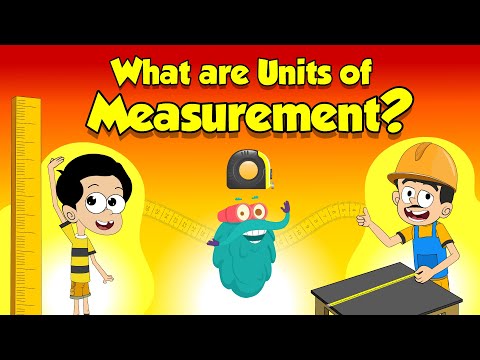
Measurement is a way to find out how big, long, or heavy something is, or how much time something takes. It helps us understand the world around us and makes life easier in many ways. Let’s explore why measurements are important!
- Measurement tells us the size, weight, or length of things.
- We use units like meters, liters, and kilograms to measure.
- It helps us know how much food to cook or what size clothes to buy.
- Builders use measurements to make houses and bridges perfectly.
- Without measurement, everything would be confusing and hard to understand.
Contents
- Why Measurements Matter: Exploring the Importance of Units
- Related MCQ’S
- 1. What is the purpose of measurement?
- 2. What is the international system of units also called?
- 3. Which unit is used in the imperial system to measure length?
- 4. What is used to measure how much liquid a container can hold?
- 5. Which scale is used in the United States to measure temperature?
- 6. What is the base unit of time?
- 7. What does the metric system measure weight in?
- 8. Who is considered the founding father of the metric system?
- 9. Which unit is used in both metric and imperial systems?
- 10. What is an example of a small liquid measurement in the metric system?
- You may like these:
Why Measurements Matter: Exploring the Importance of Units
Related MCQ’S
1. What is the purpose of measurement?
a) To compare colors
b) To find the size or quantity of something
c) To count objects
d) To guess the weight of an object
Answer: b) To find the size or quantity of something
Explanation: Measurement is the process of finding a number that shows the size or quantity of something.
2. What is the international system of units also called?
a) Imperial System
b) Metric System
c) SI Units
d) Fahrenheit System
Answer: c) SI Units
Explanation: The international system of units is referred to as the metric system and abbreviated as SI (Système International d’Unités).
3. Which unit is used in the imperial system to measure length?
a) Meter
b) Kilogram
c) Inch
d) Milliliter
Answer: c) Inch
Explanation: The imperial system measures length in units like inches, feet, and miles.
4. What is used to measure how much liquid a container can hold?
a) Length
b) Weight
c) Capacity or Volume
d) Time
Answer: c) Capacity or Volume
Explanation: Capacity or volume determines how much liquid a container can hold, such as milliliters or liters in the metric system.
5. Which scale is used in the United States to measure temperature?
a) Celsius
b) Kelvin
c) Fahrenheit
d) Metric
Answer: c) Fahrenheit
Explanation: The Fahrenheit scale is used in the United States to measure temperature.
6. What is the base unit of time?
a) Minute
b) Hour
c) Day
d) Second
Answer: d) Second
Explanation: The base unit of time is the second, which is universally used to determine time.
7. What does the metric system measure weight in?
a) Inches
b) Pounds
c) Kilograms
d) Gallons
Answer: c) Kilograms
Explanation: The metric system measures weight in kilograms.
8. Who is considered the founding father of the metric system?
a) Sir Isaac Newton
b) Galileo Galilei
c) Gabriel Mouton
d) Albert Einstein
Answer: c) Gabriel Mouton
Explanation: Gabriel Mouton, a French mathematician, is considered the founding father of the metric system.
9. Which unit is used in both metric and imperial systems?
a) Gallon
b) Degree Fahrenheit
c) Second
d) Mile
Answer: c) Second
Explanation: Time, measured in seconds, is a unit common to both metric and imperial systems.
10. What is an example of a small liquid measurement in the metric system?
a) Pint
b) Milliliter
c) Gallon
d) Cup
Answer: b) Milliliter
Explanation: Milliliters are used in the metric system to measure small quantities of liquid.
You may like these:
Reaching the Age of Adolescence
Adolescence marks the transition from childhood to adulthood, characterized by physical, emotional, and hormonal changes, including puberty, identity development, and increasing independence.
What is stars and solar system?
Stars are massive celestial bodies emitting light and heat. The solar system comprises the Sun, planets, moons, asteroids, and comets orbiting in harmony.