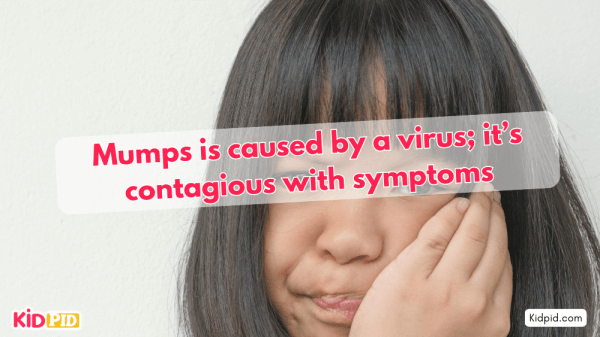
Mumps is a sickness caused by a tiny germ called a virus. It’s important to learn about mumps because it can spread easily from one person to another. Let’s find out more about what mumps is, how it spreads, and what symptoms to watch for!
- What Causes Mumps: Mumps is caused by a virus, which is a type of germ.
- How It Spreads: Mumps is contagious, meaning it can easily spread from person to person.
- Common Symptoms: Swelling of the cheeks and jaw (this is the most noticeable symptom). Fever and headache. Sore throat and tiredness.
- Prevention: Getting vaccinated can help protect you from mumps. Washing hands and staying away from sick people can also help.
Contents
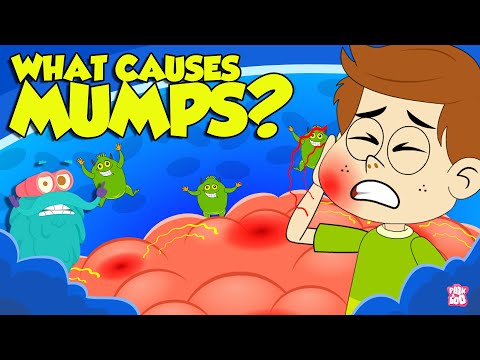
Related MCQ’S
1. What causes mumps?
a) A bacteria
b) A virus known as paramyxovirus
c) A fungus
d) A type of allergy
Answer: b) A virus known as paramyxovirus
Explanation: Mumps is caused by a virus called paramyxovirus, which belongs to the rubulavirus family.
2. What part of the body is mainly affected by the mumps virus?
a) Lungs
b) Salivary glands
c) Skin
d) Heart
Answer: b) Salivary glands
Explanation: The mumps virus mainly affects the salivary glands, especially the parotid glands located in the cheeks and jaw area.
3. How is mumps spread from one person to another?
a) By direct contact with skin
b) By coughing or sneezing droplets
c) Through eating contaminated food
d) By touching shared surfaces
Answer: b) By coughing or sneezing droplets
Explanation: Mumps spreads when an infected person coughs or sneezes, releasing tiny droplets containing the virus into the air, which can be breathed in by others.
4. What is a common symptom of mumps?
a) Swollen cheeks and jaw
b) Coughing with no fever
c) Rash on the skin
d) Difficulty breathing
Answer: a) Swollen cheeks and jaw
Explanation: A common symptom of mumps is swelling and pain in the cheeks and jaw area, caused by inflammation of the salivary glands.
5. Why is it important to get vaccinated against mumps?
a) To prevent a sore throat
b) To avoid neurological conditions and other complications
c) To reduce fever symptoms
d) To avoid headaches
Answer: b) To avoid neurological conditions and other complications
Explanation: Vaccination helps prevent serious complications from mumps, such as inflammation of the brain and spine, hearing loss, and issues like orchitis (swelling of the testicles) in boys.
6. What should you do if you notice symptoms of mumps?
a) Take a walk in the park
b) Visit the doctor and avoid public places
c) Ignore the symptoms and continue with normal activities
d) Drink lots of sugary drinks
Answer: b) Visit the doctor and avoid public places
Explanation: It’s important to visit the doctor if you notice mumps symptoms and stay home to avoid spreading the virus to others.
You may like these:
Why do we sweat?
Sweating helps regulate body temperature by cooling the skin as water evaporates, preventing overheating, and maintaining homeostasis in response to physical activity or heat.
Why do I need vaccinations?
Vaccinations protect against diseases by stimulating the immune system to produce antibodies, ensuring the body is prepared to fight infections without experiencing illness.
Do You Know Science Behind Body Odor?
Body odor occurs when sweat interacts with bacteria on the skin, breaking down proteins and producing smelly compounds. Hormonal changes and diet influence odor strength.