Nuclear energy is one of the most powerful and important energy sources in the world. It is produced through nuclear reactions and is used for electricity, medicine, and research. This essay, along with 10 pointers and questions, explains the advantages, disadvantages, and importance of nuclear energy in our lives.
Contents
10 Pointers About Nuclear Energy
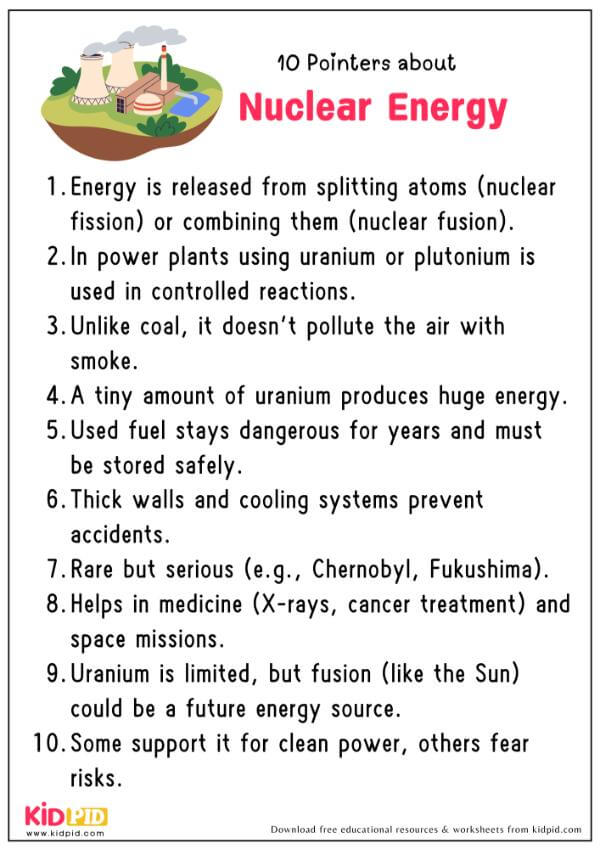

- Energy is released from splitting atoms (nuclear fission) or combining them (nuclear fusion).
- In power plants using uranium or plutonium is used in controlled reactions.
- Unlike coal, it doesn’t pollute the air with smoke.
- A tiny amount of uranium produces huge energy.
- Used fuel stays dangerous for years and must be stored safely.
- Thick walls and cooling systems prevent accidents.
- Rare but serious (e.g., Chernobyl, Fukushima).
- Helps in medicine (X-rays, cancer treatment) and space missions.
- Uranium is limited, but fusion (like the Sun) could be a future energy source.
- Some support it for clean power, others fear risks.
Short Essay On Nuclear Energy
Essay On Nuclear Energy in 100 Words
Nuclear energy comes from splitting atoms in a process called fission. It produces huge power without smoke, making it cleaner than coal. However, radioactive waste from nuclear plants must be stored carefully for years. Accidents like Chernobyl remind us that safety is important. Still, nuclear energy helps in hospitals and space missions. Scientists are also studying fusion, the Sun’s energy source, for future power. While some people support nuclear energy for its efficiency, others worry about the dangers. If used safely, it can be a strong, clean energy source for the future.
Essay On Nuclear Energy in 200 Words

Nuclear energy is a powerful way to generate electricity by splitting atoms, a process called nuclear fission. Uranium atoms are broken apart in reactors, releasing heat that turns water into steam, spinning turbines to create electricity. Unlike burning coal, nuclear power doesn’t pollute the air, making it cleaner.
However, nuclear energy has challenges. Used fuel remains radioactive for thousands of years and must be stored safely. Accidents, though rare, can be dangerous, like the Chernobyl disaster in 1986. Modern plants have strong safety systems to prevent such events.
Beyond electricity, nuclear technology helps in medicine, like cancer treatments, and powers spacecraft. Scientists are also researching nuclear fusion, which mimics the Sun’s energy and could provide limitless clean power in the future.
Many countries debate nuclear energy; some support it for reducing pollution, while others fear risks. If managed carefully, nuclear power can be a key part of fighting climate change. For kids learning about energy, nuclear power shows how science can solve big problems while needing responsibility.
Essay On Nuclear Energy in 300 Words
Nuclear energy is one of the strongest sources of power, created by splitting atoms in a process called nuclear fission. Inside a reactor, uranium atoms are split, releasing massive heat that boils water into steam. This steam spins turbines, generating electricity without burning fossil fuels. Since it doesn’t produce smoke, nuclear energy is cleaner than coal or oil, helping fight climate change.
Yet, nuclear power has risks. The used fuel stays radioactive for thousands of years and must be stored in secure facilities. Accidents, though extremely rare, can be devastating. The Chernobyl disaster in 1986 and Fukushima in 2011 showed the dangers of radiation leaks. Today, reactors have stronger safety features like backup cooling systems to prevent meltdowns.
Nuclear technology isn’t just for electricity. It helps in medicine, like X-rays and cancer treatments, and powers submarines and space probes. Scientists are also working on nuclear fusion, the same energy process that powers the Sun. If successful, fusion could provide nearly unlimited clean energy without radioactive waste.
Countries debate nuclear energy’s role. Some, like France, rely on it heavily, while others, like Germany, are phasing it out due to safety concerns. Supporters argue it’s essential for reducing carbon emissions, while opponents worry about accidents and waste.
For kids, nuclear energy is a fascinating example of science’s power and responsibility. It shows how tiny atoms can light up cities but also need careful handling. As technology improves, nuclear energy might become even safer, helping create a cleaner planet for future generations.
Long Essay On Nuclear Energy in 500 Words
Introduction
Nuclear energy is a significant source of power generated through nuclear reactions, primarily fission, where atoms are split to release massive amounts of energy. It provides about 10% of the world’s electricity and is considered a low-carbon alternative to fossil fuels. However, it remains controversial due to safety concerns, radioactive waste, and high costs.
How Nuclear Energy Works
Nuclear power plants generate electricity by using uranium or plutonium as fuel. In a process called nuclear fission, the nuclei of these atoms are split, releasing heat. This heat produces steam, which drives turbines to generate electricity. Unlike fossil fuels, nuclear reactions do not emit greenhouse gases during operation, making them an attractive option for reducing carbon emissions.
Advantages of Nuclear Energy
One of the biggest advantages of nuclear energy is its ability to produce large amounts of electricity with minimal carbon emissions. It is more reliable than solar or wind energy, as it does not depend on weather conditions. Additionally, nuclear power plants have a long operational life and can run continuously for decades, providing a stable energy supply.
Disadvantages and Risks
Despite its benefits, nuclear energy poses serious risks. Nuclear accidents, such as Chernobyl (1986) and Fukushima (2011), have demonstrated the catastrophic consequences of reactor meltdowns. Radioactive waste disposal remains a major challenge, as it remains hazardous for thousands of years. Moreover, the high cost of building and maintaining nuclear plants makes them less economically viable compared to renewable energy sources.
Nuclear Energy vs. Renewable Energy
While nuclear energy is a low-carbon option, renewable energy sources like solar, wind, and hydropower are gaining popularity due to their sustainability and lower risks. Renewables do not produce radioactive waste and have fewer safety concerns. However, they are intermittent, whereas nuclear power provides a consistent energy output. The future of energy may depend on a balanced mix of both.
The Future of Nuclear Energy
Advancements in nuclear technology, such as small modular reactors (SMRs) and fusion energy, could make nuclear power safer and more efficient. Governments and scientists are researching ways to reduce radioactive waste and improve reactor designs. If these innovations succeed, nuclear energy could play a crucial role in achieving a carbon-neutral future.
Conclusion
Nuclear energy is a powerful yet controversial energy source with both advantages and risks. While it offers a low-carbon alternative to fossil fuels, safety concerns and waste management remain significant challenges. The future of nuclear power depends on technological advancements and public acceptance. A combination of nuclear and renewable energy may be the key to sustainable energy production.


FAQs on Nuclear Energy
Q1. What is nuclear energy?
Ans. Energy from splitting atoms (fission) or combining them (fusion).
Q2. How does nuclear fission produce electricity?
Ans. Splitting uranium atoms releases heat, making steam to spin turbines.
Q3. Why is nuclear energy cleaner than coal?
Ans. It doesn’t release smoke or greenhouse gases.
Q4. What is radioactive waste?
Ans. Dangerous used fuel that must be stored safely for years.
Q5. Name two nuclear accidents.
Ans. Chernobyl (1986) and Fukushima (2011).
Q6. What is one advantage of nuclear energy over renewable sources like solar and wind?
Ans. It provides a consistent energy supply, unlike intermittent renewables.
Q7. What is the biggest challenge associated with nuclear waste?
Ans. It remains radioactive and hazardous for thousands of years.
Q8. What are Small Modular Reactors (SMRs)?
Ans. Advanced nuclear reactors are designed to be safer and more efficient.
Q9. Why is nuclear energy considered a low-carbon energy source?
Ans. It does not emit greenhouse gases during electricity generation.
Q10. What could be the future role of nuclear energy in combating climate change?
Ans. It could help achieve carbon neutrality if safety and waste issues are resolved.
Nuclear energy plays a vital role in modern development, offering clean power and innovative uses. By learning through essays, 10-pointers, and questions, we clearly understand its benefits and challenges. Explore our website for paragraphs, essays, worksheets, flashcards, Quizzes, and other interactive resources. Stay updated by connecting with us YouTube & Facebook.
You might also like
Ocean Pollution: Essay, 10 Pointers & Questions

An eye-opening essay on ocean pollution explains how plastic, oil spills, and chemicals harm marine life, plus 10 helpful pointers and guiding questions.
Essay – Comparing The Leadership Of Churchill And Roosevelt

An insightful essay comparing Churchill and Roosevelt highlights their roles in WWII, leadership styles, powerful speeches, alliances, and peace vision through 10 pointers and guiding questions.
Essay – Roald Amundsen

A thrilling essay on Roald Amundsen, the Norwegian explorer who was the first to reach the South Pole, known for bold planning and Arctic adventures.
Essay – Vasco Da Gama

A short, engaging essay about Vasco da Gama, the Portuguese explorer who discovered the first sea route to India, revolutionizing trade, wealth, and global exploration.
Essay – The Fairy Tales Of The Brothers Grimm

A classic essay on the Fairy Tales of the Brothers Grimm, sharing magical stories like Cinderella, Snow White, and Hansel and Gretel—full of timeless morals and imagination.