

‘Coping Mechanisms’ is one of the important topics on which students can be asked to write a paragraph in exams in school. Coping mechanisms help us manage tough emotions like sadness or anger by providing healthy ways to feel better and stay strong. Please check the various versions (100 words, 150 words, 200 words, and 300 words) provided below for the paragraph.
Contents
- Paragraph on ‘Coping Mechanisms’ in 100 Words
- Paragraph on ‘Coping Mechanisms’ in 150 Words
- Paragraph on ‘Coping Mechanisms’ in 200 Words
- Paragraph on ‘Coping Mechanisms’ in 300 Words
- MCQs on ‘Coping Mechanisms’
- 1. What are coping mechanisms?
- 2. Which of these is a good coping mechanism?
- 3. Who can you talk to when you feel sad or worried?
- 4. Which activity can help you calm down?
- 5. Why is it important to handle emotions kindly?
- 6. What should you do if you feel angry?
- 7. What can physical activities like running or stretching do?
- 8. Which of these is NOT a good coping mechanism?
- 9. What should you do if you feel sad for a long time?
- 10. Why is learning coping skills important?
- You may like these:
Paragraph on ‘Coping Mechanisms’ in 100 Words


Everyone feels sad, angry, or scared sometimes. Coping mechanisms help us feel better when we have big feelings. Talking to a friend, deep breathing, or drawing can help. Playing outside, listening to music, or hugging a loved one also makes us feel calm. When we are upset, taking slow breaths can help us relax. It is okay to ask for help from a parent or teacher. Everyone has feelings, and it is important to find healthy ways to deal with them. Using good coping skills helps us stay happy and strong.
Paragraph on ‘Coping Mechanisms’ in 150 Words
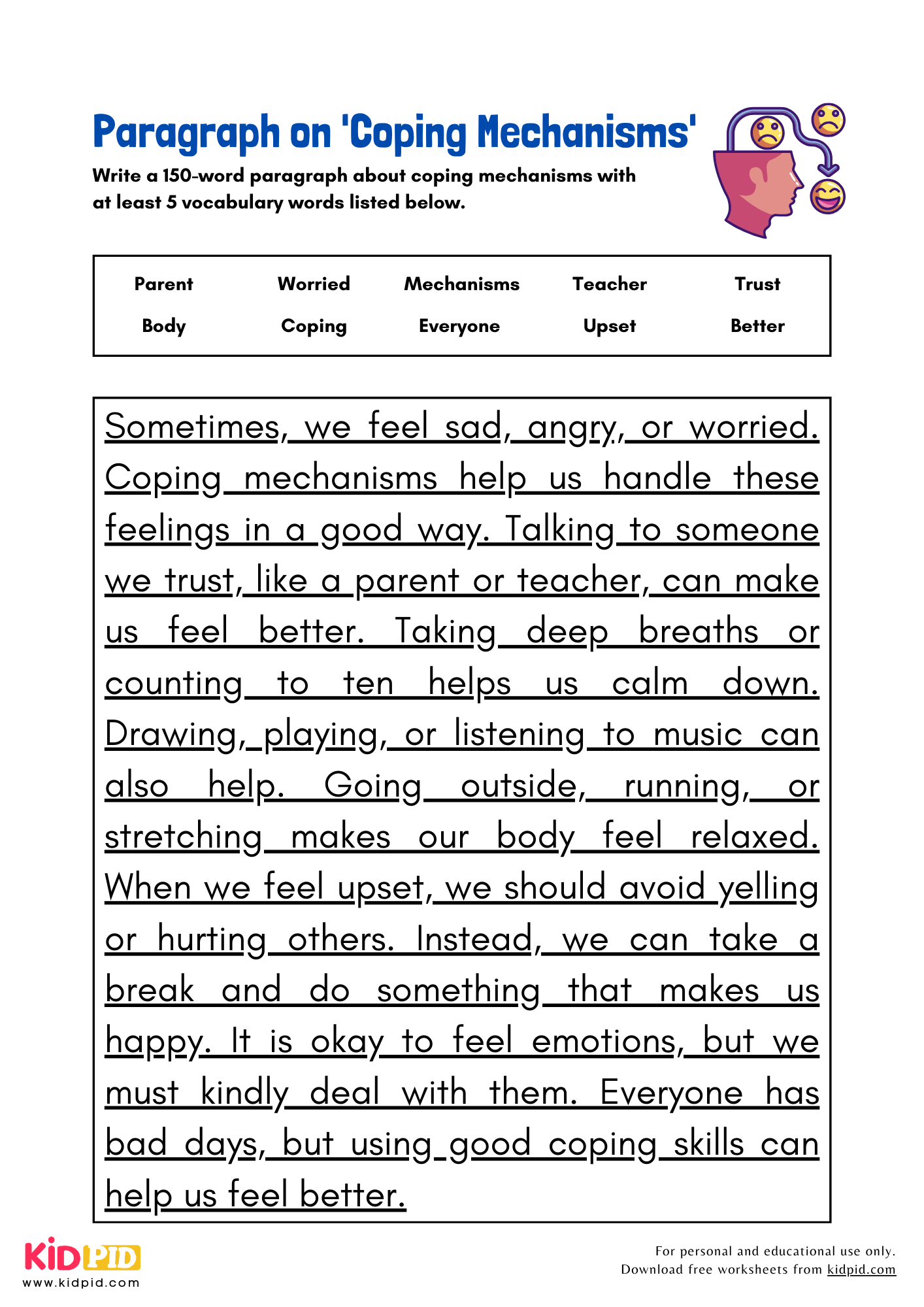
Sometimes, we feel sad, angry, or worried. Coping mechanisms help us handle these feelings in a good way. Talking to someone we trust, like a parent or teacher, can make us feel better. Taking deep breaths or counting to ten helps us calm down. Drawing, playing, or listening to music can also help. Going outside, running, or stretching makes our bodies feel relaxed. When we feel upset, we should avoid yelling or hurting others. Instead, we can take a break and do something that makes us happy. It is okay to feel emotions, but we must deal with them. Everyone has bad days, but using good coping skills can help us feel better.
Paragraph on ‘Coping Mechanisms’ in 200 Words
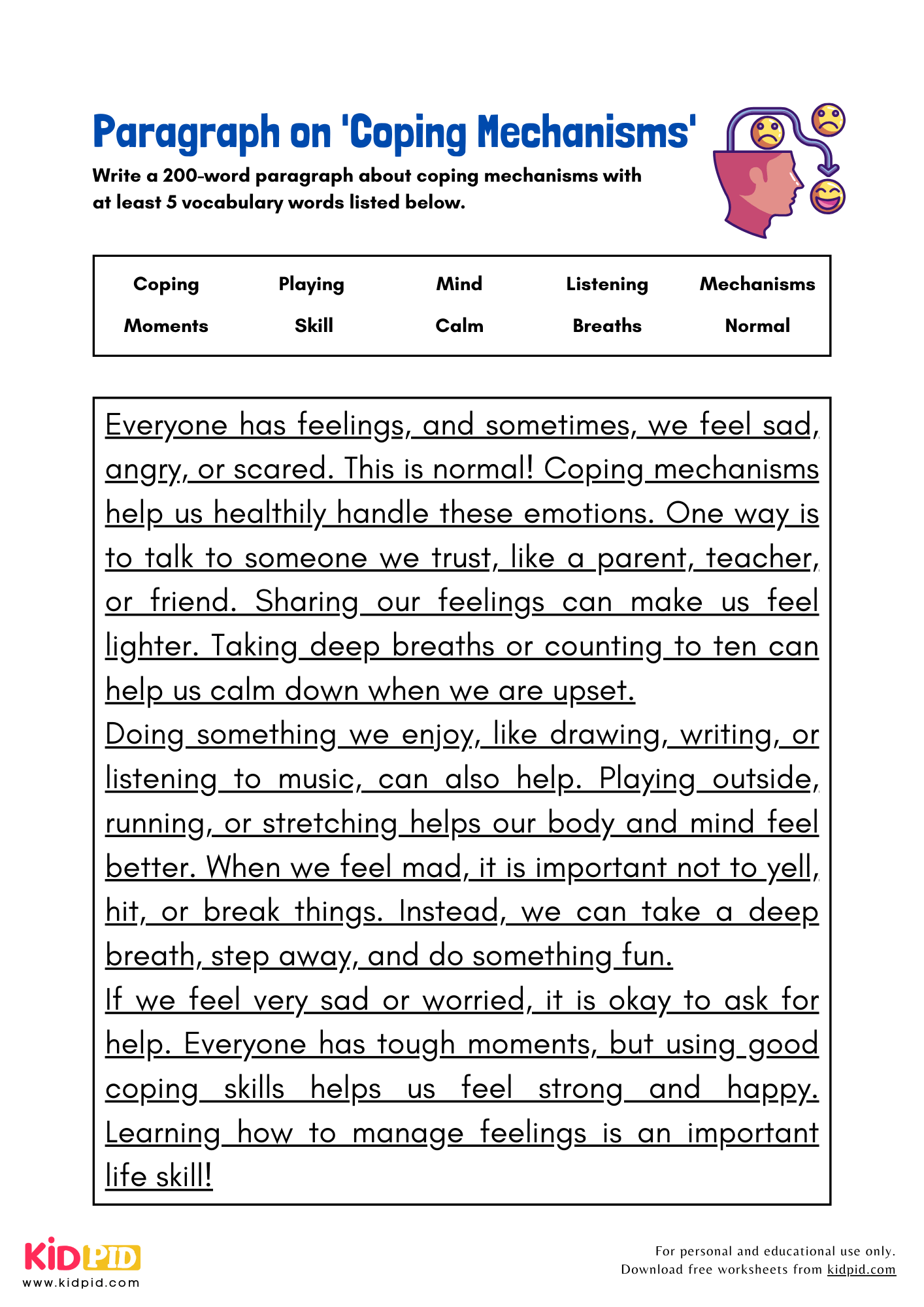
Everyone has feelings, and sometimes, we feel sad, angry, or scared. This is normal! Coping mechanisms help us handle these emotions. One way is to talk to someone we trust, like a parent, teacher, or friend. Sharing our feelings can make us feel lighter. Taking deep breaths or counting to ten can help us calm down when we are upset.
Doing something we enjoy, like drawing, writing, or listening to music, can also help. Playing outside, running, or stretching helps our bodies and minds feel better. When we feel mad, it is important not to yell, hit, or break things. Instead, we can take a deep breath, step away, and do something fun.
If we feel very sad or worried, it is okay to ask for help. Everyone has tough moments, but using good coping skills helps us feel strong and happy. Learning how to manage feelings is an important life skill!
Paragraph on ‘Coping Mechanisms’ in 300 Words
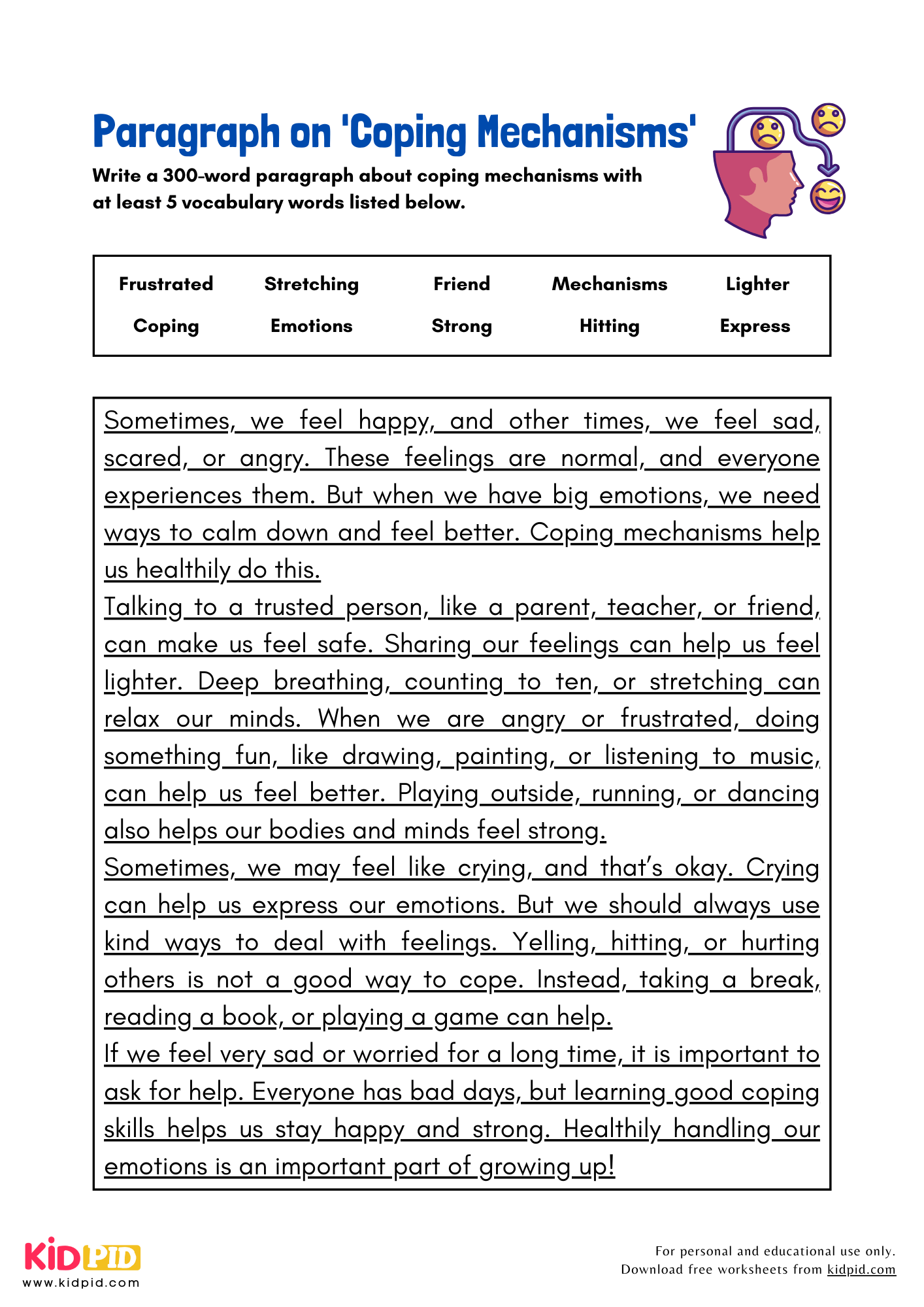
Sometimes, we feel happy, and other times, we feel sad, scared, or angry. These feelings are normal, and everyone experiences them. But when we have big emotions, we need ways to calm down and feel better. Coping mechanisms help us do this.
Talking to a trusted person, like a parent, teacher, or friend, can make us feel safe. Sharing our feelings can help us feel lighter. Deep breathing, counting to ten, or stretching can relax our minds. When we are angry or frustrated, doing something fun, like drawing, painting, or listening to music, can help us feel better. Playing outside, running, or dancing also helps our bodies and minds feel strong.
Sometimes, we may feel like crying, and that’s okay. Crying can help us express our emotions. But we should always use kind ways to deal with feelings. Yelling, hitting, or hurting others is not a good way to cope. Instead, taking a break, reading a book, or playing a game can help.
If we feel very sad or worried for a long time, it is important to ask for help. Everyone has bad days, but learning good coping skills helps us stay happy and strong. Healthily handling our emotions is an important part of growing up!
MCQs on ‘Coping Mechanisms’
1. What are coping mechanisms?
a) Ways to ignore feelings
b) Healthy ways to handle emotions
c) Ways to avoid people
d) A way to hide emotions
Answer: b) Healthy ways to handle emotions
Explanation: Coping mechanisms help us manage emotions.
2. Which of these is a good coping mechanism?
a) Yelling at someone
b) Hitting objects
c) Taking deep breaths
d) Ignoring emotions
Answer: c) Taking deep breaths
Explanation: Deep breathing helps calm the mind and body.
3. Who can you talk to when you feel sad or worried?
a) A trusted friend or adult
b) No one
c) A stranger online
d) Only yourself
Answer: a) A trusted friend or adult
Explanation: Talking to someone you trust can help you feel better.
4. Which activity can help you calm down?
a) Breaking things
b) Listening to music
c) Shouting
d) Staying upset
Answer: b) Listening to music
Explanation: Music can help relax your mind and improve your mood.
5. Why is it important to handle emotions kindly?
a) To make others happy
b) To avoid getting in trouble
c) To stay healthy and strong
d) So people don’t know you’re upset
Answer: c) To stay healthy and strong
Explanation: Healthy coping helps keep our minds and bodies strong.
6. What should you do if you feel angry?
a) Count to ten
b) Yell at someone
c) Hold in your feelings
d) Push someone
Answer: a) Count to ten
Explanation: Counting to ten gives you time to calm down.
7. What can physical activities like running or stretching do?
a) Make you more upset
b) Help relax your body and mind
c) Solve all your problems
d) Make you avoid feelings
Answer: b) Help relax your body and mind
Explanation: Exercise helps reduce stress and improves mood.
8. Which of these is NOT a good coping mechanism?
a) Hitting someone
b) Drawing
c) Playing outside
d) Talking to a parent
Answer: a) Hitting someone
Explanation: Hurting others is not a healthy way to cope with emotions.
9. What should you do if you feel sad for a long time?
a) Keep it to yourself
b) Ask for help
c) Ignore your feelings
d) Stay alone
Answer: b) Ask for help
Explanation: Talking to someone can help you feel supported.
10. Why is learning coping skills important?
a) So we never feel sad
b) To stay happy and strong
c) To make others like us
d) To ignore emotions
Answer: b) To stay happy and strong
Explanation: Coping skills help us handle emotions and stay mentally strong.


Our expert team of teachers hopes you enjoyed reading the ‘Coping Mechanisms’ paragraphs. Keep visiting our website and explore more paragraphs, essays, worksheets, flashcards, Quizzes, and many other interactive resources. Don’t forget to follow us on YouTube & Facebook.
You may like these:
Easy Paragraph on ‘Anger’


Anger is a natural emotion that everyone experiences. It can occur when we feel frustrated or treated unfairly. Managing anger is important for healthy relationships and overall well-being.
Write a Paragraph on ‘Emotional Expression’


Emotional expression involves communicating feelings through words, actions, or art. It helps individuals connect with others and understand themselves better. Healthy expression fosters empathy, encourages relationships, and promotes emotional well-being.
Short Paragraph on ‘Emotional Intelligence’

Emotional intelligence (EI) is the ability to recognize, understand, and manage our own emotions and those of others. High EI enhances communication, relationships, and decision-making, leading to better personal and professional outcomes.
Paragraph – ‘Mental Health’

Mental health encompasses emotional, psychological, and social well-being. It affects how we think, feel, and act. Maintaining good mental health is essential for coping with stress, building relationships, and achieving goals.


