

‘Data Privacy’ is one of the important topics on which students can be asked to write a paragraph in exams in school. Data privacy is about safeguarding personal information on the internet and ensuring our details are protected from misuse or unauthorized access. Please check the various versions (100 words, 150 words, 200 words, and 300 words) provided below for the paragraph.
Contents
- Paragraph on ‘Data Privacy’ in 100 Words
- Paragraph on ‘Data Privacy’ in 150 Words
- Paragraph on ‘Data Privacy’ in 200 Words
- Paragraph on ‘Data Privacy’ in 300 Words
- MCQs on ‘Data Privacy’
- 1. What is data privacy?
- 2. Why should we not share our passwords?
- 3. Who can help us check privacy settings?
- 4. What is an example of personal information?
- 5. Why is it unsafe to click on unknown links?
- 6. What happens if we share too much information online?
- 7. What is one way to stay safe online?
- 8. What should you do if you feel unsafe online?
- 9. Why should we be careful about what we post online?
- 10. How is data privacy like locking our doors?
- You may like these:
Paragraph on ‘Data Privacy’ in 100 Words


Data privacy means keeping personal information safe. When we use the internet, we share details like our name, age, and photos. It is important to protect this information from strangers. We should not share passwords or personal details with people we don’t know. Websites and apps must also keep our data safe. Parents can help by checking privacy settings. If we are careful, we can use the internet safely. Data privacy helps us keep our information secure and protects us from hackers. Always think before sharing anything online. Staying safe online is as important as staying safe in real life.
Paragraph on ‘Data Privacy’ in 150 Words
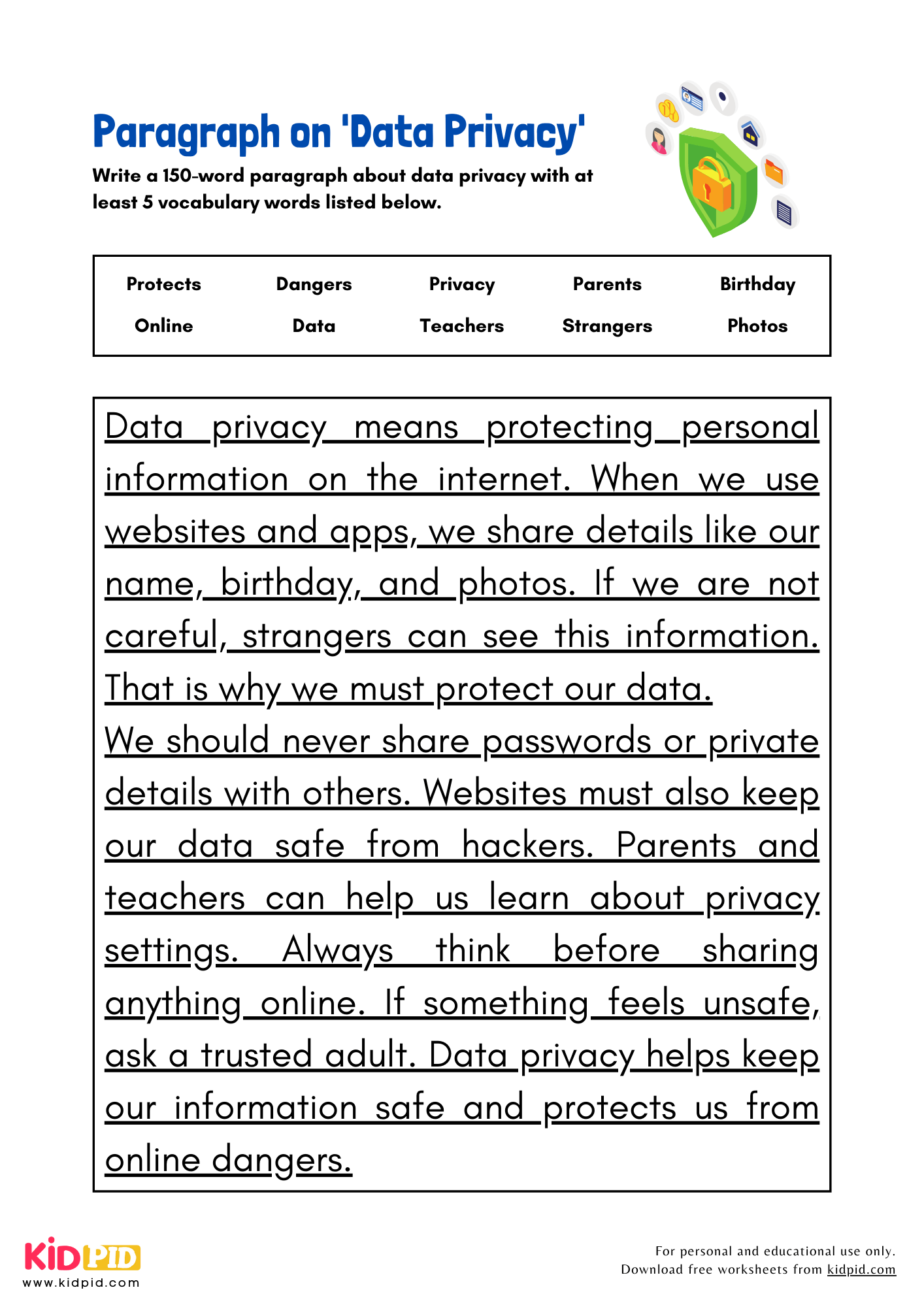
Data privacy means protecting personal information on the internet. When we use websites and apps, we share details like our name, birthday, and photos. If we are not careful, strangers can see this information. That is why we must protect our data.
We should never share passwords or private details with others. Websites must also keep our data safe from hackers. Parents and teachers can help us learn about privacy settings. Always think before sharing anything online. If something feels unsafe, ask a trusted adult. Data privacy helps keep our information safe and protects us from online dangers.
Paragraph on ‘Data Privacy’ in 200 Words
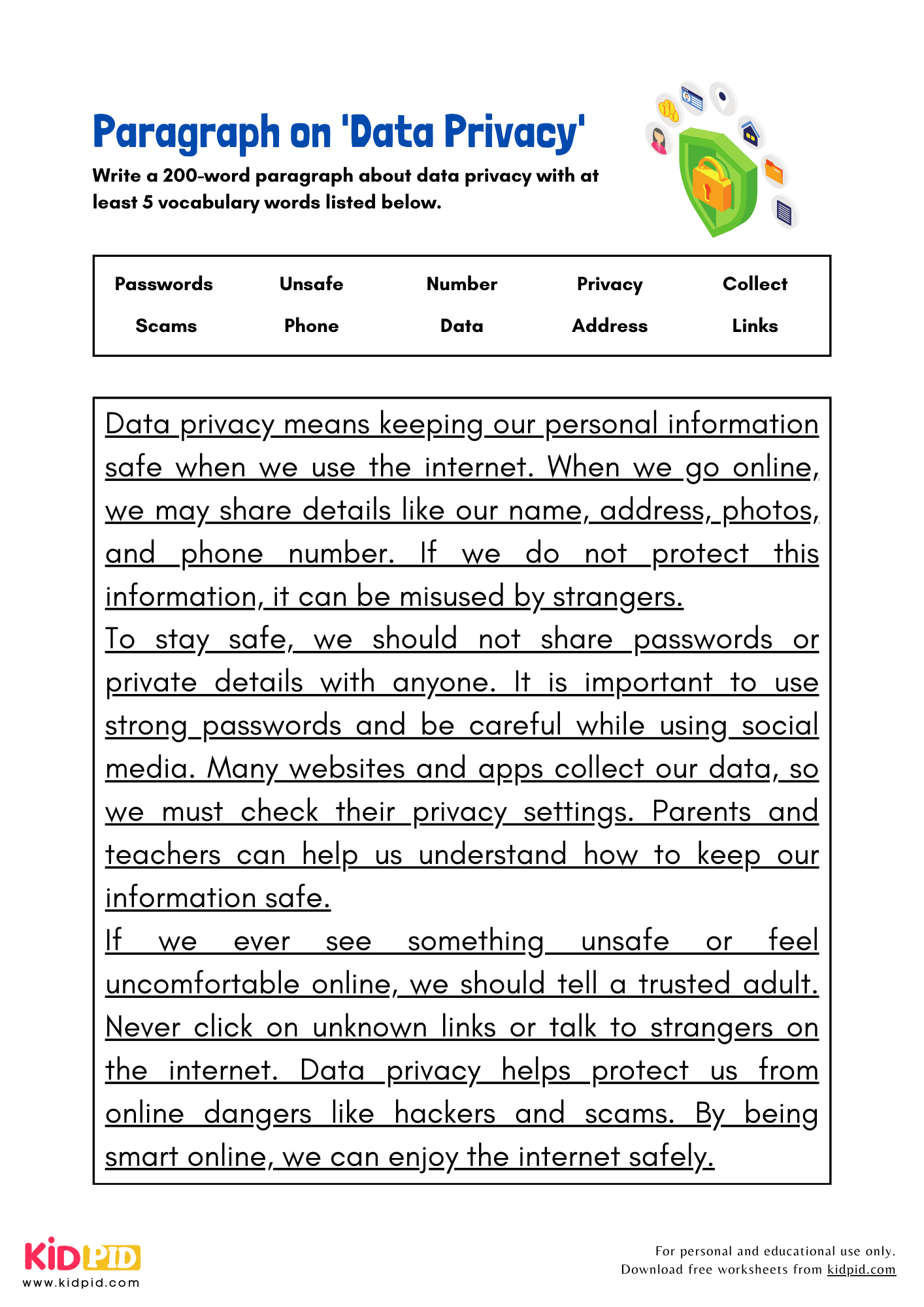
Data privacy means keeping our personal information safe when we use the internet. When we go online, we may share details like our name, address, photos, and phone number. If we do not protect this information, it can be misused by strangers.
To stay safe, we should not share passwords or private details with anyone. It is important to use strong passwords and be careful while using social media. Many websites and apps collect our data, so we must check their privacy settings. Parents and teachers can help us understand how to keep our information safe.
If we ever see something unsafe or feel uncomfortable online, we should tell a trusted adult. Never click on unknown links or talk to strangers on the internet. Data privacy helps protect us from online dangers like hackers and scams. By being smart online, we can enjoy the Internet safely.
Paragraph on ‘Data Privacy’ in 300 Words
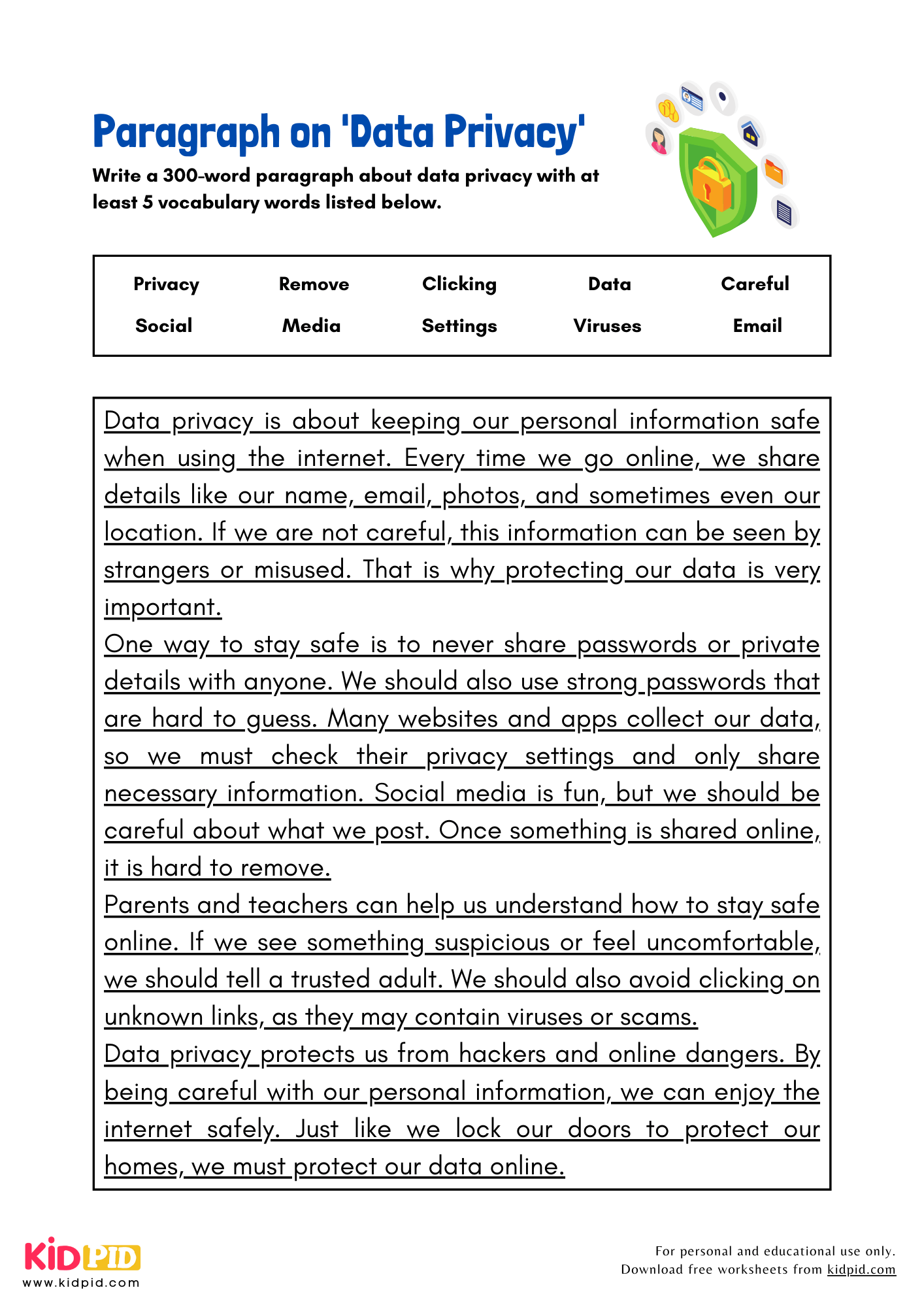
Data privacy is about keeping our personal information safe when using the internet. Every time we go online, we share details like our name, email, photos, and sometimes even our location. If we are not careful, this information can be seen by strangers or misused. That is why protecting our data is very important.
One way to stay safe is to never share passwords or private details with anyone. We should also use strong passwords that are hard to guess. Many websites and apps collect our data, so we must check their privacy settings and only share necessary information. Social media is fun, but we should be careful about what we post. Once something is shared online, it is hard to remove.
Parents and teachers can help us understand how to stay safe online. If we see something suspicious or feel uncomfortable, we should tell a trusted adult. We should also avoid clicking on unknown links, as they may contain viruses or scams.
Data privacy protects us from hackers and online dangers. By being careful with our personal information, we can enjoy the internet safely. Just like we lock our doors to protect our homes, we must protect our data online.
MCQs on ‘Data Privacy’
1. What is data privacy?
a) Sharing personal information freely
b) Keeping personal information safe
c) Giving passwords to friends
d) Posting everything online
Answer: b) Keeping personal information safe
Explanation: Data privacy means protecting our details from strangers and online dangers.
a) Because they are hard to remember
b) To protect our personal information
c) So that friends can log in for us
d) Because websites do not need them
Answer: b) To protect our personal information
Explanation: Passwords keep our accounts safe from hackers and strangers.
3. Who can help us check privacy settings?
a) Strangers online
b) Parents and teachers
c) Hackers
d) Anyone on social media
Answer: b) Parents and teachers
Explanation: Trusted adults can help us understand and set privacy controls for safety.
4. What is an example of personal information?
a) A favorite color
b) Name, age, and photos
c) A movie we like
d) A pet’s name
Answer: b) Name, age, and photos
Explanation: Personal information includes details that can identify us, like name, age, and pictures.
5. Why is it unsafe to click on unknown links?
a) They might be fun games
b) They could contain viruses or scams
c) They make the internet faster
d) They help us meet new people
Answer: b) They could contain viruses or scams
Explanation: Unknown links may have harmful content that can steal our data.
a) Strangers might misuse it
b) Our internet speed increases
c) We get more social media friends
d) Nothing will happen
Answer: a) Strangers might misuse it
Explanation: Sharing personal data online can be risky if strangers access it.
7. What is one way to stay safe online?
a) Posting personal details on social media
b) Using strong passwords and checking privacy settings
c) Clicking on all ads we see
d) Sharing accounts with friends
Answer: b) Using strong passwords and checking privacy settings
Explanation: Strong passwords and privacy settings help keep our information secure.
8. What should you do if you feel unsafe online?
a) Ignore it and move on
b) Tell a trusted adult
c) Reply to strangers to ask for help
d) Share more information to be safe
Answer: b) Tell a trusted adult
Explanation: If something seems wrong online, we should talk to a trusted adult for help.
9. Why should we be careful about what we post online?
a) Because posts cannot be removed easily
b) So that strangers can know us better
c) To become famous
d) To share everything about our life
Answer: a) Because posts cannot be removed easily
Explanation: Once something is posted online, it can stay there forever.
10. How is data privacy like locking our doors?
a) It keeps us safe from online dangers
b) It makes websites load faster
c) It helps us find new friends
d) It allows anyone to access our accounts
Answer: a) It keeps us safe from online dangers
Explanation: Just like we lock doors to keep our homes safe, we must protect our data online.


We trust the ‘Data Privacy’ paragraphs, created by our skilled educators, met your expectations. Keep visiting our website and explore more paragraphs, essays, worksheets, flashcards, Quizzes, and many other interactive resources. Don’t forget to follow us on YouTube & Facebook.
You may like these:
Paragraph – ‘Fingerprint Science’
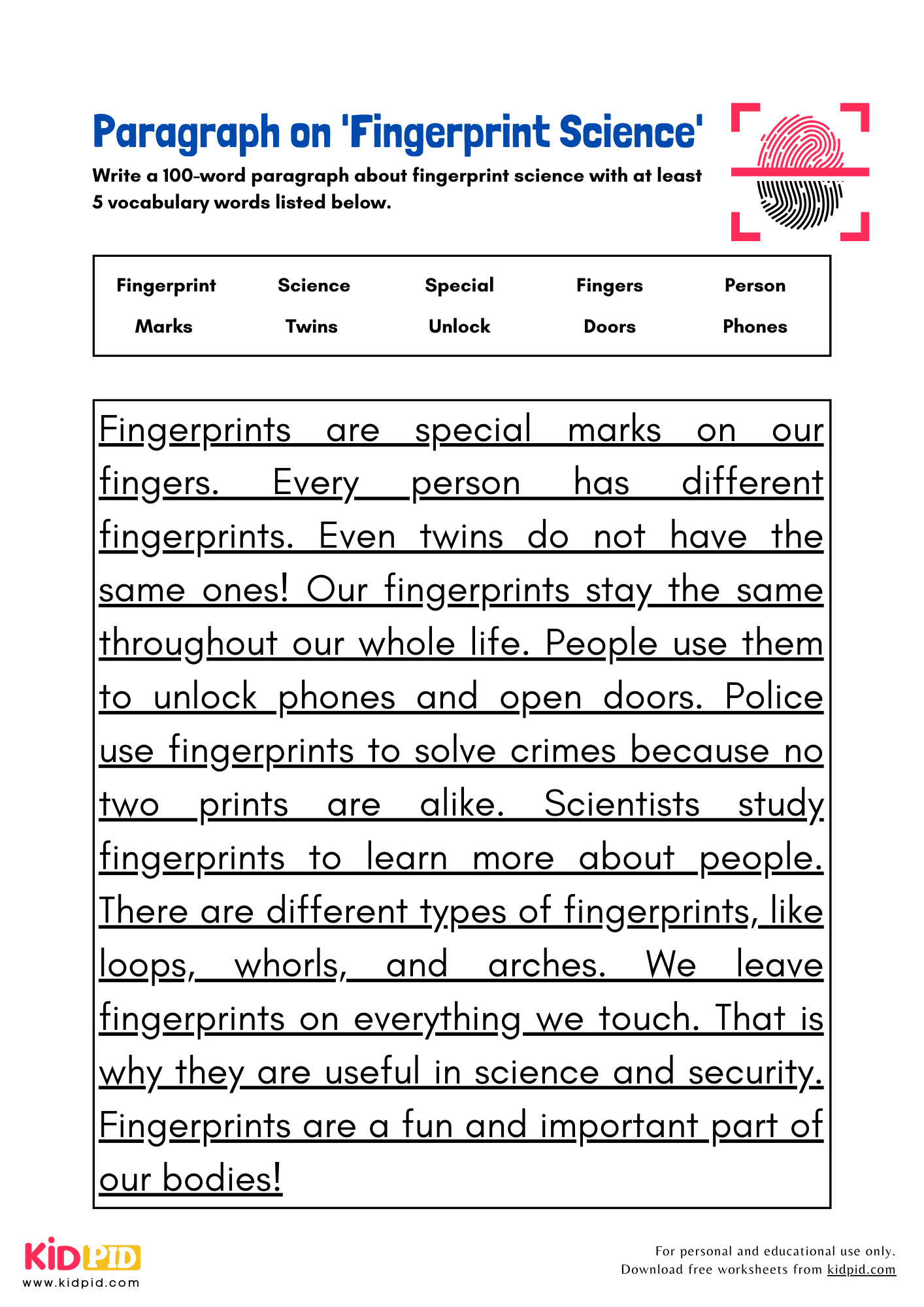

Fingerprint science studies the unique patterns of ridges and lines on fingers. Used for personal identification, it helps solve crimes and verify identities, making it a crucial tool in forensic science.
Short Paragraph on ‘Fantasy vs. Science Fiction’

Fantasy and science fiction are distinct genres. Fantasy features magical elements and mythical creatures, while science fiction explores futuristic technology and scientific concepts. Both genres spark the imagination and transport readers to new worlds.
Easy-to-Write Paragraph on ‘Banking Scams’
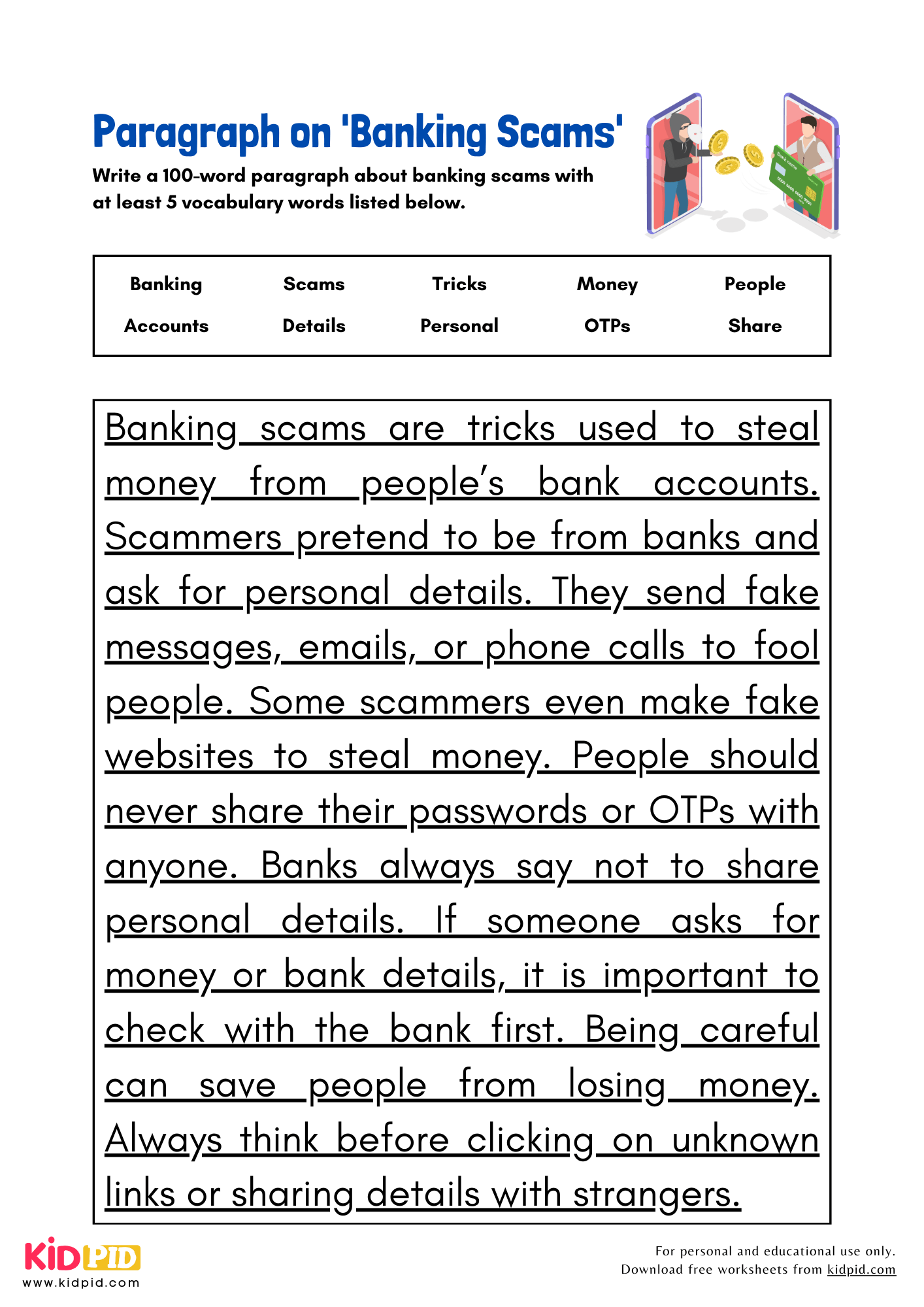

Banking scams trick people into giving away their money or personal information. Common scams include phishing emails and fake calls. Always verify information and protect your accounts to avoid falling victim.
Short Paragraph on ‘Cyber Crime’


Cyber crime involves illegal activities conducted through computers or the internet. This includes hacking, identity theft, and online fraud. Protecting personal information is essential to prevent becoming a victim of cyber crime.


