

“Disaster Management” is a significant topic often assigned to students for writing paragraphs in school exams. Disaster management is preparing for, responding to, and recovering from natural disasters to save lives and reduce damage. Please check the various versions (in 100 words, 150 words, 200 words, and 300 words) provided below for the paragraph.
Contents
- Paragraph on ‘Disaster Management’ in 100 Words for Class 7
- Paragraph on ‘Disaster Management’ in 150 Words for Class 8
- Paragraph on ‘Disaster Management’ in 200 Words for Class 9
- Paragraph on ‘Disaster Management’ in 300 Words for Class 10
- MCQs on ‘Disaster Management’
- 1. What is the primary goal of disaster management?
- 2. What should families do before a disaster?
- 3. What is included in an emergency kit?
- 4. During a disaster, why is it important to stay calm?
- 5. What should people do during a storm?
- 6. What is disaster relief?
- 7. Who works together in disaster management?
- 8. What role do schools play in disaster preparedness?
- 9. Why is it important to learn about disaster management?
- 10. What does disaster management help communities do after a disaster?
- Importance of Disaster Management
- Additional Facts of Disaster Management
- You may like these:
Read This Article in Other Languages
- आपदा प्रबंधन पर अनुच्छेद (Hindi / हिंदी)
- Párrafo sobre la gestión de desastres (Spanish / Español)
- Paragraphe sur la gestion des catastrophes (French / Français)
- Absatz über das Katastrophenmanagement (German / Deutsch)
- فقرة عن إدارة الكوارث (Arabic / العربية)
- দুর্যোগ ব্যবস্থাপনা সম্পর্কে অনুচ্ছেদ (Bengali / বাংলা)
- விபத்து மேலாண்மை பற்றி பத்தி (Tamil / தமிழ்)
- దుర్ఘటన నిర్వహణపై పేరా (Telugu / తెలుగు)
- ദുരന്ത വ്യവസ്ഥാപനത്തെക്കുറിച്ചുള്ള പാരഗ്രാഫ് (Malayalam / മലയാളം)
- آفت انتظام پر پیراگراف (Urdu / اردو)
- Parágrafo sobre gestão de desastres (Portuguese / Português)
Translation Disclaimer: These links use Google Translate, an automated translation service. Translations may vary in accuracy and are provided for convenience only.
Paragraph on ‘Disaster Management’ in 100 Words for Class 7


Disaster management is about preparing for and handling natural disasters like floods, earthquakes, or storms. It helps people stay safe during such events. Before a disaster, we need to make a plan, like knowing safe places to go. During a disaster, we must stay calm and follow safety rules. After the disaster, people help each other to rebuild and recover. This is called disaster relief. Communities, schools, and governments work together to protect everyone. Disaster management is important because it helps save lives and make sure people are safe when disasters happen.
Paragraph on ‘Disaster Management’ in 150 Words for Class 8
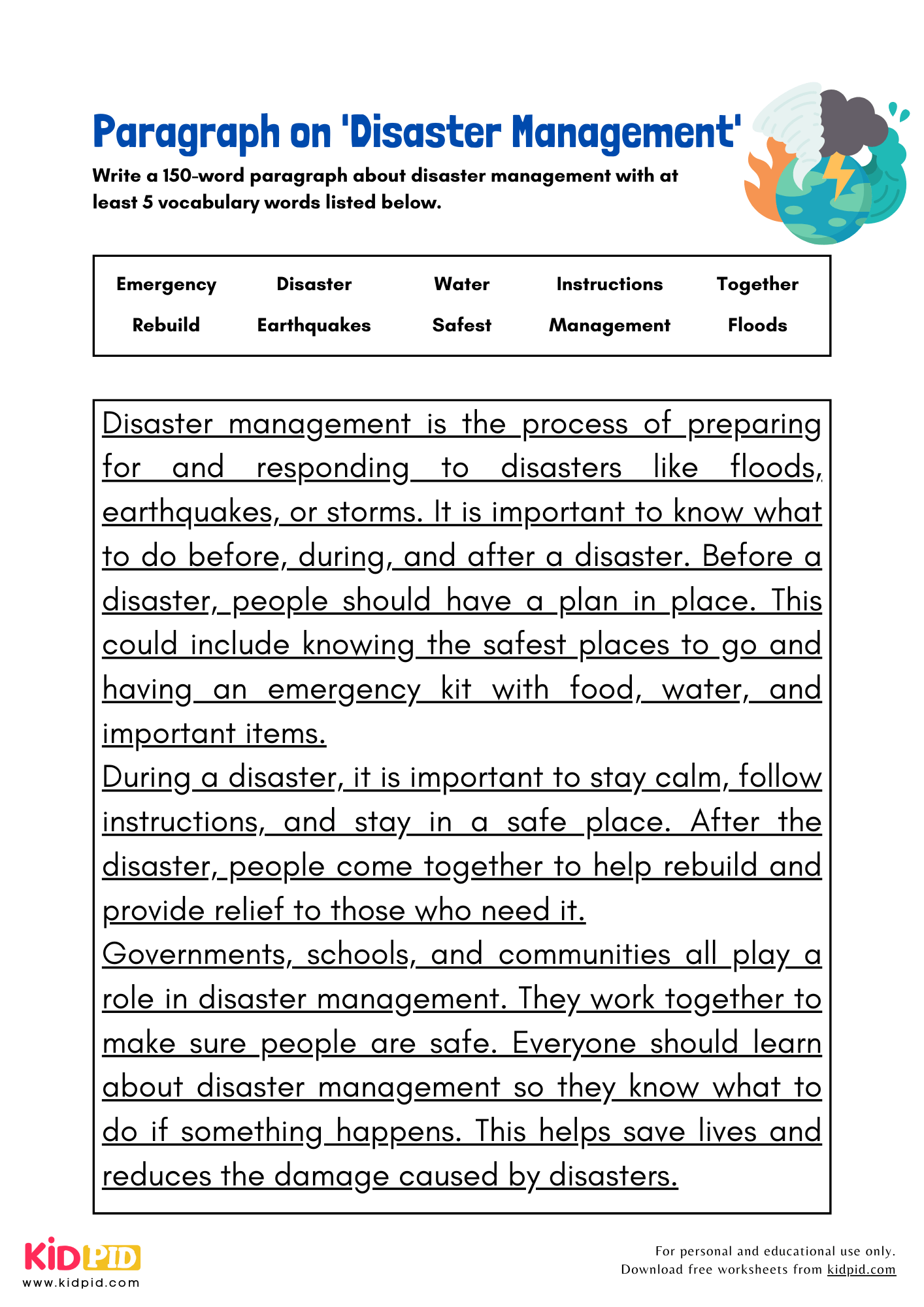
Disaster management is the process of preparing for and responding to disasters like floods, earthquakes, or storms. It is important to know what to do before, during, and after a disaster. Before a disaster, people should have a plan in place. This could include knowing the safest places to go and having an emergency kit with food, water, and important items.
During a disaster, it is important to stay calm, follow instructions, and stay in a safe place. After the disaster, people come together to help rebuild and provide relief to those who need it.
Governments, schools, and communities all play a role in disaster management. They work together to make sure people are safe. Everyone should learn about disaster management so they know what to do if something happens. This helps save lives and reduces the damage caused by disasters.
Paragraph on ‘Disaster Management’ in 200 Words for Class 9
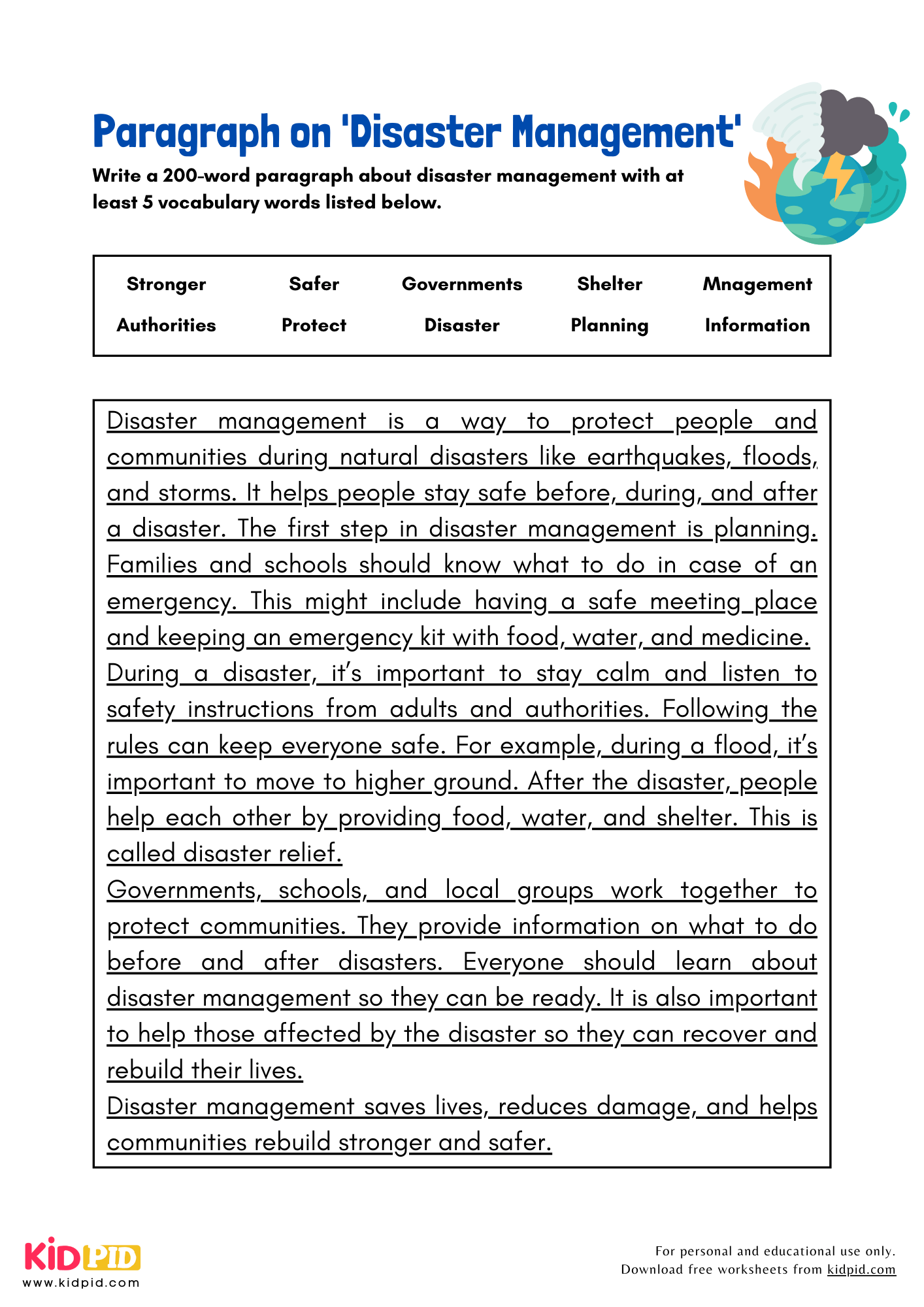
Disaster management is a way to protect people and communities during natural disasters like earthquakes, floods, and storms. It helps people stay safe before, during, and after a disaster. The first step in disaster management is planning. Families and schools should know what to do in case of an emergency. This might include having a safe meeting place and keeping an emergency kit with food, water, and medicine.
During a disaster, it’s important to stay calm and listen to safety instructions from adults and authorities. Following the rules can keep everyone safe. For example, during a flood, it’s important to move to higher ground. After the disaster, people help each other by providing food, water, and shelter. This is called disaster relief.
Governments, schools, and local groups work together to protect communities. They provide information on what to do before and after disasters. Everyone should learn about disaster management so they can be ready. It is also important to help those affected by the disaster so they can recover and rebuild their lives.
Disaster management saves lives, reduces damage, and helps communities rebuild stronger and safer.
Paragraph on ‘Disaster Management’ in 300 Words for Class 10
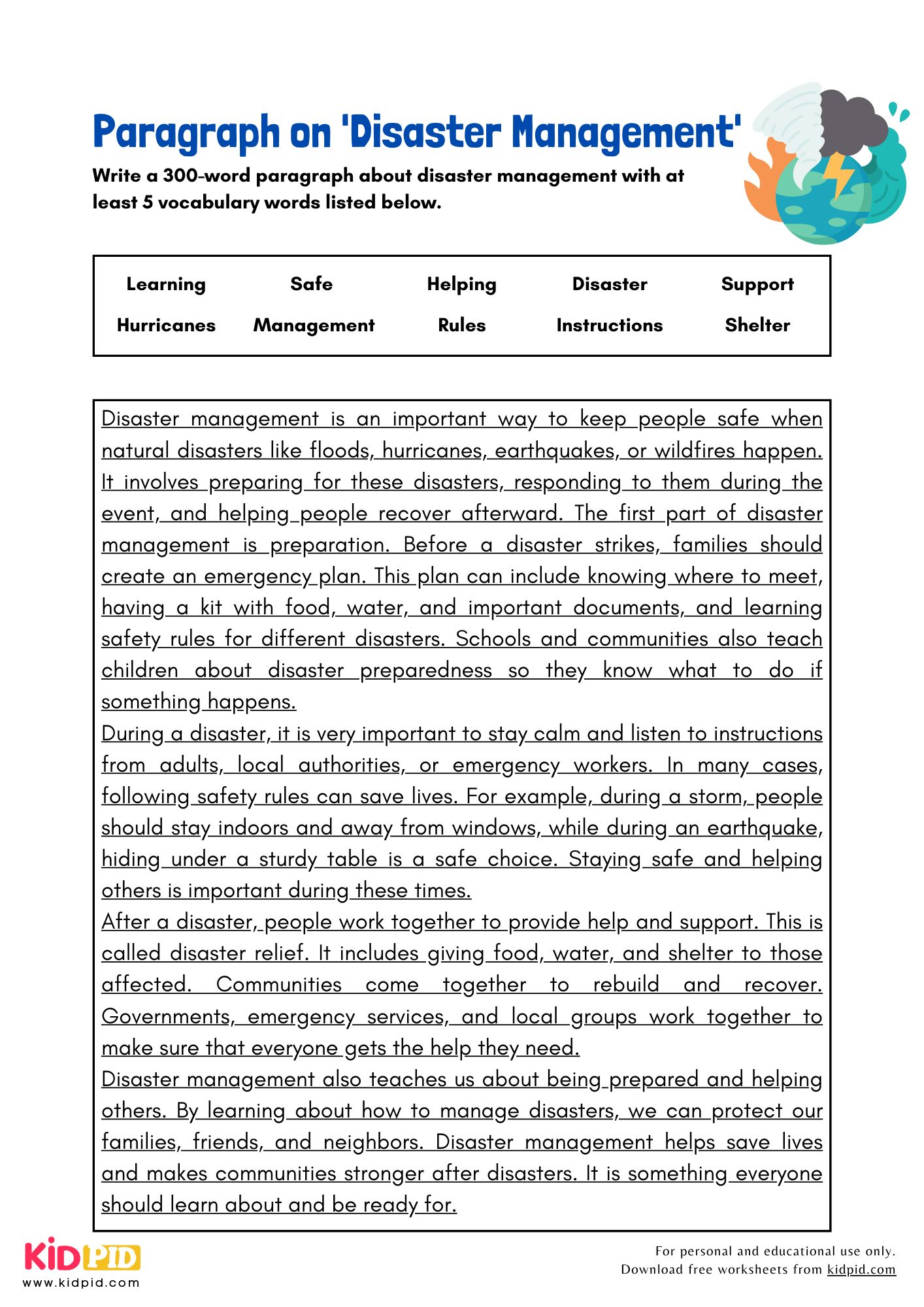
Disaster management is an important way to keep people safe when natural disasters like floods, hurricanes, earthquakes, or wildfires happen. It involves preparing for these disasters, responding to them during the event, and helping people recover afterward. The first part of disaster management is preparation. Before a disaster strikes, families should create an emergency plan. This plan can include knowing where to meet, having a kit with food, water, and important documents, and learning safety rules for different disasters. Schools and communities also teach children about disaster preparedness so they know what to do if something happens.
During a disaster, it is very important to stay calm and listen to instructions from adults, local authorities, or emergency workers. In many cases, following safety rules can save lives. For example, during a storm, people should stay indoors and away from windows, while during an earthquake, hiding under a sturdy table is a safe choice. Staying safe and helping others is important during these times.
After a disaster, people work together to provide help and support. This is called disaster relief. It includes giving food, water, and shelter to those affected. Communities come together to rebuild and recover. Governments, emergency services, and local groups work together to make sure that everyone gets the help they need.
Disaster management also teaches us about being prepared and helping others. By learning about how to manage disasters, we can protect our families, friends, and neighbors. Disaster management helps save lives and makes communities stronger after disasters. It is something everyone should learn about and be ready for.
MCQs on ‘Disaster Management’
1. What is the primary goal of disaster management?
A) To ignore disasters
B) To protect people and communities
C) To create more disasters
D) To entertain people
Answer: B) To protect people and communities
Explanation: Disaster management aims to ensure safety and support during natural disasters.
2. What should families do before a disaster?
A) Create an emergency plan
B) Wait for instructions
C) Ignore the possibility of a disaster
D) Move to another country
Answer: A) Create an emergency plan
Explanation: Preparation is key, including having a plan for emergencies.
3. What is included in an emergency kit?
A) Toys and games
B) Food, water, and important documents
C) Only clothes
D) Electronics
Answer: B) Food, water, and important documents
Explanation: An emergency kit should contain essential items for survival.
4. During a disaster, why is it important to stay calm?
A) It makes the disaster go away
B) It helps people think clearly and follow instructions
C) It is not important
D) It confuses others
Answer: B) It helps people think clearly and follow instructions
Explanation: Staying calm allows individuals to make better decisions during emergencies.
5. What should people do during a storm?
A) Go outside and play
B) Stay indoors and away from windows
C) Ignore the storm
D) Start a fire
Answer: B) Stay indoors and away from windows
Explanation: Staying indoors helps keep people safe during severe weather.
6. What is disaster relief?
A) Ignoring the needs of affected individuals
B) Providing food, water, and shelter to those affected
C) Creating more disasters
D) Giving away toys
Answer: B) Providing food, water, and shelter to those affected
Explanation: Disaster relief involves helping those impacted by disasters recover.
7. Who works together in disaster management?
A) Only the government
B) Schools, communities, and local groups
C) Only emergency workers
D) No one
Answer: B) Schools, communities, and local groups
Explanation: Collaboration among various entities is essential for effective disaster management.
8. What role do schools play in disaster preparedness?
A) They do not play a role
B) They teach children about disaster preparedness
C) They create disasters
D) They only focus on academics
Answer: B) They teach children about disaster preparedness
Explanation: Schools educate students on how to respond in emergencies.
9. Why is it important to learn about disaster management?
A) It is not important
B) To protect families, friends, and neighbors
C) To scare people
D) To create confusion
Answer: B) To protect families, friends, and neighbors
Explanation: Knowledge about disaster management helps individuals and communities stay safe.
10. What does disaster management help communities do after a disaster?
A) Forget about the disaster
B) Rebuild and recover
C) Create more disasters
D) Ignore the problems
Answer: B) Rebuild and recover
Explanation: Disaster management focuses on helping communities recover and become stronger after disasters.


Importance of Disaster Management
- Disaster management helps prepare for, respond to, and recover from disasters to save lives and property. [Source: UN Office for Disaster Risk Reduction (UNDRR)]
- Early planning and risk reduction reduce damage and loss during natural disasters. [Source: International Federation of Red Cross and Red Crescent Societies]
- Early warning systems help alert people in advance, saving lives. [Source: World Meteorological Organization]
Additional Facts of Disaster Management
- Preparedness training improves community resilience and safety. [Source: Centers for Disease Control and Prevention]
- Emergency response includes search and rescue, medical care, and shelters. [Source: World Health Organization]
- Post-disaster recovery focuses on rebuilding homes and livelihoods. [Source: World Bank]
- Education and drills help people stay calm and act correctly during emergencies. [Source: UNICEF]
We hope you enjoyed the paragraphs on the topic “Disaster Management” thoughtfully crafted by our team of experienced teachers. Keep visiting our website and explore more paragraphs, essays, worksheets, flashcards, Quizzes and many other interactive resources. Don’t forget to follow us on YouTube & Facebook.
Written by our Content Team, this paragraph supports kids’ learning.
You may like these:
Paragraph on Waste Management


Waste management involves the collection, disposal, recycling, and reduction of waste. Effective waste management helps protect the environment, reduces pollution, and promotes sustainability in communities.
Flashcards of Natural and Man-Made Disasters
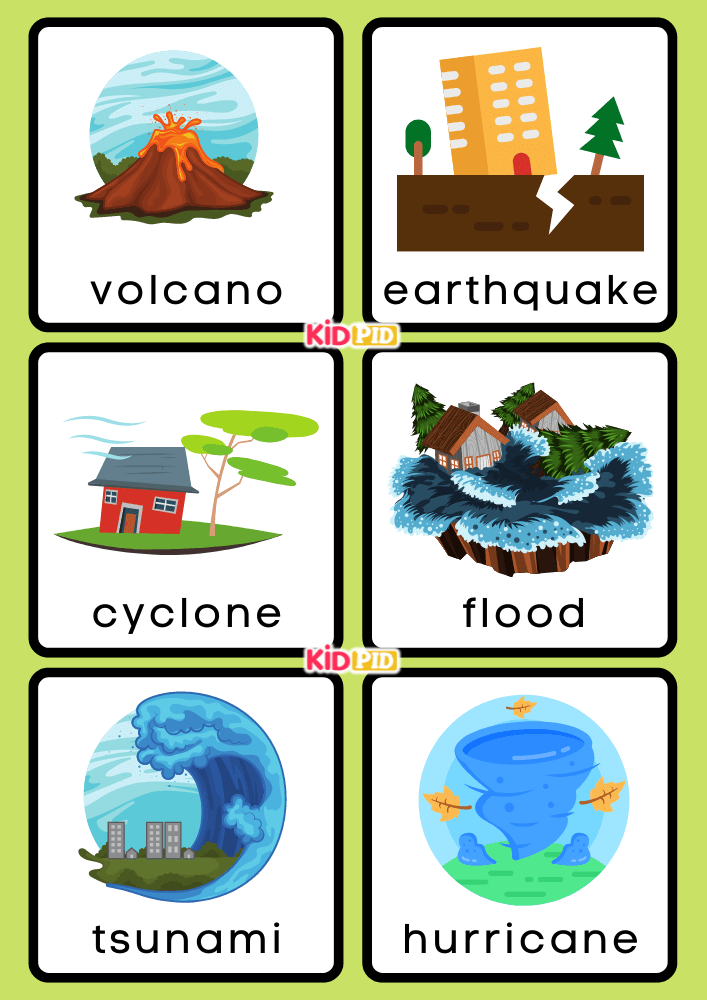

Natural disasters include earthquakes, floods, hurricanes, and wildfires, caused by natural forces. Man-made disasters, like oil spills and chemical accidents, result from human activities and negligence, causing harm.
Paragraph on the Importance of Water


Water is essential for all life forms. It hydrates the body, supports agriculture, generates energy, and sustains ecosystems. Protecting water sources is crucial for future generations.
Paragraph – Drought

Drought is a prolonged period of insufficient rainfall, leading to water shortages. It negatively impacts agriculture, wildlife, and human populations, causing food insecurity and economic losses.


