

“Fairness” is a significant topic that students may be asked to write a paragraph about in school exams. Fairness means treating everyone with respect, following rules, sharing, and ensuring everyone has an equal chance for happiness. Please check the various versions (in 100 words, 150 words, 200 words, and 300 words) provided below for the paragraph.
Contents
- Paragraph on ‘Fairness’ in 100 words for Grade 6
- Paragraph on ‘Fairness’ in 150 words for Grade 7
- Paragraph on ‘Fairness’ in 200 words for Grade 8
- Paragraph on ‘Fairness’ in 300 words for Grades 9 & 10
- MCQ’s on ‘Fairness’
- 1. What does fairness mean?
- 2. Why should we follow rules in games?
- 3. How can you show fairness at school?
- 4. What is an example of unfairness?
- 5. What should you do if you see someone being treated unfairly?
- 6. Why is fairness important in friendships?
- 7. How can you be fair at home?
- 8. Why does fairness not always mean giving the same thing to everyone?
- 9. What happens when people are fair to each other?
- 10. What is the best way to practice fairness every day?
- Importance of Fairness
- Additional Facts About Fairness
- You may like these:
Read This Article in Other Languages
- न्यायसंगतता (फेयरनेस) पर अनुच्छेद (Hindi / हिंदी)
- Párrafo sobre justicia (fairness) (Spanish / Español)
- Paragraphe sur l’équité (fairness) (French / Français)
- Absatz über Fairness (German / Deutsch)
- فقرة عن العدالة (المساواة) (Arabic / العربية)
- ন্যায় (ফেয়ারনেস) সম্পর্কে অনুচ্ছেদ (Bengali / বাংলা)
- நியாயம் (ஃபேர் நெஸ்) பற்றிய பத்தி (Tamil / தமிழ்)
- తీమీద న్యాయం (ఫెయిర్నెస్) పై పేరా (Telugu / తెలుగు)
- ന്യായത്വം (ഫെയർനെസ്) സംബന്ധിച്ച പാരഗ്രാഫ് (Malayalam / മലയാളം)
- انصاف (فیئرنیس) پر پیراگراف (Urdu / اردو)
- Parágrafo sobre equidade (fairness) (Portuguese / Português)
Translation Disclaimer: These links use Google Translate, an automated translation service. Translations may vary in accuracy and are provided for convenience only.
Paragraph on ‘Fairness’ in 100 words for Grade 6

Fairness means treating everyone the right way. It is about sharing, taking turns, and listening to others. When we play games, we follow the rules so it is fair for everyone. If one person cheats, it is not fair. Fairness also means helping others when they need it. If a friend falls, we can help them up. It is fair to treat others how we want to be treated. If we are kind and fair, others will be fair to us too. Fairness makes everyone happy and keeps things peaceful. Being fair is the right thing to do.
Paragraph on ‘Fairness’ in 150 words for Grade 7

Fairness is important in our daily lives. It means treating people with kindness and respect. When we play, we should follow the rules so everyone has a fair chance to win. If someone takes extra turns or cheats, it is unfair. Fairness also means sharing. If we have a toy, we should let others play too. In school, teachers treat all students fairly by giving everyone a chance to speak. It is not fair if one person gets special treatment. Fairness also means standing up for others. If we see someone being treated unfairly, we should help them. Being fair makes the world a better place.
Paragraph on ‘Fairness’ in 200 words for Grade 8

Fairness means treating everyone equally and doing what is right. It is about making sure no one is left out. When we play a game, we should follow the rules so everyone has the same chance to win. Cheating is not fair because it gives one person an advantage over others. In school, fairness means that every student gets the same chance to learn. The teacher listens to all students, not just one. At home, fairness means sharing chores and helping each other. If one person does all the work while others play, it is not fair. Fairness is also about kindness. If we see someone being treated unfairly, we should speak up and help them. Everyone deserves to be treated with respect. When we are fair, we build strong friendships and trust. Fairness helps us live in a world where everyone feels safe and happy.
Paragraph on ‘Fairness’ in 300 words for Grades 9 & 10

Fairness means treating everyone with kindness and respect. It is about making sure that everyone gets what they need, not just what they want. Fairness does not always mean that everyone gets the same thing. Sometimes, people need different things to be treated fairly. For example, if one friend is taller and another is shorter, they may need different-sized bikes to ride comfortably. That is fair because it helps both of them equally.
Fairness is also important when playing games. Everyone should follow the rules so the game is fair for all players. If someone cheats or does not take turns, it is unfair. Fairness in school means that all students get the chance to learn and ask questions. A teacher should treat all students equally and not show favoritism.
At home, fairness means sharing and helping each other. If one person gets to pick the movie one night, another person should pick next time. Fairness also means standing up for what is right. If we see someone being treated unfairly, we should help them. Being fair helps build trust and strong friendships. When people are fair, the world becomes a happier and kinder place for everyone.
MCQ’s on ‘Fairness’
1. What does fairness mean?
A) Treating everyone kindly and equally
B) Letting only friends win games
C) Taking more turns than others
D) Ignoring rules
2. Why should we follow rules in games?
A) To make the game fair for everyone
B) To win every time
C) So we can cheat without getting caught
D) Because rules are not important
3. How can you show fairness at school?
A) Letting only one student answer all questions
B) Sharing and giving everyone a chance
C) Ignoring classmates who need help
D) Taking all the supplies for yourself
4. What is an example of unfairness?
A) Taking turns while playing
B) Helping a friend when they fall
C) Letting one person do all the work
D) Sharing your toys with others
5. What should you do if you see someone being treated unfairly?
A) Ignore it
B) Help them or speak up
C) Join in being unfair
D) Walk away and do nothing
6. Why is fairness important in friendships?
A) It helps build trust and strong relationships
B) It allows one person to always decide
C) It means keeping all the fun things to yourself
D) It makes people argue more
7. How can you be fair at home?
A) Share and take turns
B) Let only one person choose the TV show every time
C) Make your sibling do all the chores
D) Take more food than everyone else
8. Why does fairness not always mean giving the same thing to everyone?
A) Because some people need different things to be treated fairly
B) Because only some people deserve fairness
C) Because fairness means giving the most to one person
D) Because rules do not matter
9. What happens when people are fair to each other?
A) Everyone feels happy and respected
B) More people get left out
C) People argue more
D) One person always gets their way
10. What is the best way to practice fairness every day?
A) Share, take turns, and be kind
B) Ignore people’s needs
C) Only care about yourself
D) Make rules that only help you

Importance of Fairness
- Fairness means treating everyone justly without bias or discrimination. [Source: Wikipedia]
- It is a core moral value that guides people to act justly and respect others’ rights. [Source: Springer]
- Fairness shapes how people interact in groups and judge right versus wrong. [Source: LibreTexts Social Psychology]
Additional Facts About Fairness
- Being treated fairly builds trust and cooperation in families, schools, and communities. [Source: Knowway.org]
- Fairness ensures equal opportunities for all, reducing bias and discrimination. [Source: Wikipedia]
- People feel happier and more respected when situations are fair. [Source: Social Justice Research]
We hope you enjoyed the paragraphs on “Fairness” written by our team of experienced teachers. Keep visiting our website and explore more paragraphs, essays, worksheets, flashcards, Quizzes, and other interactive resources. Don’t forget to follow us on YouTube & Facebook.
Our Content Team developed this paragraph to simplify learning concepts.
You may like these:
Paragraph on ‘ Traffic Laws’

Traffic laws keep roads safe. They include speed limits, signals, and rules for drivers and pedestrians. Following them prevents accidents and saves lives.
Paragraph on ‘MKL’

Paragraph on ‘Free Education’
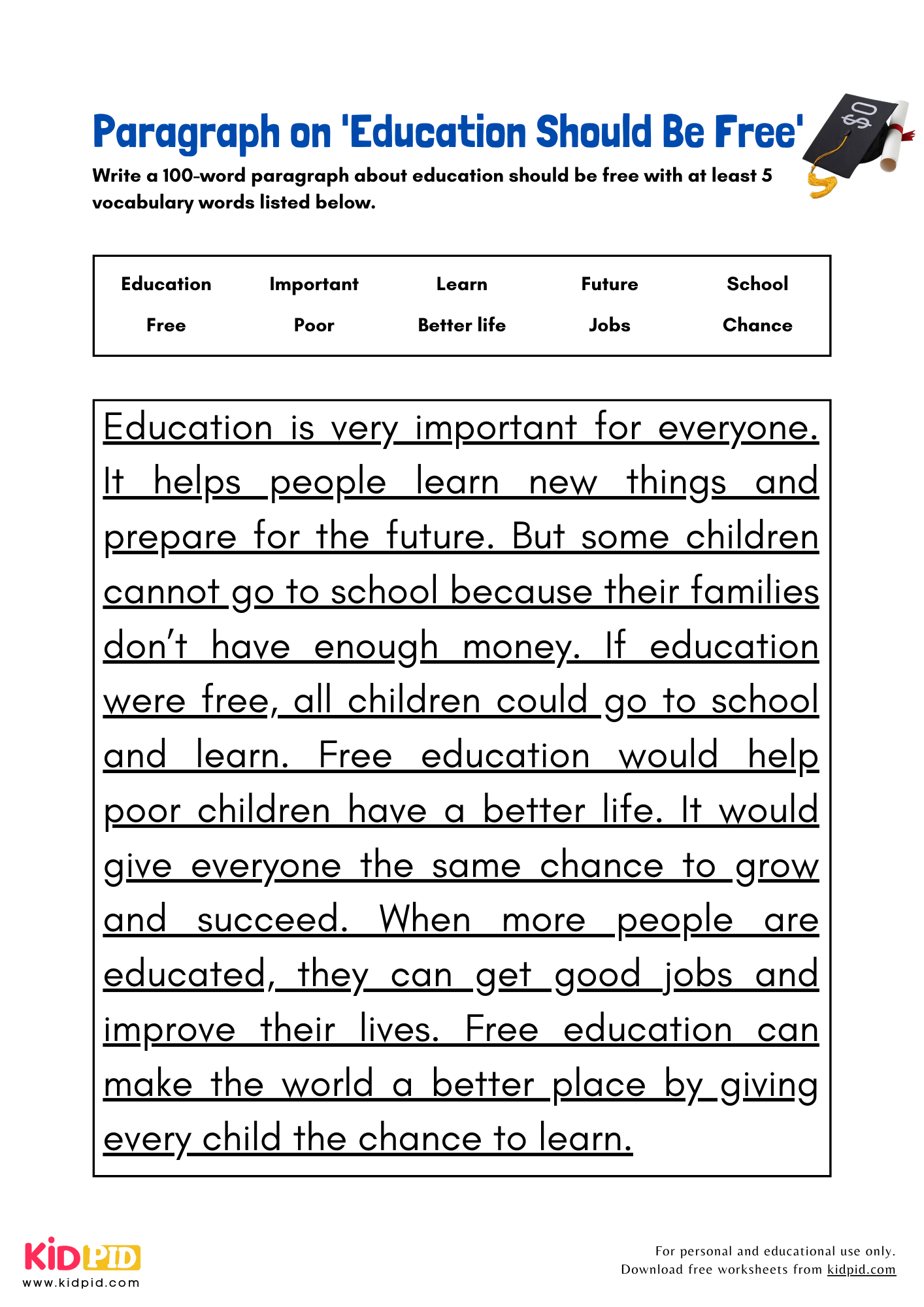
Free education helps everyone learn without cost. It gives children opportunities, reduces poverty, and builds a better future for individuals and society.
Paragraph on the life of ‘Nelson Mandela’

Nelson Mandela fought against apartheid in South Africa. He spent 27 years in prison but later became president, promoting peace, justice, and equality.
Paragraph on B.R. Ambedkar Jayanti’

B.R. Ambedkar Jayanti honors Dr. B.R. Ambedkar, the architect of India’s Constitution. Celebrated on April 14, it promotes equality, education, and social justice.


