

‘Fingerprint Science’ is one of the important topics on which students can be asked to write a paragraph in exams in school. Fingerprints are unique patterns found on our fingers, serving as an essential tool in identification, security, and science. Please check the various versions (in 100 words, 150 words, 200 words, and 300 words) provided below for the paragraph.
Contents
- Paragraph on ‘Fingerprint Science’ in 100 Words
- Paragraph on ‘Fingerprint Science’ in 150 Words
- Paragraph on ‘Fingerprint Science’ in 200 Words
- Paragraph on ‘Fingerprint Science’ in 300 Words
- MCQs on ‘Fingerprint Science’
- 1. What are fingerprints?
- 2. How many main types of fingerprints exist?
- 3. Why are fingerprints useful to police?
- 4. What makes fingerprints stay the same for life?
- 5. How do fingerprints help us hold things?
- 6. Why do we leave fingerprints on objects?
- 7. Why are fingerprints safer than passwords?
- 8. How do scientists use fingerprints in medicine?
- 9. When do fingerprints start forming?
- 10. How do banks use fingerprints?
- You may like these:
Paragraph on ‘Fingerprint Science’ in 100 Words

Fingerprints are special marks on our fingers. Every person has different fingerprints. Even twins do not have the same ones! Our fingerprints stay the same throughout our whole life. People use them to unlock phones and open doors. Police use fingerprints to solve crimes because no two prints are alike. Scientists study fingerprints to learn more about people. There are different types of fingerprints, like loops, whorls, and arches. We leave fingerprints on everything we touch. That is why they are useful in science and security. Fingerprints are a fun and important part of our bodies!
Paragraph on ‘Fingerprint Science’ in 150 Words
Fingerprints are tiny patterns on our fingers. They help us grip things and make our hands unique. Every person has different fingerprints, even identical twins! There are three main types of fingerprints: loops, whorls, and arches. These patterns never change, even as we grow.
Scientists and police use fingerprints to identify people. When we touch things, we leave behind prints. That’s why police use them to solve crimes. Today, many people use fingerprints to unlock phones and doors instead of using keys or passwords.
Fingerprints are also important in science and medicine. Scientists study them to learn more about people and health. Fingerprints are small, but they play a big role in our lives!
Paragraph on ‘Fingerprint Science’ in 200 Words
Fingerprints are the unique patterns on our fingertips. No two people have the same fingerprints, not even twins! There are three main types: loops, whorls, and arches. These patterns form before we are born and never change.
Fingerprints help us grip objects and hold things firmly. We leave fingerprints on everything we touch because of the tiny sweat and oil on our skin. Police use fingerprints to catch criminals. If someone touches something at a crime scene, their fingerprints can help identify them.
Fingerprints are also used for security. Many people use them to unlock their phones or enter buildings. Instead of using passwords, a fingerprint scan can confirm a person’s identity. Scientists also study fingerprints to learn more about human biology and health.
Even though fingerprints are small, they are very important. They help in crime-solving, security, and science. The unique patterns on our fingers make each person special!
Paragraph on ‘Fingerprint Science’ in 300 Words
Fingerprints are special patterns on our fingertips. Everyone has different fingerprints, even identical twins! These tiny ridges form before we are born and never change. There are three main types: loops, whorls, and arches. Scientists use fingerprints to study human biology, and police use them to solve crimes.
When we touch things, we leave behind fingerprints. This happens because our skin has tiny sweat and oil glands. Police collect fingerprints from crime scenes to find out who was there. Since no two people have the same fingerprints, they help identify individuals.
Fingerprints are also used for security. Many phones, computers, and doors can be unlocked with a fingerprint scan. This is safer than using passwords because no one else has the same fingerprint. Some banks even use fingerprints to confirm a person’s identity.
Scientists also study fingerprints to learn about health. Certain diseases can affect fingerprint patterns. Doctors use this information to understand medical conditions better.
Fingerprints are small but very important. They help us grip objects, solve crimes, and protect personal information. Whether used by police, scientists, or technology, fingerprints play a big role in our daily lives. They are a unique and fascinating part of our bodies!
MCQs on ‘Fingerprint Science’
1. What are fingerprints?
a) Marks made by ink
b) Special patterns on our fingers
c) Scratches on the skin
d) Marks that change every year
Answer: b) Special patterns on our fingers
Explanation: Fingerprints are unique patterns found on our fingertips.
2. How many main types of fingerprints exist?
a) Two
b) Three
c) Four
d) Five
Answer: b) Three
Explanation: The three main types of fingerprints are loops, whorls, and arches.
3. Why are fingerprints useful to police?
a) They can be erased easily
b) Everyone has the same fingerprints
c) They help identify people
d) They change every year
Answer: c) They help identify people
Explanation: Since no two fingerprints are alike, police use them to solve crimes.
4. What makes fingerprints stay the same for life?
a) They heal quickly
b) They are protected by nails
c) Their patterns never change
d) They are made of hard skin
Answer: c) Their patterns never change
Explanation: Fingerprint patterns are formed before birth and remain the same forever.
5. How do fingerprints help us hold things?
a) They are sticky
b) They create friction
c) They produce glue
d) They absorb objects
Answer: b) They create friction
Explanation: The tiny ridges in fingerprints help us grip and hold objects.
6. Why do we leave fingerprints on objects?
a) Our skin has sweat and oil
b) We press too hard
c) Objects attract them
d) They are made of dust
Answer: a) Our skin has sweat and oil
Explanation: Sweat and oil on our skin help leave fingerprint marks on surfaces.
7. Why are fingerprints safer than passwords?
a) They change often
b) They are unique to each person
c) They are easy to copy
d) They are made of ink
Answer: b) They are unique to each person
Explanation: Since no two people have the same fingerprint, they offer better security.
8. How do scientists use fingerprints in medicine?
a) To find a person’s name
b) To check for diseases
c) To match fingerprints to animals
d) To make fingerprints disappear
Answer: b) To check for diseases
Explanation: Certain diseases can affect fingerprint patterns, helping doctors in medical research.
9. When do fingerprints start forming?
a) Before birth
b) After birth
c) At age five
d) During adulthood
Answer: a) Before birth
Explanation: Fingerprints develop before a baby is born and remain the same for life.
10. How do banks use fingerprints?
a) To decorate cards
b) To confirm identity
c) To print money
d) To open vaults automatically
Answer: b) To confirm identity
Explanation: Some banks use fingerprint scans to verify customers’ identities for security.


We hope the paragraphs on “Fingerprint Science” crafted by our expert educators were to your liking. Keep visiting our website and explore more paragraphs, essays, worksheets, flashcards, Quizzes, and many other interactive resources. Don’t forget to follow us on YouTube & Facebook.
You may like these:
Short Paragraph on ‘Police’

Police maintain law and order, protect citizens, and prevent crimes. They investigate cases, enforce rules, and ensure justice, playing a crucial role in keeping communities safe and secure.
The Science of Skin – Interesting Facts about Skin
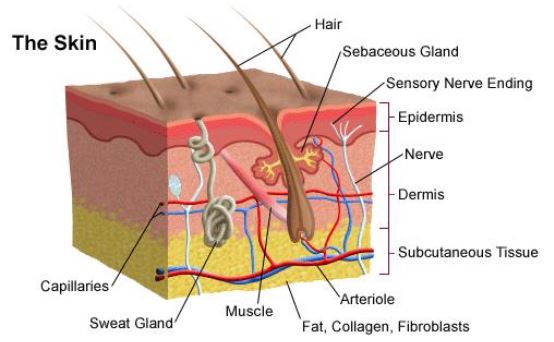

Skin is the body’s largest organ, protecting us from germs and regulating temperature. It has unique fingerprints, helps in touch sensation, and constantly regenerates, keeping us healthy and safe.
Brief Paragraph on ‘Cyber Security’
Cybersecurity protects data from online threats, ensuring privacy and safety. It prevents hacking, phishing, and identity theft using passwords, encryption, and biometric security like fingerprints to safeguard digital information.


