“The Importance of Animal Habitats” is a significant topic that students may be asked to write a paragraph about in school exams. Animal habitats are crucial for survival, providing food, shelter, and water. Protecting them ensures animals thrive and ecosystems remain balanced. Please check the various versions (in 100 words, 150 words, 200 words, and 300 words) provided below for the paragraph.
Contents
- Paragraph on ‘The Importance of Animal Habitats’ in 100 Words
- Paragraph on ‘The Importance of Animal Habitats’ in 150 Words
- Paragraph on ‘The Importance of Animal Habitats’ in 200 Words
- Paragraph on ‘The Importance of Animal Habitats’ in 300 Words
- MCQ’s on ‘The Importance of Animal Habitats’
- 1. What is a habitat?
- 2. Why are habitats important for animals?
- 3. What do forests provide for animals like deer and birds?
- 4. What can happen if animal habitats are destroyed?
- 5. Which of the following factors threatens animal habitats?
- 6. What can individuals do to help protect animal habitats?
- 7. How do oceans support animal life?
- 8. What role do deserts play for animals?
- 9. What is one consequence of pollution in the ocean?
- 10. Why is protecting animal habitats important for humans as well?
- You may like these:
Paragraph on ‘The Importance of Animal Habitats’ in 100 Words


Animal habitats are very important because they provide animals with everything they need to live. Habitats give animals food, water, and shelter. For example, forests give animals like deer food and trees to hide under. Oceans give fish food and places to swim. Without habitats, animals wouldn’t have anywhere to live. If their habitats are destroyed, animals can become homeless and may not survive. That’s why it’s important to protect habitats. When we protect animal habitats, we help animals stay safe and healthy. We also protect the environment, which is important for all life.
Paragraph on ‘The Importance of Animal Habitats’ in 150 Words

Animal habitats are very important for the survival of animals. A habitat is the place where an animal lives and finds everything it needs to survive, like food, water, and shelter. For example, forests provide food for animals like squirrels and trees for them to live in. Oceans give fish plenty of space to swim and food to eat. If animals lose their habitats, they could have trouble finding food or a safe place to live. Some animals might even become extinct if their habitats are destroyed. That’s why it is important to protect animal habitats. When we take care of forests, oceans, and other places where animals live, we help keep the balance of nature. This helps animals, plants, and even people stay healthy.
Paragraph on ‘The Importance of Animal Habitats’ in 200 Words

Animal habitats are important because they provide everything animals need to survive, like food, water, and shelter. A habitat can be a forest, a desert, an ocean, or even a city. Each habitat is home to different animals. For example, forests provide animals like birds, squirrels, and deer with food, trees to climb, and places to hide from predators. Oceans give fish and other sea creatures space to swim, food to eat, and coral reefs to hide in. Animals depend on their habitats to stay safe and healthy.
However, many animal habitats are in danger. Pollution, climate change, and deforestation are causing animals to lose their homes. When animals lose their habitats, they struggle to find food and shelter. Some animals may even disappear forever. That’s why it’s important to protect animal habitats. By taking care of the environment and making sure animals have safe places to live, we help protect not only animals but also the balance of nature. Every time we plant a tree or protect a forest, we are helping animals have a safe home. Protecting habitats means protecting life on Earth.
Paragraph on ‘The Importance of Animal Habitats’ in 300 Words

Animal habitats are very important for the survival of animals. A habitat is a place where animals live, eat, and find shelter. Each habitat provides different things that animals need to stay alive. For example, forests give animals like deer and birds food, trees to rest in, and a safe place to hide from predators. Oceans provide fish and other sea animals with water, food, and coral reefs to hide in. Deserts give animals like camels and lizards a place to find water and stay cool. Habitats are the home that animals rely on every day.
Without healthy habitats, animals can’t survive. When their homes are destroyed, animals lose their food and shelter. This makes it harder for them to find the things they need to stay alive. Pollution, deforestation, and climate change are big problems that harm animal habitats. For example, when forests are cut down, animals lose their homes, and they may have nowhere to go. If the ocean becomes polluted, fish and sea animals can get sick or lose their food sources.
Protecting animal habitats is important for all of us. By taking care of the environment, we help animals stay safe and healthy. We can do things like plant trees, clean up pollution, and protect forests, oceans, and other habitats. Every action we take to protect nature helps animals. When animals have a safe place to live, they can thrive and continue to play their role in the ecosystem. Protecting habitats means protecting all life on Earth, including our own.
MCQ’s on ‘The Importance of Animal Habitats’
1. What is a habitat?
A) A type of animal
B) A place where animals live and find resources
C) A kind of food
D) A method of hunting
Answer: B) A place where animals live and find resources
Explanation: A habitat is where animals get their food, water, and shelter.
2. Why are habitats important for animals?
A) They provide homes and resources for survival
B) They make animals aggressive
C) They restrict animals’ movement
D) They are unnecessary for survival
Answer: A) They provide homes and resources for survival
Explanation: Habitats supply vital needs like food, water, and shelter.
3. What do forests provide for animals like deer and birds?
A) Water only
B) Food, trees, and shelter
C) Only shelter
D) None of the above
Answer: B) Food, trees, and shelter
Explanation: Forests offer essential resources for many animals.
4. What can happen if animal habitats are destroyed?
A) Animals may adapt to new habitats easily
B) Animals can become homeless and may struggle to survive
C) Animals will find more food
D) Animals will thrive in urban settings
Answer: B) Animals can become homeless and may struggle to survive
Explanation: Habitat destruction can lead to food scarcity and loss of shelter.
5. Which of the following factors threatens animal habitats?
A) Pollution
B) Climate change
C) Deforestation
D) All of the above
Answer: D) All of the above
Explanation: These factors all contribute to habitat loss and degradation.
6. What can individuals do to help protect animal habitats?
A) Ignore environmental issues
B) Plant trees and clean up pollution
C) Build more urban areas
D) Use more plastic
Answer: B) Plant trees and clean up pollution
Explanation: These actions can help restore and protect natural environments.
7. How do oceans support animal life?
A) By providing land for animals
B) By offering food and places to swim
C) By keeping animals dry
D) By providing only freshwater
Answer: B) By offering food and places to swim
Explanation: Oceans are crucial habitats for many marine species.
8. What role do deserts play for animals?
A) They provide forests for shelter
B) They offer cool temperatures
C) They supply water and a place to find food
D) They are dangerous and uninhabitable
Answer: C) They supply water and a place to find food
Explanation: Deserts provide specific resources that certain animals need to survive.
9. What is one consequence of pollution in the ocean?
A) Fish become healthier
B) Fish can get sick or lose food sources
C) Marine animals thrive
D) Coral reefs grow faster
Answer: B) Fish can get sick or lose food sources
Explanation: Pollution can harm marine life directly and indirectly.
10. Why is protecting animal habitats important for humans as well?
A) It does not affect humans
B) It ensures a balanced ecosystem that supports all life
C) It only benefits animals
D) It makes nature less appealing
Answer: B) It ensures a balanced ecosystem that supports all life
Explanation: Healthy habitats contribute to the overall health of the planet, including human well-being.


We hope you enjoyed the paragraphs on the topic “The Importance of Animal Habitats,” written by our team of experienced teachers. Keep visiting our website and explore more paragraphs, essays, worksheets, flashcards, Quizzes, and other interactive resources. Don’t forget to follow us on YouTube & Facebook.
You may like these:
Paragraph Of Importance of Forest


Forests provide oxygen, regulate climate, and support biodiversity. They prevent soil erosion, store carbon, and sustain livelihoods, making them essential for environmental balance and human survival.
Paragraph – Impact of Global Warming on Oceans


Global warming raises ocean temperatures, leading to coral bleaching, rising sea levels, and disrupted marine ecosystems. It threatens biodiversity, fisheries, and coastal communities worldwide.
Paragraph About Dangers of Animal Extinction
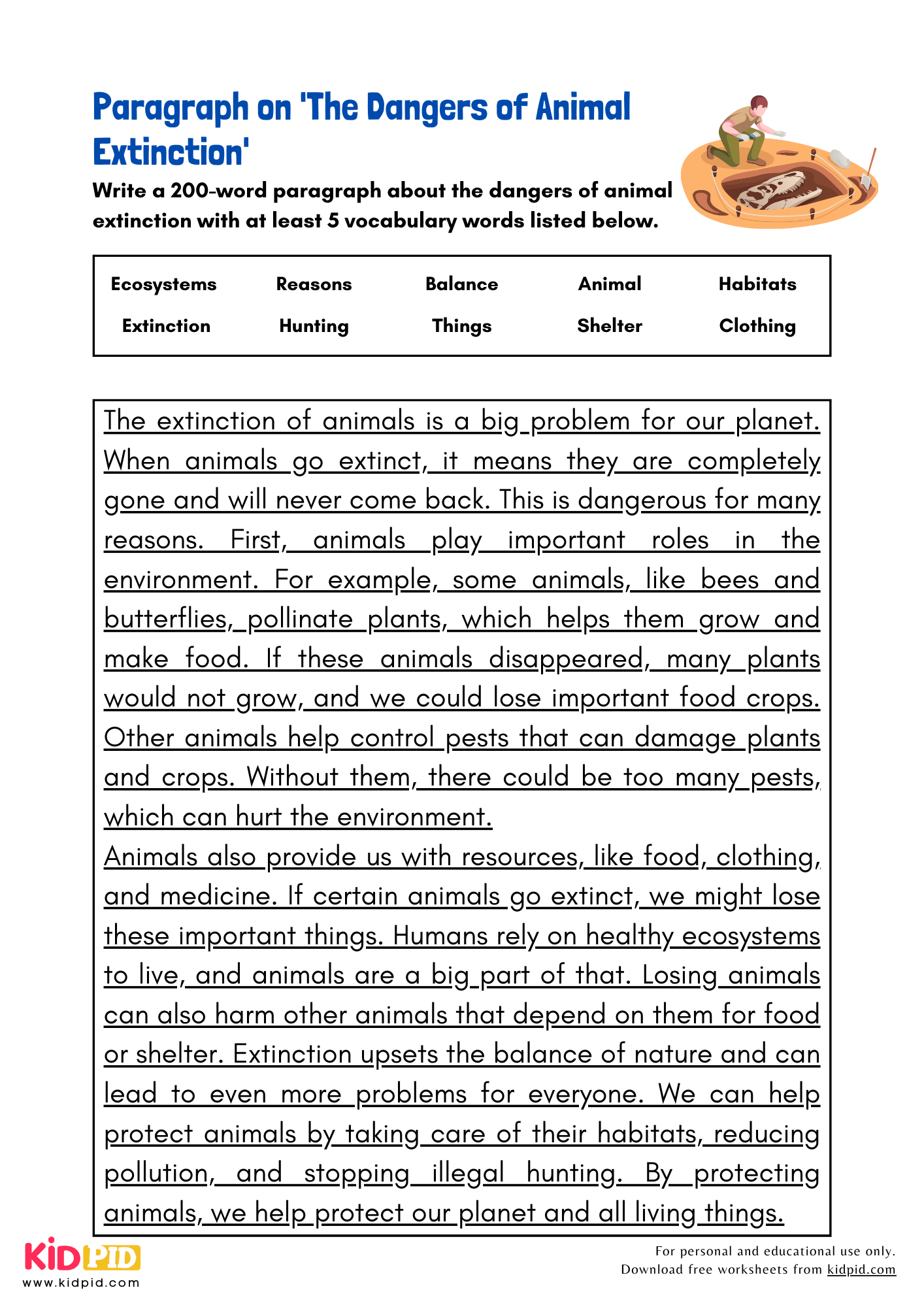
Animal extinction disrupts ecosystems, reduces biodiversity, and affects food chains. Losing species weakens ecological stability, impacts agriculture, and threatens natural resources crucial for human survival.
Paragraph Of The Importance of Tree Plantation
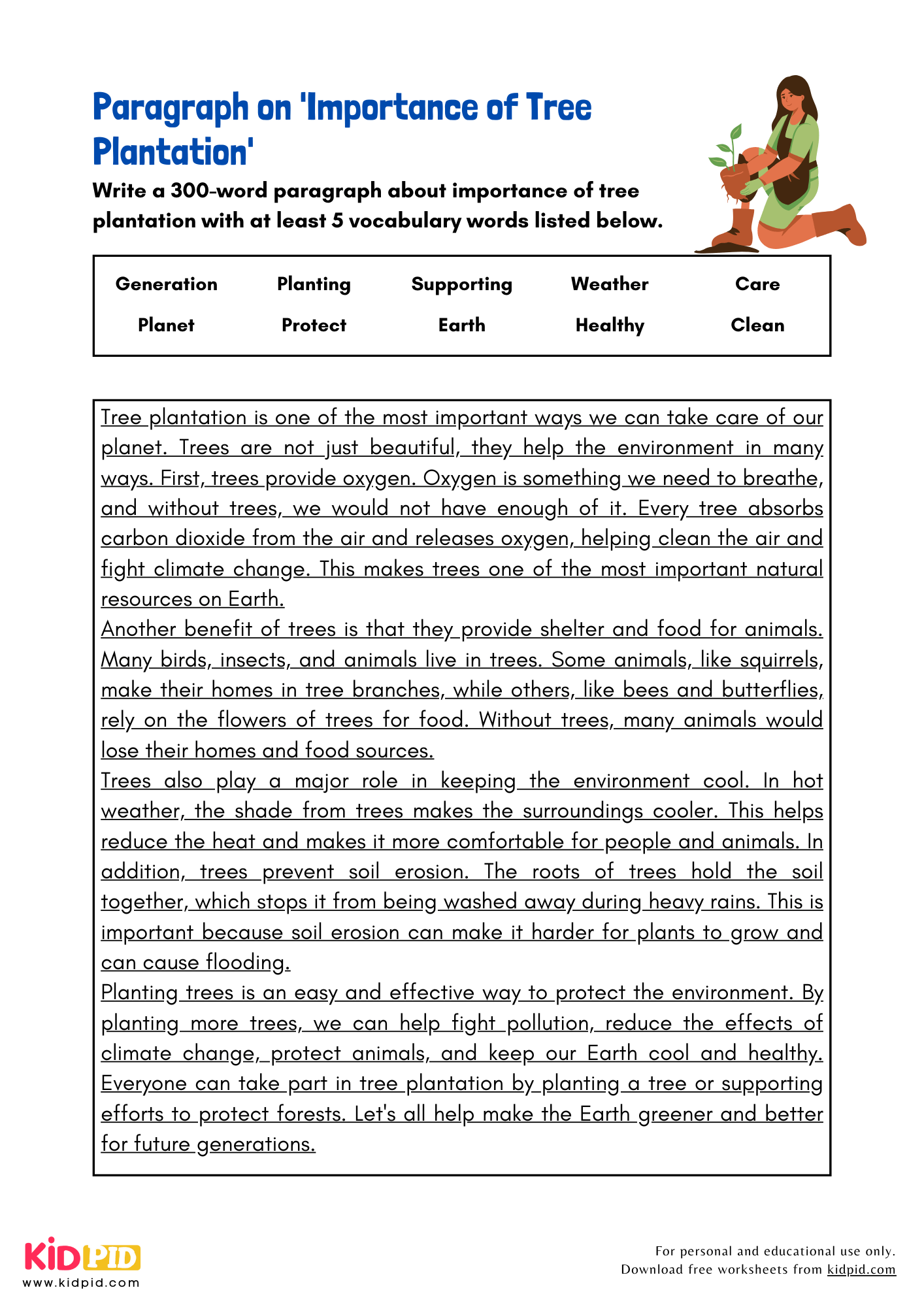

Tree plantation enhances air quality, prevents soil erosion, and combats climate change. It provides habitat for wildlife, improves water conservation, and contributes to ecological balance.
Paragraph – What Is Deforestation?

Deforestation is the large-scale clearing of forests, mainly for agriculture, logging, and urbanization. It leads to habitat loss, climate change, and decreased biodiversity.