An essay on plagiarism discussing its meaning, consequences in academics and writing, and the importance of originality and integrity
Plagiarism means copying someone else’s work or ideas and saying they are your own. It is unfair and dishonest. Plagiarism can happen in writing, school projects, or even art. Learning to use your own words and giving credit to others helps you stay honest and build good habits.
Contents
10 Pointers About Plagiarism
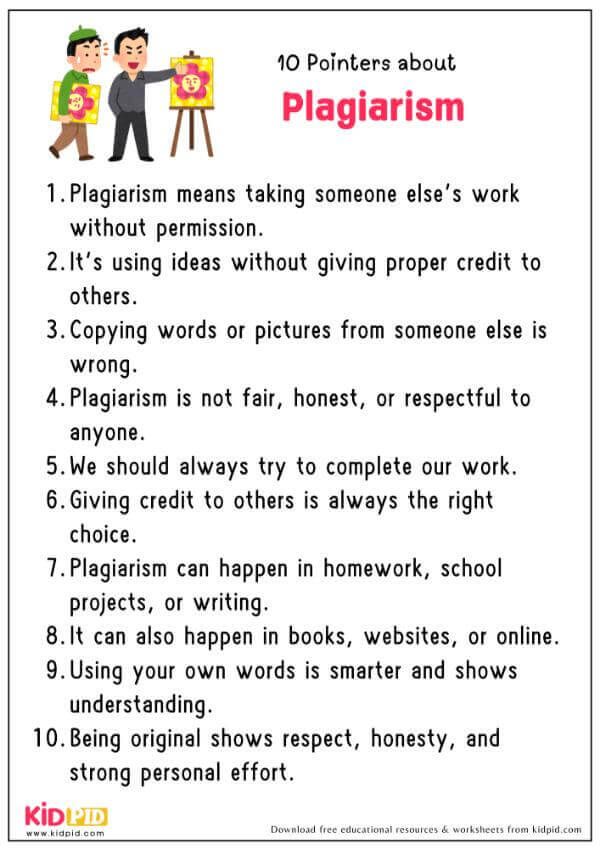

- Plagiarism means taking someone else’s work without permission.
- It’s using ideas without giving proper credit to others.
- Copying words or pictures from someone else is wrong.
- Plagiarism is not fair, honest, or respectful to anyone.
- We should always try to complete our work.
- Giving credit to others is always the right choice.
- Plagiarism can happen in homework, school projects, or writing.
- It can also happen in books, on websites, or online.
- Using your own words is smarter and shows understanding.
- Being original shows respect, honesty, and strong personal effort.
Short Essay On Plagiarism
Essay On Plagiarism in 100 Words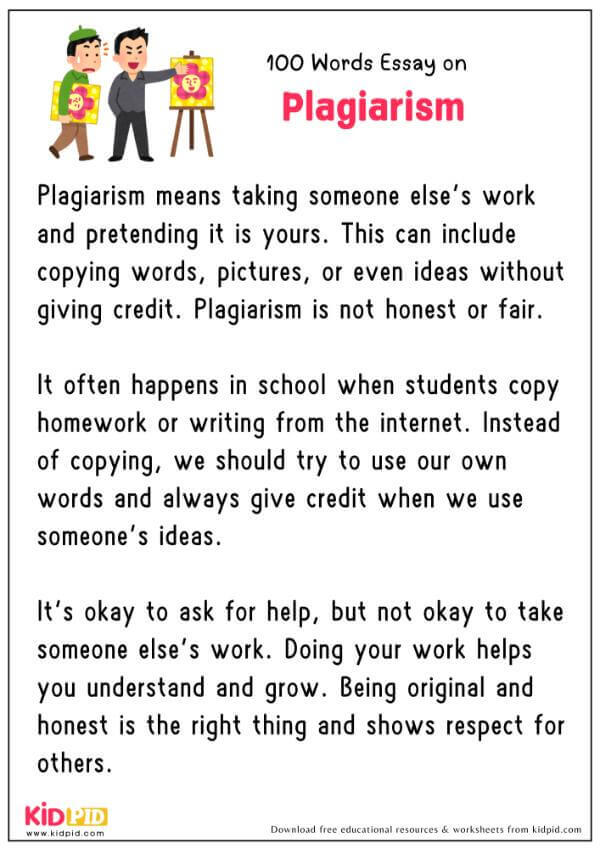
Plagiarism means taking someone else’s work and pretending it is yours. This can include copying words, pictures, or even ideas without giving credit. Plagiarism is not honest or fair. It often happens in school when students copy homework or writing from the internet. Instead of copying, we should try to use our own words and always give credit when we use someone’s ideas. It’s okay to ask for help, but not okay to take someone else’s work. Doing your work helps you understand and grow. Being original and honest is the right thing and shows respect for others.
Essay On Plagiarism in 200 Words
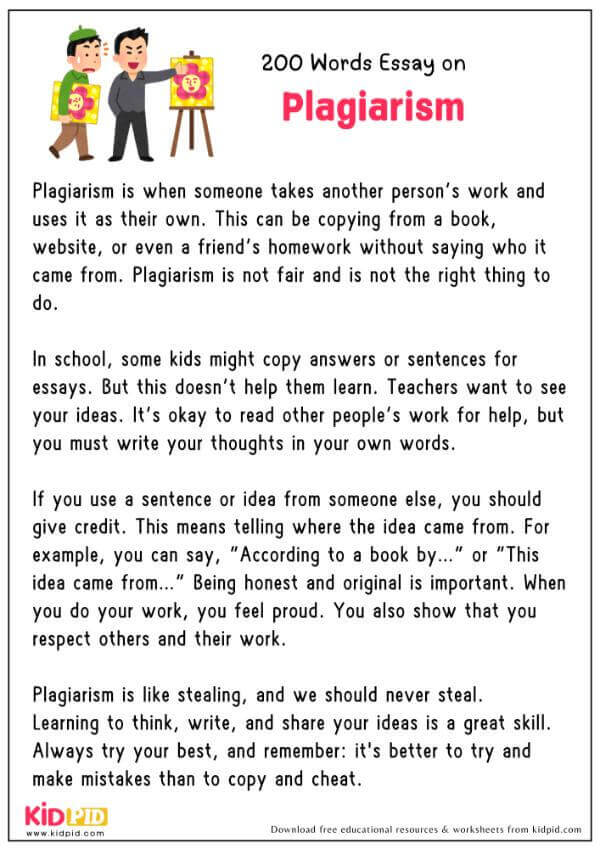
Plagiarism is when someone takes another person’s work and uses it as their own. This can be copying from a book, website, or even a friend’s homework without saying who it came from. Plagiarism is not fair and is not the right thing to do.
In school, some kids might copy answers or sentences for essays. But this doesn’t help them learn. Teachers want to see your ideas. It’s okay to read other people’s work for help, but you must write your thoughts in your own words.
If you use a sentence or idea from someone else, you should give credit. This means telling where the idea came from. For example, you can say, “According to a book by…” or “This idea came from…”
Being honest and original is important. When you do your work, you feel proud. You also show that you respect others and their work. Plagiarism is like stealing, and we should never steal.
Learning to think, write, and share your ideas is a great skill. Always try your best, and remember: it’s better to try and make mistakes than to copy and cheat.
Essay On Plagiarism in 300 Words
Plagiarism is the act of using someone else’s work or ideas and pretending they are your own. It can happen when a person copies a sentence, paragraph, image, or idea from a book, website, or even another student without giving credit. Plagiarism is considered wrong because it is dishonest and unfair.
At school, plagiarism can happen when students copy homework, essays, or answers. Some students might find information online and copy it exactly into their assignments. This does not help them learn. Teachers want students to think on their own and do their own work. Copying from others is like cheating.
It is okay to read books or websites to get ideas, but you must use your own words to explain them. If you use someone’s exact words, you must say where the words came from. This is called giving credit or citing your source.
Avoiding plagiarism shows honesty, respect, and responsibility. When you do your work, even if it’s not perfect, you are learning and improving. Everyone makes mistakes sometimes, but copying will not help you grow.
Teachers, writers, and even famous people can get in trouble for plagiarism. That’s why it’s important to understand what it means and how to avoid it.
Being honest is more important than getting a perfect grade. Always try your best, and don’t be afraid to ask for help if you don’t understand something. Your ideas matter, and they should be shared in your voice. Say no to plagiarism and yes to learning!
Long Essay On Plagiarism in 500 Words
Introduction
Plagiarism is the act of using someone else’s work, ideas, or words without proper acknowledgment, presenting them as one’s own. It is considered a serious ethical violation in academic, professional, and creative fields. Plagiarism undermines intellectual integrity, devalues original work, and can lead to severe consequences such as failing grades, job loss, or legal action. Understanding plagiarism is essential for maintaining honesty and credibility in any form of writing or research.
Types of Plagiarism
Plagiarism can take various forms, including direct copying, paraphrasing without citation, and self-plagiarism. Direct plagiarism involves verbatim reproduction of text without quotation marks or attribution. Paraphrasing plagiarism occurs when someone rewrites another’s ideas in their own words but fails to credit the source. Self-plagiarism, though less discussed, involves reusing one’s previous work without permission, which can be problematic in academic and publishing contexts.
Causes of Plagiarism
Several factors contribute to plagiarism, such as poor time management, lack of understanding of citation rules, and pressure to achieve high grades. Some students plagiarize unintentionally due to ignorance of proper referencing techniques, while others do so deliberately to save effort. The ease of accessing online information has also increased the temptation to copy content without attribution.
Consequences of Plagiarism
The repercussions of plagiarism can be severe. In academic settings, students may face penalties ranging from failing assignments to expulsion. Professionals caught plagiarizing risk damage to their reputation, job termination, or legal consequences if copyright infringement is involved. Additionally, plagiarism erodes trust and diminishes the value of original contributions in any field.
To Avoid Plagiarism
Avoiding plagiarism requires proper research and citation practices. Writers should always credit sources when quoting, paraphrasing, or summarizing. Using plagiarism detection tools like Turnitin or Grammarly can help identify unintentional plagiarism. Developing strong research and writing skills, along with time management, reduces the temptation to plagiarize. Educators can also play a role by teaching proper citation methods (APA, MLA, Chicago) and promoting academic integrity.
The Role of Technology in Detecting Plagiarism
Advancements in technology have made it easier to detect plagiarism. Software like Turnitin, Copyscape, and Grammarly compares submitted work against vast databases of published material to identify matches. While these tools help maintain academic honesty, they also encourage students and professionals to produce original work. However, over-reliance on such tools without understanding ethical writing practices can be problematic.
Conclusion
Plagiarism is a serious ethical breach that affects academic and professional credibility. Understanding its forms, causes, and consequences is crucial for maintaining integrity in writing. By practicing proper citation, improving research skills, and utilizing plagiarism detection tools, individuals can avoid plagiarism and contribute original, valuable work to their fields.


FAQs on Plagiarism
Q1. What is plagiarism?
Ans. Presenting someone else’s work as your own without credit.
Q2. Name two types of plagiarism.
Ans. Direct plagiarism and self-plagiarism.
Q3. What is accidental plagiarism?
Ans. Unintentional failure to cite sources properly.
Q4. Why do students plagiarize?
Ans. Due to time pressure, laziness, or fear of failure.
Q5. What are the consequences of plagiarism in academics?
Ans. Failing grades, suspension, or expulsion.
Q6. How can you avoid plagiarism when paraphrasing?
Ans. Rewrite in your own words and still cite the source.
Q7. What is self-plagiarism?
Ans. Reusing one’s own previously submitted work without permission.
Q8. How does technology help detect plagiarism?
Ans. Tools like Turnitin compare texts against databases to find copied content.
Q9. Why is academic integrity important?
Ans. It ensures credibility, originality, and ethical scholarship.
Q10. What is giving credit?
Ans. Saying where the idea came from.
Plagiarism is wrong and unfair. We should always use our own ideas or give credit to others. Being honest in our work helps us learn and grow the right way.Visit our website for more paragraphs, essays, worksheets, flashcards, Quizzes, and other interactive resources. Don’t forget to follow us on YouTube & Facebook.
You May Like This:
Essay – Mangal Pandey: The First Freedom Fighter


Mangal Pandey (born July 19, 1827) was a sepoy in the 34th Bengal Native Infantry. In March 1857, he attacked British officers over greased cartridges, sparking India’s first uprising. He was hanged on April 8, 1857.
Essay – Nandita Das: The Social Activist and Actress

Nandita Das is an award‑winning Indian actress, director, writer, and social advocate. She has acted in films across ten languages and directed impactful movies like Firaaq, Manto and Zwigato.
Essay – T. N. Seshan: Revolutionizing Indian Election Commission’s Role


Tirunellai Narayana Iyer Seshan (born December 15, 1932) served as India’s 10th Chief Election Commissioner (1990–1996). He enforced strict election reforms like Model Code of Conduct and voter ID cards to make elections fair and transparent.
Essay – Sushma Swaraj: The Respected Politician


Sushma Swaraj (1952–2019) was a respected Indian politician and lawyer. She became Delhi’s first woman Chief Minister and served as External Affairs Minister (2014–2019), known for helping Indians overseas via Twitter.
Essay – Amulya Kumar: The Environmental Activist


Amulya Kumar N. Reddy (1930–2006) was a scientist and professor at IISc, Bangalore. He founded ASTRA to bring sustainable technology to rural India, wrote over 250 papers, and won the Volvo Environment Prize.