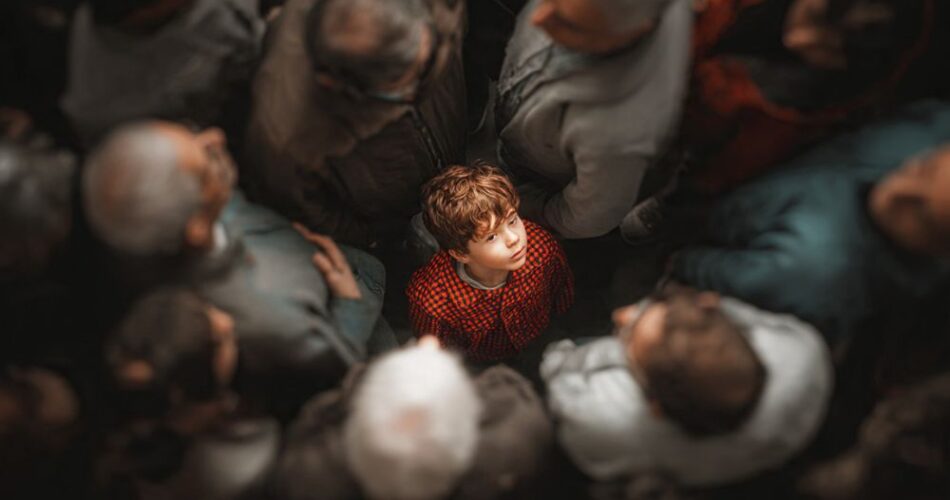
Meet-ups with kids in crowded places can feel like a mini adventure—until the noise, distractions, traffic, and “I just ran over there!” moments kick in. The goal isn’t to control the fun. It’s to add a simple structure so your child can relax and you can stay calm.
Contents
- What Counts as a Busy Place
- The Simple Crowd Safety Plan
- How to Choose a Meeting Spot That Works
- Safe Helpers and Safe Zones
- Coaching by Age
- Check-Ins That Feel Supportive
- Make Your Child Easy to Spot
- Your 3-Minute Arrival Routine
- Parking, Drop-Offs, and Why Travel Planning Is Part of Safety
- If Separation Happens: The Playbook
- Quick Checklist
What Counts as a Busy Place
Any space with lots of people, movement, and attention-pulls: festivals, markets, indoor play centres, fairs, community days, sports events, packed playgrounds, or crowded parks. More stimulation can mean wandering, missed cues, or freezing when unsure. What helps most is a plan your child can repeat back to you.
The Simple Crowd Safety Plan
Keep one plan for every outing:
- Go to the meeting spot.
- Ask a safe helper.
Say it before you go and again when you arrive. Repetition is how it sticks.
What to Say to Your Child (Script)
“If you can’t see me, stop your feet. Look around slowly. Go to our meeting spot. If you still need help, find a safe helper with a badge.”
How to Choose a Meeting Spot That Works
Pick a place your child can find again fast:
- Easy to see from far away and easy to describe (the big tree by the entrance)
- Not in a bottleneck where crowds squeeze
- Close to staff/help if possible
Avoid:
- Food trucks (lines shift)
- Stages (crowd surges)
- Bathroom entrances (constant traffic)
On arrival, walk your child to the spot, say it out loud, then have them point to it and repeat the plan back. That quick teach-back makes it real.
Safe Helpers and Safe Zones
A safe helper is an adult whose job is to help people: security, event staff with badges, first-aid staff, or workers behind a counter.
A safe zone is where helpers are stationed, such as:
- Information booth
- First-aid tent
- Security desk
- Main entrance/check-in
Kid-friendly line: “If you need help, go to the information booth and stay there.”
Coaching by Age
Ages 2–4
Expect impulsive movement. Use hand-holding zones in crowds, crossings, and transitions. Practise “freeze feet” at home.
Ages 5–7
Add a buddy rule and short check-ins (15–20 minutes). Give simple boundaries: “You can play here, but you don’t go behind booths.”
Ages 8–10
Set map boundaries (“between the fountain and the playground”) and base check-ins every 30 minutes. Teach one help sentence: “I’m lost. Can you help me find the information desk?”
Ages 11–13
Agree on moving rules. If phones are involved: volume on, no headphones in crowds, and text “Moving” before changing zones.
Check-Ins That Feel Supportive
Use three kinds:
- Time: “Back at base when the timer beeps.”
- Transition: “Tell me before you go somewhere new.”
- Body: “Let me see your face—are you okay or do you need a break?”
These routines help you catch overwhelm early (zoning out, irritability, clinginess, sudden tears) and take a break before it escalates.
Make Your Child Easy to Spot
Use bright tops or hats (solid colours scan fastest) and closed-toe shoes for outdoor events.
Add simple ID: a pocket card or wrist label with your phone number (plus allergies if relevant). Explain it calmly: “This is just in case—like a seatbelt.”
Also, take a quick photo of your child right before you enter (same-day outfit). If you ever need to describe them, you won’t rely on memory.
Your 3-Minute Arrival Routine
Before the fun starts: point out bathrooms, exits, first aid, and information/security. Walk to the meeting spot and safe zone, then have your child point to both.
Parking, Drop-Offs, and Why Travel Planning Is Part of Safety
The riskiest moments often happen outside the fun area: parking lots, crossings, and drop-off zones. A solid arrival/exit plan keeps you from feeling rushed and distracted.
If you’re meeting up in Sydney for a crowded weekend event, it can help to plan short term car parking in Sydney ahead of time so you’re not circling streets or juggling directions with kids in tow. Some families compare hourly parking options close to the venue, like Secure Parking’s hourly parking solutions, and pick a spot that means a simpler walk, fewer road crossings, and a calmer entry point for the group.
Parking Lot Rules to Stick To
- Your child holds your hand (or the stroller strap) in parking lots
- Load kids into the car first, then bags
- Cross only at marked crossings
- No running ahead, even if they see friends
If Separation Happens: The Playbook
- Go to the meeting spot immediately.
- If there are two adults, one stays at the meeting spot while the other checks the last-seen area.
- Alert staff/security with: first name, age, height range, clothing, a standout item (hat/backpack), and last known location.
- If there’s a formal lost-child point, go there and stay reachable.
What you teach your child stays the same: Stop. Look. Meeting spot. Safe helper.
Quick Checklist
Before you go: meeting spot (and backup), bright clothing, simple ID, snacks/water, and check-in rules.
When you arrive, point out help spots and practise the plan once.
During: check in, repeat rules calmly, and take breaks early.
With a short plan you repeat and practise, busy places feel less risky—and a lot more like what they should be: social, memorable, and genuinely fun.