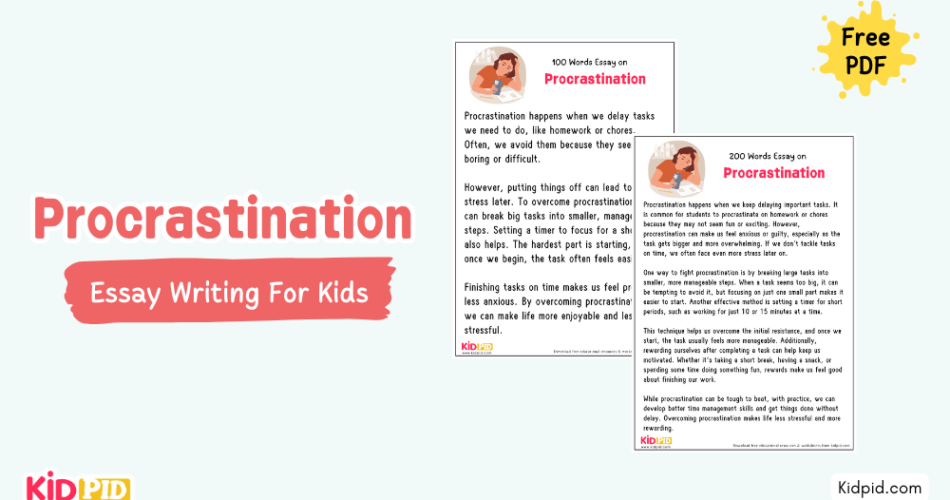
An essay on Procrastination explains the causes and effects of delaying important tasks.
Procrastination means delaying important tasks and choosing easier activities instead. Many people face this habit in daily life, which often leads to stress and incomplete work. Learning to manage time and stay focused helps in reducing procrastination and improving both productivity and personal growth.
Contents
10 Pointers About Procrastination

- Procrastination means delaying tasks or activities we need to do.
- It can lead to stress and pressure later on.
- We often avoid tasks we find boring or difficult.
- Setting small, manageable goals helps overcome procrastination.
- Procrastination happens when we feel overwhelmed or unsure.
- Distractions make it easy to avoid important tasks.
- Starting with small steps helps us get tasks done.
- Breaking tasks into smaller steps makes them less overwhelming.
- Rewarding ourselves after tasks encourages productivity and motivation.
- Avoiding procrastination reduces stress and helps maintain mental health.
Short Essay On Procrastination
Essay On Procrastination in 100 Words

Procrastination happens when we delay tasks we need to do, like homework or chores. Often, we avoid them because they seem boring or difficult. However, putting things off can lead to more stress later. To overcome procrastination, we can break big tasks into smaller, manageable steps. Setting a timer to focus for a short time also helps. The hardest part is starting, but once we begin, the task often feels easier. Finishing tasks on time makes us feel proud and less anxious. By overcoming procrastination, we can make life more enjoyable and less stressful.
Essay On Procrastination in 200 Words

Procrastination happens when we keep delaying important tasks. It is common for students to procrastinate on homework or chores because they may not seem fun or exciting. However, procrastination can make us feel anxious or guilty, especially as the task gets bigger and more overwhelming. If we don’t tackle tasks on time, we often face even more stress later on.
One way to fight procrastination is by breaking large tasks into smaller, more manageable steps. When a task seems too big, it can be tempting to avoid it, but focusing on just one small part makes it easier to start. Another effective method is setting a timer for short periods, such as working for just 10 or 15 minutes at a time. This technique helps us overcome the initial resistance, and once we start, the task usually feels more manageable.
Additionally, rewarding ourselves after completing a task can help keep us motivated. Whether it’s taking a short break, having a snack, or spending some time doing something fun, rewards make us feel good about finishing our work.
While procrastination can be tough to beat, with practice, we can develop better time management skills and get things done without delay. Overcoming procrastination makes life less stressful and more rewarding.
Essay On Procrastination in 300 Words
Procrastination is when we delay doing tasks that we need to finish. It happens when we feel lazy, distracted, or overwhelmed by the work ahead. Often, we put off doing homework, cleaning, or even small chores because we don’t want to do them right away. Procrastination makes us feel stressed because the tasks pile up, and we end up rushing to finish them later.
One reason we procrastinate is that the tasks feel too big or boring. When we look at a big project, it can seem too much to handle, so we avoid starting. But if we break the task into smaller steps, it becomes easier. For example, instead of thinking about finishing a whole essay, we can focus on writing just one paragraph at a time. This helps reduce the feeling of being overwhelmed.
Another way to beat procrastination is by setting a timer. Working for just 10 to 15 minutes without distractions helps us get started. After a short period, we often find that continuing the task is easier. It also helps to reward ourselves once we finish a task. Whether it’s taking a break, watching a show, or eating something we like, rewards make it easier to stay motivated.
Procrastination can also happen when we get distracted by phones, games, or social media. We need to focus on the task at hand and avoid things that pull our attention away. By setting boundaries and taking breaks, we can make progress and feel less stressed.
Long Essay On Procrastination in 500 Words
Introduction
Procrastination is the act of delaying tasks or activities that we should be doing. Everyone has experienced procrastination at some point, whether it’s putting off homework, chores, or even bigger projects. While it’s normal to feel like procrastinating now and then, it can lead to stress, anxiety, and last-minute rushes to get work done. The good news is that there are simple ways to stop procrastinating and improve productivity.
Need to Procrastinate
There are many reasons why we procrastinate. One common reason is that the task seems overwhelming or boring. When a project feels like too much work, we might avoid starting it altogether. Other times, we procrastinate because we are distracted by things we enjoy, like video games or social media. It’s easy to put off something that seems less fun, but doing so only makes things harder later.
Another reason we procrastinate is fear of failure. We may avoid a task because we worry we won’t do it well. This fear can make us feel anxious and stop us from even trying. The good news is that making mistakes is part of learning, and starting a task is often the hardest part.
How Can We Stop Procrastinating?
One way to overcome procrastination is by breaking tasks into smaller steps. Instead of looking at a big task and feeling overwhelmed, we can focus on one small part. For example, if we need to write a report, we can start by writing an introduction or researching one part of the topic. Breaking tasks down makes them feel less stressful and easier to begin.
Setting a timer for focused work can also help. For example, we can set a timer for 10 to 15 minutes to work without distractions. After the timer goes off, we can take a short break. This method helps us build momentum and stay on track. It’s also important to eliminate distractions while working. Turning off our phone or finding a quiet space can help us focus better.
Another effective strategy is rewarding ourselves after completing a task. Whether it’s taking a break, eating a treat, or doing something fun, rewards make it easier to stay motivated. By looking forward to a small reward, we feel more excited to finish tasks.
The Importance of Time Management
Procrastination is closely linked to poor time management. If we don’t plan our time well, we may put things off until the last minute. To manage our time better, we can use a planner or make a to-do list. This helps us see what needs to be done and when, making it easier to stay on top of tasks. Time management helps us avoid procrastination and reduces stress.
Conclusion
Procrastination is something we all experience, but it doesn’t have to control us. By breaking tasks into smaller steps, setting timers, eliminating distractions, and rewarding ourselves, we can overcome procrastination. Good time management is also key to staying on track. With practice, we can stop procrastinating and feel more confident about getting things done. Being proactive helps us reduce stress and be more productive, allowing us to enjoy our free time without worrying about unfinished tasks.

FAQs on Procrastination
Q1. What is procrastination?
Ans. Procrastination is delaying tasks or activities that need to be done.
Q2. Why do we procrastinate?
Ans. We procrastinate because tasks seem overwhelming, boring, or distracting.
Q3. How can procrastination cause stress?
Ans. Procrastination causes stress by piling up tasks that need to be done later.
Q4. What is one way to overcome procrastination?
Ans. Breaking tasks into smaller steps can help overcome procrastination.
Q5. How does setting a timer help with procrastination?
Ans. Setting a timer for short work periods helps build focus and momentum.
Q6. Why is fear of failure a reason for procrastination?
Ans. Fear of failure can stop us from starting tasks because we worry we won’t do them well.
Q7. What role does time management play in procrastination?
Ans. Time management helps avoid procrastination by planning tasks and setting deadlines.
Q8. What can help eliminate distractions while working?
Ans. Turning off the phone or working in a quiet space can reduce distractions.
Q9. How can rewards help in overcoming procrastination?
Ans. Rewards after completing tasks motivate us to finish them.
Q10. Why is starting a task often the hardest part?
Ans. Starting is tough because we fear failure or feel overwhelmed by the task.
Procrastination slows us down and causes stress. By planning well and staying focused, we can overcome it, finish tasks on time, and enjoy success and peace in our daily lives. For more learning materials like paragraphs, essays, worksheets, flashcards, Quizzes, and other interactive resources. Don’t forget to follow us on YouTube & Facebook.
You May Like This:

Vasco da Gama introduces readers to his pioneering voyage that connected Europe to India by sea. It highlights his strategic navigation around Africa’s Cape of Good Hope, establishing a direct maritime trade route and strengthening Portugal’s influence in Asia .
Essay – Comparing Shakespeare And Contemporary Cervantes’ Works

compares the works of Shakespeare and Cervantes, highlighting Shakespeare’s English plays and Cervantes’ Spanish novel Don Quixote, emphasizing their distinct storytelling styles and cultural impacts.
Essay – The Music Of Beethoven

Beethoven highlights his journey from a talented German composer to a global icon. Despite losing his hearing, he composed masterpieces like the 5th and 9th symphonies, conveying deep emotions and inspiring audiences worldwide. His music continues to influence musicians today.
Essay – Van Gogh’s Use Of Color

Vincent van Gogh used color to express emotions and moods in his art. Bright yellows and oranges conveyed happiness, while blues and greens suggested calmness or sadness. His bold brushstrokes and thick paint added intensity, making his paintings feel alive.