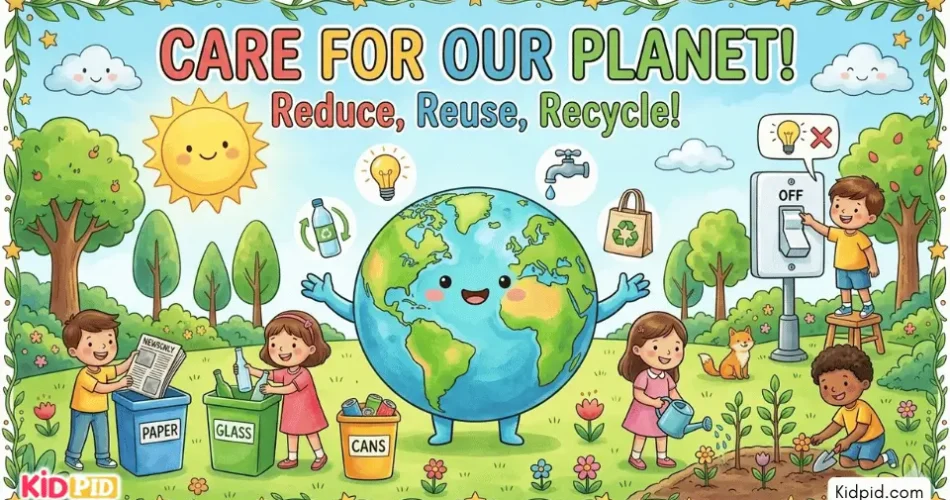
Learning about Reduce, Reuse, and Recycle helps children understand how to protect the environment and reduce waste. These simple habits can keep our planet clean, save natural resources, and create a healthier future for everyone. This short and fun poem teaches kids the importance of the 3Rs of waste management through easy rhymes and simple examples. Let’s explore how small actions can make a big difference for our Earth.
Contents
- Care for Our Planet! Reduce, Reuse, Recycle Kids Rhyme Poster
- Why Are Reduce, Reuse, and Recycle Important?
- Benefits of the 3Rs
- FAQs
- Q1. What do the 3Rs stand for in waste management?
- Q2. Why is reducing waste important?
- Q3. How can kids reduce waste at home?
- Q4. What are some examples of reusing items?
- Q5. What materials can be recycled?
- Q6. How does recycling help the environment?
- Q7. Why should children learn about recycling?
- Q8. How can schools encourage recycling and sustainability?
- Q9. How can families practice the 3Rs every day?
Care for Our Planet! Reduce, Reuse, Recycle Kids Rhyme Poster

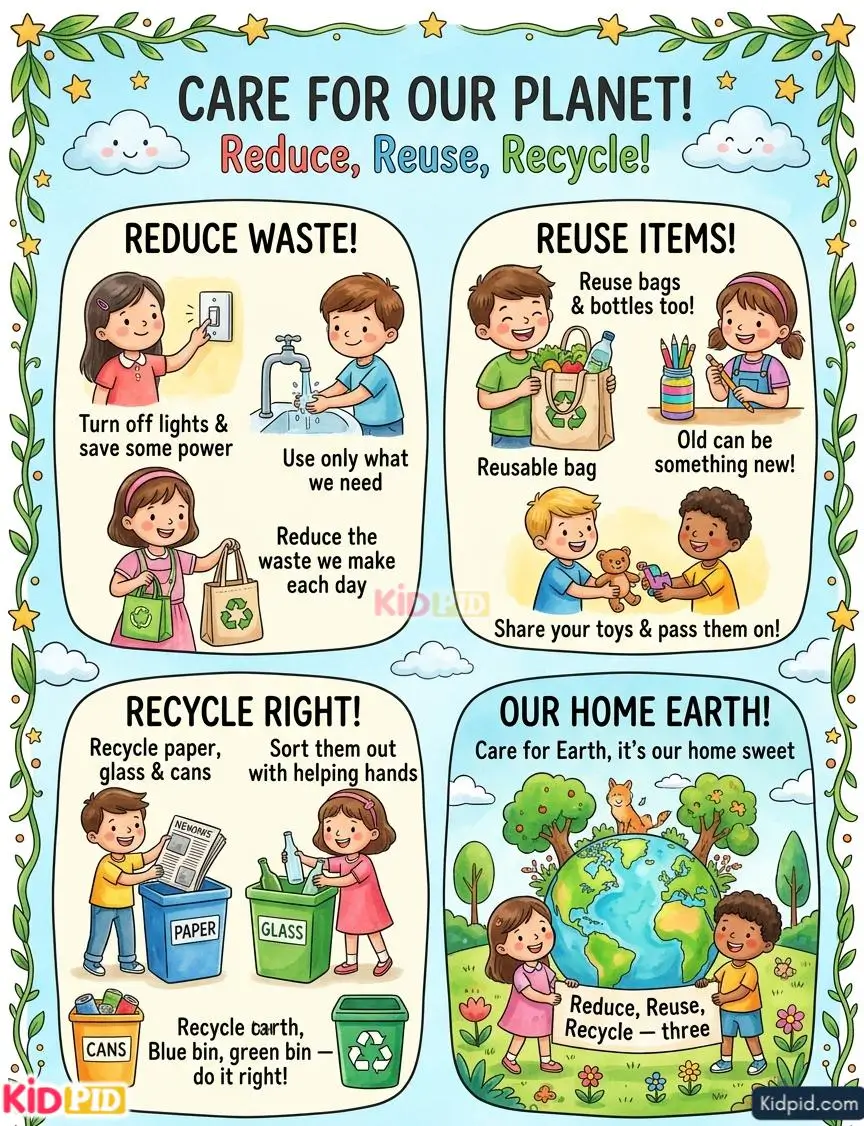
This fun recycling rhyme helps children learn simple eco-friendly habits like reducing waste, reusing everyday items, and recycling correctly. The catchy messages make environmental awareness easy to remember while building responsibility and positive Earth-care habits.
A bright and engaging Earth Day learning poster that introduces children to reducing waste, reusing materials, and recycling properly. Cute illustrations show practical actions such as turning off lights, carrying reusable bags, sharing toys, and sorting recyclables. The simple rhyme-based format helps young learners remember important environmental habits in a fun and meaningful way.
Why Are Reduce, Reuse, and Recycle Important?
The Earth provides us with clean air, water, food, and natural resources. However, too much waste can pollute the environment and harm plants, animals, and people. Practicing the 3Rs helps reduce the amount of trash sent to landfills and saves valuable resources.
- Reduce: Using fewer items and avoiding unnecessary waste. Simple actions include turning off lights when leaving a room, using less water, and choosing reusable products instead of disposable ones.
- Reuse: Reusing means finding new ways to use old items instead of throwing them away. Reusable shopping bags, water bottles, containers, books, and toys can be used many times, helping to reduce waste and save money.
- Recycle: Recycling turns used materials like paper, cardboard, glass, metal cans, and certain plastics into new products. Recycling helps conserve natural resources, reduce pollution, and save energy.
Benefits of the 3Rs
- Helps protect the environment
- Reduces pollution and waste
- Saves energy and natural resources
- Keeps communities clean and healthy
- Encourages responsible and sustainable living
By practicing these simple habits every day, children can become environmental heroes and help create a cleaner, greener world.
FAQs
Q1. What do the 3Rs stand for in waste management?
Answer: The 3Rs stand for Reduce, Reuse, and Recycle. These three practices help minimize waste, conserve natural resources, and protect the environment. Learning the 3Rs is an important part of environmental education for children and adults alike.
Q2. Why is reducing waste important?
Answer: Reducing waste helps decrease pollution, save energy, and conserve natural resources. When we use only what we need, we create less trash and help keep the Earth clean and healthy.
Q3. How can kids reduce waste at home?
Answer: Children can reduce waste by turning off lights when not in use, using both sides of paper, avoiding single-use plastics, and taking only the food they can eat. Small daily actions can make a big difference.
Q4. What are some examples of reusing items?
Answer: Reusing means using items again instead of throwing them away. Examples include using reusable water bottles, carrying cloth shopping bags, donating old toys, reusing containers for storage, and repairing items instead of replacing them.
Q5. What materials can be recycled?
Answer: Many common materials can be recycled, including paper, cardboard, glass bottles, aluminum cans, steel containers, and certain plastic products. Recycling rules may vary by location, so it is important to check local recycling guidelines.
Q6. How does recycling help the environment?
Answer: Recycling helps reduce landfill waste, conserve natural resources, save energy, and lower pollution levels. It also reduces the need to extract raw materials from the Earth.
Q7. Why should children learn about recycling?
Answer: Teaching children about recycling encourages environmental responsibility from a young age. It helps them understand the importance of protecting nature and developing sustainable habits for the future.
Q8. How can schools encourage recycling and sustainability?
Answer: Schools can promote sustainability by providing recycling bins, organizing environmental awareness programs, encouraging reusable supplies, and teaching students about waste reduction and conservation.
Q9. How can families practice the 3Rs every day?
Answer: Families can practice the 3Rs by using reusable bags and bottles, recycling household materials, repairing items when possible, donating unwanted goods, and making mindful purchasing decisions that reduce waste.
The message of reduce, reuse, and recycle reminds us that small actions can make a big difference. By reducing waste, reusing everyday items, and recycling materials correctly, children can help protect the environment and support a sustainable future. These simple habits not only keep our planet clean but also teach responsibility and care for nature. Keep the learning journey going! Explore our website for fresh rhymes, engaging paragraphs, essays, worksheets, flashcards, quizzes, and much more. Join us on YouTube & Facebook for daily educational videos and fun-filled activities for children.