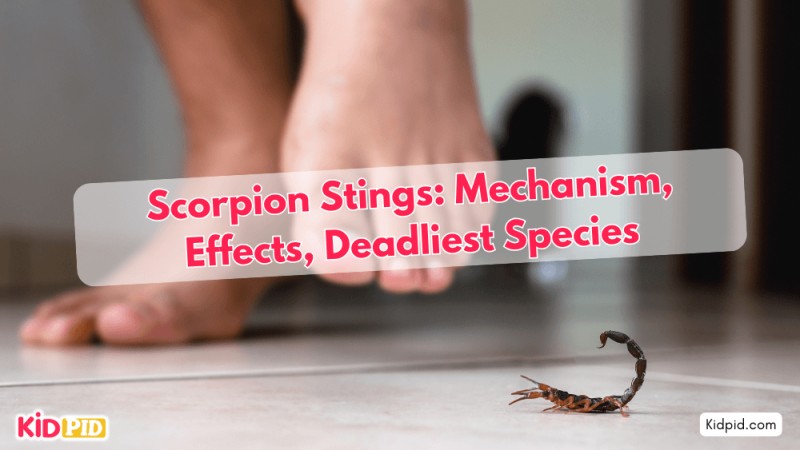
Scorpions are fascinating creatures that have been around for millions of years. They are known for their long tails and sharp stingers. Let’s learn about how scorpion stings work, what their venom does, and which species are the most dangerous!
- What is a Scorpion: Scorpions are small animals with eight legs and a tail that curls up
- How Do Scorpion Stings Work: Scorpions use their tails to sting prey or protect themselves. The sting can be painful.
- What is called Venom: Venom is a special fluid that scorpions inject when they sting. It can cause different effects on other animals or humans.
- Effects of Venom: Some scorpion venoms cause pain, swelling, or allergic reactions. Most stings are not deadly, but some can be very harmful.
- Deadliest Species: Some scorpions are more dangerous than others. The most dangerous ones can cause serious health problems or even be fatal.
Contents
- Scorpion Stings: How They Work, Venom Effects, and the Deadliest Species
- Related MCQ’s
- 1. What type of creature is a scorpion?
- 2. What is the function of the scorpion’s stinger?
- 3. What is the main effect of scorpion venom on the body?
- 4. How does the body respond to a scorpion sting?
- 5. What should you do if stung by a highly venomous scorpion?
- 6. What unique feature causes scorpions to glow under UV light?
- You may like these:
Scorpion Stings: How They Work, Venom Effects, and the Deadliest Species

Related MCQ’s
1. What type of creature is a scorpion?
a) Insect
b) Arachnid
c) Mammal
d) Amphibian
Answer: b) Arachnid
Explanation: Scorpions belong to the arachnid class, closely related to spiders, ticks, and mites.
2. What is the function of the scorpion’s stinger?
a) To grab prey
b) To inject venom
c) To communicate with other scorpions
d) To sense vibrations
Answer: b) To inject venom
Explanation: A scorpion’s stinger has a sharp needle (aculeus) that injects venom into prey or threats.
3. What is the main effect of scorpion venom on the body?
a) Boosts energy levels
b) Targets the nervous system
c) Heals injuries
d) Enhances immunity
Answer: b) Targets the nervous system
Explanation: Scorpion venom contains neurotoxins that disrupt nerve signaling, leading to pain, tingling, or paralysis.
4. How does the body respond to a scorpion sting?
a) It ignores the venom.
b) The immune system attacks the venom.
c) The body multiplies nerve signals.
d) The venom spreads unchecked.
Answer: b) The immune system attacks the venom.
Explanation: The immune system releases white blood cells and histamines to neutralize the venom, resulting in redness, swelling, and warmth.
5. What should you do if stung by a highly venomous scorpion?
a) Ignore it and rest.
b) Capture the scorpion.
c) Wash the sting, apply a cool compress, and seek medical help.
d) Only apply antivenom at home.
Answer: c) Wash the sting, apply a cool compress, and seek medical help.
Explanation: Immediate care includes cleaning the area, applying a cool compress, and seeking medical help for pain relief or antivenom if required.
6. What unique feature causes scorpions to glow under UV light?
a) Their venom
b) Special chemicals in their exoskeleton
c) Their diet
d) Their stinger
Answer: b) Special chemicals in their exoskeleton
Explanation: Scorpions glow under UV light due to chemicals in their outer layer, making them visible in darkness.
You may like these:
Why do wasps sting?
Wasps sting to protect themselves or their nests. The sting releases venom, which can cause pain and swelling, serving as a defense mechanism against threats.
How do vaccines work?
Vaccines stimulate the immune system by introducing harmless versions of pathogens, helping the body develop immunity and recognize future infections, preventing serious illnesses.
Why do I need vaccinations?
Vaccinations protect against harmful diseases by boosting immunity. They prevent the spread of contagious illnesses, ensuring individual and community health, and safeguarding vulnerable populations.