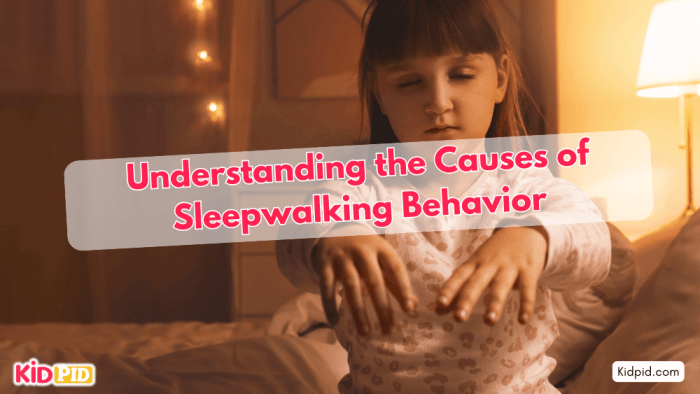
Have you ever heard of someone walking around while still asleep? This is called sleepwalking, and it happens when a person’s brain and body get a little confused during sleep. Let’s explore what causes sleepwalking and some interesting facts about it!
Contents
- Exploring the Reasons Behind Sleepwalking
- Related MCQ’s
- 1. What is another name for sleepwalking?
- 2. What is a common sign of sleepwalking?
- 3. How long does a typical sleepwalking episode last?
- 4. Why is sleepwalking more common in children?
- 5. What should you do if you see someone sleepwalking?
- 6. Which stage of sleep is characterized by dreaming?
- 7. What causes the brain to trigger sleepwalking?
- You may like these:
Exploring the Reasons Behind Sleepwalking
- Sleepwalking, or somnambulism, is a sleep disorder where people do activities like walking or sitting up while still asleep.
- Sleepwalkers often have their eyes open but aren’t fully awake or aware of their surroundings.
- Episodes can last a few seconds to about 10 minutes, and the person usually doesn’t remember it in the morning.
- Sleepwalking is more common in kids because their brains are still developing.
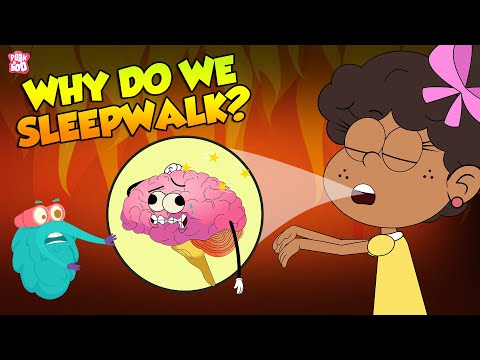
- It occurs when the brain skips a normal step in the sleep cycle, getting stuck between deep sleep and being awake.
- Yes, adults can sleepwalk too, often because of stress, medications, or sleep issues.
- Gently guide them back to their bed.
What Causes Sleepwalking?
Related MCQ’s
1. What is another name for sleepwalking?
A) Insomnia
B) Somnambulism
C) Narcolepsy
D) REM disorder
Answer: B) Somnambulism
Explanation: Sleepwalking is scientifically called somnambulism, a type of sleep disorder.
2. What is a common sign of sleepwalking?
A) Closed eyes
B) Eyes wide open but not seeing normally
C) Sitting still with closed eyes
D) Speaking clearly
Answer: B) Eyes wide open but not seeing normally
Explanation: Sleepwalkers often have their eyes open but are unaware of their surroundings.
3. How long does a typical sleepwalking episode last?
A) A few seconds to 10 minutes
B) 1 to 5 hours
C) Only during the REM stage
D) 1 to 2 minutes
Answer: A) A few seconds to 10 minutes
Explanation: Sleepwalking episodes can last from a few seconds to up to half an hour, but most are around 10 minutes.
4. Why is sleepwalking more common in children?
A) They dream more than adults
B) Their brains are underdeveloped
C) They sleep more hours
D) They don’t have REM sleep
Answer: B) Their brains are underdeveloped
Explanation: Sleepwalking in children is thought to be due to their developing brains, which makes the sleep cycle more confusing.
5. What should you do if you see someone sleepwalking?
A) Wake them up immediately
B) Let them continue sleepwalking
C) Gently guide them back to bed
D) Talk loudly to them
Answer: C) Gently guide them back to bed
Explanation: It’s safer to guide a sleepwalker back to bed instead of waking them up.
6. Which stage of sleep is characterized by dreaming?
A) Stage 1 (Transition)
B) Stage 2 (Light Sleep)
C) Stage 3 (Deep Sleep)
D) Stage 4 (REM Sleep)
Answer: D) Stage 4 (REM Sleep)
Explanation: REM sleep is when dreaming occurs, and muscles are temporarily paralyzed to prevent physical reactions.
7. What causes the brain to trigger sleepwalking?
A) A partial arousal from deep non-REM (non-rapid eye movement) sleep
B) Staying too long in REM sleep
C) Not getting enough sleep
D) Eating before bed
Answer: A) Moving directly from deep sleep to being awake
Explanation: Sleepwalking happens when a person partly wakes up during deep non-REM sleep (stage 3), causing the brain to be confused between sleep and wakefulness.
You may like these:
Why do we need sleep?
Sleep is essential for physical and mental health, allowing the body to restore energy, repair cells, consolidate memories, and support cognitive functions.
What happens when you don’t get this much need sleep?
Lack of sleep can impair focus, memory, mood, and decision-making, increase the risk of health issues, and weaken immune function.
Why Do We Dream?
Dreams may serve to process emotions, consolidate memories, problem-solve, and regulate brain activity, helping us to make sense of our waking experiences.
The Teenage Brain Explained
Teenage brains undergo significant changes, particularly in the prefrontal cortex, affecting decision-making, risk-taking, emotional regulation, and social interactions, influencing behavior and cognition.