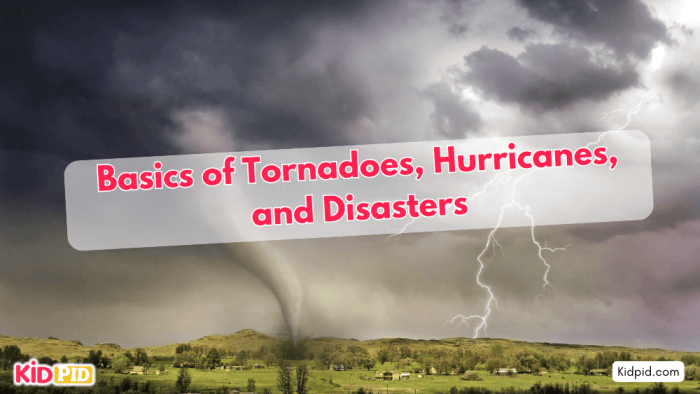
Storms are powerful forces of nature that can bring wind, rain, and sometimes cause damage. Some of the most interesting storms are tornadoes and hurricanes. Each of these storms forms in a unique way and has its own effects. Understanding them can help us stay safe and learn more about nature!
- What are storms: Storms are natural weather events with strong winds, rain, and sometimes thunder.
- What is a tornado: A tornado is a spinning column of air that moves from a cloud to the ground. Tornadoes can destroy buildings, trees, and anything in their path.
- What is a hurricane: A hurricane is a giant storm that forms over warm ocean water. It has strong winds and heavy rain, and it can be very wide.
- How can storms affect us: Storms can cause damage to homes, trees, and cars. It’s important to stay safe by going to a safe place when a storm comes.
- Why learn about storms: Understanding storms helps us know what to do during bad weather and appreciate nature’s power!
Contents
- “Understanding Storms: Hurricanes, Tornadoes, and Other Powerful Weather Events”
- Related MCQ’s
- 1. What is the center of a hurricane called?
- 2. How do hurricanes get their energy?
- 3. What are hurricanes called in the Pacific Ocean?
- 4. What causes lightning?
- 5. What is the shape of lightning?
- 6. What is a single lightning bolt’s power equal to?
- 7. What is another name for a tornado?
- 8. What is the shape of a tornado?
- 9. How wide can a tornado grow?
- You may like these:
“Understanding Storms: Hurricanes, Tornadoes, and Other Powerful Weather Events”

Related MCQ’s
1. What is the center of a hurricane called?
a) Eye wall
b) Eye
c) Rain bands
d) Cyclone
Answer: b) Eye
Explanation: The eye of the hurricane is the calmest part of the storm, surrounded by the strong winds of the eye wall.
2. How do hurricanes get their energy?
a) From cold air
b) From warm and moist air
c) From land heat
d) From thunder
Answer: b) From warm and moist air
Explanation: Hurricanes act like giant engines, using warm, moist air from the ocean as their fuel.
3. What are hurricanes called in the Pacific Ocean?
a) Cyclones
b) Typhoons
c) Tornadoes
d) Storms
Answer: b) Typhoons
Explanation: Hurricanes are called typhoons when they occur in the Pacific Ocean.
4. What causes lightning?
a) Clouds rubbing against each other
b) Ice particles rubbing and separating charges in a storm cloud
c) Warm air rising quickly
d) Heavy rain
Answer: b) Ice particles rubbing and separating charges in a storm cloud
Explanation: Lightning is caused by the buildup and separation of electric charges within storm clouds.
5. What is the shape of lightning?
a) Straight line
b) Fork-shaped
c) Circular
d) Spiral
Answer: b) Fork-shaped
Explanation: Lightning often appears as forked or zigzagging flashes.
6. What is a single lightning bolt’s power equal to?
a) 1 car battery
b) 18 million car batteries
c) 10 car batteries
d) A windstorm’s power
Answer: b) 18 million car batteries
Explanation: A single bolt of lightning is so powerful it equals the energy of 18 million car batteries.
7. What is another name for a tornado?
a) Cyclone
b) Twister
c) Hurricane
d) Storm
Answer: b) Twister
Explanation: Tornadoes are also known as twisters because of their swirling, twisting motion.
8. What is the shape of a tornado?
a) Flat and wide
b) Column-shaped
c) Square-shaped
d) Circular
Answer: b) Column-shaped
Explanation: Tornadoes are rapidly rotating columns of air that stretch from the cloud to the ground.
9. How wide can a tornado grow?
a) 1 kilometer
b) 5 kilometers
c) 10 kilometers
d) 20 kilometers
Answer: b) 5 kilometers
Explanation: Tornadoes can grow up to 5 kilometers wide and cause massive destruction.
You may like these:
What is a Hurricane?
A hurricane is a powerful tropical storm with strong winds and heavy rain. It forms over warm ocean waters and can cause widespread damage when it hits land.
What is a Tornado?
A tornado is a violent rotating column of air that forms during severe storms. It can cause destruction by picking up debris and moving it at high speeds.
What causes a tornado?
Tornadoes form when warm, moist air collides with cold, dry air, creating unstable weather conditions. This leads to rotating columns of air, forming tornadoes.
Winds, Storms and Cyclones
Winds are moving air, and storms occur due to changes in temperature or pressure. Cyclones are intense storms with rotating winds, often causing heavy rain and damage.