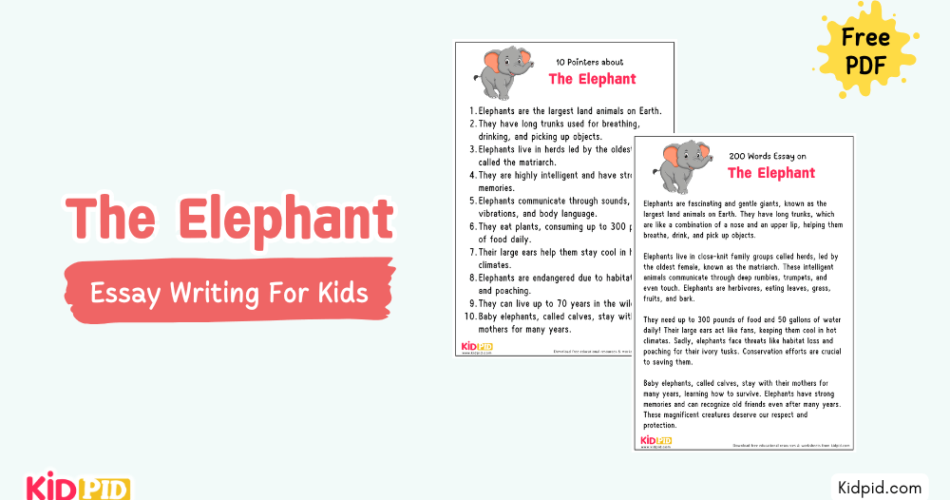
The elephant is the largest land animal in the world. It is known for its big ears, long trunk, and strong body. This essay on the elephant explains its features, habits, and importance in nature. Learn more through 10 simple points and answer fun questions to test your knowledge.
Contents
10 Pointers About The Elephant

- Elephants are the largest land animals on Earth.
- They have long trunks used for breathing, drinking, and picking up objects.
- Elephants live in herds led by the oldest female, called the matriarch.
- They are highly intelligent and have strong memories.
- Elephants communicate through sounds, vibrations, and body language.
- They eat plants, consuming up to 300 pounds of food daily.
- Their large ears help them stay cool in hot climates.
- Elephants are endangered due to habitat loss and poaching.
- They can live up to 70 years in the wild.
- Baby elephants, called calves, stay with their mothers for many years.
Short Essay On The Elephant
Essay On The Elephant in 100 Words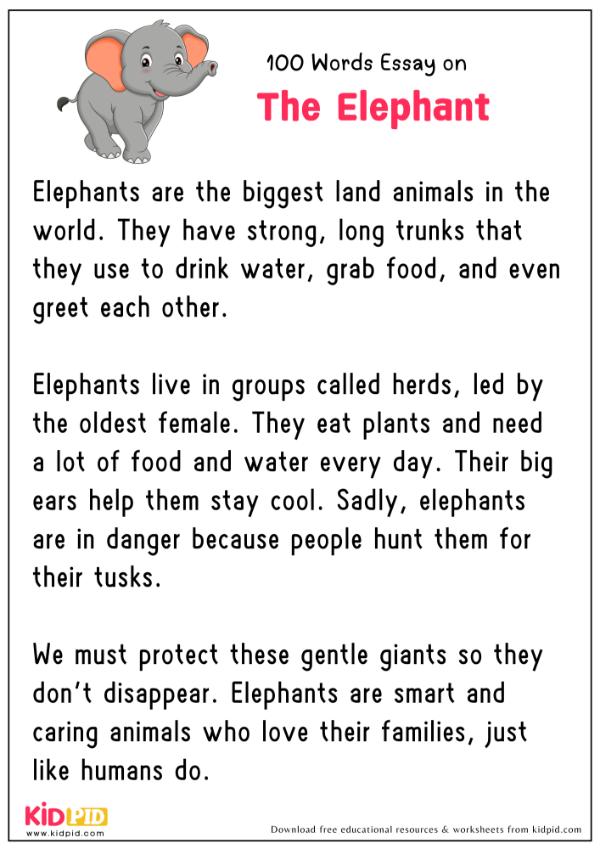
Elephants are the biggest land animals in the world. They have strong, long trunks that they use to drink water, grab food, and even greet each other. Elephants live in groups called herds, led by the oldest female. They eat plants and need a lot of food and water every day. Their big ears help them stay cool. Sadly, elephants are in danger because people hunt them for their tusks. We must protect these gentle giants so they don’t disappear. Elephants are smart and caring animals who love their families, just like humans do.
Essay On The Elephant in 200 Words
Elephants are fascinating and gentle giants, known as the largest land animals on Earth. They have long trunks, which are like a combination of a nose and an upper lip, helping them breathe, drink, and pick up objects. Elephants live in close-knit family groups called herds, led by the oldest female, known as the matriarch. These intelligent animals communicate through deep rumbles, trumpets, and even touch.
Elephants are herbivores, eating leaves, grass, fruits, and bark. They need up to 300 pounds of food and 50 gallons of water daily! Their large ears act like fans, keeping them cool in hot climates. Sadly, elephants face threats like habitat loss and poaching for their ivory tusks. Conservation efforts are crucial to saving them.
Baby elephants, called calves, stay with their mothers for many years, learning how to survive. Elephants have strong memories and can recognize old friends even after many years. These magnificent creatures deserve our respect and protection.
Essay On The Elephant in 300 Words
Elephants are the largest and one of the most intelligent land animals on our planet. They belong to the family Elephantidae and are divided into two main species—the African elephant and the Asian elephant. African elephants are larger, with bigger ears, while Asian elephants have smaller ears and a more rounded back.
One of the most remarkable features of an elephant is its trunk, which is a fusion of the nose and upper lip. The trunk is incredibly strong yet delicate, allowing elephants to pick up tiny objects, spray water, and even greet each other. Elephants also have long tusks, which are enlarged teeth, but sadly, these tusks make them targets for poachers.
Elephants live in matriarchal herds, meaning the oldest female leads the group. They communicate using low-frequency sounds, body language, and even vibrations felt through the ground. These social animals form deep bonds and show emotions like joy and grief.
Being herbivores, elephants spend most of their day eating leaves, grass, bark, and fruits. They need vast amounts of food and water, which is why they often migrate in search of resources. Their large ears help regulate body temperature by flapping to cool themselves down.
Sadly, elephants are endangered due to habitat destruction, human-wildlife conflict, and illegal hunting. Conservation efforts like anti-poaching laws and wildlife sanctuaries are helping, but more awareness is needed.
Baby elephants, called calves, are cared for by the entire herd. They stay with their mothers for up to 10 years, learning survival skills. Elephants have excellent memories and can recognize other elephants and humans even after decades. Protecting these majestic creatures ensures that future generations can also admire their beauty and intelligence.
Long Essay On The Elephant in 500 Words
Introduction
The elephant is one of the most magnificent and intelligent creatures on Earth. Belonging to the family Elephantidae, these gentle giants are known for their immense size, strong social bonds, and crucial role in maintaining ecosystems. Elephants are divided into three species: the African bush elephant, the African forest elephant, and the Asian elephant. They have fascinated humans for centuries due to their strength, memory, and emotional depth.
Physical Characteristics
Elephants are the largest land animals, with males weighing up to 6,000 kg. They have thick, wrinkled skin, long trunks, and large ears that help regulate body temperature. Their tusks, which are elongated incisors, are used for digging, fighting, and lifting objects. The trunk, a fusion of the nose and upper lip, is a highly sensitive organ capable of grasping food, sucking water, and even expressing affection.
Habitat and Distribution
African elephants are primarily found in savannas, forests, and deserts across sub-Saharan Africa, while Asian elephants inhabit grasslands and forests in India, Sri Lanka, and Southeast Asia. Their habitats are shrinking due to human activities like deforestation, agriculture, and urbanization, leading to conflicts between elephants and people.
Social Structure and Behavior
Elephants are highly social animals, living in matriarchal herds led by the oldest female. They communicate through low-frequency rumbles, body language, and even seismic vibrations. Elephants display deep emotional bonds, mourning their dead and showing empathy toward injured herd members. Their intelligence is evident in their problem-solving skills, tool use, and long-term memory.
Diet and Feeding Habits
Elephants are herbivores, consuming up to 150 kg of vegetation daily. Their diet includes grasses, leaves, bark, and fruits. They play a vital role in seed dispersal, helping maintain forest and savanna ecosystems. Their feeding habits sometimes bring them into conflict with farmers when they raid crops.
Conservation Status and Threats
Elephants face severe threats from poaching for ivory, habitat loss, and human-wildlife conflict. Conservation efforts include anti-poaching laws, habitat restoration, and community-based programs to reduce conflicts. Ecotourism also plays a key role in raising awareness and funding for elephant protection.
Conclusion
Elephants are not just symbols of strength and wisdom but also keystone species essential for biodiversity. Protecting them ensures the health of ecosystems and preserves a vital part of our natural heritage. Efforts must continue to safeguard these magnificent creatures for future generations.


FAQs on The Elephant
Q1. What is the largest land animal on Earth?
Ans. Elephant.
Q2. What do elephants use their trunks for?
Ans. Breathing, drinking, and picking up objects.
Q3. Who leads an elephant herd?
Ans. The oldest female (matriarch).
Q4. How much food does an elephant eat in a day?
Ans. Up to 300 pounds.
Q5. Why do elephants have big ears?
Ans. To help them stay cool.
Q6. Why are elephants important to ecosystems?
Ans. They help in seed dispersal and maintaining habitats.
Q7. What are the main threats to elephants?
Ans. Poaching, habitat loss, and human-wildlife conflict.
Q8. How much can an adult male elephant weigh?
Ans. Up to 6,000 kg.
Q9. How do elephants communicate?
Ans. Through rumbles, body language, and vibrations.
Q10. What is being done to protect elephants?
Ans. Anti-poaching laws, habitat conservation, and ecotourism efforts.
The elephant is a smart and gentle wild animal. We should protect elephants and their homes to keep nature safe and balanced for all animals and people. Explore our website to find a wide variety of paragraphs, essays, worksheets, flashcards, Quizzes, and other interactive resources. Also, don’t forget to follow us on YouTube & Facebook.
You might also like
Essay – Why I Love My Pet


This essay on why I love my pet shares the special bond between a person and their pet. It highlights the friendship, care, joy, and moments that make pets truly beloved companions.
Essay – Robert Frost

This essay on Robert Frost introduces his life as a famous American poet, highlighting his use of nature themes, simple language, Pulitzer Prize wins, and how his poems continue to inspire.
Essay – Bill Nye


This essay on Bill Nye describes him as a popular science educator and TV host known for “Bill Nye the Science Guy.” It highlights how he makes science fun, teaches curiosity, and inspires kids worldwide
Essay – Clara Schumann

This essay on Clara Schumann celebrates her life as a talented pianist and composer. It highlights her musical skill, performances, and her major role in shaping classical music history.
Essay – Chester A. Arthur

This essay on Chester A. Arthur explains his life as the 21st U.S. President, how he led civil service reform, modernized the Navy, and transformed his reputation through public service.