Once, in a bustling town, lived two merchants with very different ways of doing business. One believed in honesty and fairness, while the other used tricks and lies to earn more. This story reveals how their choices shaped their fortunes and teaches us an important lesson about truth and integrity.
[Scroll Down for Download Link]
Contents
The Journey of Two Merchants – Moral Story for Kids


Read More: Paragraph on ‘The Life of a Revolutionary War Spy’
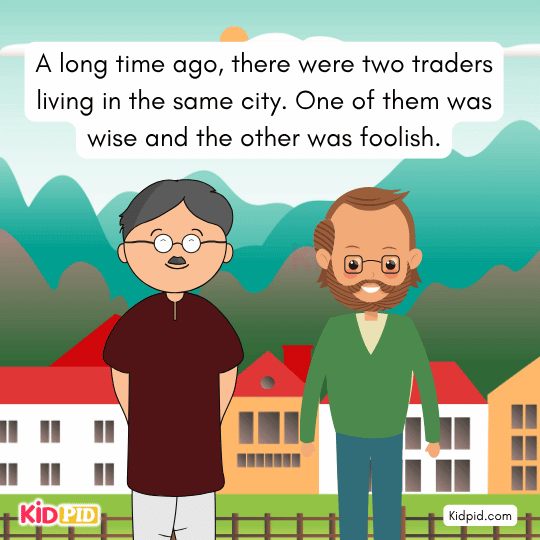
A long time ago, there were two traders living in the same city. One of them was wise and the other was foolish.
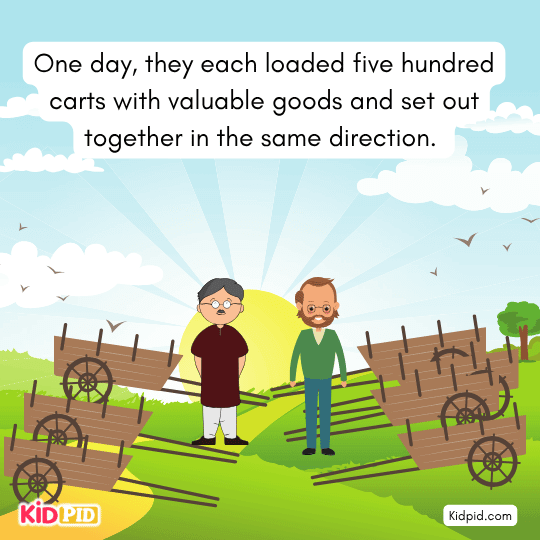
One day, they each loaded five hundred carts with valuable goods and set out together in the same direction.
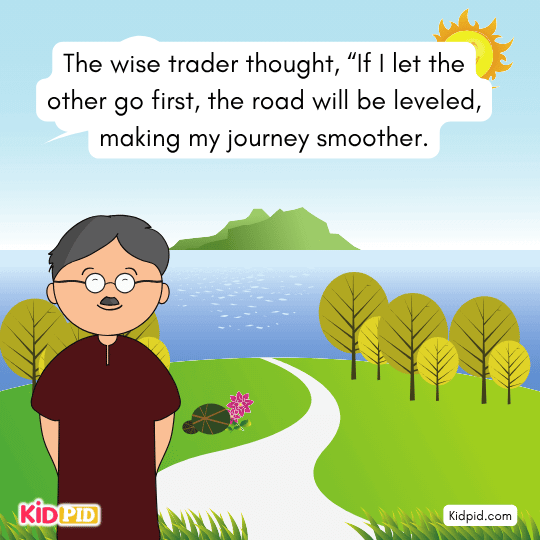
The wise trader thought, “If I let the other go first, the road will be leveled, making my journey smoother.

His oxen will eat the coarse grass, while mine enjoy the fresh blades. My men will find ripe fruits, and he will set the prices.
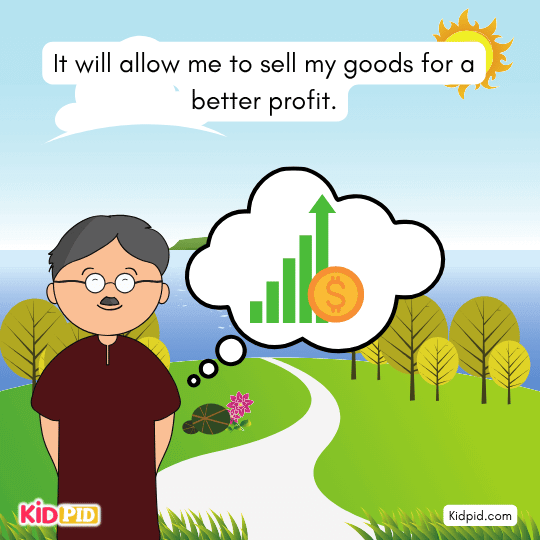
It will allow me to sell my goods for a better profit.
He said to the other trader, “Friend, both of us cannot travel at the same time. Wouldn’t you rather go first, and I shall follow?”

The foolish trader, hearing this, thought, “If I go first, I can also enjoy a smooth road, fresh grass for my oxen.
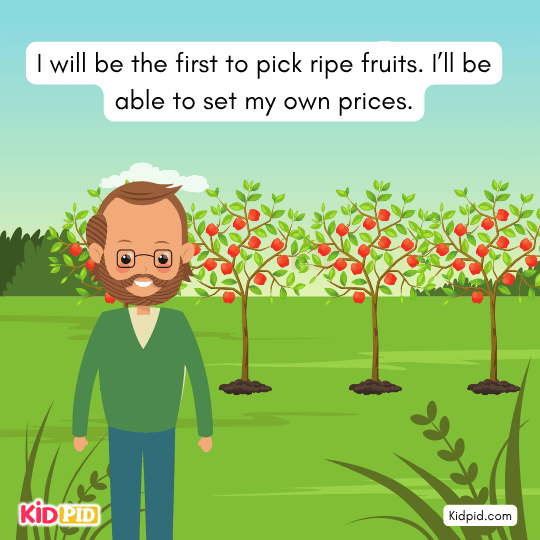
I will be the first to pick ripe fruits. I’ll be able to set my own prices.

He agreed to let the wise trader follow him.
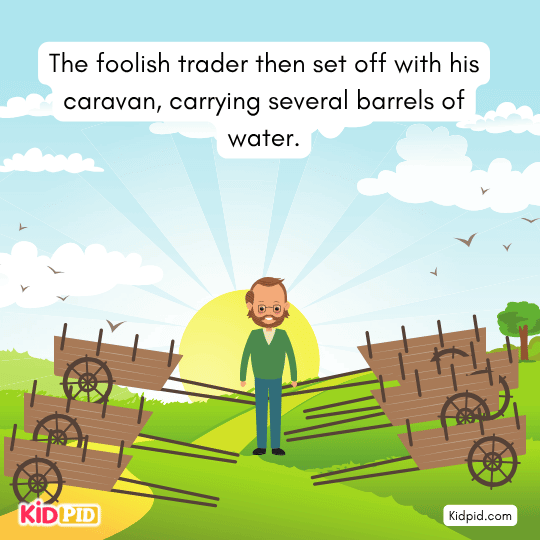
The foolish trader then set off with his caravan, carrying several barrels of water
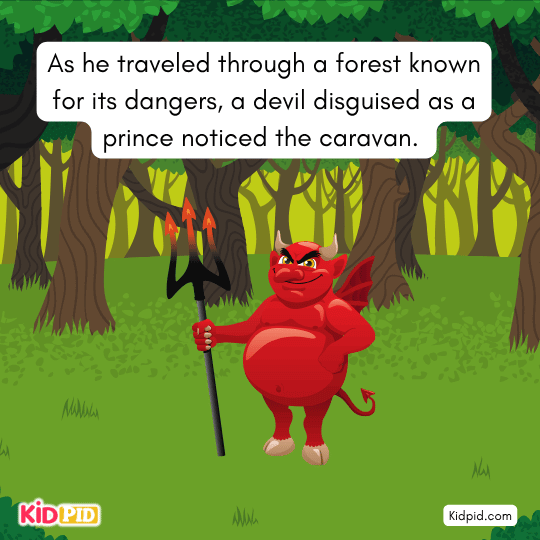
As he traveled through a forest known for its dangers, a devil disguised as a prince noticed the caravan.
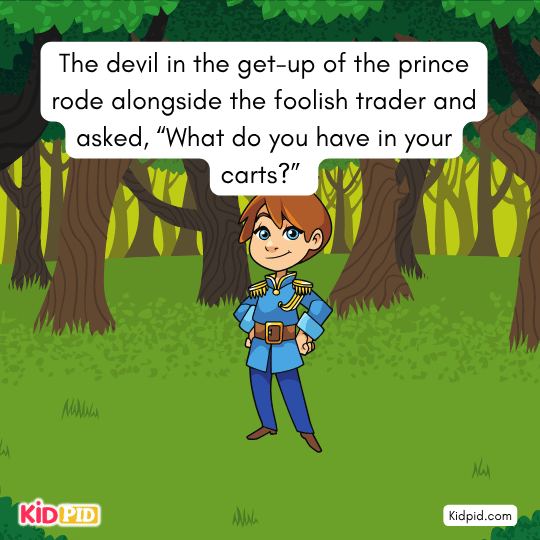
The devil in the get-up of the prince rode alongside the foolish trader and asked, “What do you have in your carts?”
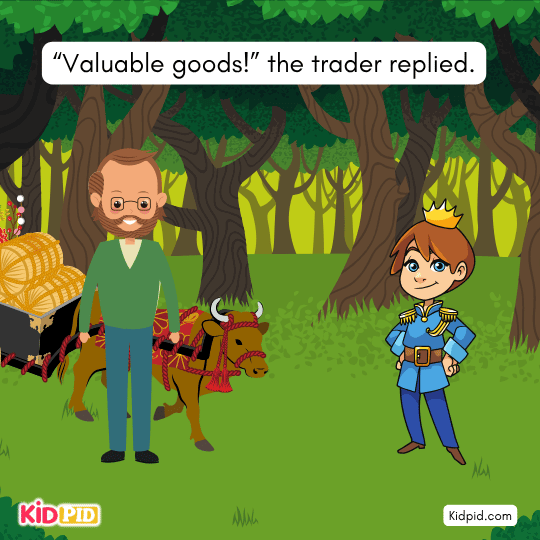
“Valuable goods!” the trader replied.
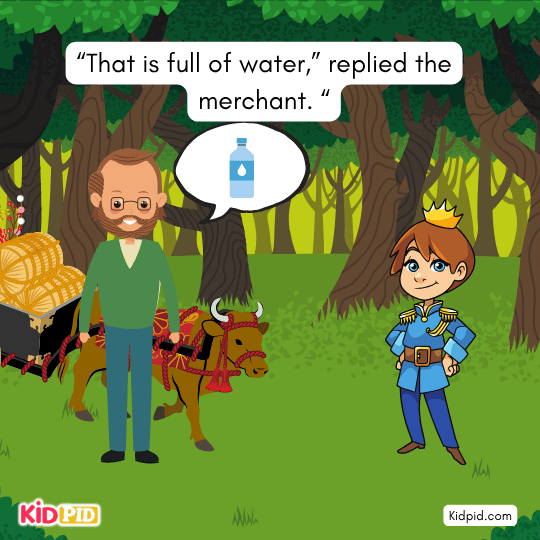
“That is full of water,” replied the merchant.“
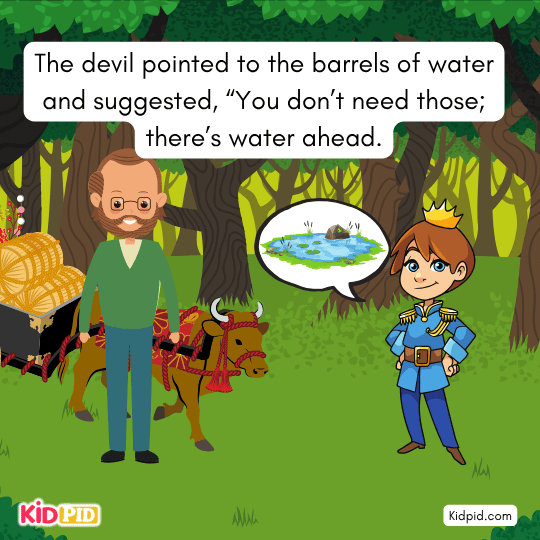
The devil pointed to the barrels of water and suggested, “You don’t need those; there’s water ahead.
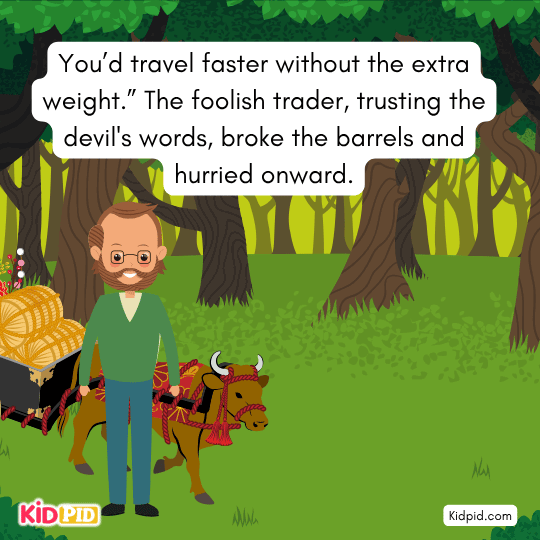
You’d travel faster without the extra weight. ” The foolish trader, trusting the devil’s words, broke the barrels and hurried onward.
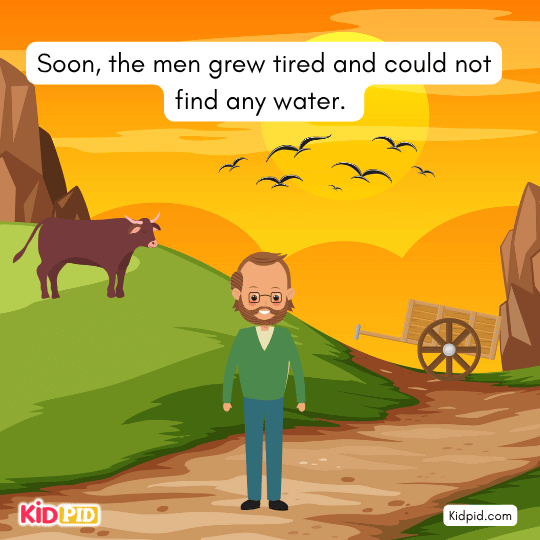
Soon, the men grew tired and could not find any water.
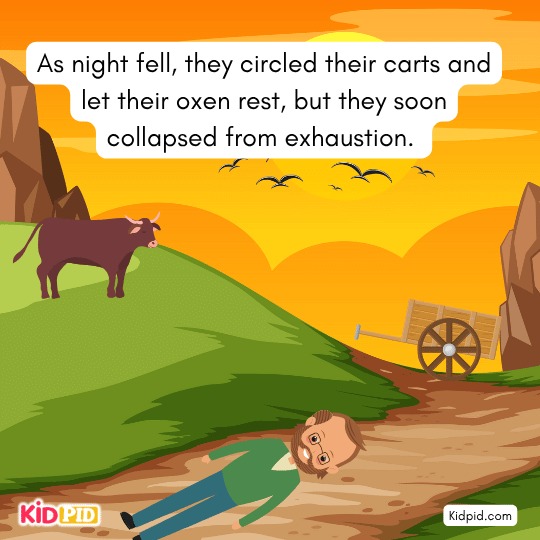
As night fell, they circled their carts and let their oxen rest, but they soon collapsed from exhaustion.
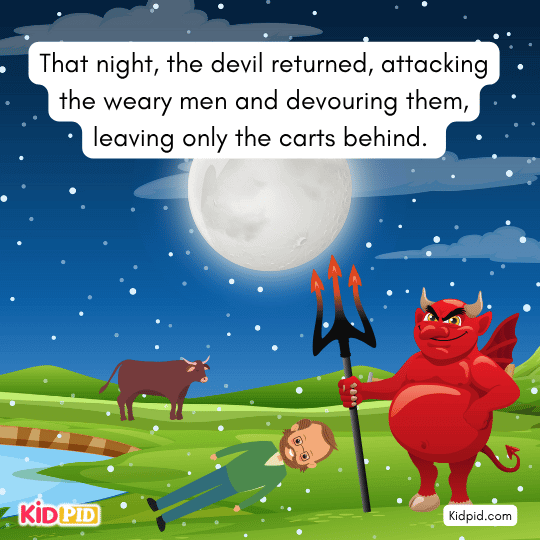
That night, the devil returned, attacking the weary men and devouring them, leaving only the carts behind.
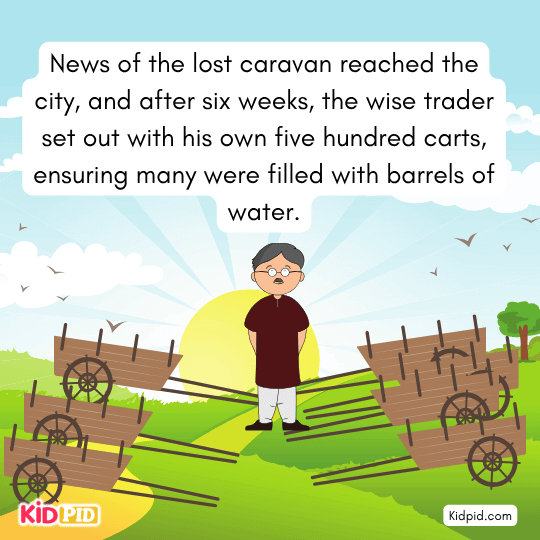
News of the lost caravan reached the city, and after six weeks, the wise trader set out with his own five hundred carts, ensuring many were filled with barrels of water.

Upon reaching the dangerous forest, he warned his men, “Do not drink or eat anything here; it’s all poisoned.”
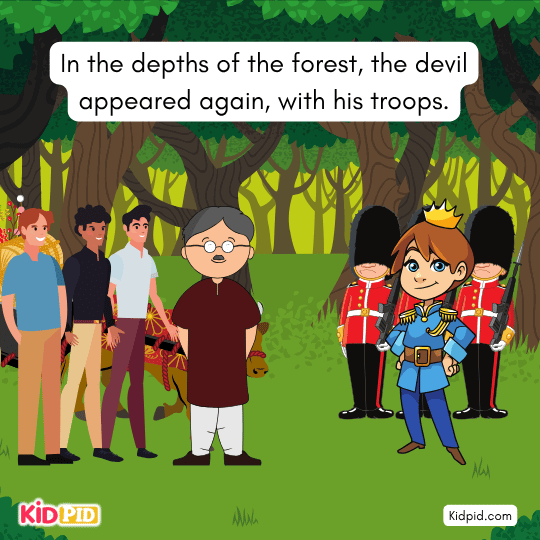
In the depths of the forest, the devil appeared again, with his troops.
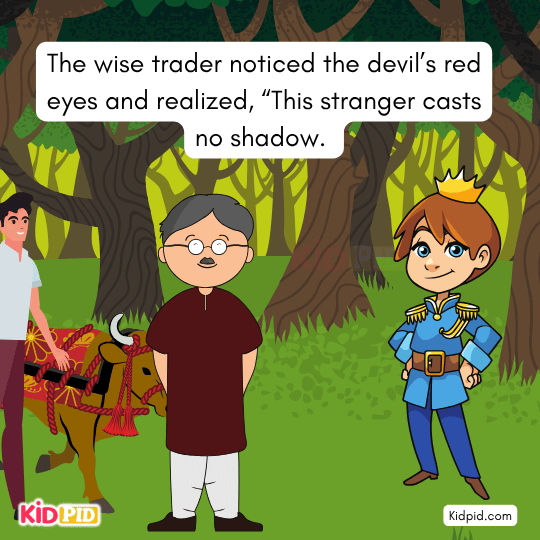
The wise trader noticed the devil’s red eyes and realized, “This stranger casts no shadow.
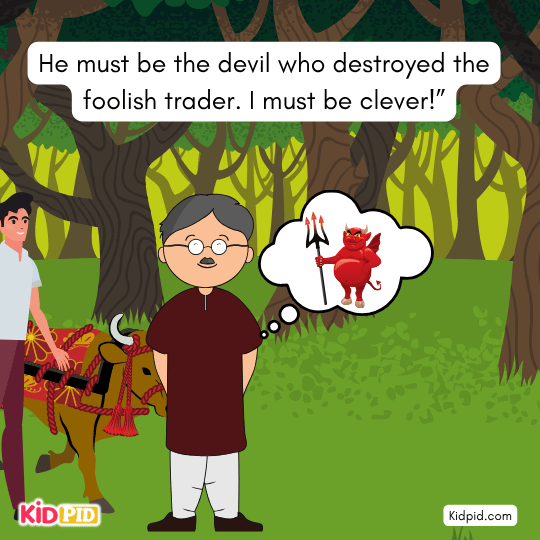
He must be the devil who destroyed the foolish trader. I must be clever!”
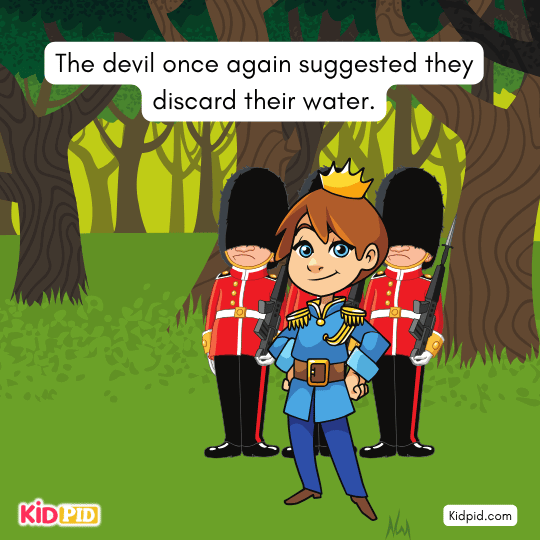
The devil once again suggested they discard their water.
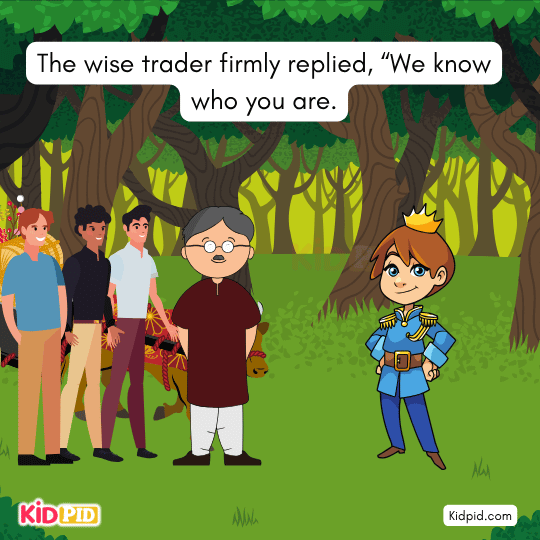
The wise trader firmly replied, “We know who you are.
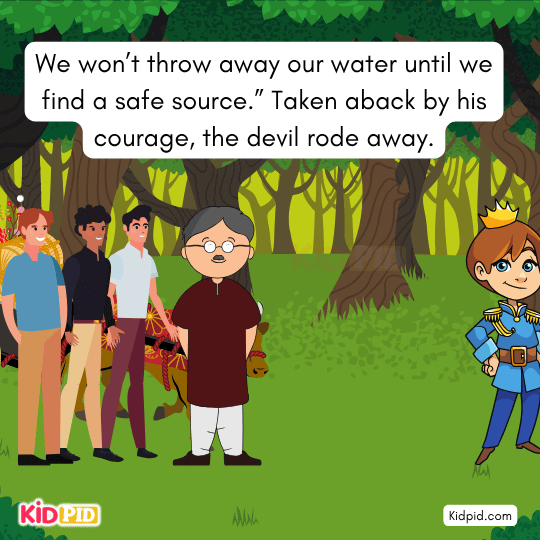
We won’t throw away our water until we find a safe source.” Taken aback by his courage, the devil rode away.
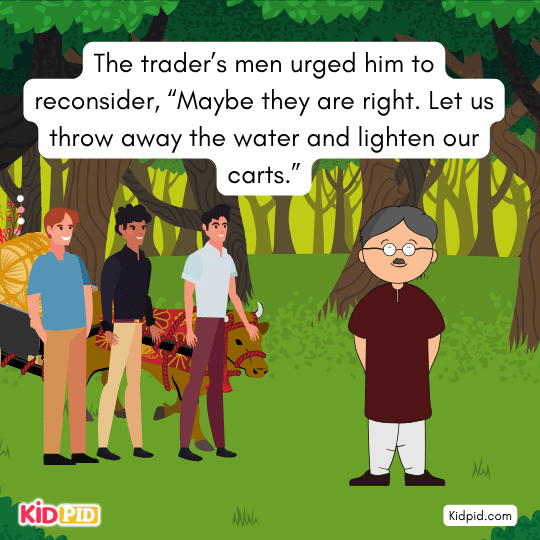
30.The trader’s men urged him to reconsider, “Maybe they are right. Let us throw away the water and lighten our carts.”
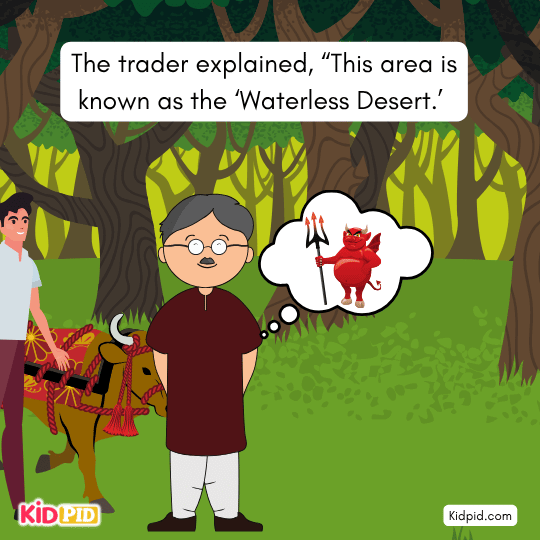
The trader explained, “This area is known as the ‘Waterless Desert.’
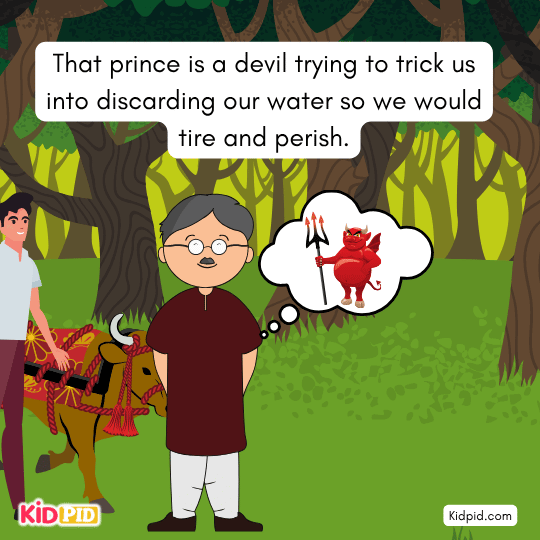
That prince is a devil trying to trick us into discarding our water so we would tire and perish.
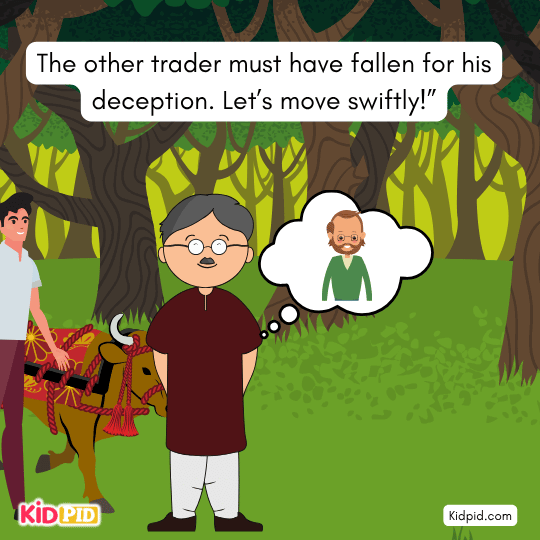
The other trader must have fallen for his deception. Let’s move swiftly!”
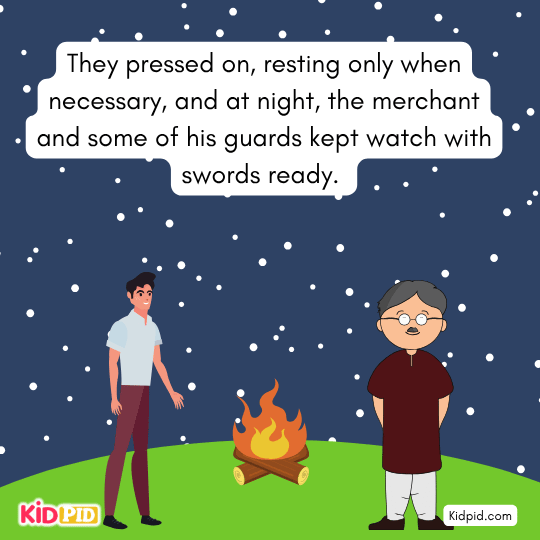
They pressed on, resting only when necessary, and at night, the merchant and some of his guards kept watch with swords ready.
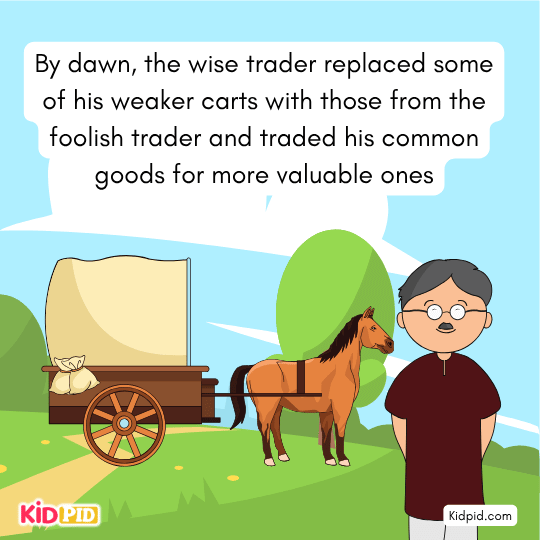
By dawn, the wise trader replaced some of his weaker carts with those from the foolish trader and traded his common goods for more valuable ones
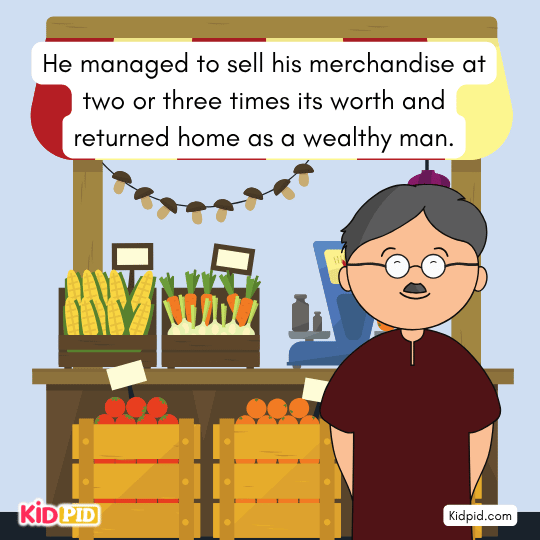
He managed to sell his merchandise at two or three times its worth and returned home as a wealthy man.
Moral: Wisdom and patience lead to success, while greed and haste bring ruin.
In the end, the story of the two merchants teaches us that honesty and kindness bring true success, while greed leads to loss. Their contrasting choices highlight the importance of values in business and life. Good intentions and fair dealings always win hearts and build lasting trust among people.


You may like this
Paragraph on ‘Life in an Ancient Greek City-State’
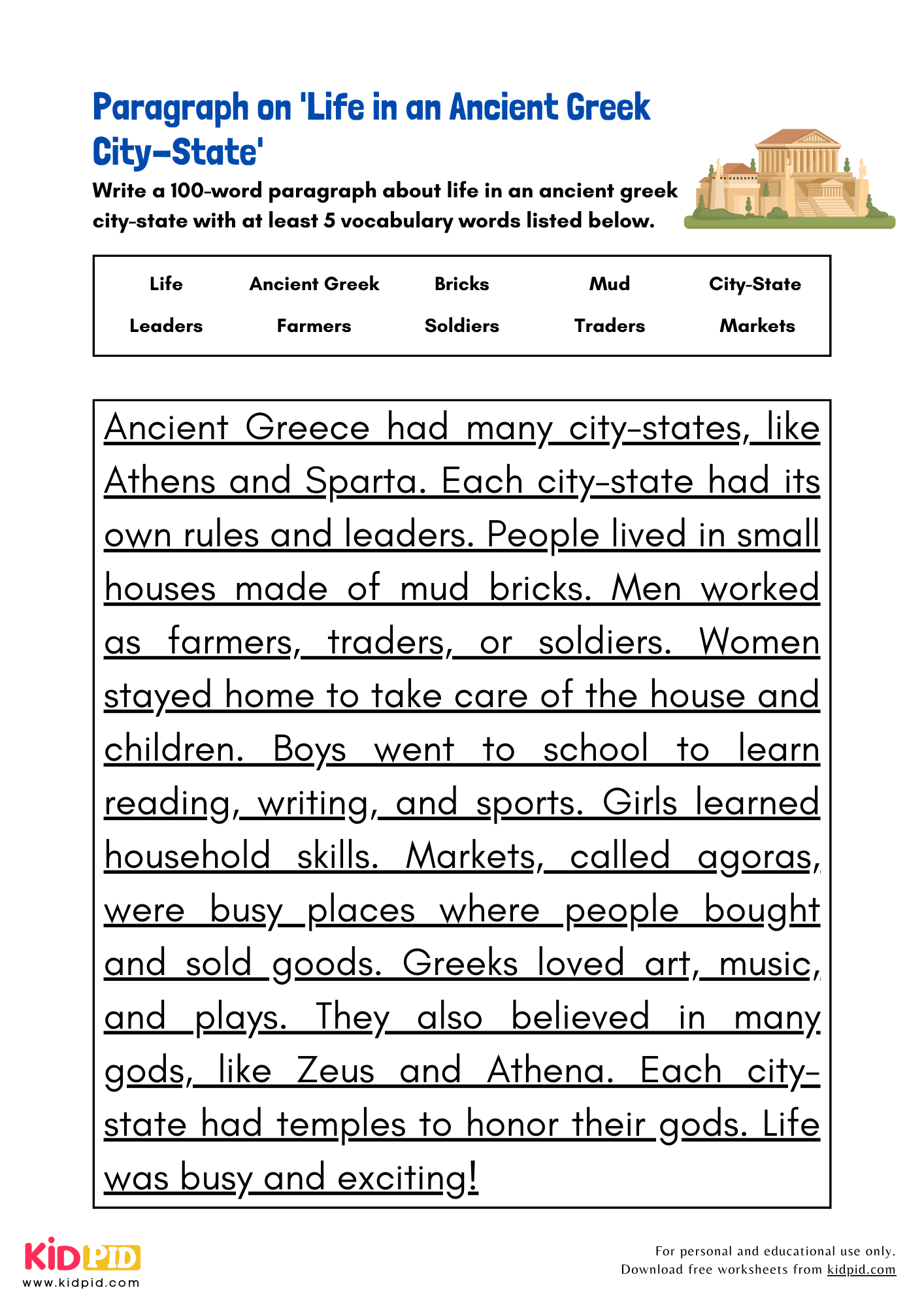

Engaging paragraph on “Life in an Ancient Greek City‑State”: citizens farmed, traded in the agora, attended festivals, schools, and temples; social roles varied by class and gender—polis life rich in politics, culture, and community.
Paragraph on ‘Success’


An engaging paragraph on “Success” explains success as achieving goals through hard work, perseverance, learning from failure, discipline, and personal growth.
Paragraph on ‘Life in Ancient Persia’

“Vibrant Persian Empire: bustling markets, diverse cultures, majestic palaces, respected women, Zoroastrian ethics, road networks, rich art.”
Paragraph on ‘Businessman’

Engaging paragraph on “Businessman”: describes a person who starts and manages businesses, makes decisions, takes risks, leads teams, and strives for profit.
Paragraph on ‘Achievement’

Engaging paragraph on “Achievement”: describes doing something important through hard work, learning new skills, reaching goals, and helping others.