Time is one of the most precious resources in life. Understanding its value helps us prioritize, stay disciplined, and achieve our goals. Wasting time can never be recovered, while wisely using it brings success and satisfaction. This essay explores ten key points and questions about the importance of time.
Contents
10 Pointers About The Value Of Time
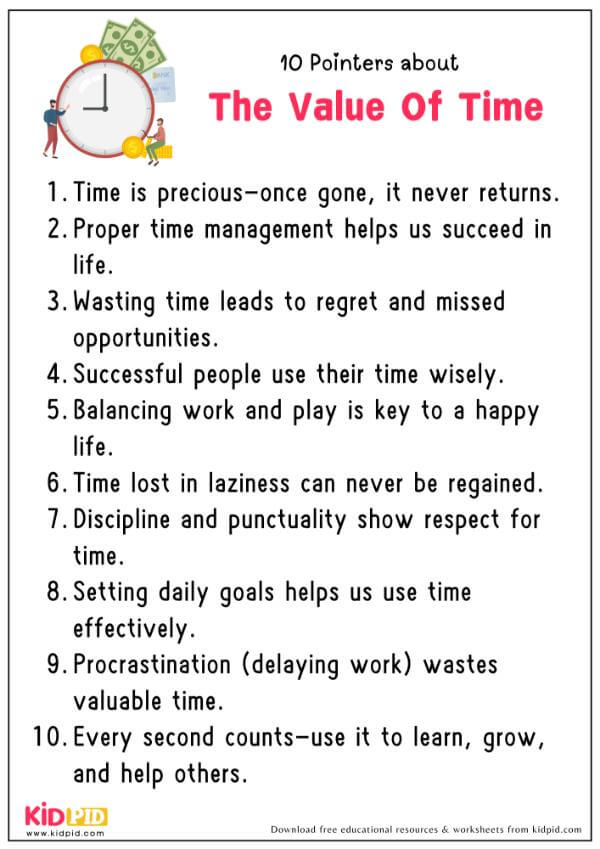

- Time is precious; once gone, it never returns.
- Proper time management helps us succeed in life.
- Wasting time leads to regret and missed opportunities.
- Successful people use their time wisely.
- Balancing work and play is key to a happy life.
- Time lost in laziness can never be regained.
- Discipline and punctuality show respect for time.
- Setting daily goals helps us use time effectively.
- Procrastination (delaying work) wastes valuable time.
- Every second counts—use it to learn, grow, and help others.
Short Essay On The Value Of Time
Essay On The Value Of Time in 100 Words
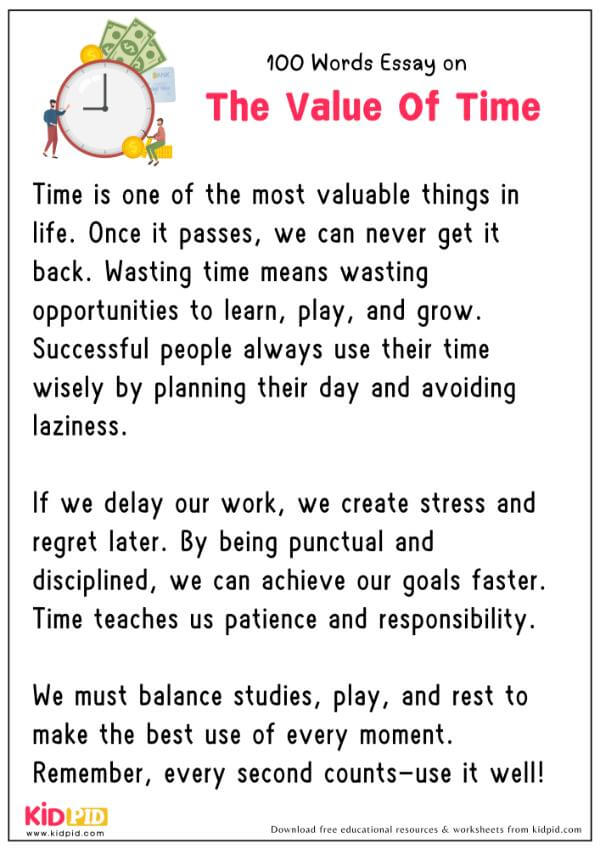
Time is one of the most valuable things in life. Once it passes, we can never get it back. Wasting time means wasting opportunities to learn, play, and grow. Successful people always use their time wisely by planning their day and avoiding laziness. If we delay our work, we create stress and regret later. By being punctual and disciplined, we can achieve our goals faster. Time teaches us patience and responsibility. We must balance studies, play, and rest to make the best use of every moment. Remember, every second counts—use it well!
Essay On The Value Of Time in 200 Words

Time is a priceless gift that we must use wisely. Unlike money, once time is lost, it can never be earned back. Wasting time means missing chances to learn, improve, and enjoy life. Successful people like scientists, athletes, and leaders value time and plan their days carefully.
Procrastination, or delaying tasks, is the biggest enemy of time management. When we postpone homework or chores, we create unnecessary stress. Instead, setting small daily goals helps us stay productive. Discipline and punctuality are key—arriving on time shows respect for others and ourselves.
Time also teaches responsibility. A student who studies regularly performs better than one who crams at the last minute. Similarly, balancing work and play keeps us happy and healthy. Even small habits, like waking up early or organizing tasks, save time in the long run.
The key lesson is that every second matters. Whether playing, studying, or helping others, we must use time meaningfully. As the saying goes, “Time and tide wait for no one.” So, let’s value every moment and make the most of our days!
Essay On The Value Of Time in 300 Words
Time is the most valuable resource we have. Unlike money or possessions, once time is lost, it can never be recovered. That’s why wise people say, “Time is more precious than gold.” Every second counts, and how we use it shapes our future.
Wasting time leads to regret. For example, a student who spends hours watching TV instead of studying will struggle during exams. On the other hand, a disciplined person who plans their day achieves success without stress. Great inventors, leaders, and athletes all value time—they set goals, avoid distractions, and work consistently.
Procrastination is the thief of time. Delaying tasks creates a pile of unfinished work, leading to frustration. Instead, breaking tasks into smaller steps makes them easier to complete. A simple routine, like fixing a study schedule or waking up early, helps in managing time effectively.
Punctuality is another sign of respecting time. Being late for school or appointments shows carelessness and affects others, too. On the contrary, arriving on time builds trust and discipline. Time management also means balancing work and relaxation. Playing, resting, and spending time with family are equally important for a happy life.
Time teaches us responsibility. Farmers sow seeds on time to reap a good harvest. Similarly, if we invest time in learning skills, we gain knowledge for life. Even small habits—like keeping things organized or avoiding unnecessary screen time—save hours every week.
The lesson is clear: time waits for no one. Whether young or old, we must use every moment wisely. By setting priorities, avoiding laziness, and staying focused, we can achieve our dreams. As Benjamin Franklin said, “Lost time is never found again.” So, let’s make every second count!
Long Essay On The Value Of Time in 500 Words
Introduction
Time is one of the most precious things in life. Once it passes, we can never get it back. That is why we must use our time wisely. Whether we are studying, playing, or helping others, every moment should be spent meaningfully. Let us learn why time is so valuable and how we can make the best use of it.
The Value of Time
Time is more valuable than money because money can be earned again, but time cannot. Every second that passes is gone forever. If we waste time today, we may regret it later. Successful people understand this and always plan their days carefully.
Time Management for Kids
Managing time helps us finish our work without stress. A simple way to do this is by making a daily schedule. For example:
Set a time for homework, play for a while, help with small chores, and sleep on time.
Wasting Time Leads to Regret
If we spend too much time watching TV, playing video games, or being lazy, we may not complete important tasks. Later, we might feel sad for not studying enough or missing opportunities. Time wasted is time lost forever.
Using Time for Good Habits
Good habits like reading, exercising, and learning new skills make our time worthwhile. Instead of wasting hours on unimportant things, we should focus on activities that help us grow. Even small efforts every day can lead to big successes in the future.
Respecting Others’ Time
Just as our time is important, others’ time is valuable too. Being late or not keeping promises wastes their time. We must always be punctual and responsible so that others can trust us.
Conclusion
Time is a gift that we must use wisely. By managing our time well, we can achieve our goals, stay happy, and avoid regrets. Let us promise to value every minute and make the best use of it!


FAQs on The Value Of Time
Q1. Why is time so valuable?
Ans. Because once it’s lost, we can’t get it back.
Q2. What happens when we waste time?
Ans. We miss chances to learn, grow, and succeed.
Q3. How do successful people use time?
Ans. They plan their day and avoid laziness.
Q4. What is procrastination?
Ans. It means delaying tasks or putting off work.
Q5. How can students manage their time well?
Ans. By making a daily schedule and setting small goals.
Q6. What are some good habits that use time wisely?
Ans. Reading, exercising, and learning new skills.
Q7. Why is punctuality important?
Ans. It shows respect for others and builds trust.
Q8. How does time teach responsibility?
Ans. By helping us finish tasks on time and avoid stress.
Q9. What should we avoid to save time?
Ans. Watching too much TV or playing too many video games.
Q10. What is the main message of the essays?
Ans. We should use every moment wisely and never waste time.
Time is precious and once lost cannot be regained. Valuing it helps us achieve goals, stay disciplined, and live a meaningful life. Respecting time ensures success and personal growth. To explore more, visit our website and get more paragraphs, essays, worksheets, flashcards, Quizzes, and other interactive resources. Don’t forget to follow us on YouTube & Facebook.
You might also like


The essay on Kidpid emphasizes the importance of standing up for others by supporting them in times of need, promoting kindness, and fostering a respectful and caring community.
Essay – Narasimha Rao, The Architect of Economic Reforms


The essay on Kidpid highlights P.V. Narasimha Rao’s pivotal role as India’s 9th Prime Minister, introducing transformative economic reforms in 1991 that liberalized the economy and positioned India as a global economic power.
Essay – Fali Nariman: The Eminent Jurist

Fali Nariman, a renowned Indian jurist, excelled in constitutional law, served as Senior Advocate and Additional Solicitor General, represented India in landmark cases, earned the Padma Bhushan, and inspired future lawyers.

Thomas Edison, a brilliant American inventor, held over 1,000 patents, created the phonograph and improved the light bulb, founded Menlo Park lab, and revolutionized daily life with modern electric innovations.