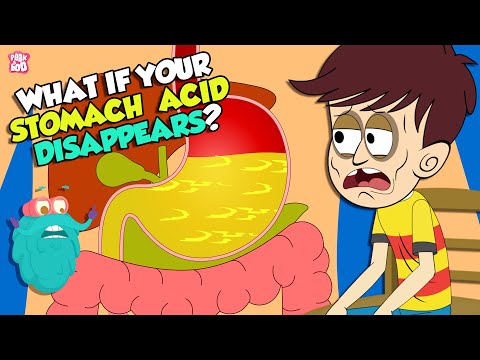
Have you ever wondered what would happen if your stomach acid disappeared? Stomach acid, also called gastric acid, is like a superhero inside your tummy! It has a big job to do, and without it, your body would face a lot of trouble. Let’s explore why stomach acid is so important and what could go wrong if it wasn’t there.
- Stomach acid helps digest food: It breaks down food into smaller parts to give your body energy.
- Kills harmful bacteria: It acts like a shield, protecting you from getting sick.
- Protective stomach lining: A special layer in your stomach keeps the acid from hurting it.
- Low acid causes problems: Without enough stomach acid, food wouldn’t digest properly, leading to bloating, infections, and weakness.
- Take care of your tummy: Eating healthy food, staying hydrated, and exercising help keep your stomach acid balanced.
Contents
- What Happens If Gastric Acid Vanishes? Role and Importance
- Related MCQ’S
- 1. What is the role of stomach acid in our body?
- 2. What is the name of the mass food becomes after mixing with saliva?
- 3. What protects the stomach from being harmed by its own acid?
- 4. Which enzyme is activated by stomach acid to help digest proteins?
- 5. What happens if stomach acid levels are too low?
- 6. What is the pH range of human stomach acid?
- 7. What condition occurs when the stomach produces too little acid?
- You may like these:
What Happens If Gastric Acid Vanishes? Role and Importance
Related MCQ’S
1. What is the role of stomach acid in our body?
A. To break down food and kill bacteria
B. To make us feel hungry
C. To protect the stomach from harm
D. To turn food into water
Answer: A. To break down food and kill bacteria
Explanation: Stomach acid helps in digesting food by breaking it down and killing harmful bacteria.
2. What is the name of the mass food becomes after mixing with saliva?
A. Bolus
B. Enzyme
C. Protein
D. Polypeptide
Answer: A. Bolus
Explanation: Food mixed with saliva is called a bolus, which then travels down the esophagus to the stomach.
3. What protects the stomach from being harmed by its own acid?
A. A layer of epithelial cells
B. The esophagus
C. Saliva
D. Digestive enzymes
Answer: A. A layer of epithelial cells
Explanation: The epithelial cells create a protective layer that prevents the stomach acid from harming the stomach itself.
4. Which enzyme is activated by stomach acid to help digest proteins?
A. Pepsin
B. Hydrochloric acid
C. Bolus
D. Proteins
Answer: A. Pepsin
Explanation: Pepsin is an enzyme activated by stomach acid that assists in breaking down proteins.
5. What happens if stomach acid levels are too low?
A. Food is not properly digested, leading to bloating and infections
B. Food digests too quickly
C. The stomach becomes too strong
D. You feel hungry all the time
Answer: A. Food is not properly digested, leading to bloating and infections
Explanation: Low stomach acid can prevent proper digestion, allow bacteria to thrive, and cause health issues.
6. What is the pH range of human stomach acid?
A. 1.5 to 2.0
B. 3.5 to 4.0
C. 5.5 to 6.0
D. 7.0 to 8.0
Answer: A. 1.5 to 2.0
Explanation: The pH of human stomach acid is very acidic, ranging from 1.5 to 2.0, which helps in digestion.
7. What condition occurs when the stomach produces too little acid?
A. Hypochlorhydria
B. Hyperacidity
C. Heartburn
D. Bloating
Answer: A. Hypochlorhydria
Explanation: Hypochlorhydria is a condition where the stomach produces less acid than needed, leading to digestive problems.
You may like these:
Enzymes
Enzymes are biological catalysts that speed up chemical reactions in living organisms by lowering activation energy, ensuring efficient metabolic processes without being consumed.
Nutrition in Animals
Animals obtain nutrients through ingestion, digestion, absorption, and assimilation, providing energy for growth, repair, and maintenance, with herbivores, carnivores, and omnivores having diverse dietary strategies.
Are bacteria alive?
Yes, bacteria are alive as they grow, reproduce, metabolize, and respond to stimuli, functioning as single-celled organisms with essential life characteristics.