
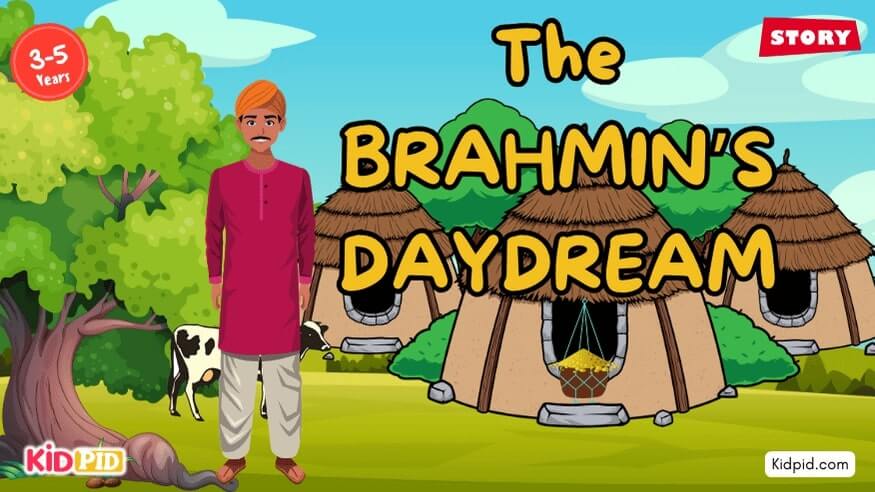
“The Brahmin’s Daydream” is a popular moral story for kids that teaches focus, discipline, and practical thinking. This engaging tale highlights good values, life lessons, and the importance of staying grounded. Children enjoy this story because it shows how daydreaming without action can lead to funny but meaningful consequences.
[Scroll Down for Download Link]
The Brahmin’s Daydream – Moral Story for Kids
The Brahmin’s Daydream – A kid-friendly moral story about greed and unrealistic dreams.
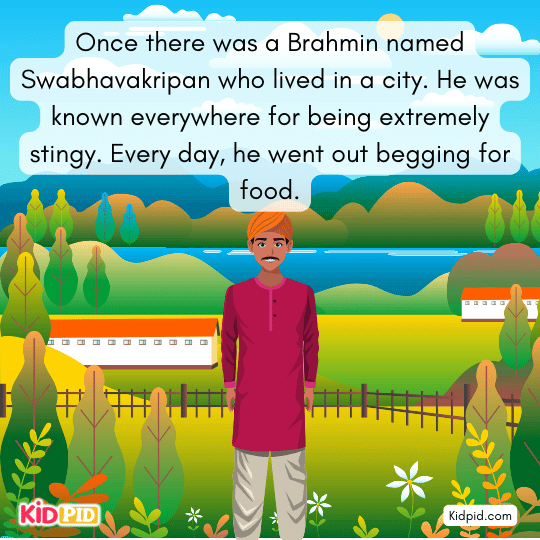
Swabhavakripan the Brahmin begs for food each day in the city.
Once there was a Brahmin named Swabhavakripan who lived in a city. He was known everywhere for being extremely stingy. Every day, he went out begging for food.
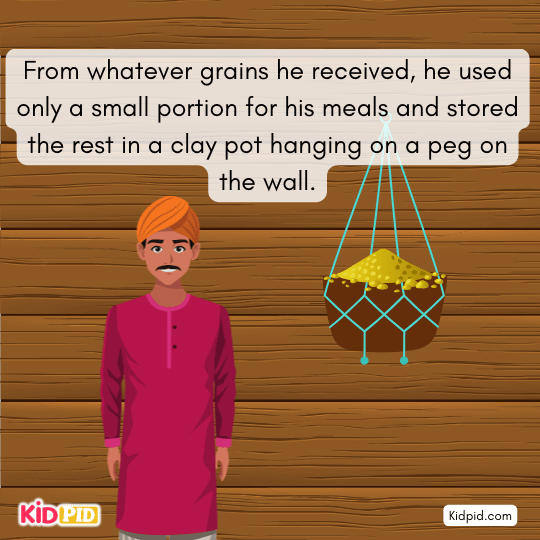
He stores leftover grains in a clay pot hanging on the wall.
From whatever grains he received, he used only a small portion for his meals and stored the rest in a clay pot hanging on a peg on the wall.
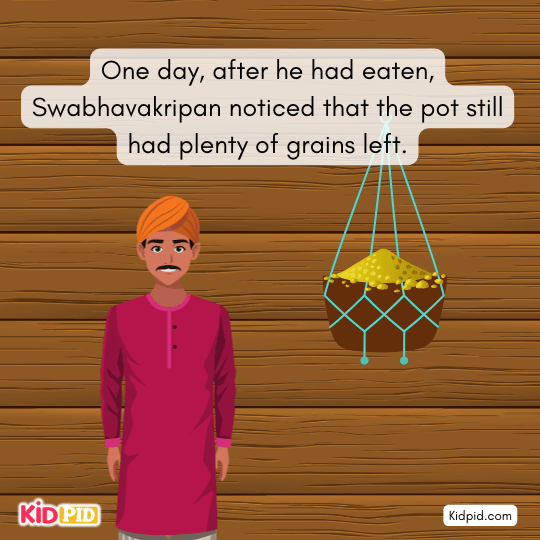
He notices the pot still has plenty of grains left.
One day, after he had eaten, Swabhavakripan noticed that the pot still had plenty of grains left.
He lies down to rest and slowly drifts into a daydream.
Feeling satisfied, he lay down to rest and drifted off into a daydream.
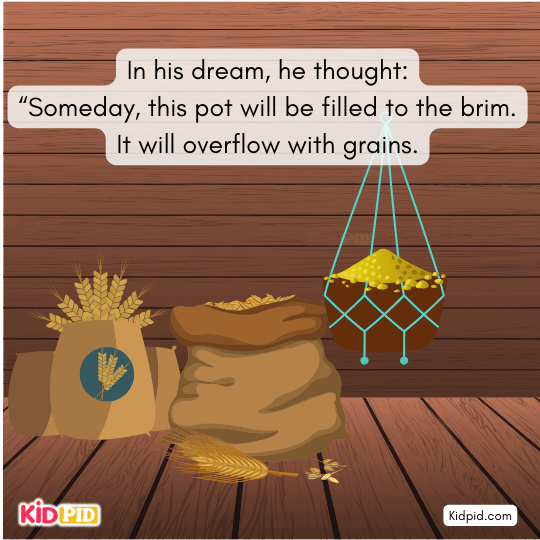
He dreams the pot will someday overflow with grains.
In his dream, he thought: “Someday, this pot will be filled to the brim. It will overflow with grains.
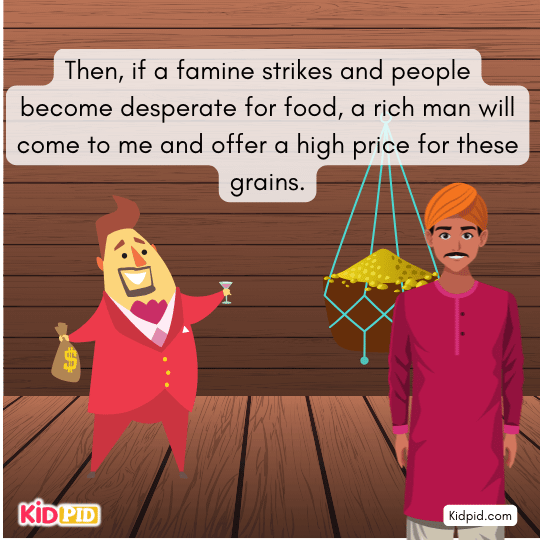
He imagines selling grains at a high price during famine.
Then, if a famine strikes and people become desperate for food, a rich man will come to me and offer a high price for these grains.
He dreams of buying cows and earning money by selling milk.
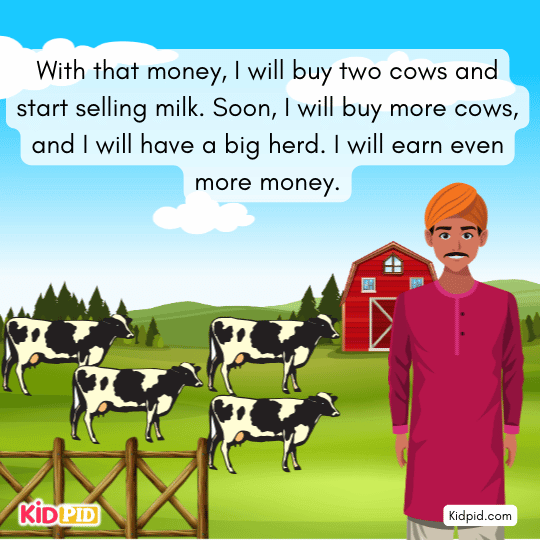
With that money, I will buy two cows and start selling milk. Soon, I will buy more cows, and I will have a big herd. I will earn even more money.
He imagines buying more cows and creating a big herd.
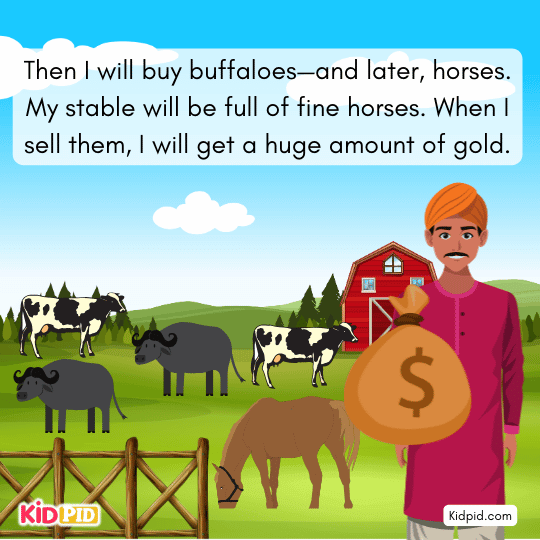
Then I will buy buffaloes—and later, horses. My stable will be full of fine horses. When I sell them, I will get a huge amount of gold.
He dreams of owning buffaloes and later many fine horses.
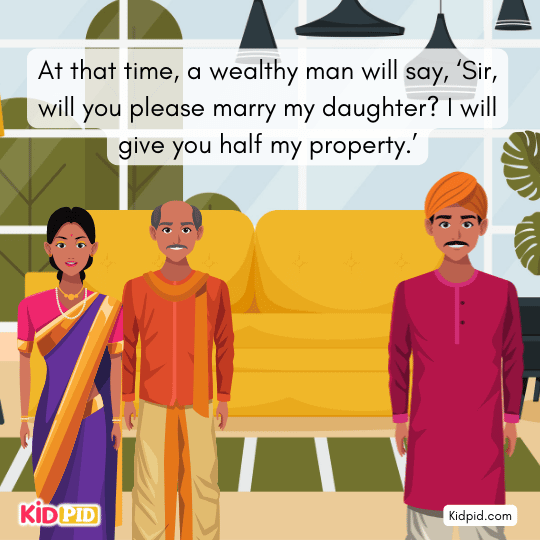
At that time, a wealthy man will say, ‘Sir, will you please marry my daughter? I will give you half my property.’

He imagines selling horses for huge amounts of gold.
I will marry his beautiful daughter, and we will have a son. I will name him Chandrahasa.
A rich man offers him marriage and half his property.
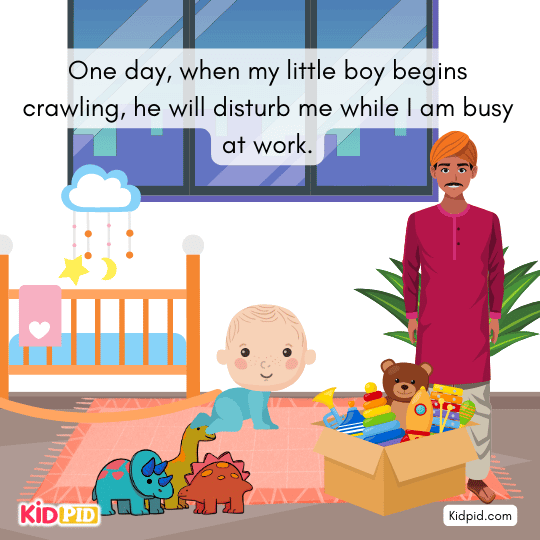
One day, when my little boy begins crawling, he will disturb me while I am busy at work.
He dreams of having a son he names Chandrahasa.
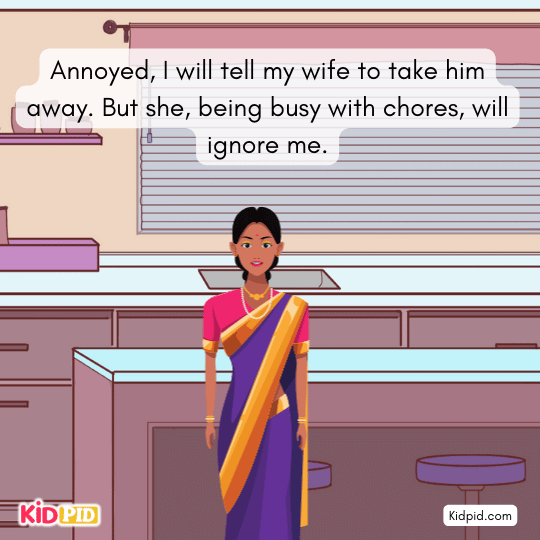
Annoyed, I will tell my wife to take him away. But she, being busy with chores, will ignore me.
He imagines his son disturbing him while he works.
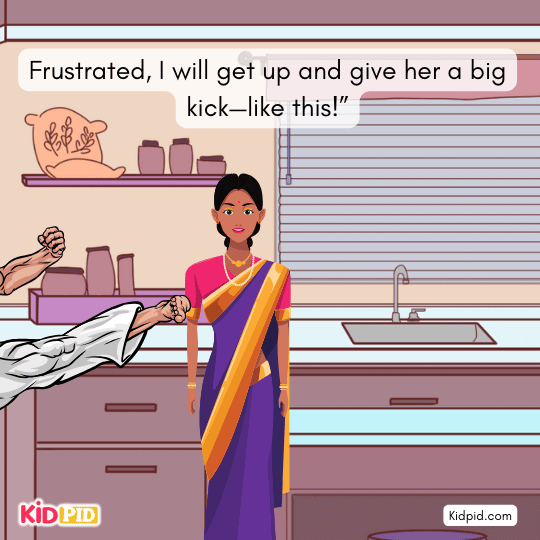
Frustrated, I will get up and give her a big kick—like this!”**
He dreams of angrily kicking his wife in frustration.
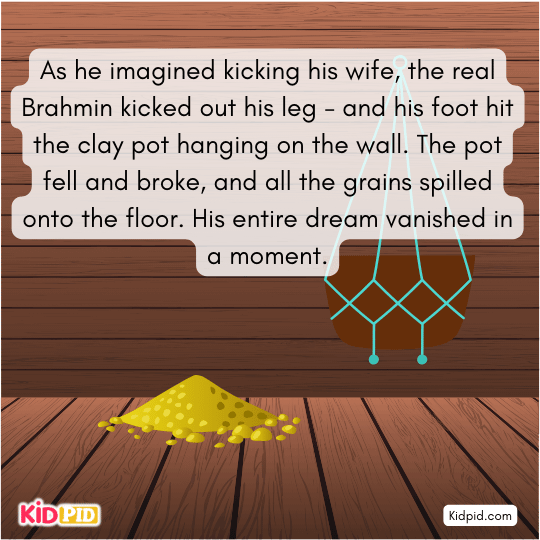
As he imagined kicking his wife, the real Brahmin kicked out his leg – and his foot hit the clay pot hanging on the wall. The pot fell and broke, and all the grains spilled onto the floor. His entire dream vanished in a moment.
He realizes all his dreams vanished as the grains spill out.
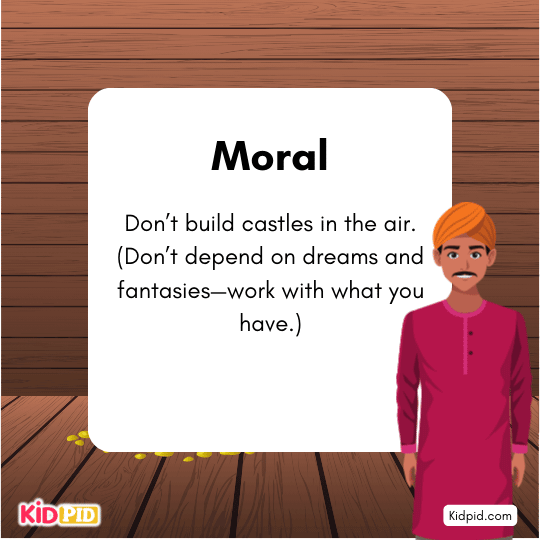
Moral of the Story: Don’t build castles in the air. (Don’t depend on dreams and fantasies—work with what you have.)

“The Brahmin’s Daydream” teaches children to stay focused, responsible, and practical. This moral story reminds kids that dreams come true only with effort and awareness, not careless imagination or distractions.


