
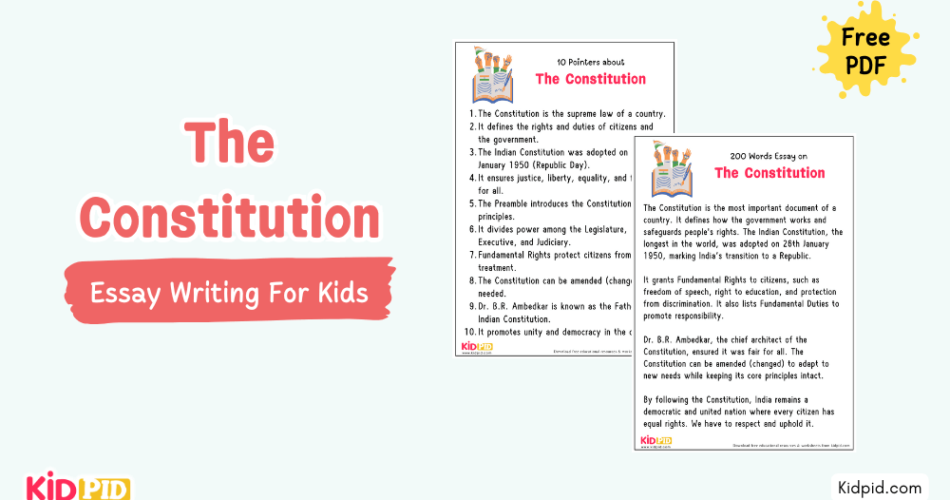
The Constitution is the foundation of a nation, guiding its governance, rights, and duties. It defines laws, ensures justice, and protects citizens. Understanding its principles helps us appreciate democracy, responsibilities, and the framework that unites a diverse country, making it essential for every citizen to study and respect.
Contents
10 Pointers About The Constitution

- The Constitution is the supreme law of a country.
- It defines the rights and duties of citizens and the government.
- The Indian Constitution was adopted on 26th January 1950 (Republic Day).
- It ensures justice, liberty, equality, and fraternity for all.
- The Preamble introduces the Constitution’s main principles.
- It divides power among the Legislature, Executive, and Judiciary.
- Fundamental Rights protect citizens from unfair treatment.
- The Constitution can be amended (changed) when needed.
- Dr. B.R. Ambedkar is known as the Father of the Indian Constitution.
- It promotes unity and democracy in the country.
Short Essay On The Constitution
Essay On The Constitution in 100 Words
The Constitution is the highest law of the land. It sets rules for the government and protects citizens’ rights. India’s Constitution was adopted on 26th January 1950, celebrated as Republic Day. It promises justice, freedom, equality, and brotherhood for all. The Preamble introduces its key ideas. The Constitution divides power among three branches: the Legislature, the Executive, and the Judiciary. It also gives citizens Fundamental Rights, like the right to education and freedom of speech. Dr. B.R. Ambedkar played a big role in making it. The Constitution helps maintain peace, unity, and democracy in India.
Essay On The Constitution in 200 Words

The Constitution is the most important document of a country. It defines how the government works and safeguards people’s rights. The Indian Constitution, the longest in the world, was adopted on 26th January 1950, marking India’s transition to a Republic. It grants Fundamental Rights to citizens, such as freedom of speech, the right to education, and protection from discrimination. It also lists Fundamental Duties to promote responsibility. Dr. B.R. Ambedkar, the chief architect of the Constitution, ensured it was fair for all. The Constitution can be amended (changed) to adapt to new needs while keeping its core principles intact. By following the Constitution, India remains a democratic and united nation where every citizen has equal rights. We have to respect and uphold it.
Essay On The Constitution in 300 Words
The Constitution is the supreme law that governs a country. It outlines the government’s structure, citizens’ rights, and their duties. The Indian Constitution, adopted on 26th January 1950, is the longest written constitution in the world. This day is celebrated as Republic Day.
The Constitution also lists Fundamental Duties, reminding citizens to respect national symbols, protect the environment, and promote harmony.
Dr. B.R. Ambedkar, the Chairman of the Drafting Committee, is called the Father of the Indian Constitution. He worked hard to ensure equality for all, including marginalized groups.
The Constitution is not rigid—it can be amended (changed) when necessary. However, its basic structure remains intact to protect democracy.
By following the Constitution, India remains a secular, democratic, and sovereign nation. It unites people of different religions, languages, and cultures under one rule of law. As responsible citizens, we must respect the Constitution and contribute to the nation’s progress.
Long Essay On The Constitution in 500 Words
Introduction
A constitution is a fundamental document that outlines the principles, laws, and framework of governance for a country. It serves as the supreme legal authority, ensuring stability, justice, and the protection of citizens’ rights. Constitutions can be written (like the U.S. Constitution) or unwritten (like the UK’s constitutional system), but their primary purpose remains the same: to define the structure of government and safeguard democracy.
Importance of a Constitution
The constitution plays a crucial role in maintaining order in society. It establishes the separation of powers among the legislative, executive, and judicial branches, preventing any one branch from becoming too powerful. Additionally, it guarantees fundamental rights such as freedom of speech, equality before the law, and protection against discrimination. Without a constitution, governments could act arbitrarily, leading to chaos and oppression.
Key Features of a Constitution
A well-drafted constitution includes several essential elements. It defines the structure of government, specifying the roles of different institutions like the parliament, presidency, and judiciary. It also outlines the amendment process, ensuring that changes are made carefully and democratically. Furthermore, it includes a bill of rights to protect individual freedoms and establishes the rule of law, ensuring that no one is above the law.
Types of Constitutions
Constitutions can be classified into different types based on their form and flexibility. A written constitution is a formal, codified document, while an unwritten constitution relies on traditions, judicial decisions, and statutes. A rigid constitution requires a special procedure for amendments, making it more stable, whereas a flexible constitution can be amended like ordinary laws, allowing for easier adaptation.
The Role of the Judiciary
The judiciary acts as the guardian of the Constitution. Courts interpret constitutional provisions and ensure that laws passed by the government comply with the Constitution. In many countries, the judiciary has the power of judicial review, allowing it to strike down unconstitutional laws. This system of checks and balances is vital in upholding democracy and preventing misuse of power.
Conclusion
The constitution is the backbone of any nation, providing a legal and political framework for governance. It protects citizens’ rights, ensures justice, and maintains stability. A strong and well-implemented constitution is essential for democracy to thrive, making it one of the most important documents in any country.

FAQs on The Constitution
Q1. What is a constitution?
Ans. It is the highest law that guides how a country is governed.
Q2. When was the Indian Constitution adopted?
Ans. On 26th January 1950.
Q3. Who is known as the Father of the Indian Constitution?
Ans. Dr. B.R. Ambedkar.
Q4. What are Fundamental Rights?
Ans. Rights given to all citizens like freedom of speech and the right to education.
Q5. What do the Fundamental Duties remind citizens to do?
Ans. To respect the nation, protect nature, and live in harmony.
Q6. How does the Constitution divide government powers?
Ans. Into three branches: the Legislature, the Executive, and the Judiciary.
Q7. What does the judiciary do concerning the Constitution?
Ans. It protects the Constitution and reviews laws.
Q8. What is the Preamble?
Ans. It introduces the key ideas of the Constitution.
Q9. Can the Constitution be changed?
Ans. Yes, through amendments.
Q10. Why is the Constitution important for a country?
Ans. It maintains democracy, protects rights, and keeps the country united.
In conclusion, the Constitution is the backbone of a nation, ensuring rights, justice, and equality. It guides governance, protects citizens, and unites diverse people under shared laws and principles. For more, visit our website and get more paragraphs, essays, worksheets, flashcards, Quizzes, and other interactive resources. Join us on YouTube & Facebook.
You might also like

The essay “My Favorite Hobby” on Kidpid describes drawing as a beloved hobby, highlighting creativity, imagination, and joy. It emphasizes expressing emotions, enjoying colors, and relaxing while creating art of animals and loved ones.
Essay – A Memorable Family Trip: Best vacation packagesFamily vacation packages

The essay “A Memorable Family Trip” on Kidpid describes a joyful hill station vacation, filled with adventure, scenic views, cozy stays, and activities like boating and treks, creating lasting family memories.

The essay “My Dream Job” on Kidpid expresses a student’s aspiration to become a doctor, aiming to help others, save lives, and bring hope through compassionate care.

The essay “Why I Love My Pet” on Kidpid describes the special bond with a pet dog, highlighting loyalty, playfulness, companionship, and the joy and comfort pets bring to daily life.