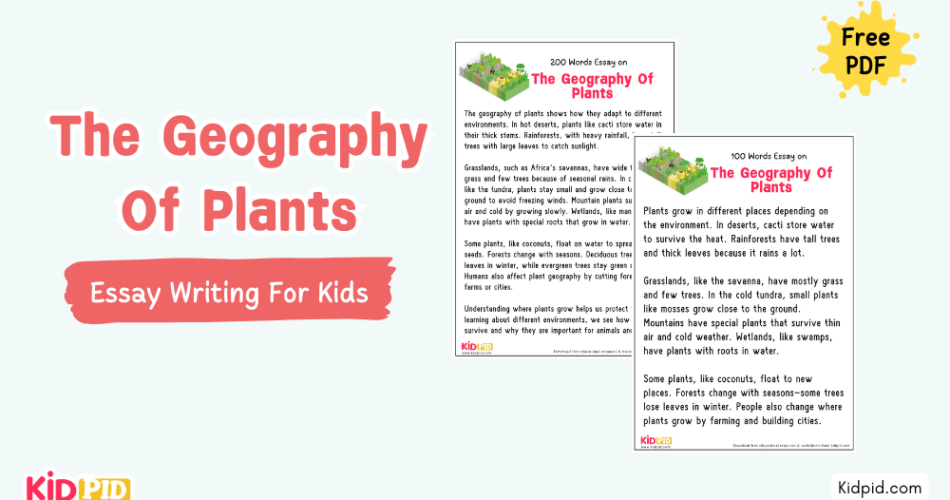
The geography of plants explores how different plants grow in various regions across the world. It studies the climate, soil, and environment that shape plant life. This essay, with 10 pointers and questions, highlights their diversity, importance, and connection to nature.
Contents
10 Pointers About The Geography Of Plants
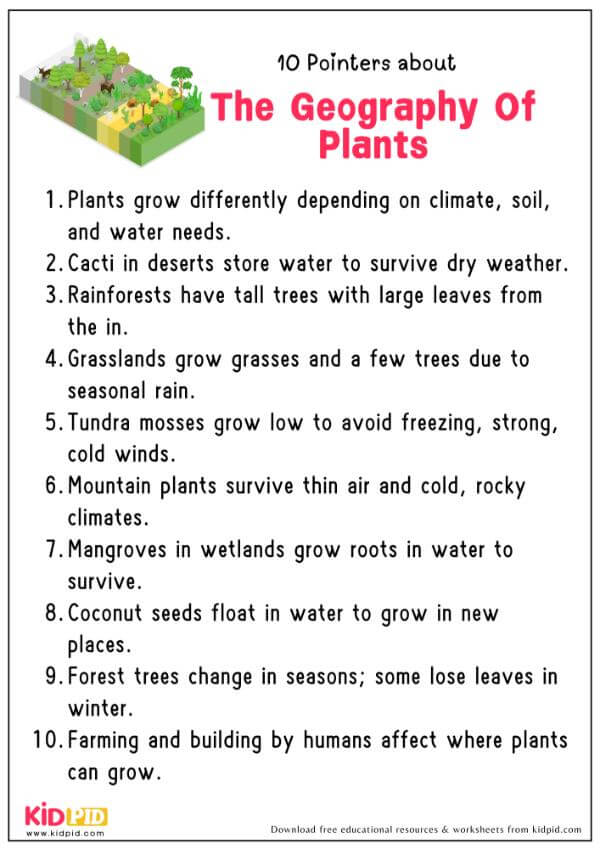
- Plants grow differently depending on climate, soil, and water needs.
- Cacti in deserts store water to survive dry weather.
- Rainforests have tall trees with large leaves from the in.
- Grasslands grow grasses and a few trees due to seasonal rain.
- Tundra mosses grow low to avoid freezing, strong, cold winds.
- Mountain plants survive thin air and cold, rocky climates.
- Mangroves in wetlands grow roots in water to survive.
- Coconut seeds float in water to grow in new places.
- Forest trees change in seasons; some lose leaves in winter.
- Farming and building by humans affect where plants can grow.
Short Essay On The Geography Of Plants
Essay On The Geography Of Plants in 100 Words
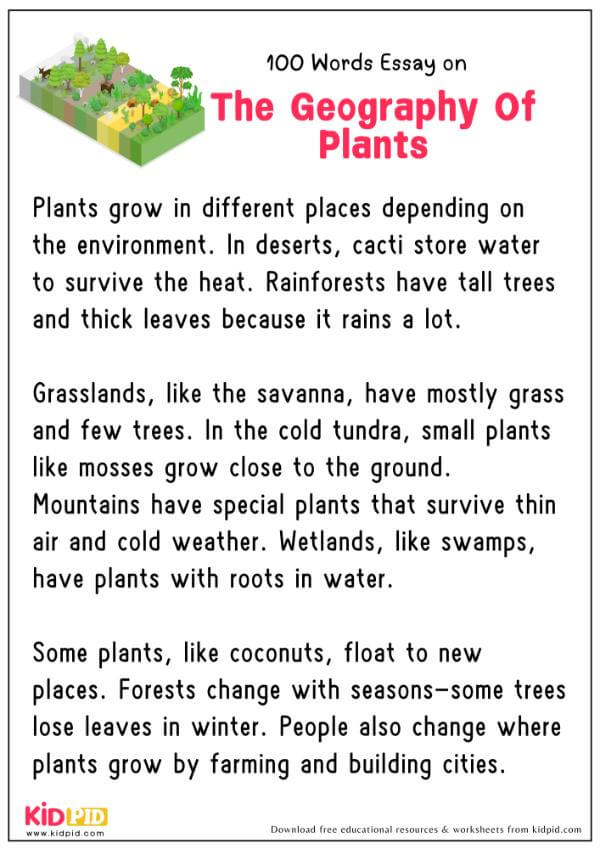
Plants grow in different places depending on the environment. In deserts, cacti store water to survive the heat. Rainforests have tall trees and thick leaves because it rains a lot. Grasslands, like the savanna, have mostly grass and few trees. In the cold tundra, small plants like mosses grow close to the ground. Mountains have special plants that survive thin air and cold weather. Wetlands, like swamps, have plants with roots in water. Some plants, like coconuts, float to new places. Forests change with seasons—some trees lose leaves in winter. People also change where plants grow by farming and building cities.
Essay On The Geography Of Plants in 200 Words
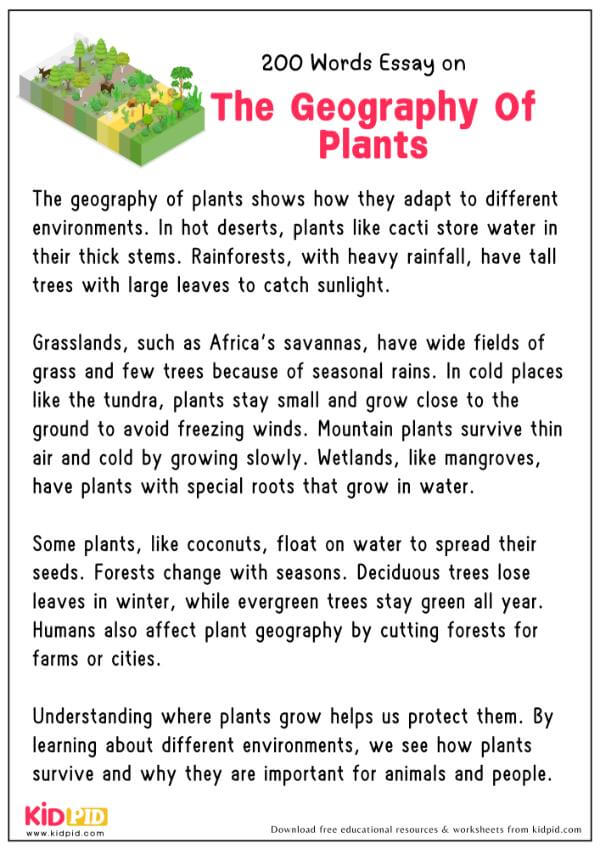
The geography of plants shows how they adapt to different environments. In hot deserts, plants like cacti store water in their thick stems. Rainforests, with heavy rainfall, have tall trees with large leaves to catch sunlight. Grasslands, such as Africa’s savannas, have wide fields of grass and few trees because of seasonal rains.
In cold places like the tundra, plants stay small and grow close to the ground to avoid freezing winds. Mountain plants survive thin air and cold by growing slowly. Wetlands, like mangroves, have plants with special roots that grow in water. Some plants, like coconuts, float on water to spread their seeds.
Forests change with the seasons. Deciduous trees lose leaves in winter, while evergreen trees stay green all year. Humans also affect plant geography by cutting forests for farms or cities. Understanding where plants grow helps us protect them. By learning about different environments, we see how plants survive and why they are important for animals and people.
Essay On The Geography Of Plants in 300 Words
Plants grow in different parts of the world depending on climate, soil, and water. Each type of environment has unique plants adapted to survive there.
Deserts are hot and dry, so plants like cacti store water in their thick stems. Rainforests, with constant rain, have tall trees forming a canopy, blocking sunlight from reaching the ground. Smaller plants grow on tree branches to get light. Grasslands, like the African savanna, have vast fields of grass and few trees because of irregular rainfall.
In the freezing tundra, plants like mosses and lichens grow low to avoid cold winds. Mountains have special plants that survive thin air and rocky soil. Wetlands, such as swamps and mangroves, have plants with roots that can live in water. Some plants, like coconuts, use water to spread seeds to new places.
Forests change with seasons. Deciduous trees lose leaves in winter to save energy, while evergreen trees keep needles year-round. Tropical forests stay warm and green all year round.
Humans change plant geography by farming, cutting forests, and building cities. This can harm natural habitats. Protecting plants is important because they give us oxygen, food, and homes for animals.
By studying plant geography, we learn how nature works and why we must care for different environments. Plants help balance Earth’s climate and support life. Understanding them helps us protect our planet for the future.
Long Essay On The Geography Of Plants in 500 Words
Introduction
Plants are like humans—they need the right place to live, food, and water to grow. Just like people live in different parts of the world, plants also grow in different places depending on the climate, soil, and sunlight. This study of where plants grow and why is called the geography of plants.
The Habitats of Plants
Plants grow almost everywhere—from hot deserts to icy mountains, and even underwater! Some plants, like cacti, love deserts, while others, like water lilies, grow in ponds. The place where a plant naturally grows is called its habitat.
Climate and Plants
Just like we wear warm clothes in winter, plants adapt to their climate. In cold places, trees like pine trees have needle-shaped leaves to survive the snow. In hot rainforests, plants like ferns grow big leaves to catch sunlight. Some plants even store water in thick stems, like the cactus!
Soil: The Plant’s Food
Plants need healthy soil to grow. Some soils are sandy, while others are full of clay or rich in nutrients. Farmers add compost to make the soil better for crops like wheat and rice. Without good soil, plants cannot grow strong roots.
Mountains, Forests, and Grasslands
High up in the mountains, only small plants grow because the air is thin. Forests are full of tall trees that form a green roof called the canopy. Grasslands, like the African savanna, have wide-open spaces with grasses and a few trees where animals like zebras live.
Plants and Humans
People depend on plants for food, oxygen, and even medicine! Fruits, vegetables, and grains all come from plants. Trees also clean the air by taking in carbon dioxide and giving out oxygen. Without plants, life on Earth would be very difficult.
Protecting Plants
Many plants are in danger because of pollution and the cutting down of forests. We must protect them by planting more trees, recycling, and using less paper. National parks and gardens help save rare plants.
Conclusion
Plants are amazing living things that grow in different places for different reasons. By learning about the geography of plants, we can take better care of our green friends and the planet.

FAQ on The Geography Of Plants
Q1. Why do cacti store water?
Ans. To survive in hot deserts.
Q2. What kind of plants grow in rainforests?
Ans. Tall trees with big leaves.
Q3. Why do tundra plants grow close to the ground?
Ans. To avoid freezing winds and cold temperatures.
Q4. How do mountain plants survive?
Ans. They adapt to thin air and cold weather.
Q5. What special roots do wetland plants have?
Ans. Roots that grow in or above water.
Q6. What happens to deciduous trees in winter?
Ans. They lose their leaves.
Q7. How do coconuts spread their seeds?
Ans. By floating in water to new places.
Q8. How do humans change plant geography?
Ans. By farming, cutting forests, and building cities.
Q9. Why is soil important for plants?
Ans. It gives them nutrients to grow.
Q10. How can we protect plant life?
Ans. By planting trees, recycling, and saving forests.
The geography of plants explains how different environments influence plant life. It teaches us the importance of ecosystems, biodiversity, and conservation, reminding us to protect nature for a balanced and sustainable future. For further knowledge, visit our website and get more paragraphs, essays, worksheets, flashcards, Quizzes, and other interactive resources. Join us on YouTube & Facebook.
You might also like

The essay “Why I Love To Read” explains a child’s love for reading, showing how books spark imagination, teach new knowledge, improve vocabulary, and inspire personal growth, joy, and creativity.
Essay – How to be a Good Friend

The essay “How to Be a Good Friend” explains that kindness, honesty, listening, sharing, and supporting others are essential. Understanding, forgiveness, and quality time help build strong, happy, lasting friendships.
Essay – Why Pets Are Important

The essay “Why Pets Are Important” on Kidpid explains how pets provide companionship, reduce stress, teach responsibility, and offer emotional support, while fostering empathy, love, and happiness in our daily lives.

The essay “A Lesson I’ve Learned” on Kidpid shares how a mistake taught responsibility, time management, and personal growth, highlighting guidance from parents and teachers to build better habits and pride.

The essay “The Best Teacher” on Kidpid highlights the qualities of an exceptional educator, emphasizing kindness, patience, and the ability to inspire students through engaging and supportive teaching methods.