Learning action verbs is an important part of early language development for children. This fun and educational action verbs rhyme helps kids understand verbs through simple daily activities such as running, jumping, reading, writing, eating, and playing. By connecting words with actions, children improve their vocabulary, communication skills, reading comprehension, and grammar knowledge while making language learning enjoyable, interactive, and easy to remember.
Contents
Fun Action Verbs Rhyme for Kids – Learn Verbs Through Everyday Actions

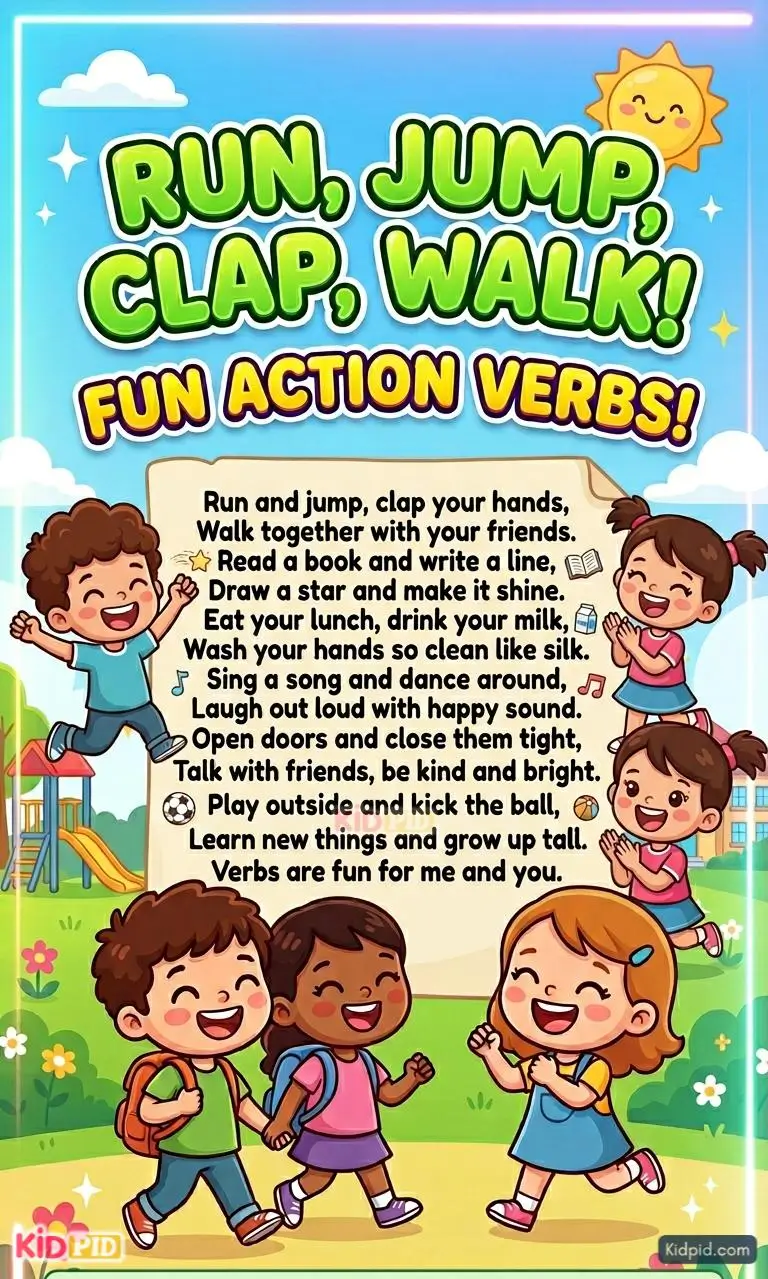
This engaging action verbs rhyme helps children build vocabulary, improve language skills, and understand how action words are used in everyday life through fun and memorable examples.
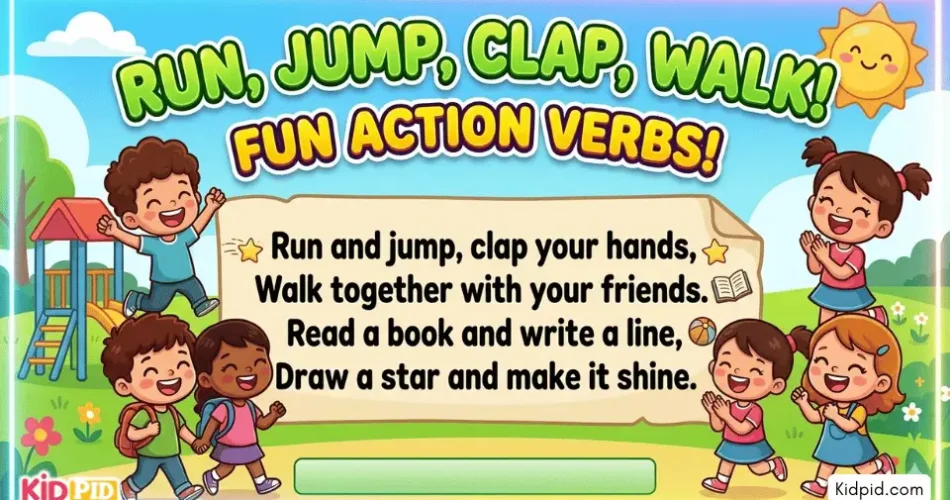
This colorful action verbs rhyme introduces children to common verbs like run, jump, clap, walk, read, write, sing, and play in a fun and engaging way. The rhyme helps improve vocabulary, sentence-building skills, reading comprehension, and early grammar development. Bright illustrations and simple rhyming lines make learning action words enjoyable and easy for young learners. Click the YouTube link below to watch the full Action Verbs Rhyme video and learn through fun songs and animations!
Why Learning Action Verbs Matters
- Helps children understand how actions are expressed in language.
- Improves vocabulary and sentence-building skills.
- Strengthens reading, writing, and communication abilities.
- Supports early grammar and language development.
- Encourages active participation in classroom learning.
- Builds confidence in speaking and storytelling.
- Makes English learning fun and engaging.
- Develops listening and comprehension skills.
Benefits of Teaching Action Verbs to Children
Children use action verbs every day when they speak, read, and write. Learning verbs helps young learners describe activities, express thoughts clearly, and communicate effectively. Action-based learning also improves memory retention because children can physically perform many of the verbs they learn. Through songs, rhymes, games, and everyday conversations, children gain a stronger understanding of language while developing essential literacy skills.
Tips for Parents and Teachers
- Use action verbs during daily conversations.
- Encourage children to act out different verbs.
- Read books that contain simple action words.
- Play movement games that involve verbs.
- Ask children to create sentences using new verbs.
- Use rhymes and songs to reinforce learning.
- Praise children when they correctly identify action words.
FAQs
Q1. What are action verbs for kids?
Answer: Action verbs are words that describe what a person, animal, or object does, such as run, jump, read, write, sing, and play.
Q2. Why are action verbs important for children?
Answer: Action verbs help children improve vocabulary, communication, grammar, and sentence construction skills.
Q3. At what age can children learn action verbs?
Answer: Most children begin learning simple action verbs during preschool and continue expanding their vocabulary throughout elementary school.
Q4. How can parents teach action verbs at home?
Answer: Parents can use daily activities, games, rhymes, books, and conversations to help children recognize and practice action verbs.
These action verb rhymes make grammar learning simple, fun, and engaging for young learners. By practicing action words regularly, children build stronger language skills, confidence, vocabulary, and communication abilities. Explore our website regularly for fresh rhymes, paragraphs, essays, worksheets, flashcards, quizzes, and a wide range of engaging learning resources. For children. Be sure to follow us on YouTube & Facebook for daily educational activities, fun learning content, and the latest updates.