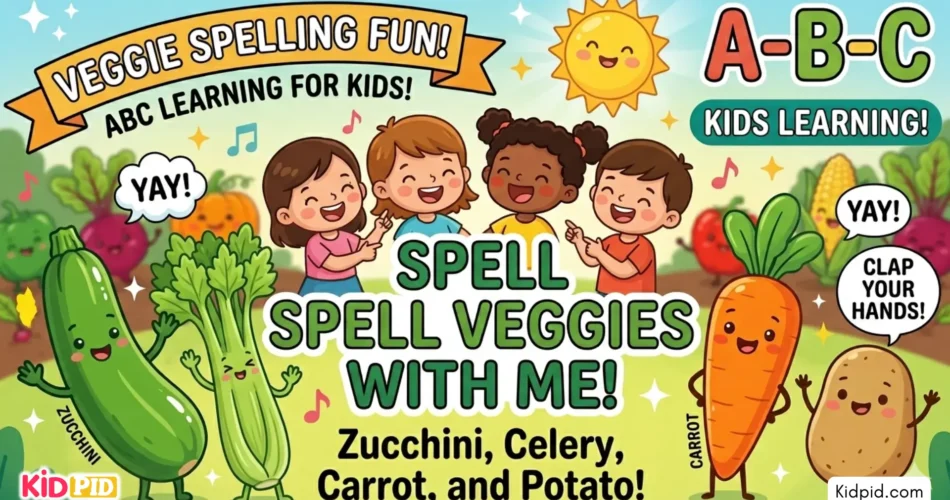
Welcome to these fun vegetable spelling rhymes for kids! These educational nursery rhymes help preschool and kindergarten children learn vegetable names, English spelling, phonics, and healthy eating habits easily and playfully. Kids can sing, clap, and spell vegetables like carrot, tomato, broccoli, cucumber, and more while improving vocabulary, pronunciation, memory skills, and early learning confidence through interactive learning activities.
This collection of kids’ vegetable rhymes combines:
- Easy spelling practice for children
- Healthy food awareness
- Vocabulary building activities
- Preschool learning songs
- Kindergarten phonics practice
- Interactive educational fun
Parents, teachers, homeschoolers, and caregivers can use these vegetable spelling songs during classroom activities, circle time, reading sessions, vocabulary lessons, or fun learning at home.
Contents
- Why Vegetable Rhymes Are Important for Early Childhood Learning
- Fun Veggie Spelling Rhymes for Kids | Learn Vegetable Names with Phonics
- Vegetable Spelling Fun for Kids | Learn Veggie Names with Easy Rhymes
- Veggie Spelling Fun for Kids | Learn Vegetable Names with Rhymes & Phonics
- Vegetable Spelling Rhymes for Kids | Fun Veggie Phonics Learning Chart
- Advanced Veggie Spelling Fun for Kids | Learn Vegetable Names with Rhymes
- Benefits of Vegetable Spelling Rhymes for Kids
- Best Ways to Use These Vegetable Rhymes
- Educational Value for Preschool and Kindergarten Kids
- FAQs
- Q1. What are vegetable spelling rhymes for kids?
- Q2. Are these vegetable rhymes good for preschool children?
- Q3. How do spelling rhymes help children learn?
- Q4. Can teachers use these vegetable rhymes in classrooms?
- Q5. Why are vegetable learning songs important for kids?
- Q6. Which vegetables are included in these spelling rhymes?
- Q7. Are these rhymes useful for homeschooling?
- Q8. What age group are these vegetable rhymes suitable for?
- Q9. Can these rhymes improve English vocabulary?
- Q10. How can parents make these rhymes more interactive?
Why Vegetable Rhymes Are Important for Early Childhood Learning
Vegetable spelling rhymes help children learn in multiple ways at the same time. Educational experts often recommend rhymes and repetition because they support language development and memory retention in young learners.
Fun Veggie Spelling Rhymes for Kids | Learn Vegetable Names with Phonics
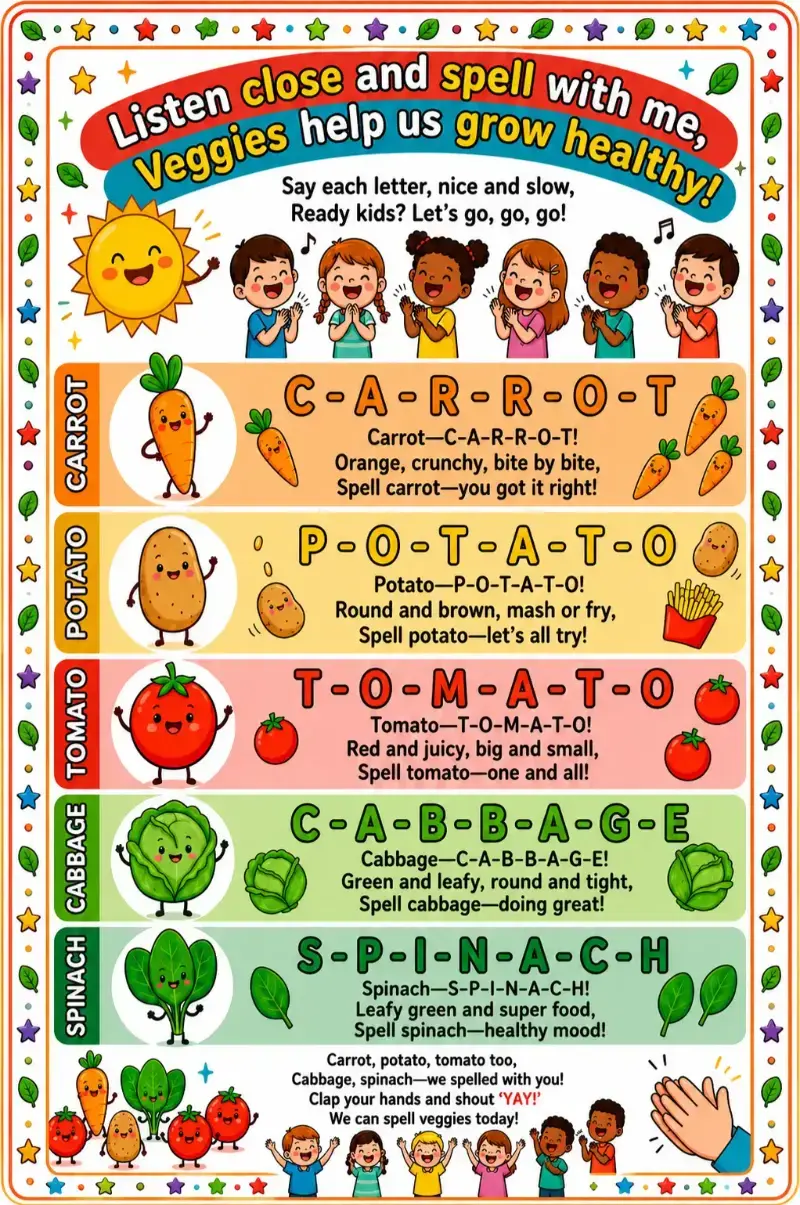
This fun spelling rhyme chart helps children strengthen phonics, vocabulary, listening skills, and confidence while learning vegetable names through music and repetition.
This colorful veggie spelling rhyme chart makes learning fun for preschool and kindergarten kids through phonics, spelling, and repetition. Children can easily learn vegetable names like carrot, potato, tomato, cabbage, and spinach while improving vocabulary and pronunciation skills. Cute cartoon vegetables and cheerful rhymes help boost memory, reading confidence, and early language development playfully. Click the YouTube link below to watch the full vegetable rhymes video and make spelling learning fun through music and singing:
Vegetable Spelling Fun for Kids | Learn Veggie Names with Easy Rhymes
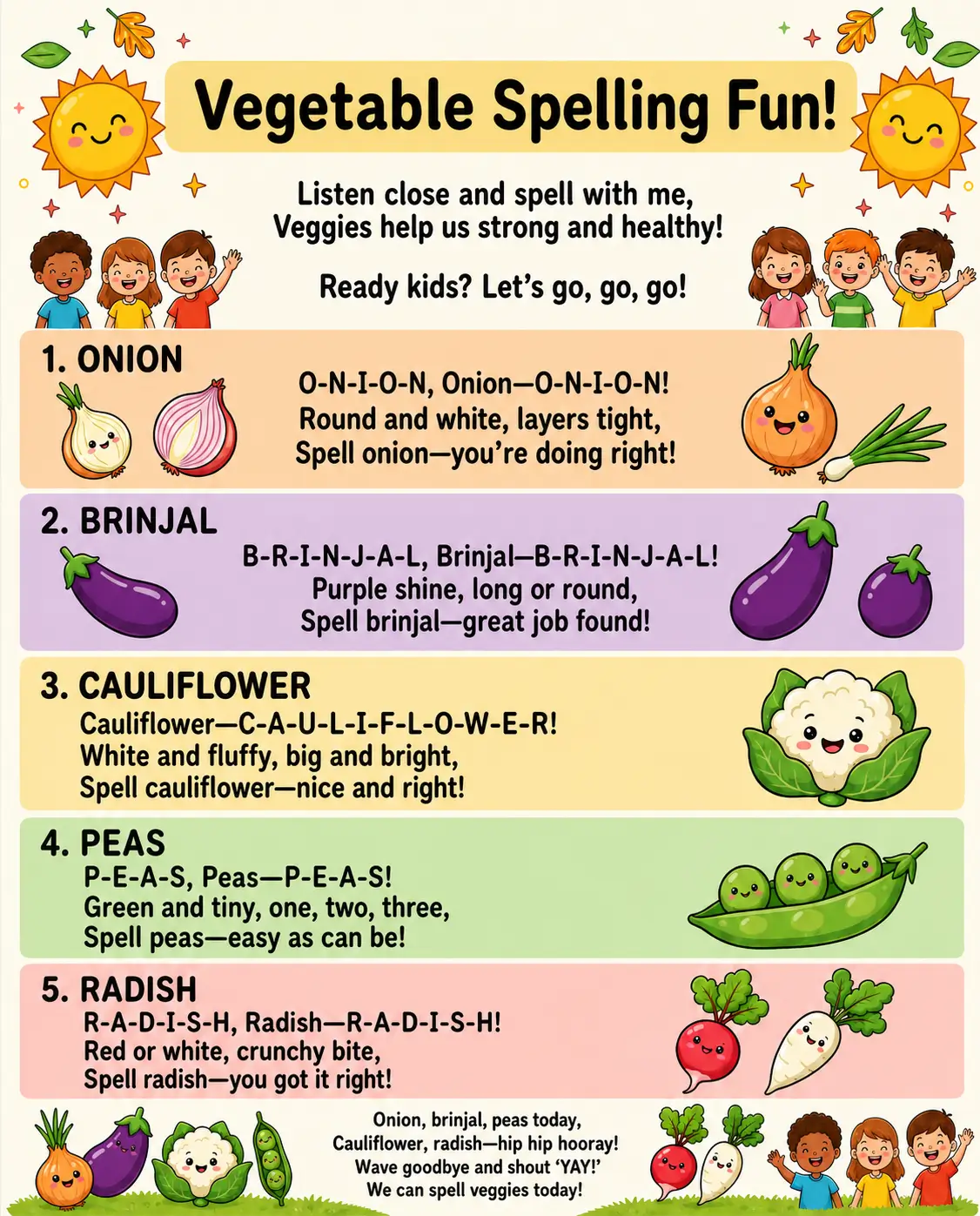
Help children build vocabulary, spelling, pronunciation, and healthy eating awareness through fun vegetable rhymes and engaging picture-based learning.
This cheerful vegetable spelling chart introduces kids to onion, brinjal, cauliflower, peas, and radish through easy rhymes and phonics practice. Bright cartoon illustrations and repetitive spelling patterns help improve early reading, pronunciation, vocabulary, and listening skills for young learners. This cheerful vegetable rhyme is perfect for preschoolers, kindergarten students, homeschool lessons, and classroom activities, making learning enjoyable and easy. Watch the complete vegetable rhymes video by tapping the YouTube link below and enjoy a fun-filled spelling adventure:
Veggie Spelling Fun for Kids | Learn Vegetable Names with Rhymes & Phonics
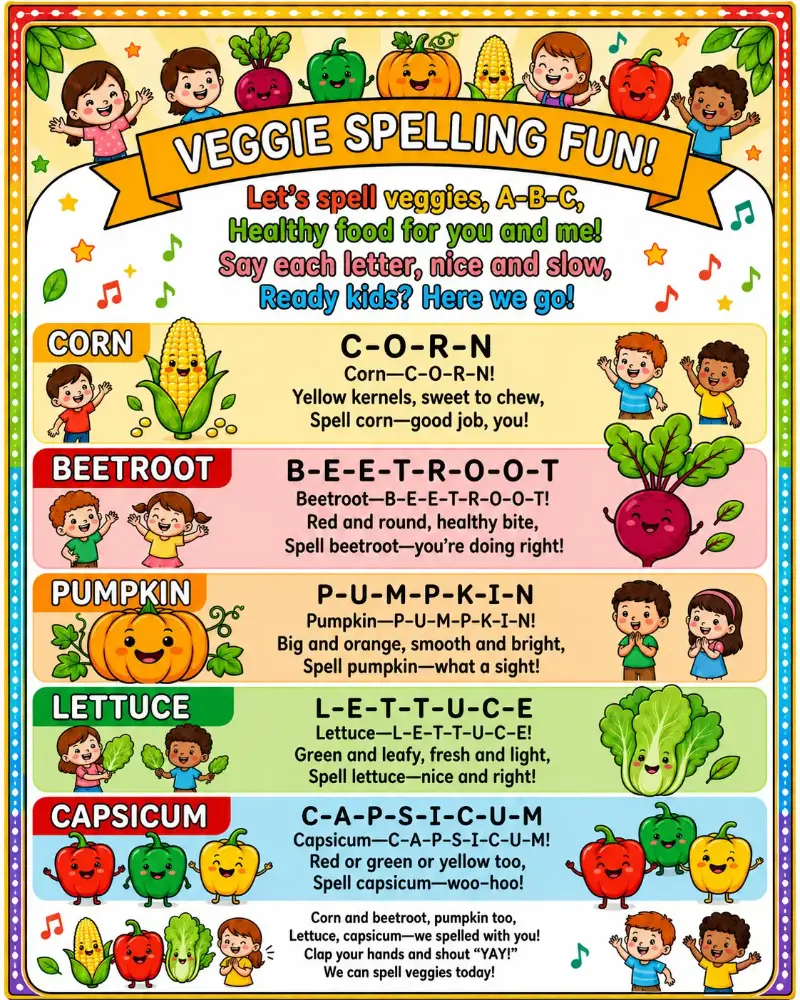
Help kids learn vegetable names, improve spelling, build vocabulary, and develop early reading skills through this fun and engaging veggie spelling rhyme.
This vibrant veggie spelling learning chart teaches children how to spell corn, beetroot, pumpkin, lettuce, and capsicum in a fun and engaging way. Easy rhymes, colorful vegetable characters, and repetitive phonics patterns help improve early reading, listening, and word recognition skills for young learners. Designed for preschool, kindergarten, homeschool, and school settings, this fun-filled rhyme makes vegetable learning interactive and memorable. Watch the full rhymes video on YouTube below and sing along:
Vegetable Spelling Rhymes for Kids | Fun Veggie Phonics Learning Chart
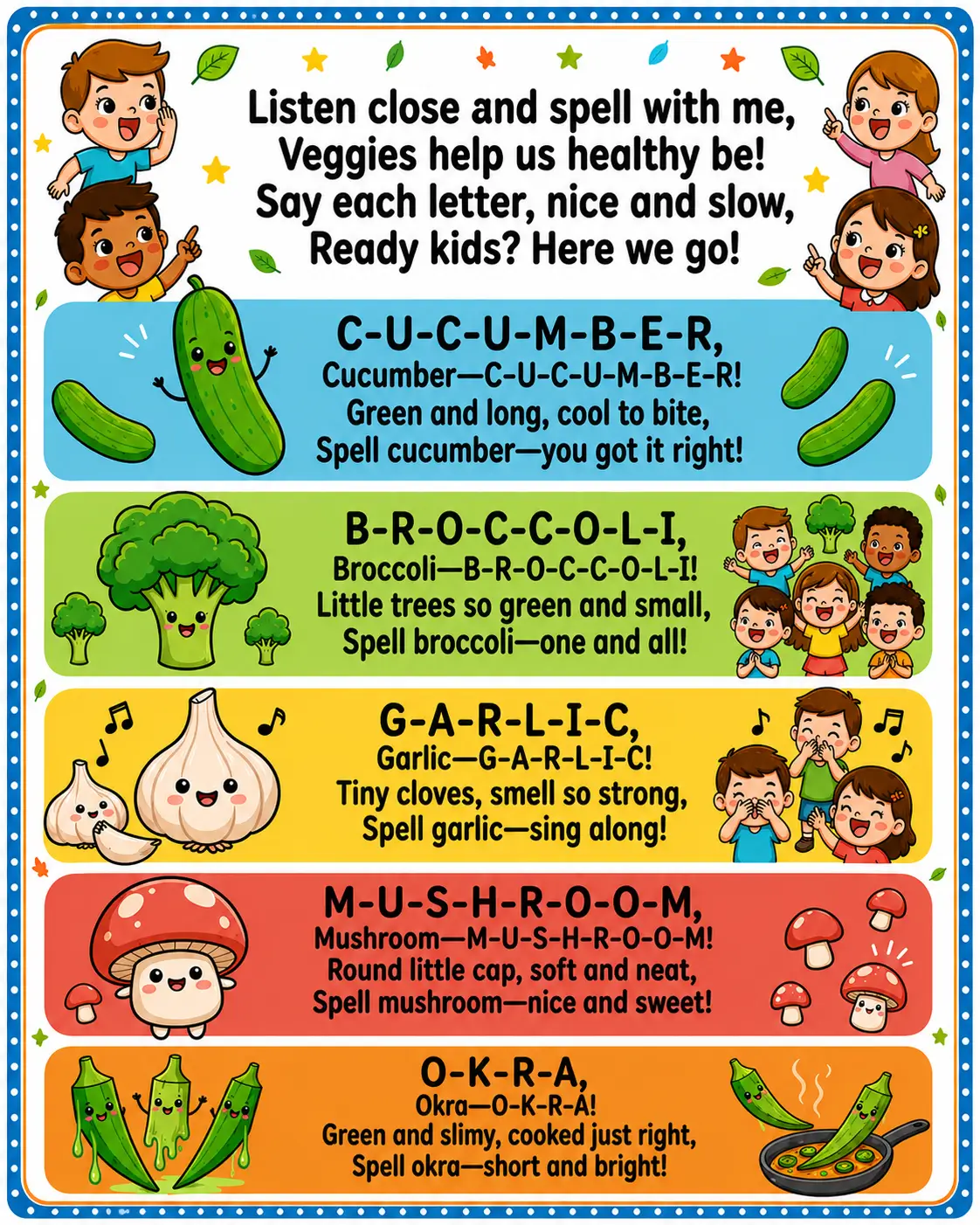
Build early spelling, phonics, and vocabulary skills as kids sing, spell, and remember vegetable names through fun educational rhymes.
This colorful vegetable-spelling-rhyme poster introduces kids to cucumber, broccoli, garlic, mushroom, and okra through simple phonics and catchy rhymes. Fun cartoon illustrations and easy spelling repetition help children strengthen vocabulary, listening skills, pronunciation, and early reading confidence. Great for preschool, kindergarten, homeschooling, and classroom use, this catchy rhyme encourages kids to learn vegetable vocabulary through playful learning. Don’t miss the full vegetable rhymes video—click the YouTube link below and turn learning into a joyful sing-along experience:
Advanced Veggie Spelling Fun for Kids | Learn Vegetable Names with Rhymes
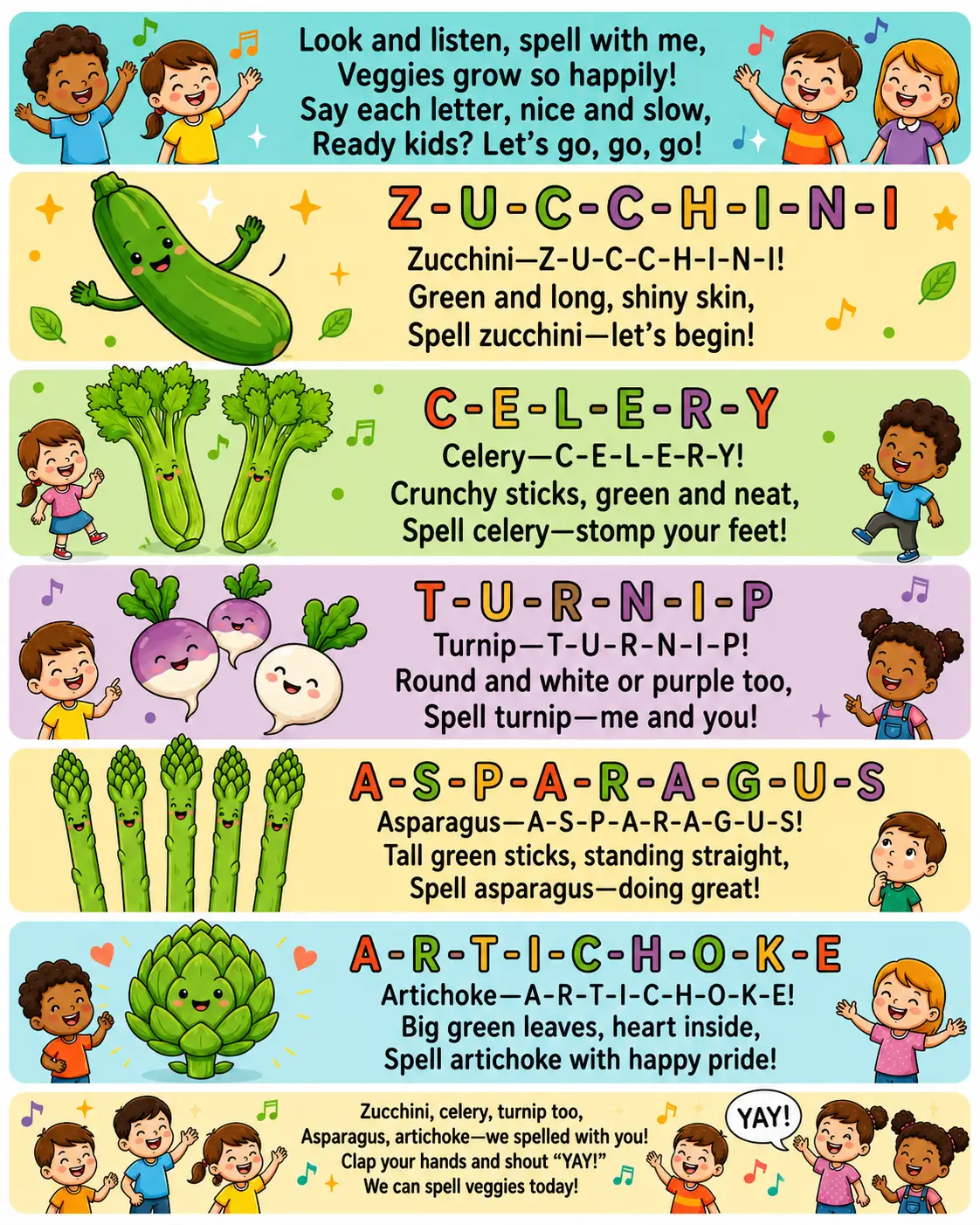
Make spelling fun with cheerful vegetable rhymes that help children improve phonics, vocabulary, letter recognition, and early reading skills through music and repetition.
This fun and colorful vegetable spelling rhyme chart teaches kids how to spell zucchini, celery, turnip, asparagus, and artichoke with easy phonics practice. Cute cartoon veggies and catchy rhymes help young learners build vocabulary, listening skills, pronunciation, and early reading confidence in an exciting way. Perfect for preschool, kindergarten, homeschool, and classroom learning, this educational activity makes healthy food learning playful and memorable for children. Tap the YouTube link below to watch all the vegetable rhymes and make spelling practice exciting, interactive, and memorable for kids.
Benefits of Vegetable Spelling Rhymes for Kids
1. Improves Spelling Skills
Children learn how to recognize letters and spell common vegetable names correctly through repetition and rhythm.
2. Builds Vocabulary
Kids discover new vegetable names like asparagus, zucchini, artichoke, capsicum, and cauliflower while expanding their English vocabulary.
3. Encourages Healthy Eating Habits
Fun rhymes help children become familiar with healthy vegetables and create positive associations with nutritious foods.
4. Supports Phonics Learning
Listening to sounds and repeating words improves pronunciation, phonics understanding, and early reading skills.
5. Makes Learning Fun and Interactive
Songs and rhymes keep children engaged far better than traditional memorization methods.
Best Ways to Use These Vegetable Rhymes
Parents and teachers can make learning even more exciting by combining these rhymes with fun educational activities.
Fun Learning Ideas
- Flashcards with vegetable pictures
- Vegetable coloring pages
- Classroom spelling games
- Vegetable matching activities
- Singing and clapping games
- Printable worksheets
- Vegetable craft projects
- Phonics circle time sessions
These activities help improve:
- Fine motor skills
- Letter recognition
- Listening skills
- Memory development
- Communication confidence
Educational Value for Preschool and Kindergarten Kids
These rhymes are ideal for:
- Preschool learning activities
- Kindergarten English lessons
- Nursery rhyme sessions
- ESL vocabulary practice
- Homeschool educational content
- Kids learning videos
- Early phonics education
- Healthy food awareness lessons
The repeated spelling format makes the content easy for toddlers and young learners to follow while building confidence step by step.
FAQs
Q1. What are vegetable spelling rhymes for kids?
Answer: Vegetable spelling rhymes are fun educational songs that help children learn vegetable names, English spelling, phonics, and vocabulary through music, repetition, and rhyming words.
Q2. Are these vegetable rhymes good for preschool children?
Answer: Yes, these rhymes are perfect for preschoolers, kindergarten kids, toddlers, and early learners because they use simple words, easy spelling patterns, and catchy rhythms.
Q3. How do spelling rhymes help children learn?
Answer: Spelling rhymes improve letter recognition, pronunciation, listening skills, vocabulary, memory, and phonics understanding in a fun and interactive way.
Q4. Can teachers use these vegetable rhymes in classrooms?
Answer: Absolutely! Teachers can use these educational rhymes during circle time, phonics lessons, spelling activities, classroom singing sessions, and vocabulary practice.
Q5. Why are vegetable learning songs important for kids?
Answer: Vegetable learning songs help children become familiar with healthy foods while making learning enjoyable. They encourage healthy eating habits and language development together.
Q6. Which vegetables are included in these spelling rhymes?
Answer: These rhymes include many vegetables like carrot, potato, tomato, spinach, cabbage, broccoli, cucumber, pumpkin, capsicum, peas, onion, mushroom, zucchini, asparagus, and more.
Q7. Are these rhymes useful for homeschooling?
Answer: Yes, parents and homeschool educators can use these rhymes for fun learning activities, reading practice, spelling lessons, and educational games at home.
Q8. What age group are these vegetable rhymes suitable for?
Answer: These vegetable spelling songs are best for children aged 3 to 7 years, including nursery, preschool, kindergarten, and primary school students.
Q9. Can these rhymes improve English vocabulary?
Answer: Yes, children learn new vegetable names, improve spelling skills, and expand their English vocabulary naturally through repeated singing and spelling practice.
Q10. How can parents make these rhymes more interactive?
Answer: Parents can add flashcards, vegetable coloring pages, spelling games, worksheets, clapping activities, and sing-along sessions to make learning more exciting for kids.