

Avalanches are powerful snow slides that can happen in mountains. They can be very dangerous, but knowing about them can help keep us safe. Let’s learn what causes avalanches and some important tips for staying safe if one happens!
- What is an avalanche: A large amount of snow that suddenly falls down a mountain. Can move very fast and cover everything in its path.
- What causes avalanches: Heavy snowfall can make the snow unstable. Changes in temperature can weaken the snow.
- Why are avalanches dangerous: They can bury people and things under heavy snow. They can destroy trees, buildings, and roads.
- How can we stay safe: Avoid going into areas where avalanches can happen, especially after heavy snow. If you are in the mountains, carry safety gear like beacons and shovels.
Contents
Understanding Avalanches: Causes and Essential Survival Tips
💡 Did you know? Avalanches can travel up to 80 mph (130 km/h), faster than most cars on highways!
Related MCQ’S
1. What is an avalanche?
a) A snowstorm that covers the whole mountain
b) A layer of snow that collapses and slides downhill
c) A storm that forms in icy regions
d) A slow movement of snow over time
2. Which slope angles are most prone to avalanches?
a) Slopes under 25°
b) Slopes over 60°
c) Slopes between 30° and 45°
d) Flat slopes with no angle
3. Which of the following is NOT a natural trigger for an avalanche?
a) Earthquakes
b) Rain
c) Snowmobile vibrations
d) Large animal movement
4. Why should you avoid playing under steep slopes in snowy areas?
a) The snow is too hard to build a snowman
b) The area is too cold for safety
c) Avalanches are more likely to occur under steep slopes
d) The snow cannot accumulate under steep slopes
5. What is the survival rate for avalanche victims rescued within 18 minutes?
a) 50%
b) 70%
c) 91%
d) 100%
You may like these:
What causes an avalanche?
Avalanches occur when a layer of snow collapses and slides down a slope due to factors like weather, terrain, or human disturbance.
Key Survival Tips & Strategies For 6 Emergencies
Essential survival tips for handling six common emergencies, including fire, floods, earthquakes, accidents, wilderness, and medical crises, ensuring safety and effective decision-making.
Heavy vs Light Sorting Activity Worksheets
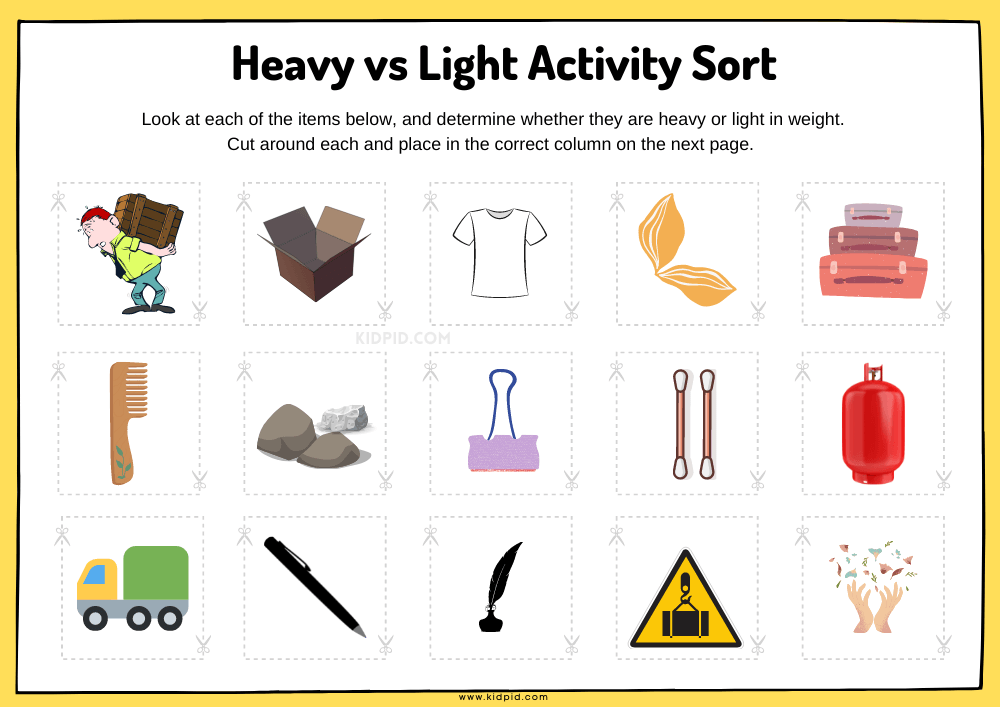
Worksheets that help students practice sorting objects or concepts by weight, exploring the differences between heavy and light items through interactive activities