Did you know there are some animals that don’t have a brain but still manage to live and survive? It may sound strange, but these creatures are perfectly adapted to their environments. Let’s explore how certain animals function without a brain!
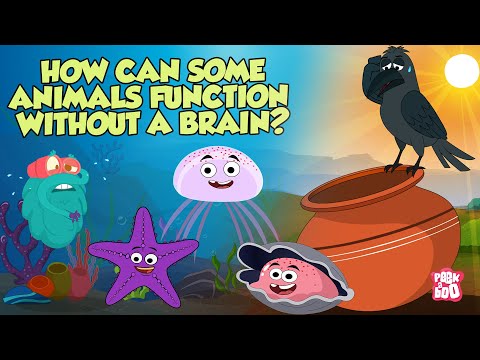
- Some animals like jellyfish, sea stars, and oysters don’t have a brain.
- These animals are simple and only need basic functions to survive.
- Instead of a brain, they use nerve networks or sensors to react to their surroundings.
- Jellyfish, for example, use their tentacles to sting intruders.
- Sea stars have sensors in their arms that help them see, smell, and touch things.
- These brainless animals conserve energy by not using a brain, which would need a lot of power.
- Some creatures, like sea squirt larvae, even lose their tiny brain as they grow.
- Despite not having a brain, these animals still have nerves that help them survive.
Contents
- How Some Animals Survive and Operate Without Having a Brain.
- Related MCQ’s
- 1. What is a brain made up of?
- 2. Which animal can survive without a brain, heart, or blood?
- 3. How do brainless animals like jellyfish survive?
- 4. Which of these animals does NOT have a brain?
- 5. Why don’t simple animals need a brain?
- 6. What happens to the sea squirt’s brain as it grows?
- 7. Why did some simple animals lose their brains over time?
- 8. What is an example of how jellyfish protect themselves?
- You may like these:
How Some Animals Survive and Operate Without Having a Brain.
Related MCQ’s
1. What is a brain made up of?
A) Bones
B) Muscles
C) Clustered neurons
D) Water
Answer: C) Clustered neurons
Explanation: A brain is a group of clustered neurons that control actions and functions in animals and humans.
2. Which animal can survive without a brain, heart, or blood?
A) Dolphin
B) Jellyfish
C) Turtle
D) Shark
Answer: B) Jellyfish
Explanation: Jellyfish have been thriving for 650 million years without a brain, heart, or blood by using sensory nerves to react to their surroundings.
3. How do brainless animals like jellyfish survive?
A) By sleeping all the time
B) By having sensors that help them react to the environment
C) By eating other animals’ brains
D) By staying out of water
Answer: B) By having sensors that help them react to the environment
Explanation: These animals use sensory mechanisms to sense food and avoid danger, which works like a simple automatic system.
4. Which of these animals does NOT have a brain?
A) Starfish
B) Elephant
C) Monkey
D) Dog
Answer: A) Starfish
Explanation: Starfish use sensors in their arms to touch, see, and smell their surroundings, even though they lack a brain.
5. Why don’t simple animals need a brain?
A) They are lazy and don’t do much.
B) They only need basic features to sense food and danger.
C) They live on land and don’t face dangers.
D) They have friends to help them.
Answer: B) They only need basic features to sense food and danger.
Explanation: Simple animals perform basic tasks and don’t need a complex brain like humans to survive.
6. What happens to the sea squirt’s brain as it grows?
A) It turns into a heart.
B) It gets bigger.
C) It gets absorbed into its body.
D) It becomes a shell.
Answer: C) It gets absorbed into its body.
Explanation: A sea squirt’s brain is absorbed as it settles into one place and transforms into a cluster of nerves.
7. Why did some simple animals lose their brains over time?
A) They didn’t want to think.
B) They needed the energy for other body functions.
C) Brains became too heavy to carry.
D) They moved to land.
Answer: B) They needed the energy for other body functions.
Explanation: Simple animals don’t need a brain because their energy is better used for other survival functions.
8. What is an example of how jellyfish protect themselves?
A) They run away.
B) They hide in shells.
C) Their tentacles release a toxin to neutralize intruders.
D) They call for help.
Answer: C) Their tentacles release a toxin to neutralize intruders.
Explanation: Jellyfish use their sensory nerves to sting intruders and protect themselves.
You may like these:
Why am I ticklish?
Ticklishness is a physical response triggered by light touch, causing involuntary reactions. It’s linked to the body’s defense mechanisms and sensitivity to sensations.
Why Do Our Limbs Fall Asleep?
When limbs “fall asleep,” pressure on nerves restricts blood flow, causing temporary numbness. Once pressure is relieved, circulation restores, and normal feeling returns to the area.
Sea animals worksheets for kindergarten with answers
These worksheets teach kindergarteners about sea animals, their habitats, and characteristics. Fun activities and questions help children learn while engaging with colorful images and simple answers.