An earthquake is a sudden shaking of the ground caused by movements deep inside the Earth. These natural events can damage buildings, roads, and even lives. This essay explains what earthquakes are, their causes, effects, and how people can stay safe. It also includes 10 pointers and important questions.
Contents
10 Pointers About Earthquake
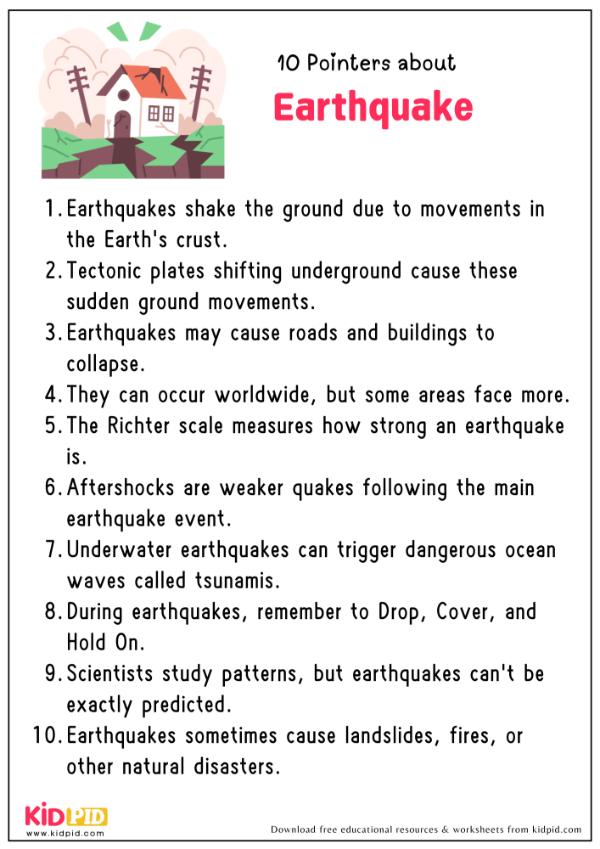

- Earthquakes shake the ground due to movements in the Earth’s crust.
- Tectonic plates shifting underground cause these sudden ground movements.
- Earthquakes may cause roads and buildings to collapse.
- They can occur worldwide, but some areas face more.
- The Richter scale measures how strong an earthquake is.
- Aftershocks are weaker quakes following the main earthquake event.
- Underwater earthquakes can trigger dangerous ocean waves called tsunamis.
- During earthquakes, remember to Drop, Cover, and Hold On.
- Scientists study patterns, but earthquakes can’t be exactly predicted.
- Earthquakes sometimes cause landslides, fires, or other natural disasters.
Short Essay On Earthquake
Essay On Earthquake in 100 Words
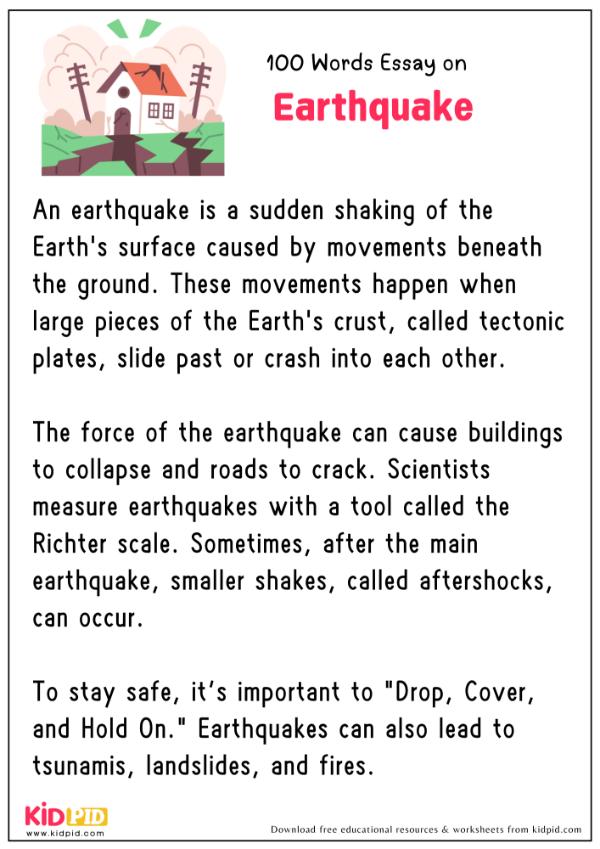
An earthquake is a sudden shaking of the Earth’s surface caused by movements beneath the ground. These movements happen when large pieces of the Earth’s crust, called tectonic plates, slide past or crash into each other. The force of the earthquake can cause buildings to collapse and roads to crack. Scientists measure earthquakes with a tool called the Richter scale. Sometimes, after the main earthquake, smaller shakes, called aftershocks, can occur. To stay safe, it’s important to “Drop, Cover, and Hold On.” Earthquakes can also lead to tsunamis, landslides, and fires.
Essay On Earthquake in 200 Words

An earthquake is a natural disaster that happens when the Earth’s crust shakes. It’s caused by the movement of huge pieces of land beneath the Earth’s surface. These pieces of land, called tectonic plates, are always moving, but sometimes they get stuck. When they finally move, the energy causes the ground to shake. Earthquakes can happen anywhere in the world, but places like California and Japan experience them often. The strength of an earthquake is measured using the Richter scale, which helps us understand how powerful the shaking is.
When an earthquake happens, buildings may collapse, roads may crack, and people might get hurt. That’s why it’s important to know how to stay safe. The best thing to do during an earthquake is to “Drop, Cover, and Hold On.” After an earthquake, smaller shakes called aftershocks can happen, so it’s important to stay alert. Earthquakes can sometimes lead to tsunamis, which are big waves in the ocean, or landslides. Scientists are always studying earthquakes to learn more about them and try to predict when they might happen. While they can’t predict exactly when an earthquake will happen, they can help people stay safe by giving early warnings.
Essay On Earthquake in 300 Words
An earthquake is a sudden shaking of the ground caused by the movement of the Earth’s tectonic plates. These plates are huge pieces of the Earth’s crust that are always moving, but they don’t always move smoothly. Sometimes, they get stuck because of friction, and when they finally release, the energy causes the ground to shake. This shaking can cause damage to buildings, roads, and other structures. The strength of an earthquake is measured using the Richter scale, with higher numbers showing stronger shakes.
Earthquakes can happen in many places around the world, but certain areas are more likely to experience them, such as California and Japan, where tectonic plates are in constant motion. After an earthquake, smaller earthquakes, known as aftershocks, may occur. These are often weaker but can still cause damage, so people need to be careful after the main earthquake.
Sometimes, earthquakes that happen underwater can create huge waves called tsunamis. Tsunamis can flood coastal areas and cause severe destruction. Earthquakes can also trigger landslides, where rocks and dirt fall down hills and mountains. This makes it even more important to know what to do to stay safe.
The best way to protect yourself during an earthquake is to “Drop, Cover, and Hold On.” Drop to the ground, take cover under a sturdy piece of furniture, and hold on until the shaking stops. While scientists are working hard to understand earthquakes, we can’t predict exactly when they will happen. However, they can study patterns to give early warnings and help people stay safe when an earthquake occurs.
Long Essay On Earthquake in 500 Words
Introduction
An earthquake is a sudden shaking of the ground caused by movements under the Earth’s surface. These movements happen when giant pieces of Earth’s crust, called tectonic plates, slide against, crash into, or pull away from each other. When the pressure between the plates becomes too much, they suddenly move, and this releases energy that causes the ground to shake.
Why Do Earthquakes Happen?
The Earth is made up of different layers, and the outer layer, known as the crust, is broken into many plates. These plates float on the soft, hot layer beneath them. Sometimes the plates bump into each other or slide past one another. When this happens, cracks called faults form. The energy released along these faults is what causes an earthquake. Most earthquakes happen near these fault lines.
How Do We Measure Earthquakes?
Scientists use a tool called a seismograph to measure the strength of earthquakes. The strength is given a number using the Richter scale. A small earthquake might be around 3 or 4 on the scale, while a very strong and dangerous one could be above 7. Earthquakes can happen quickly and last only a few seconds or minutes, but their effects can be huge.
Effects of Earthquakes
Earthquakes can cause a lot of damage. Buildings may fall, roads may crack, and bridges may collapse. People can get injured, and homes can be destroyed. Sometimes, earthquakes that happen in the ocean can cause big waves called tsunamis, which crash onto land and flood coastal areas. Earthquakes can also lead to landslides in hilly areas, making the damage even worse.
How to Stay Safe During an Earthquake
If you ever feel the ground shaking, it’s important to stay calm and remember these three steps: Drop, Cover, and Hold On. Drop to the ground so you don’t fall. Take cover under a table or sturdy furniture to protect yourself from falling objects. Hold on until the shaking stops. If you are outside, stay away from trees, buildings, or anything that might fall.
Can We Predict Earthquakes?
Scientists have not yet found a way to predict exactly when an earthquake will happen. But they can study where earthquakes happen often and warn people about the risk. Some countries have alarms and safety drills to help keep people safe.
Conclusion
Earthquakes are powerful natural events that can be very dangerous. Even though we can’t stop them, we can learn how to stay safe. Knowing what causes earthquakes and how to act during one can help save lives. Science continues to find ways to better understand and prepare for these natural disasters.


FAQs on Earthquake
Q1. What causes an earthquake?
Ans. An earthquake is caused by movements in the Earth’s crust.
Q2. What are tectonic plates?
Ans. Tectonic plates are large pieces of the Earth’s surface that move.
Q3. How do scientists measure the strength of an earthquake?
Ans. They use a tool called the Richter scale.
Q4. What are aftershocks?
Ans. Aftershocks are smaller quakes that happen after the main earthquake
Q5. Which places are more likely to have earthquakes?
Ans. Places like California and Japan experience more earthquakes.
Q6. What safety rule should people follow during an earthquake?
Ans. They should “Drop, Cover, and Hold On.”
Q7. What is a tsunami, and when can it happen?
Ans. A tsunami is a big wave caused by underwater earthquakes.
Q8. What is a fault in the Earth’s crust?
Ans. A fault is a crack where tectonic plates move and cause earthquakes.
Q9. Can scientists predict earthquakes exactly?
Ans. No, but they can study patterns to give early warnings.
Q10. Name two effects earthquakes can cause besides shaking.
Ans. They can cause landslides and fires.
Earthquakes are powerful and sometimes dangerous natural disasters. By learning about their causes, effects, and safety tips, we can better protect ourselves and others during these sudden ground-shaking events. Browse our website to find a wide variety of paragraphs, essays, worksheets, flashcards, Quizzes, and other interactive resources. Don’t forget to follow us on YouTube & Facebook.
You might also like
Essay – Franklin D. Roosevelt


Franklin D. Roosevelt’s essay tells about the 32nd U.S. President who guided America through the Great Depression with his New Deal, led during World War II, showed courage despite polio, and inspired resilience.
Essay – Geraldine Ferraro

Geraldine Ferraro’s essay shares the inspiring life of the first woman vice-presidential candidate for a major U.S. party. It highlights her legal and political career, advocacy for women’s rights, and lasting legacy.
Essay – Jackie Joyner-Kersee

Jackie Joyner-Kersee’s essay tells the inspiring story of a legendary track and field star. Famous for her heptathlon and long jump world records and six Olympic medals, she now helps kids through sports and education.
Essay – Neil deGrasse Tyson


Neil deGrasse Tyson’s essay celebrates the renowned American astrophysicist and science communicator. Known for making space science easy and exciting, he inspires people through books, shows, planetarium leadership, and encouragement of natural curiosity.
Essay – Judy Blume

Judy Blume’s essay introduces the beloved children’s author whose honest, heartfelt stories of growing up, friendship, and self‑discovery connect deeply with young readers and inspire them to read and understand life.